
Crime/Justice
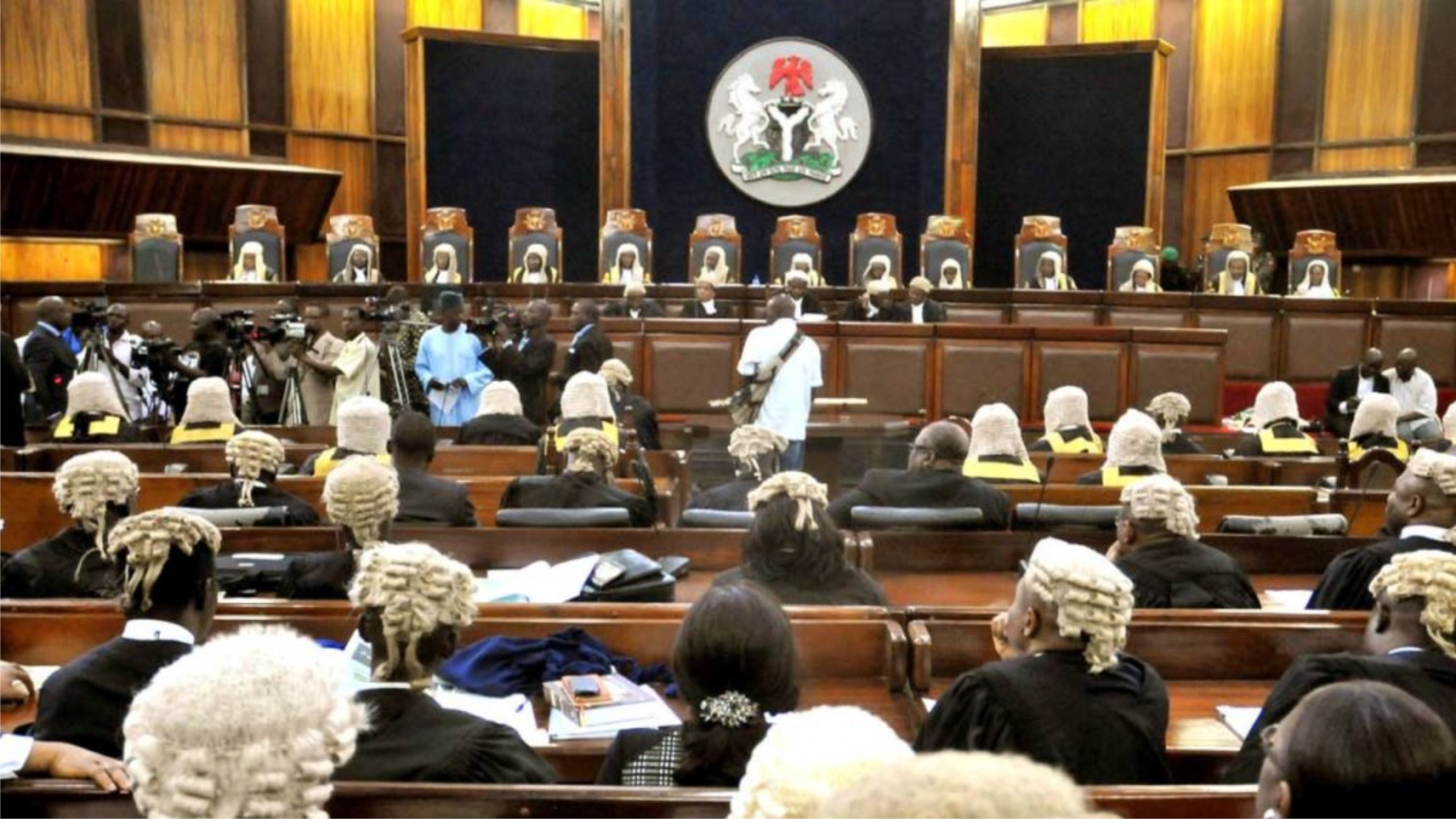
‘The Supreme Court Of Nigeria Is A Court Of/For Only High-Profile Cases’

The cry of the poor may not not always be just, but if you don’t listen to it, you will never know what justice is”.
I have just gone through a report under the headline, “Ex-CJN Onnoghen Advocates Adequate Funding Of Supreme Court” wherein (according to TheNigeriaLawyer reporting on 17 June 2022) an ex CJN, Hon Justice Walter Onnoghen (rtd) “warned that unless the Supreme Court is adequately funded, it may soon at best be a glorified High Court”.
While I agree that the Supreme Court should be adequately funded, it is my respectful view that the court has not justified past funding.
My reasons:
1. With the greatest respect, the Nigerian Supreme Court appears to be the slowest Supreme/apex Court in the entire world and leaders of the Court appear to be comfortable with the prevailing situation; hence, they are doing practically nothing to accelerate, improve justice delivery in the court. A case (an appeal filed by an ordinary Nigerian, a low profile Nigerian) could stay pending at the Supreme Court of Nigeria for up to 10 to 20 years. For instances, permit me to refer to pages 1-2 of my recent paper titled, “Role of the Bar and the Bench in Accelerating Justice Delivery In Nigeria: Lessons From Malaysia”.
A distinguished Senior Advocate of Nigeria, Akajiugo Emeka Obegolu, SAN, was reported to have posted the following statement on Facebook on 22 February 2022: “Today, 22/2/22, a 2005 appeal came up for hearing before the Supreme Court of Nigeria. Counsel informed the court that both the appellant and the respondent are deceased. #Justicedelayed”. From the post, it is obvious that the appeal at the Supreme Court of Nigeria had lasted 17 years, the appeal having commenced in 2005. Who knows when the case was filed at the High/Magistrates’ Court?. Meanwhile, when this author contacted Chief Obegolu, SAN, to confirm his authorship of the Facebook post and to get more facts about the case, Chief Obegolu advised that “the case was later adjourned to 2024 to enable the parties file applications for substitution”. A two-year adjournment to hear an interlocutory application! Earlier, on 5 February 2021, while delivering the lead judgment in a landlord-and-tenancy appeal case, Pillars (Nig) Ltd v. Desbordes, His Lordship, the Honourable Justice Emmanuel Akomaye Agim, J.S.C., had started with the following introduction: “This appeal was commenced on 24/6/2009 when the appellant herein filed a notice of appeal against the judgment of the Court of Appeal at Lagos delivered on 8/5/2009 in appeal No.CA/L/859/2006 affirming the judgment of the High Court of Lagos delivered on 8/12/2000 in LD/148/93 and dismissing the appeal against it. The notice of appeal contains 5 Grounds of appeal”. The suit number shows that the suit was filed in a Lagos High Court in the year 1993, appealed to the Court of Appeal, Lagos Division, in 2006 and later to the Supreme Court of Nigeria in 2009. The suit lasted 13 years at the High Court, 3 years at the Court of Appeal and 12 years at the Nigerian Supreme Court. A total of 28 years! The cited examples fall among the rule, the norm, and not exceptional or isolated cases’.
2. The Nigerian Supreme Court appears to be the most oppressive Supreme Court in the world, the worst violator of human rights in Nigeria and the most partial institution in Nigeria.
Let me explain: the Nigerian Supreme Court has by its actions/conduct classified cases that come before it into (I) high profile cases and (II) low profile cases. For the high profile cases, the Supreme Court accords accelerated hearing for very quick dispensation. For the low-profile cases, the Supreme Court has (by conduct) decided that hearing must be delayed and justice dispensation kept unnecessarily and annoyingly slow, in some cases until all litigants have died off and their successors-in-title substituted for the deceased litigants who had hoped to get justice in their lifetime. Example, the Supreme Court recently announced that all cases (all appeals) filed at the Supreme Court after 2015 would not get any hearing dates until after 2027.
Again, instances abound in which the parties (litigants) in cases pending before the Supreme Court die while the cases are still pending and being perpetually adjourned by the supreme court. Yet, all so called high-profile cases filed at the supreme court receive instant hearing dates and accelerated determination and judgment, within one month or there abouts of filing/appeal.
If this is not partiality, what then is the correct definition of partiality? If this is not gross violation of human rights of low profile Nigerians to access to justice within a reasonable time, then what is it?.
Again, I refer to my earlier observation in a published commentary titled, “The Federal High Court (Federal Inland Revenue Service) Practice Directions, 2021 and Questions of (Dis)Respect for Rule of Law, Human Rights and Access to Justice” (see: Lawbreed.blog on 15 June 2021: Access to justice means being “treated fairly according to the law and if you are not treated fairly, being able to get appropriate redress…. It means access to ombudsmen, advice agencies and the police law.
It means public authorities behaving properly…. Access to justice [is] a human right that must be respected and could be enforced. According to International and European human rights law, EU Member States must guarantee everyone the right to go to court, or to an alternative dispute resolution body, and to obtain a remedy when their rights are violated. This is the right of access to justice…. Further on this, paragraphs 14 and 15 of the United Nations’ Declaration of the High-level Meeting on the Rule of Law recognises that access to justice is a basic principle of the rule of law in the absence of which people are unable to have their voice heard, exercise their rights, challenge discrimination or hold decision-makers accountable.
The Declaration emphasises the right of equal access to justice for all, including members of vulnerable groups, and reaffirmed the commitment of Member States to taking all necessary steps to provide fair, transparent, effective, non-discriminatory and accountable services that promote access to justice for all.
Paragraph 13 of the Declaration stresses that delivery of justice should be impartial and non-discriminatory and highlighted the independence of the judicial system, together with its impartiality and integrity, as an essential prerequisite for upholding the rule of law and ensuring that there is no discrimination in the administration of justice… Nigeria is a member-State of the United Nations…
If we agree that Access to Justice is a basic human right, to be enjoyed by all (including the lowly placed), then we are entitled to query Nigerian Supreme Court’s different, partial, and unequal treatment of cases before the Court.
Why, for example, should High-Profile cases filed in the Supreme Court in 2022 be heard and determined in 2022 while the Supreme Court keeps insisting that earlier cases (unfairly classified as “Low-Profile Cases”) filed in the supreme court, say in 2016 – 2021, would not and must not be heard until after 2027? Is this not a form of oppression, human rights violation and denial of access to justice?
With due respect, I submit that the Nigerian Supreme Court is the worst violator of human rights in Nigeria, the worst perpetrator of injustice and the greatest promoter of partiality and segregation in justice delivery in Nigeria!
Unfortunately, Nigerian Supreme Court Leaders are always seen in the public domain preaching to other people (to members of lower courts) a gospel of accelerated justice dispensation. What an irony! As an example, see my paper: “Prolonged Justice Dispensation As The Bane Of Nigeria’s Judiciary: Leadership By Example As The Cure” (published by TheNigeriaLawyer on 11 August 2021) wherein I observed:
In my opinion, the Nigerian Supreme Court is the home of justice delay in Nigeria; other courts merely learn from it how to delay cases, grant long adjournments and prolong justice dispensation. …the best way to preach to other people… is to be a good example of what you want to see in others. You do not lead people by only what you say to them (it won’t work); you lead them by what they see you do.
True leaders are self-leaders. ..Leadership is an art expressed by the demonstration of characters worthy of imitations, emulation and inspiration. It is neither a title nor a position. The leader’s job is to show the way… you can not tell anything about the condition of the way if you have not travelled on it yourself!… Practise what you preach and let people learn from you. Be the light and source of inspiration that others see”.
While the current Chief Justice of Nigeria (CJN), Hon Justice Justice Tanko Muhammad, has repeatedly expressed concern over what he called delay in Nigeria’s justice delivery system, one has not seen any concrete, practical efforts my Lord, the CJN (as the leader of the Judiciary) is making or has made anywhere (beyond mere words and promises) to pull the justice sector out of the doldrums. Yet, Stakeholders keep asking for increased funding for the Supreme Court.
Increased funding is good, but a question arises: How have ordinary Nigerians benefitted from past adequate funding of the Supreme Court? Or, you are just asking for increased funding while the Supreme Court continues to sit on and suppress the basic right of ordinary Nigerians to quick and accelerated access to justice? The maxim that “Justice delayed is justice denied” means that if legal redress or equitable relief is available for a party that has suffered some injury, but is not forthcoming in a timely fashion, it is effectively the same as having no redress at all.
Hence, those who argue that “delay of justice is injustice” are right. The long-term effect is made clearer by Martin Luther King Jnr:”Injustice anywhere is a threat to justice everywhere. We are caught in an inescapable network of mutuality, tied in a single garment of destiny. Whatever affects one directly, affects all indirectly”. Besides, as Howard Zinn put it, “The cry of the poor may not always be just, but if you don’t listen to it, you will never know what justice is”.
My conclusion is, with due respect, the Nigerian Supreme Court exists only for High Profile Nigerians and for High Profile Cases and not for all Nigerians; it is a Court of Only High Profile Cases for High Profile Nigerians.
This is why only high-profile cases, involving High Profile Nigerians, receive due and accelerated attention from the Supreme Court. In view of this unjustified and reasonably unjustifiable lopsidedness against Low-Profile Nigerians, I respectfully advocate that High Profile Nigerians should contribute money to increase funding for the Supreme Court. The Supreme Court of Nigeria is not a court of justice for all Nigerians.
Put differently, the Supreme Court of Nigeria is a Court of Justice for High-Profile Nigerians and a Court of Injustice to/for Low-Profile Nigerians. Accordingly, let those Nigerians for whose interest the Supreme Court works, be solely responsible for the court’s funding!
By: Sylvester Udemezue


Children are highly desired and parenthood is culturally significant in Africa. In Nigeria, infertility is a socially unacceptable condition, making victims embark on relentless quest for conception. In Vitro Fertilisation (IVF) is the only alternative but same is expensive.
Admittedly, this has contributed to the advent of illegal baby factories in Nigeria and consequently constitutes an emerging trend of human trafficking.
What is baby factory? This implies to a practice in which young pregnant and unmarried girls are given shelter by a proprietor i.e Oga or Madam of the home until they are delivered of their pregnancies and give up the new born for sale.
This illegal centres and homes are most times camouflaged as “maternity homes, orphanages, social welfare homes, and clinics and are operated by well organised groups”.
As an emerging phenomena in developing countries of the world, it is also prevalent in Nigeria particularly in States such as Abia, Imo, Enugu, Edo, Rivers and Lagos.
It is important as well as my concern to note that children have rights and these rights must be protected. This evil scourge of baby factory is an illegal business involving getting pregnant young girls and women without sanity who either are willing or not to give up their babies for financial gain and benefits without having any contacts with the buyer or ever seeing their baby again.
This category of persons are introduced into this business forcefully, by deceit of evaporated love and care or under the guise that the baby factories are clinics or homes where they can pay less or deliver freely with some promise of jobs, safe abortion or money after delivery.
The owners of the factory and their syndicate insist that babies be put up for adoption by childless couples in the most fortunate scenario, else supply the babies to politicians for their rituals, illegal adoption and human trafficking. Pathetic right?
It is my argument that children born into baby factories are denied various civil and fundamental rights alongside their mothers because of their vulnerability. Some of the rights these children are denied include birth registration.
Nigeria is a signatory to many international and regional instruments targeted at eliminating child trafficking, protecting children and also the promotion of their rights which include, the United Nations Convention on the Rights of the Child (1989) and the Optional Protocol to the Convention on the sale of Children.
Section 12 of the Constitution of the Federal Republic of Nigeria (as amended) stipulates the guidelines for applicability of this treaties in Nigeria.
Regrettably, despite the vast number of statutes protecting children and women, there is still an alarming prevalence of heinous crimes against these vulnerable units of our society.
The Children’s Rights Act was enacted as passed in Law in Nigeria in 2003, to serve as a legal document and protection of children’s rights and responsibilities in Nigeria which consolidates all laws relating to children into one single legislation, as well as specifying the duties and obligations of government, parents and organisations.
However, despite its values and importance, most States in Nigeria have not domesticated the Act, which implies that children in some States are not being protected under this law which prompts unequal rights in children.
Section 30(1) of the Children Rights Act provides that No person shall buy, sell, hire, let on hire, dispose off or obtain possession of or otherwise deal in a child. This section clearly prohibits the act of buying and selling of a child or children.
Section 207 empowers the police to create a specialised unit for the combating of the crime.
The sporadic growth of baby factories across the Nigeria State is a front burner issue that needs urgent address, given the rise in in the thriving business due to the ever increasing in height of economic downturn in the country.
The vulnerability of children and the need for their protection has attracted international recognition as well as domestic legislation.
The Constitution also provides protection for the dignity of the human persons and personal liberty as stated in Sections 34 and 35 respectively. Howbeit, it is very safe to say that these laws are ineffective for the purpose they were enacted.
Having considered this topic in relation to baby factories as an avenue for trafficking and the laws enacted to promote and protect women and children, it is my recommendation that:
1. The government institutions established by law for the protection of children performs their duties.
Security agencies should not delay the prosecution of persons who commit this offence.
The government should ensure that upon discovery facilities harbouring women and children for sale be destroyed and periodic checks should be conducted on churches, mosque, hospital etc.
Intense education and sensitisation campaign and programmes for young girls, and boys and women about unwanted pregnancies.
Government should assume their responsibility of the protection of lives and increase the budgetary allocation for children orientation programme in schools, villages, church and mosque.
Esaenwani Baribor Ferguson
Esaenwani is a practising lawyer based in Port Harcourt at Brisk Attorneys and Consultants.
The Nigeria Police Force is the principal law enforcement agency in Nigeria. It has its origin in Lagos following the creation of a 30-man Counsular in the year, 1861.
It further has its Constitutional backing in the Chapter Six (6), Part Three (3), Section 214 of the Constitution of the Federal Republic of Nigeria , 1999 (as amended). Down the line, the Nigeria Police Force begin to have other formations like the Mobile Police Force in the 1980s.
The motive behind the creation of the Nigeria Police Force, is to preserve law and order, the enforcement of law and regulations with which they are directly charged. The performance of such military duties within and outside the country as may be required of them by or under the authority of the Police Act or any other Act.
When the heat or should I say, the need or urge to provide better policing in the country became necessary, more formations like the Special Anti Robbery Squad (SARS) were birthed around 1992 to battle crime especially armed robbery.
This very formation (SARS), before it went under on Sunday November 11, 2020, when the then Inspector General of Police, Mr Mohammed Adamu announced its disbandment was a talk-of the-town.
People were delighted to catch a glimpse of SARS men especially when they are in operation and in their full regalia. They fought crime to almost zero point before the devil took over the outfit and placed it in the history book.
The Slogan ‘ The Police is Your Friend’ is one of the most disgusting or disturbing things about the Nigeria Police Force. Many are not at ease with it. In most cases, they begin to wonder what the Police is even doing to get the least attention.
But until you are closer to some people including the Police, you may not say for sure what they do or their importance to the society. Some Police men are down-to- earth. They execute their jobs in such professional manner that one may be tempted to purchase Police recruitment form of a given year.
I have the privilege to interface with some of them at some Special Areas in Rivers state. Their profiles are not only intimidating, but reveal a serious road map on how best to tackle security challenges in the country.
When they related to me why they cannot execute some actions, I was flabbergasted. The government ought to look for those kind of officers and secretly talk with them.
They complained of being tagged as saboteurs should they approach their Heads with their ideas on some issues.
One of the officers confided in me how he unearthed a high profile kidnapping gang that nailed a certain bigman. I mean a bigman with both wealth and honour. I looked at the fragile frame of mind of the officer and took his claims with a pinch of salt.
When other of his colleagues at different fora commended him on some hard job success, it then dawned on me that I was dealing with a senior intelligence officer. His challenge was not also far from the ones earlier enumerated by his colleagues .
Armed with the little information I have gathered about the Police and its challenges, I delved into personal investigation. I went round almost the big formations in the state. With utmost humility, I discovered that the government was unfair to the Police.
In some of the outfits, over ten (10) officers are squeezed into one office. About three (3) of them or so share one (1) table. One will begin to imagine what the occupants of such place will produce.
Even the big formations with big names are not better. They suffer even the worst. But as the big men they are, they stomached the whole thing and welcome you with a beaming smile.
If you are not of a good temperament, you may take him (the bigman officer), for an evil man who derives joy in suffering. Or was the foremost Afro Beat King , Fela Anikulapo Kuti right when he sang ‘Suffering and Smiling’?
I think it is about time those that head some big Police formations in the country begin to think on how to improve on their jobs. Those at the top are not too mindful of the welfare of others. I blame them not, because such is a typical Nigerian factor.
I can recall vividly well at a particular public function in Port Harcourt when one officer was introduced as the Financial Officer in charge of a certain Police outfit. The master of ceremony (MC), took it up. He (MC), was like “thank God oga will bless us today”, the officer in a quick reaction, gave it back to the MC, thus, please “I am sorry, we are only bearing the name, the real office is in Abuja”.
People took it as a joke including me, but when I dug into the situation, I knew what exactly the officer meant then. The narrative must change, if the police must perform to the taste of the common man.
The Police and its welfarism must not be gambled with. The government and its authorities should consider the need for Police reform and execute it with immediate alacrity.
This will also help the authority to place a plum line on the Police. I think part of the poor check on the side of the government on the Police is deliberate, in that the authority know that they have not performed their own part of the agreement hence, the ‘On Your Own’ kind of approach to issues.
The police, if well equipped, will do more than expected. The manpower to execute some tactical operations are within them, but lack of support for them remains a bane to their positive operations.
Another point to effective Policing in the country is , management of the Internally Generated Funds by the Police. If the Police are allowed to manage the funds they generate internally, it will go a long way in fixing things among them.
The issue of waiting for approval to fix even furniture in the office is a major clog in the system. At times, they are forced to ask for financial support from the suspects to enable them buy as little as writing materials.
Such ought not to be in that the risk of compromising the matter will be high. If the materials are so provided, the officer will have no option than to do the needful.
Another point is that of personal visit and inspection. The authority should make out time to visit the Police formations across the country. They should visit such places like the convenience, bathrooms, canteens, etc. When you pay some unscheduled visits to some of the mentioned places, you will agree with this piece to the extent of making a quick case for an improved welfare package for the police.
As a citizen of Nigeria, make a personal visit Police formation as part of your menu. Let the issue of the police harassment especially on the roads not deter you. By so doing, you will be armed with some information that will convince you that of a truth, the to any Police is really ‘Your Friend’.
The time to address the challenges of the police is now. No need to dwell on the past. Let’s stop the blame game and think of the way forward.
King Onunwor
-

 Editorial3 days ago
Enough Of Xenophobic Attacks On Nigerians
-

 Nation3 days ago
RSU, Otonti Nduka Foundation Holds Centenary Conference, Unveil Book on Values in Nigeria
-

 Oil & Energy3 days ago
Rivers PETROAN Elects 12-Member Executive
-

 Sports3 days ago
Oparaodu Urges Rivers United To Win Katsina United
-
Politics3 days ago
APC Group Protests Ex–Presidential Aspirant’s Disqualification From Rivers Senatorial Race
-
Politics3 days ago
Reps Speaker Secures APC Return Ticket For Fifth Term
-

 Sports3 days ago
” Nigeria’s best domestic players are not in NPFL”
-
Politics3 days ago
Primaries: Diri Lauds APC’s Unity, Cohesion In Bayelsa