
Editorial
Enough Of Killings In Anambra

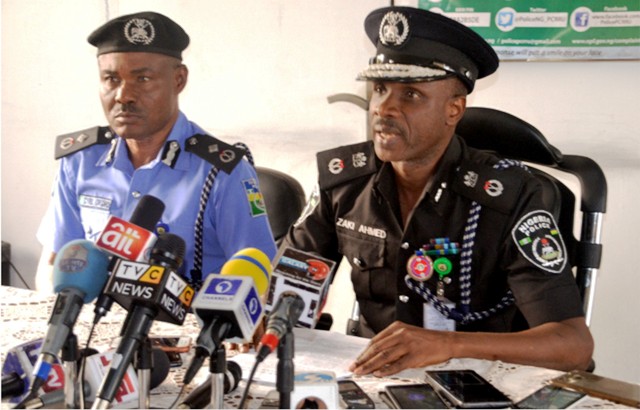
Tragedy struck again in Anambra State just at a time the people of the state were hilariously heaving a sigh of relief that normalcy was gradually returning after over one year of living in deep-seated fear, following the activities of “unknown gunmen” that killed and maimed several people.
This time around, the victims were Senator Ifeanyi Ubah representing Anambra South Senatorial Zone in the country’s upper legislative chambers and his aides, who were returning to the Senator’s hometown, Nnewi, from a function. The September 11 assault on the convoy of Senator Ubah in Enugu-Ukwu, Anambra State, draws attention to the dire security situation in the South East.
Two police officers, two Ubah’s aides and a Department of State Services (DSS) operative were among the dead. Also among the dead was a businessman from Nri, Anaocha Local Government Area. It was reported that the businessman was based in Lagos but relocated to his hometown, following alleged attempts on his life after a failed business deal. The attackers were after him, only for the Senator’s convoy to arrive at the scene when the gunmen had ambushed their target.
Another version indicated that it was a targeted assassination attempt on Ubah. According to reports, the foray on the Senator had a link with the sacked Chairman of Nnewi North Local Government Council, whose wife died mysteriously. It was gathered that the man was Ubah’s boy, whom the Senator brought to political limelight. The source added that another businessman allegedly having issues with Ubah influenced the man’s political predicament.
Recall that some parts of the South-East, especially Imo State and Anambra State, have been reeling from incessant attacks by “unknown gunmen”. The situation worsened following the April 5, 2021 blitzkrieg on the Imo police headquarters and the correctional centre. About 1,844 inmates were freed, some of them hardened criminals. Since then, police stations have been assailed and arms carted away.
Ahead of the attack on Ubah and his convoy, prominent South Easterners had been gruesomely murdered in the region. Dr Chike Akunyili, husband of the late Minister of Information, Prof Dora Akunyili, was killed along with eight others at Nkpor in the Idemili North Local Government Area of Anambra. Director-General, Scientific Equipment Development Institute (SEDI), Enugu, Prof Samuel Ndubuisi, and a police officer attached to him were shot dead in Enugu.
Also, the member representing Aguata State Constituency in the Anambra State House of Assembly, Okechukwu Okoye, and a former member of the State House of Assembly, Nelson Achukwu, were beheaded by unknown persons. Traditional rulers and religious leaders were equally not left out. Some were kidnapped and never seen again. Many security operatives, remarkably policemen at checkpoints, have been brutally murdered in the region.
Most villagers have fled their homes, while those living in cities have ceased from travelling home. Many who journey home hardly use their vehicles for fear of being identified, abducted or even killed. Although security agents may be doing their best to bring the violence to a halt, they have also been accused of engaging in extrajudicial activities. Some, especially young men, have had to flee for fear of arrest and detention.
The recent bloody incident in Anambra is deeply regrettable. It is wicked, barbaric, senseless and knavish. We condemn the savage attacks on Ubah and his aides and call for the strengthening and overhauling of the security architecture of the state in particular and the nation at large. Law enforcement agents should work harder to fish out the perpetrators and prosecute them. It should matter less what organisation such criminals are representing.
One worrisome development for us is the continuous attacks despite repeated government assurances to address the ubiquitous security crisis. But even more discommoding is the fact that the perpetrators remain unknown, while their grouse and motive are unspecified. The Federal Government should intervene urgently, failure of which the heinous and barbaric killings may continue unabated, subjecting Anambra people to untold apprehension and suffering.
We think that the failed assassination attempt on Ubah and the killing of others, just like many other attacks across the South-East geopolitical zone, are perpetrated by implacable enemies of Ndigbo. We maintain that the provocative action signposts the collapse of the country’s security architecture, which, in turn, has rubbed off on the capacity of security operatives to tackle crime and criminality frontally.
The apparent dilemma in the South-East is an obvious pointer that the elite and political leaders have completely lost touch with the people. The widening gap between the rich and the aggrieved poor in the country is rearing its ugly head in the type of violence that society is exposed to in recent times. Therefore, political leaders have to rise above mischief and find a way to calm down the youths.
Leadership in the embattled zone has taken a nosedive and the people are more divided than ever. The governors, including Soludo, need immediate assistance and full support from traditional rulers and other stakeholders to stop the violence in the region. It is not enough for both the state and central governments to express alarms about the killings or offer a huge amount of money to unravel the killers. They must find a lasting solution and end the appalling massacres.
The Anambra people want to see what the government is doing to arrest the lingering insecurity before the situation gets out of hand. It is all about the safety and welfare of the people, which is the primary purpose of government. The “unknown gunmen” should not be more powerful than the state apparatus.




Nigeria stands at a critical juncture as the world marked World Press Freedom Day (WPFD) on May 3. This annual observance is a reminder that a free press is central to democratic life, good governance, and public accountability. For Nigeria, it is also a moment for sober reflection on how far the country has come and how far it still has to go in safeguarding the independence of its media.
World Press Freedom Day exists to highlight the fundamental importance of freedom of expression and to honour journalists who risk their lives in pursuit of truth. It underscores the idea that without a free press, societies cannot function transparently, nor can citizens make informed decisions. In countries like Nigeria, where democracy continues to evolve, the observance carries particular urgency.
This year’s theme, “Shaping a Future at Peace: Promoting Press Freedom for Human Rights, Development and Security”, places journalism at the heart of global stability. It emphasises that a peaceful society cannot be built on silence, fear, or manipulated information. Rather, it depends on the free flow of accurate, timely, and independent reporting.
At its core, the theme highlights the role of journalism in fostering accountability, dialogue, and trust. These are not abstract ideals. In Nigeria, where public confidence in institutions is often fragile, the media remains one of the few platforms through which citizens can question authority and demand transparency. When press freedom declines, so too does public trust.
Journalism serves as a foundation for peace, security, and economic recovery. Countries with robust media systems tend to attract greater investment, maintain stronger institutions, and resolve conflicts more effectively. Nigeria’s economic challenges, ranging from inflation to unemployment, require open scrutiny and informed debate, both of which depend on a free press.
However, the issue of information integrity has become increasingly complex in the digital age. Artificial Intelligence (AI) and online platforms have amplified the spread of misinformation and disinformation. In Nigeria, where internet penetration has grown rapidly, false narratives can travel faster than verified facts. This makes the role of credible journalism more vital than ever.
The challenge is not only technological but also ethical. AI-driven manipulation of information threatens to distort public discourse, influence elections, and deepen social divisions. In such an environment, professional journalism must act as a stabilising force, ensuring that truth prevails over sensationalism and propaganda.
Equally troubling is the safety of journalists. Across Nigeria, reporters face growing levels of online harassment, judicial intimidation, and physical threats. Self-censorship is becoming more common, as media practitioners weigh the risks of reporting sensitive issues. This trend undermines the very essence of journalism.
A particularly alarming incident involved a serving minister in the present administration, who openly threatened to shoot a journalist during a televised exchange. Such conduct, broadcast to the public, sends a dangerous signal that hostility towards the press is acceptable. It erodes the norms of democratic engagement and places journalists in harm’s way.
This year’s theme aligns closely with the United Nations Sustainable Development Goal (SDG)16, which promotes peace, justice, and strong institutions. Freedom of expression is a cornerstone of this goal. Without it, institutions weaken, corruption thrives, and justice becomes elusive. Nigeria’s commitment to SDG 16 must therefore include genuine protection for the media.
Historically, the Nigerian press has been a formidable force. From resisting colonial rule to challenging military dictatorships, our journalists have played a central role in shaping the nation’s political landscape. Today, however, that legacy appears to be under strain, as the media operates under what can best be described as a veneer of freedom.
Beneath this facade lies a troubling reality. Journalists are routinely harassed, detained, and prosecuted for performing their constitutional duties. Reports from media watchdogs indicate that dozens of Nigerian journalists face legal threats or arrest each year, often for exposing corruption or criticising those in power.
The Cybercrimes (Prohibition, Prevention, etc.) Act of 2015 has become a focal point of concern. Originally intended to combat cyber threats, it has increasingly been used to silence dissent. Sections 24 and 27(1)(b), in particular, have been invoked to target journalists, bloggers, and social commentators.
Although amendments introduced in February 2024 were meant to safeguard journalists, concerns persist. The law continues to be wielded in ways that stifle investigative reporting and restrict freedom of expression. Legal reforms must go beyond cosmetic changes to address the root causes of misuse.
To safeguard the future of journalism in Nigeria, decisive action is required. The Cybercrimes Act must be revisited to ensure it cannot be weaponised against the press. Law enforcement agencies must operate free from political influence, upholding the rule of law and protecting journalists’ rights. Civil society and international partners must also strengthen independent media through funding, training, and platforms for wider reach.
In this rapidly evolving world shaped by artificial intelligence and digital innovation, Nigeria faces a clear choice. It can either allow press freedom to erode under pressure, or it can champion a truly independent media landscape. The path it chooses will determine not only the future of journalism, but also the strength of its democracy and the peace it seeks to build.
-
 Editorial4 days ago
Enough Of Xenophobic Attacks On Nigerians
-

 Education4 days ago
UNIPort Senate Grants Two-Year Amnesty to U2010–U2018 Students
-

 Nation4 days ago
RSU, Otonti Nduka Foundation Holds Centenary Conference, Unveil Book on Values in Nigeria
-

 Sports4 days ago
Oparaodu Urges Rivers United To Win Katsina United
-

 Oil & Energy4 days ago
Rivers PETROAN Elects 12-Member Executive
-
Politics4 days ago
APC Group Protests Ex–Presidential Aspirant’s Disqualification From Rivers Senatorial Race
-

 Sports4 days ago
” Nigeria’s best domestic players are not in NPFL”
-
Politics4 days ago
Reps Speaker Secures APC Return Ticket For Fifth Term