
Editorial
Congratulations, Justice Mary Peter-Odili

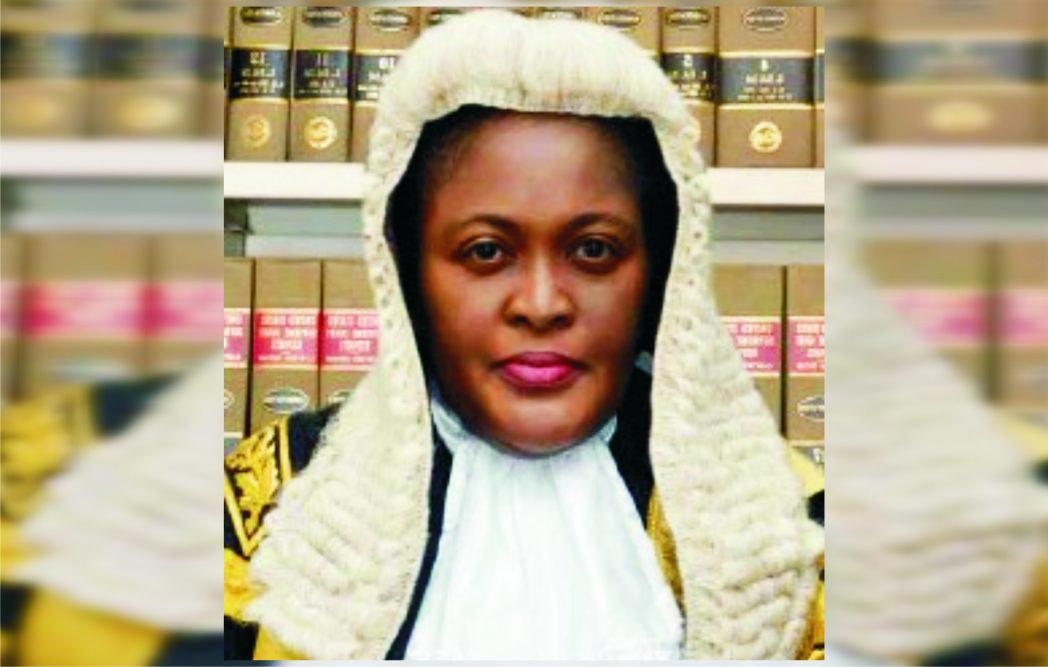
The learned Justice Mary Ukaego Peter-Odili of the Nigerian Supreme Court, officially left the
country’s judiciary on Thursday, May 12, 2022. Justice Peter-Odili, who is one of the earliest women to be elevated to the Supreme Court bench, stepped aside having attained the mandatory retirement age of 70 after serving at the apex court for 11 years. The Imo State-born jurist, whose meritorious milestone judgments have shaped the political, economic and social terrains of the nation, was hosted to an elaborate retirement event on the day.
The apex court officials had a farewell session worthy of her. The sitting was chaired by the Chief Justice of Nigeria (CJN), Ibrahim Tanko Muhammad, in the main courtroom of the Supreme Court that Thursday morning. Distinguished Nigerians, especially the Attorney General of the Federation (AGF) and Minister of Justice, President of the Nigerian Bar Association (NBA), Body of Benchers, and Body of the Senior Advocates of Nigeria, among others, graced the valedictory court session.
Spanning 45 years in the legal profession, her total journey to the Supreme Court tracked a steady climb through the Nigerian Law School, Victoria Island, in 1976 and was called to the Bar the following year. Shortly after, she enrolled in the mandatory National Youth Service Corps (NYSC) and accomplished her primary assignment at the Ministry of Justice in Abeokuta, Ogun State, before proceeding to the Ministry of Justice in the old Bendel State as a pupil state counsel.
Upon being called to the Bar on July 1, 1977, Mary saw her dream of seeing her family become a reality. She and Dr Peter Odili, who had long been acquainted right from their days in the University of Nigeria, Enugu campus that housed both the medical and law colleges within it, decided to be joined in holy matrimony in Benin City, two months later (August 26, 1977). Both were said to have met at a campus feast and began a lasting relationship that resulted in a marriage. They received their first baby, Adaeze, in 1979. Not long after that, they had three more children — Chinelo, Peter, and Njideka.
For the first time since she became the second most senior justice of the Supreme Court, she had the privilege to speak about herself and the nation she had served dispassionately for over four decades. Born May 12, 1952, at Orieonuoha Maternity, in Onicha Ezinihitte-Mbaise, Imo State, young Mary’s father, Bernard Chigbu Nzenwa, was a reputable lawyer, sports enthusiast and traditional ruler while her mother, Bernadette Nwatuma Nzenwa, was a seamstress and textile trader.
Mary, a kind lady of glamorous qualities and eminence that surpass the legal profession, was well known for her irresistible voice in the temple of justice. She has offered the best of her intellect to the improvement of the legal profession through her many years of unparalleled rulings at various levels of courts in Nigeria. The retired legal giant is a specimen of hard work, industry, discipline and moral rectitude. We commend her for her contributions to the judiciary in Nigeria.
As well, Mrs Odili is a dedicated jurist and an example for the public service. She is an exceptional judicial icon whose service on the Bench will continue to be referenced as a result of her sense of balance, fairness, integrity and confidence in the nation’s judiciary. She has left the Bench as an outstanding jurist. Her devotion to duty took her to the peak of her career, having served creditably as a magistrate, high court judge and justice of both the Appeal Court and the Supreme Court of the land. Her support for women, advocacy for legal reforms and her crusade for positive change in society are part of her legacy that will continue long after her retirement.
Attesting the virtue of the retired jurist, the Rivers State Governor, Chief Nyesom Wike, revealed that Justice Mary Odili saved his political career in 2004, and vowed to remain grateful to her. The disclosure was made at the 70th birthday and retirement thanksgiving mass of Mary Odili as Justice of the Supreme Court at Our Lady of the Holy Rosary Chaplaincy, Catholic Institute of West Africa (CIWA) in Port Harcourt.
Wike posited that in 2004, he cried to Mrs Peter-Odili after he got the clue that his name was left out from those approved to contest either as first term or second term chairmen of local councils in the state and the retired judge listened to him and took the complaint to her husband, Dr Peter Odili, who was then the Governor of Rivers State. Wike explained how the Mary’s presentation of the case led her husband to act immediately.
Citing a vital lesson of life he learnt from Justice Peter-Odili as the determination to build the capacity to be successful in one’s career while not ignoring giving requisite attention to the family, Wike said: “I have seen somebody who is very compassionate and very caring. The moment you are around her husband, she takes care of you. She sees you as her husband’s person, and so she will always relate with you. Some of us are direct beneficiaries of the care through our relationship with the husband.”
However, Justice Peter-Odili’s career was not exempt from a number of notable controversies. Her status as a judicial officer married to someone politically exposed made her an easy target in the intrigues of her husband’s and his party’s political rivals. An example was the knock-on effect from the All Progressives Congress (APC) following the Supreme Court judgment of February 13, 2020, that sacked the APC’s David Lyon as governor-elect of Bayelsa State, barely 24 hours to his inauguration. Justice Peter-Odili led the panel of the apex court justices that decided the matter.
The Tide joins all well-meaning Nigerians, the judiciary, the NBA, the international community and all illustrious sons and daughters of Rivers State to specially celebrate and congratulate our very own, Hon. Justice Mary Ukaego Peter-Odili, on her 70th birthday and her exit from the Supreme Court. Indeed, it has been a sojourn, and we are proud of her. She has made her indelible marks. Our best wishes for a successful and exceptional retirement.




Nigeria stands at a critical juncture as the world marked World Press Freedom Day (WPFD) on May 3. This annual observance is a reminder that a free press is central to democratic life, good governance, and public accountability. For Nigeria, it is also a moment for sober reflection on how far the country has come and how far it still has to go in safeguarding the independence of its media.
World Press Freedom Day exists to highlight the fundamental importance of freedom of expression and to honour journalists who risk their lives in pursuit of truth. It underscores the idea that without a free press, societies cannot function transparently, nor can citizens make informed decisions. In countries like Nigeria, where democracy continues to evolve, the observance carries particular urgency.
This year’s theme, “Shaping a Future at Peace: Promoting Press Freedom for Human Rights, Development and Security”, places journalism at the heart of global stability. It emphasises that a peaceful society cannot be built on silence, fear, or manipulated information. Rather, it depends on the free flow of accurate, timely, and independent reporting.
At its core, the theme highlights the role of journalism in fostering accountability, dialogue, and trust. These are not abstract ideals. In Nigeria, where public confidence in institutions is often fragile, the media remains one of the few platforms through which citizens can question authority and demand transparency. When press freedom declines, so too does public trust.
Journalism serves as a foundation for peace, security, and economic recovery. Countries with robust media systems tend to attract greater investment, maintain stronger institutions, and resolve conflicts more effectively. Nigeria’s economic challenges, ranging from inflation to unemployment, require open scrutiny and informed debate, both of which depend on a free press.
However, the issue of information integrity has become increasingly complex in the digital age. Artificial Intelligence (AI) and online platforms have amplified the spread of misinformation and disinformation. In Nigeria, where internet penetration has grown rapidly, false narratives can travel faster than verified facts. This makes the role of credible journalism more vital than ever.
The challenge is not only technological but also ethical. AI-driven manipulation of information threatens to distort public discourse, influence elections, and deepen social divisions. In such an environment, professional journalism must act as a stabilising force, ensuring that truth prevails over sensationalism and propaganda.
Equally troubling is the safety of journalists. Across Nigeria, reporters face growing levels of online harassment, judicial intimidation, and physical threats. Self-censorship is becoming more common, as media practitioners weigh the risks of reporting sensitive issues. This trend undermines the very essence of journalism.
A particularly alarming incident involved a serving minister in the present administration, who openly threatened to shoot a journalist during a televised exchange. Such conduct, broadcast to the public, sends a dangerous signal that hostility towards the press is acceptable. It erodes the norms of democratic engagement and places journalists in harm’s way.
This year’s theme aligns closely with the United Nations Sustainable Development Goal (SDG)16, which promotes peace, justice, and strong institutions. Freedom of expression is a cornerstone of this goal. Without it, institutions weaken, corruption thrives, and justice becomes elusive. Nigeria’s commitment to SDG 16 must therefore include genuine protection for the media.
Historically, the Nigerian press has been a formidable force. From resisting colonial rule to challenging military dictatorships, our journalists have played a central role in shaping the nation’s political landscape. Today, however, that legacy appears to be under strain, as the media operates under what can best be described as a veneer of freedom.
Beneath this facade lies a troubling reality. Journalists are routinely harassed, detained, and prosecuted for performing their constitutional duties. Reports from media watchdogs indicate that dozens of Nigerian journalists face legal threats or arrest each year, often for exposing corruption or criticising those in power.
The Cybercrimes (Prohibition, Prevention, etc.) Act of 2015 has become a focal point of concern. Originally intended to combat cyber threats, it has increasingly been used to silence dissent. Sections 24 and 27(1)(b), in particular, have been invoked to target journalists, bloggers, and social commentators.
Although amendments introduced in February 2024 were meant to safeguard journalists, concerns persist. The law continues to be wielded in ways that stifle investigative reporting and restrict freedom of expression. Legal reforms must go beyond cosmetic changes to address the root causes of misuse.
To safeguard the future of journalism in Nigeria, decisive action is required. The Cybercrimes Act must be revisited to ensure it cannot be weaponised against the press. Law enforcement agencies must operate free from political influence, upholding the rule of law and protecting journalists’ rights. Civil society and international partners must also strengthen independent media through funding, training, and platforms for wider reach.
In this rapidly evolving world shaped by artificial intelligence and digital innovation, Nigeria faces a clear choice. It can either allow press freedom to erode under pressure, or it can champion a truly independent media landscape. The path it chooses will determine not only the future of journalism, but also the strength of its democracy and the peace it seeks to build.
-
 Editorial4 days ago
Enough Of Xenophobic Attacks On Nigerians
-

 Education4 days ago
UNIPort Senate Grants Two-Year Amnesty to U2010–U2018 Students
-

 Nation4 days ago
RSU, Otonti Nduka Foundation Holds Centenary Conference, Unveil Book on Values in Nigeria
-

 Sports4 days ago
Oparaodu Urges Rivers United To Win Katsina United
-

 Oil & Energy4 days ago
Rivers PETROAN Elects 12-Member Executive
-
Politics4 days ago
APC Group Protests Ex–Presidential Aspirant’s Disqualification From Rivers Senatorial Race
-

 Sports4 days ago
” Nigeria’s best domestic players are not in NPFL”
-
Politics4 days ago
Reps Speaker Secures APC Return Ticket For Fifth Term