
Politics
Jega Tasks Workers To Rescue Nigeria

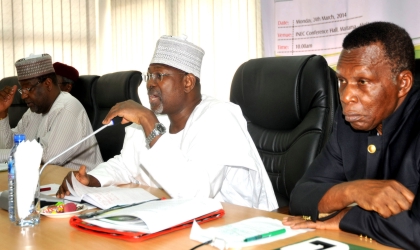
A former Chairman of Independent National Electoral Commission (INEC), Prof. Attahiru Jega, has called on Nigerian workers to wake up and rescue the country from “a few reckless elites in control of the governance process who are running the country aground”.
Jega, a Professor of Political Science, Bayero University, Kano, specifically said the forthcoming 2023 general elections might be the “make or break” epochal moment for Nigeria, depending on actions and inactions of workers.
The former INEC boss, who spoke in Abuja at the 2022 Workers’ Political Conference organised by the Nigeria Labour Congress (NLC) on Wednesday, decried the socio-economic conditions in the country.
Jega, who chaired the conference spoke on the theme: “Commitment to National Emancipation and Development Through Effective Political Engagement By Nigerian Workers.”
Apparently commenting on the current fuel scarcity, strike action embarked upon by members of Academic Staff Union of Universities (ASUU), incessant borrowings, among other issues, Jega stressed the need for active engagement and involvement of Nigerian workers in the rescue mission.
“Nigeria is, undoubtedly, at a point in its history when the issue of national emancipation for credible national development, beneficial to the Nigerian people, requires being raised high on the front banner of national discourses by patriotic Nigerians and friends of Nigeria, and especially by the Nigerian workers themselves.
“The sorry state of the socio-economic conditions under which the Nigerian working people, indeed the overwhelming majority of all citizens live and work, the reckless misrule and mis-governance by a tiny, rabid and reckless band of elite, and the manner by which these myopic ‘elected’ so-called ‘leaders’ and their collaborators, have devastated the Nigerian economy, heightened insecurity, and virtually destroyed the basis for national cohesion and integration, Nigeria, as a potentially great nation, is crying for a rescue mission, before it is too late.
“Such a rescue mission cannot be serious, positive and successful, without the active engagement and involvement of the Nigerian workers through their genuine representatives in working class organizations and movements, in alliance with other progressive and patriotic Nigerians,” Jega said.
He added, “Most analysts agree that while Nigeria may not have totally collapsed, it is in the process of collapsing, as reckless elites in control of the governance process are blindly running the country aground. And the 2023 general elections may be the ‘make or break’ epochal moment.
“Given this, all hands of progressive forces need to, have to, be on deck to prevent our country from imminent collapse, and to turn it around on to a trajectory of good democratic governance for beneficial democratic, socio-economic development, and human security for Nigerian citizens.
“A broad alliance of progressive forces for national rescue and emancipation is absolutely required to get Nigeria out of the current unwholesome predicament in which it finds itself.”
On his part, the President of NLC, Ayuba Wabba, lamented that the country had never been like this since democracy returned in 1999, saying the polity is already being overheated ahead of 2023 general elections.
He said, “To say that Nigeria is at political crossroads would not be a statement of alarm. It would be a factual construction of our reality. With 2023 in view, there is a lot of politicking, intrigues and subterfuge in the political space. Every indication shows that the polity is once again being overheated.
“Sadly, as it has become the norm with our cycle of broken politics, the polity is not being heated with questions and answers on how the current political mandate has been used by political office holders.
“The polity is not being overheated with concerns on how the current ruling elites have honoured the socio-economic rights of Nigerians in Chapter Two of the 1999 Constitution.
“The polity is not being overheated with new ideas of how politicians can meet the expectations of Nigerians who want constant power to power their potentials, motorable roads, adequate security that will keep us from always looking over our shoulders and living wages that will offer workers a chance at decent living.
“Our country has not always been like this. During the quest for our national independence, the wheel of our collective liberation from the grips of the colonial masters did not turn until the muscles of Nigerian workers were applied.
“The June 1945 nationwide strike action created the big momentum that finally caught the attention of the British colonialists that Nigerians were ready to take their own destiny into their own hands. And what was the fulcrum of our agitation for independence? It was the demand for equality, decent work, and social justice.”

Politics
Alleged Coup: Protests Rock N’Assembly As Detained Officers’ Children, Wives Demand Justice

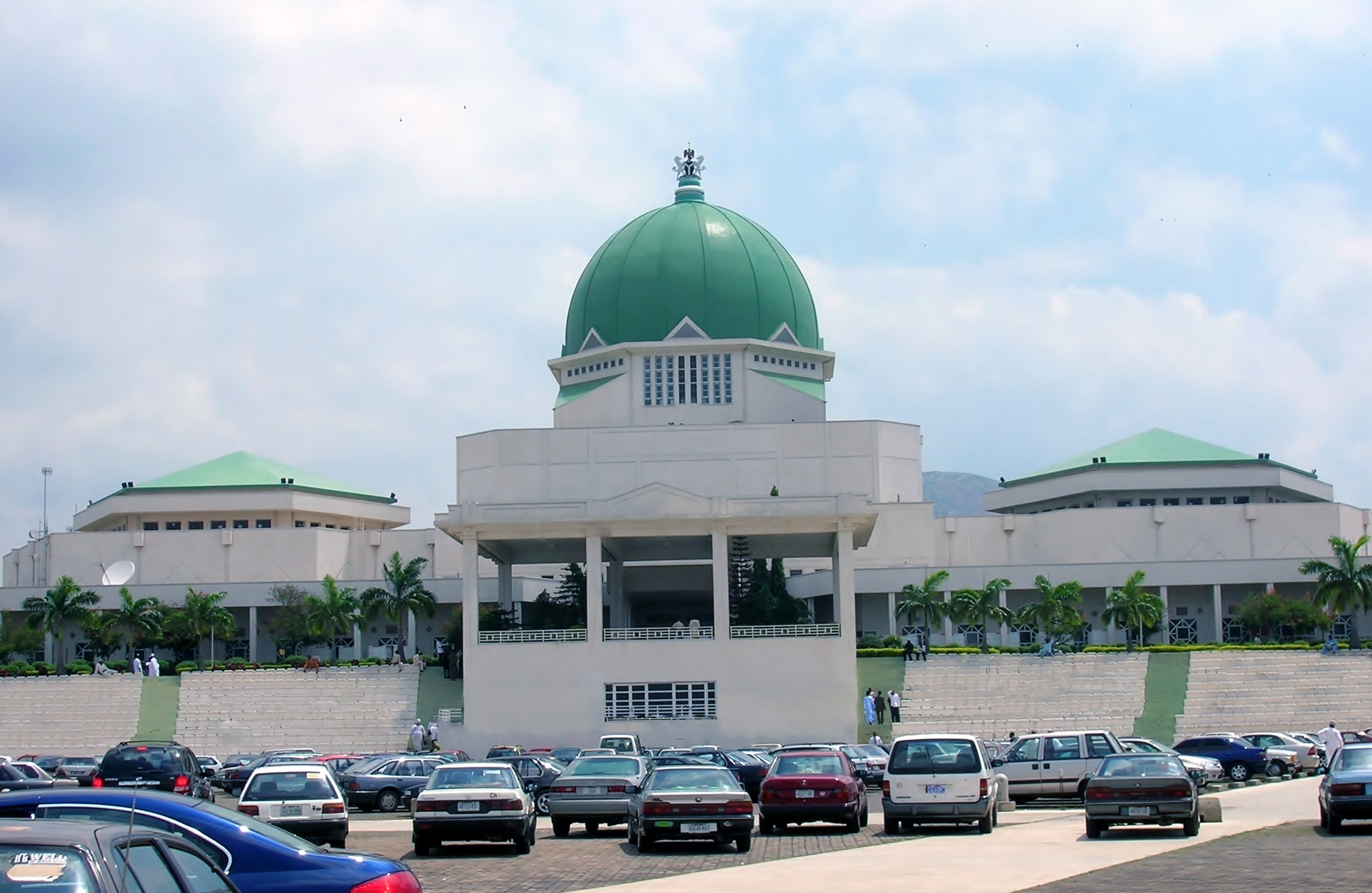
Scores of children and wives of military officers detained over an alleged coup plot yesterday staged a peaceful protest at the National Assembly, demanding a speedy trial and the release of the accused officials.
The protesters who gathered at the entrance of the National Assembly complex, moved in a slow procession while clutching placards with inscriptions such as “Don’t Kill Our Daddies,” “Detention Without Trial is Injustice,” and “Six Months of Torture: Enough Is Enough.”
Amid tears and trembling voices, the children appealed for justice and access to their detained fathers, many of whom they said they had not seen for months.
The appeal was made during a press briefing in Abuja attended by no fewer than 20 wives and several children of the detained officers, including a two-month-old baby.
The families were accompanied by human rights lawyer, Deji Adeyanju and activist Omoyele Sowore.
At the briefing, the families lamented that the officers had been held for over 160 days without trial or contact with their relatives, describing the situation as a violation of their fundamental rights.
Speaking on behalf of the families, Memuna Bashiru said the prolonged detention had thrown their households into uncertainty and emotional distress, noting that while allegations had been widely publicised, families remained in the dark about the fate of their loved ones.
The arrest of the indicted officers was first announced on October 4, 2025, by the then Director of Defense Information, Brigadier General Tukur Gusau, who disclosed that 16 officers were taken into custody for alleged breaches of military regulations and acts of indiscipline.
However, an interim investigation later suggested the existence of a clandestine network of officers, allegedly coordinated by a senior Army officer, which had begun preliminary planning for a coup.
According to the report, the alleged plot involved surveillance of key national assets, including the Presidential Villa, Armed Forces Complex, Niger Barracks in Abuja, and major international airports, with October 25, 2025, cited as the planned date for the operation.
Those reportedly in custody include Brig Gen M. A. Sadiq, Col M. A. Maaji, Lt Col S. Bappah, Lt Col A. A. Hayatu, Lt Col P. Dangnap, Lt Col M. Almakura, Maj A. J. Ibrahim, Maj M. M. Jiddah, Maj M. A. Usman, Maj D. Yusuf, Capt I. Bello, Capt A. A. Yusuf, Lt S. S. Felix, Lt Cdr D. B. Abdullahi, Sqn Ldr S. B. Adamu and Maj I. Dauda.
The alleged plot, according to findings, targeted senior government officials, including President Tinubu and Vice President Kashim Shettima.

In a statement issued yesterday, the party’s National Publicity Secretary, Mr Felix Morka, said the exercise would take place in all wards and designated centres nationwide.
He called on existing members to update their records, while encouraging new entrants to join the party through the digital platform.
“As the electronic membership registration exercise resumes in all wards and designated locations nationwide, we urge existing members to validate their membership while new members are encouraged to register and join the progressive family,” Mr Morka said.
According to him, eligibility for registration is limited to individuals aged 18 and above who possess a valid National Identification Number (NIN).
The party said the initiative is part of efforts to modernise its operations by transitioning to a digital database that would enhance record accuracy and accessibility.
Mr Morka noted that the e-registration would “digitise the party’s membership register, ensure the integrity of records, and enhance efficient access to membership data for planning and management decisions.”
He added that the move is also aimed at promoting internal democracy within the party and strengthening its commitment to democratic innovation.
The APC had previously introduced electronic registration as part of broader reforms to streamline its membership system and improve organisational efficiency.
-
News4 days ago
Decentralizing Pipeline Surveillance Poses Greater Dangers To Niger Delta …. Group Warns
-
 Politics4 days ago
APC Resumes Electronic Membership Registration Nationwide
-
 Rivers4 days ago
Court Rules Out Interim Administration In Jumbo House, Bonny
-
 Business4 days ago
33 Banks Raise N4.65tn As Recapitalisation Ends
-
 Politics4 days ago
Alleged Coup: Protests Rock N’Assembly As Detained Officers’ Children, Wives Demand Justice
-

 Nation4 days ago
Nile University Hosts ICA Nigeria First National Confab On Global Communication
-
Sports4 days ago
Lewandowski Leads Top Stars Missing From W/Cup Roll Call
-

 Sports4 days ago
Para Games: Team Rivers Wins 53 Medals On Day 5 … Director Praise Athletes