
Business
Osinbajo Wants More Stakeholders’ Involvement In Blue Economy … Inaugurates Committee

Vice President Yemi Osinbajo has sought for wider participation of relevant stakeholders in the blue economy project to deepen participation and benefits of Nigerians from the country’s marine resources.
Making the call at the inaugural meeting of an Expanded Committee on Sustainable Blue Economy in Nigeria at the Presidential Villa yesterday, the Vice President said “a viable blue economy project will offer vista of opportunities not only for littoral states where there are bodies of waters, but for the entire country”.
He identified areas to be exploited to include ports, terminals, fishing, training, environment, tourism, power,oil and gas.
While identifying possible challenges of sustainability, the VP urged all the ministries, departments and agencies to strengthen their collaborations in an atmosphere of inter ministerial working groups and advised all members to attend the meetings faithfully for maximum results.
Osinbajo , who formally inaugurated the expanded committee, identified the need for a legal framework that will be more robust than other international maritime conventions on blue economy, which Nigeria has been signatory to.
He said the scope and participation of the committee will be further improved upon to accommodate more members from government agencies and relevant private sector stakeholders
“There is no doubt that the blue economy is a new frontier for economic development and a means of diversifying the economy through the use of resources from oceans, seas, rivers and lakes for the well being of the people.
“It also provides positive contribution to the achievement of the Sustainable Development Goals(SDGs) 2052 Africa Integrated Maritime Strategy (2052AIM) and the UN 2030 agenda
“This concept for economic diversification is promoted by the international community and provides friendly means of livelihood in line with this administration’s agenda on job creation’, he said.
He continued that “the ocean economy as an emerging economic frontier applies to ocean-based industry activities and the assets, goods and services of marine ecosystems.
“Countries have to define the scope of their blue economy based on their priorities. For example, in Bangladesh, the ocean economy consists of the following broad and growing economic sectors; living resources, minerals, energy, transport, trade, tourism and recreation, carbon sequestration and coastal protection.
“These industries and ecosystem services do not develop in isolation, but rather interact as an economic ecosystem”, the VP said.
Earlier in his remark,Transportation Minister, Rotimi Amaechi said the blue economy is capable of improving government revenue, create employments and grow the gross domestic product of Nigeria.
Amaechi, who was represented by the Permanent Secretary of the ministry, Dr Magdalene Ajani, also expressed optimism in the benefits derivable from a well exploited marine environment
Speaking at the event, Dr. Paul Adalikwu, Secretary General of Maritime Organisation of West and Central Africa (MOWCA) lauded the initiative of the expansion while recommending inclusion of financial institutions such as the Central Bank of Nigeria (CBN) and African Development Bank (AfDB), as well as key financial institutions that will contribute meaningfully to realizing Nigeria’s Blue Economy objective.
In addition to maritime agencies such as the Nigeria Ports Authority, Nigerian Maritime Administration and Safety Agency, and Maritime Academy of Nigeria, the expanded committee also include ten state governors.
They the Governors of Rivers, Lagos, Delta, Akwa Ibom, Borno, Ogun, Ondo, Cross River, Bayelsa and Edo States.
Other members are Ministers of Foreign Affairs, Power, Finance, Environment, Trade and Investment, Agriculture and Water Resources , Chief of Naval Staff, Comptroller General of Customs, Lake Chad Basin Commission, Nigeria Economic Summit Group, etc.
By: Nkpemenyie Mcdominic, Lagos



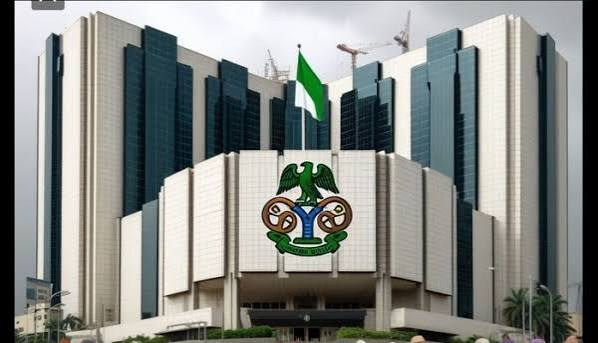
Credit to Nigeria’s private sector rose to N83.26 trillion in June 2026 from N81.04 trillion in May, signifying a positive balance of N2.22 trillion month-on-month.
Year-on-year, the figure represents a nine per cent increase compared with the N76.13 trillion recorded in June 2025. The latest figures come as the CBN continues to balance efforts to control inflation with the need to support economic growth and expand credit to businesses.
The CBN data shows that credit to Nigeria’s private sector increased by approximately 2.74 per cent month-on-month between May and June 2026. Also, the CBN data noted that credit to the government fell slightly to N40.03 trillion from N40.38 trillion. Other assets, net, dropped to N10.76 trillion from N12.63 trillion.
The credit surge signifies sustained growth in lending to businesses and other private-sector borrowers during the month. The rise in private sector credit was recorded alongside an increase in net domestic credit, despite declines in credit to government and other assets.
Further analysis of the report says that compared with June 2025, private sector credit rose by about N7.13 trillion yea-on-year but net domestic credit increased by approximately N1.87 trillion during the month.
The CBN’s relatively tight monetary policy stance notwithstanding, more banks still loaded funds to the private sector within the period. The Monetary Policy Committee (MPC) of the Central Bank of Nigeria (CBN) held its 306th meeting on July 20 and 21.
The Committee reviewed recent developments in the global and domestic economies, assessed emerging risks to the outlook and considered their implications for monetary policy and retained all rates.
The Committee decided to retain the Monetary Policy Rate at 26.5 per cent; the Standing Facilities Corridor around the MPR at +50/-450 basis points and retain the Cash Reserve Requirement (CRR) for Deposit Money Banks at 45.00 per cent, Merchant Banks at 16.00 per cent, and non-TSA public sector deposits at 75.00 per cent.
The MPC decision means that credit extension in the private sector will likely continue to rise because of rising confidence in the sector and calls by stakeholders for banks to invest in the private scetor instead of government securities.


-
 Politics3 days ago
Buhari Administration Originated Fake PFIPC, Budget Office Tells Reps
-

 Rivers3 days ago
NBA Set To Inaugurate New National Executive In PH
-

 Politics3 days ago
CHRISTIAN FORUM PASSES CONFIDENCE VOTE ON TINUBU, WIKE, OTHERS
-

 Business3 days ago
$50m Steel Pipe Facility: NCDMB Lauds Brentex, Assures Industry Patronage
-

 Politics3 days ago
Speak For Yourself, Otti Tells Uzodimma Over Tinubu’s Reelection Bid
-

 Politics3 days ago
Votes Will Count In 2027, INEC Assures Nigerians
-

 Politics3 days ago
Tinubu Felicitates Umahi @63, Says Works Minister Outstanding
-

 Editorial3 days ago
Improving Surveillance in Rivers’ Boundary Communities