
Editorial
Militants’ Demands And Peace In N’Delta

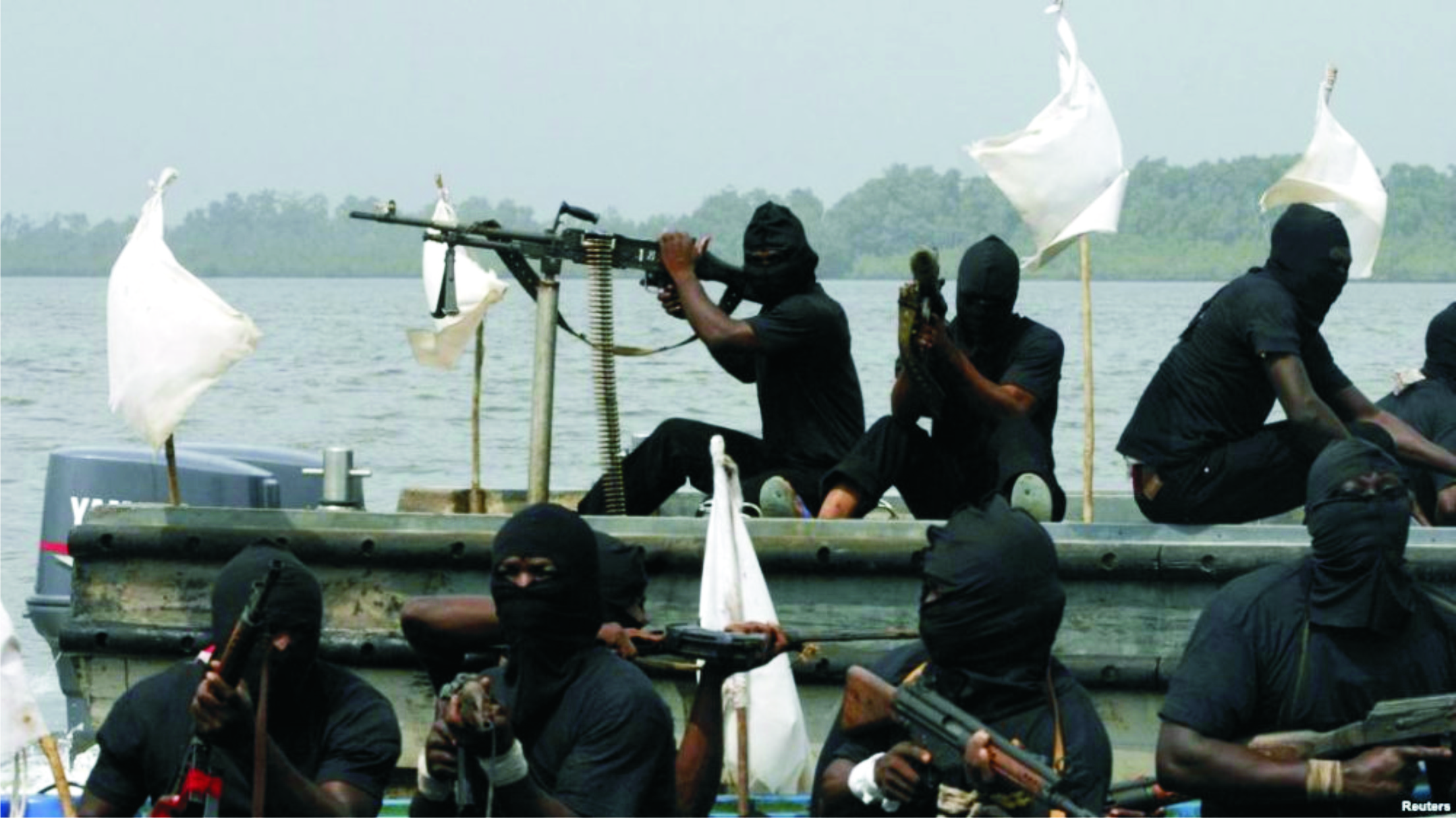
Barring any positive state interventions and responses, the fragile peace and stability hitherto enjoyed in the Niger Delta region may soon be endangered severely. A worrisome situation indeed requiring urgent actions in the upcoming days.
The fresh anxieties supersede warnings by militant groups from the nine states of the Niger Delta, vowing to resume hostilities. The latest threats may have aimed at showing solidarity with the #EndSARS protests, as the militants presented an 11-point demand to the Federal Government.
Self-styled “Major-General” Johnmark Ezonebi, leader of the Reformed Niger Delta Avengers (RNDA), unequivocally stated that the coalition had communicated multinational oil companies to evacuate their staff to forestall human casualties.
The Avengers are demanding the release of the N98 billion gas flare penalty funds to the host communities; total control of resources in the region; linking of riverine areas in the Niger Delta to the cities with roads and bridges; withholding the release of 2021 NDDC budget till the inauguration of a substantive board.
Others are immediate take-off and re-opening of the Burutu Seaport and its inclusion in the 2021 budget; review of the Revenue Allocation Act to give a proper interpretation of the 13 per cent derivation funds; allocation of pipeline security surveillance job and release of the 10 licences for modular refineries in the Niger Delta.
The Federal Government should know all too well that it has been unsuccessful in handling conflicts in the region following the wrong approach. Thus, we may be in for an interminable recurrence of violent threats in the region. In 2018, the Niger Delta Avengers (NDV), had issued a remarkably similar threat in reaction to the killings by herdsmen across the country.
Though we deeply deplore the use of violence to redress any problems, we strongly advise the government to honour the 2016 peace pact with the militants. Truly, the RNDA has enough reasons to be disenchanted with the antics of the Muhammadu Buhari’s administration. These are dangerous times; so, unnecessary confrontations with militants need to be prevented to safeguard the ailing economy.
A replication of the last major attacks on oil facilities by militants which resulted in a total shutdown of oil terminals and took oil production to its lowest level in twenty years, must be circumvented. That incident dangerously positioned Nigeria far behind Angola as Africa’s largest oil producer. Both the economy and the budget suffered for it.
The government always pays lip-service to develop the region. The interventionist agencies, the Niger Delta Development Commission, (NDDC), and the Niger Delta Ministry, have all been reduced to mere bureaucracies, fraught with the most frustrating corruption. At no time has the government committed the enormous funds it deploys to the North East to the Niger Delta, the producer of the wealth.
Most of those demands are not strange. They have always been there awaiting attention. It is heartwarming that the federal authorities have begun a dialogue with the Avengers and stakeholders through the Deputy President of Senate, Senator Ovie Omo-Agege, who is expected to convey the complaints to President Buhari.
Since Omo-Agege has earned the confidence of the militants and kick-started the dialogue process on behalf of the Federal Government, the Presidency should stick to him and shun any other group likely to parade themselves as critical stakeholders in the region to hijack the discussions for selfish reasons.
Again, it is unfair to deny host communities huge gas flaring penalty funds currently stacked in the Central Bank. We demand an end to this injustice. Gas flaring must terminate or let compensations be paid. Also, the headquarters of the oil majors are yet to relocate despite the presidential directive about two years ago. This is certainly not the way to go.
On another level, the legitimate demand to restructure the country has become like a recurring decimal and needs to be addressed now to ensure stability and corporate survival. It beats the imagination why the President is so intransigent and has grown too fondly of his anti-restructuring stance.
We broadly endorse the call by RNDA for a review of the Revenue Allocation Act to give a proper interpretation of the 13 per cent derivation funds managed by governors of the region. Explanations are absolutely required from these governors why the monies are not utilised for their intended use; that is to develop the host communities.
Nigerians need a guarantee that hostilities would not return in the Niger Delta. It, therefore, seems appropriate to spare no efforts to redress the injustice often perpetrated by the Federal Government and its cronies. A restructured Nigeria with well-defined rules of engagement will serve all sections of the country better than what currently obtains.




Nigeria stands at a critical juncture as the world marked World Press Freedom Day (WPFD) on May 3. This annual observance is a reminder that a free press is central to democratic life, good governance, and public accountability. For Nigeria, it is also a moment for sober reflection on how far the country has come and how far it still has to go in safeguarding the independence of its media.
World Press Freedom Day exists to highlight the fundamental importance of freedom of expression and to honour journalists who risk their lives in pursuit of truth. It underscores the idea that without a free press, societies cannot function transparently, nor can citizens make informed decisions. In countries like Nigeria, where democracy continues to evolve, the observance carries particular urgency.
This year’s theme, “Shaping a Future at Peace: Promoting Press Freedom for Human Rights, Development and Security”, places journalism at the heart of global stability. It emphasises that a peaceful society cannot be built on silence, fear, or manipulated information. Rather, it depends on the free flow of accurate, timely, and independent reporting.
At its core, the theme highlights the role of journalism in fostering accountability, dialogue, and trust. These are not abstract ideals. In Nigeria, where public confidence in institutions is often fragile, the media remains one of the few platforms through which citizens can question authority and demand transparency. When press freedom declines, so too does public trust.
Journalism serves as a foundation for peace, security, and economic recovery. Countries with robust media systems tend to attract greater investment, maintain stronger institutions, and resolve conflicts more effectively. Nigeria’s economic challenges, ranging from inflation to unemployment, require open scrutiny and informed debate, both of which depend on a free press.
However, the issue of information integrity has become increasingly complex in the digital age. Artificial Intelligence (AI) and online platforms have amplified the spread of misinformation and disinformation. In Nigeria, where internet penetration has grown rapidly, false narratives can travel faster than verified facts. This makes the role of credible journalism more vital than ever.
The challenge is not only technological but also ethical. AI-driven manipulation of information threatens to distort public discourse, influence elections, and deepen social divisions. In such an environment, professional journalism must act as a stabilising force, ensuring that truth prevails over sensationalism and propaganda.
Equally troubling is the safety of journalists. Across Nigeria, reporters face growing levels of online harassment, judicial intimidation, and physical threats. Self-censorship is becoming more common, as media practitioners weigh the risks of reporting sensitive issues. This trend undermines the very essence of journalism.
A particularly alarming incident involved a serving minister in the present administration, who openly threatened to shoot a journalist during a televised exchange. Such conduct, broadcast to the public, sends a dangerous signal that hostility towards the press is acceptable. It erodes the norms of democratic engagement and places journalists in harm’s way.
This year’s theme aligns closely with the United Nations Sustainable Development Goal (SDG)16, which promotes peace, justice, and strong institutions. Freedom of expression is a cornerstone of this goal. Without it, institutions weaken, corruption thrives, and justice becomes elusive. Nigeria’s commitment to SDG 16 must therefore include genuine protection for the media.
Historically, the Nigerian press has been a formidable force. From resisting colonial rule to challenging military dictatorships, our journalists have played a central role in shaping the nation’s political landscape. Today, however, that legacy appears to be under strain, as the media operates under what can best be described as a veneer of freedom.
Beneath this facade lies a troubling reality. Journalists are routinely harassed, detained, and prosecuted for performing their constitutional duties. Reports from media watchdogs indicate that dozens of Nigerian journalists face legal threats or arrest each year, often for exposing corruption or criticising those in power.
The Cybercrimes (Prohibition, Prevention, etc.) Act of 2015 has become a focal point of concern. Originally intended to combat cyber threats, it has increasingly been used to silence dissent. Sections 24 and 27(1)(b), in particular, have been invoked to target journalists, bloggers, and social commentators.
Although amendments introduced in February 2024 were meant to safeguard journalists, concerns persist. The law continues to be wielded in ways that stifle investigative reporting and restrict freedom of expression. Legal reforms must go beyond cosmetic changes to address the root causes of misuse.
To safeguard the future of journalism in Nigeria, decisive action is required. The Cybercrimes Act must be revisited to ensure it cannot be weaponised against the press. Law enforcement agencies must operate free from political influence, upholding the rule of law and protecting journalists’ rights. Civil society and international partners must also strengthen independent media through funding, training, and platforms for wider reach.
In this rapidly evolving world shaped by artificial intelligence and digital innovation, Nigeria faces a clear choice. It can either allow press freedom to erode under pressure, or it can champion a truly independent media landscape. The path it chooses will determine not only the future of journalism, but also the strength of its democracy and the peace it seeks to build.
-
 Editorial1 day ago
Enough Of Xenophobic Attacks On Nigerians
-

 Nation1 day ago
RSU, Otonti Nduka Foundation Hold Centenary Conference, Unveil Book on Values in Nigeria
-

 Oil & Energy1 day ago
Rivers PETROAN Elects 12-Member Executive
-

 Environment1 day ago
MOSOP – Tinubu Not Sincere With Ogoni People For Oil Resumption
-
Politics1 day ago
APC Group Protests Ex–Presidential Aspirant’s Disqualification From Rivers Senatorial Race
-

 News1 day ago
Fubara, Wife Hail Tinubu’s Renewed Hope Initiative …As Over 6,800 Families Benefit From Largesse In Rivers
-
Politics1 day ago
Reps Speaker Secures APC Return Ticket For Fifth Term
-

 Maritime1 day ago
Products, Others, To Arrive Lagos Ports Today — MPA