Connect with us

Niger Delta

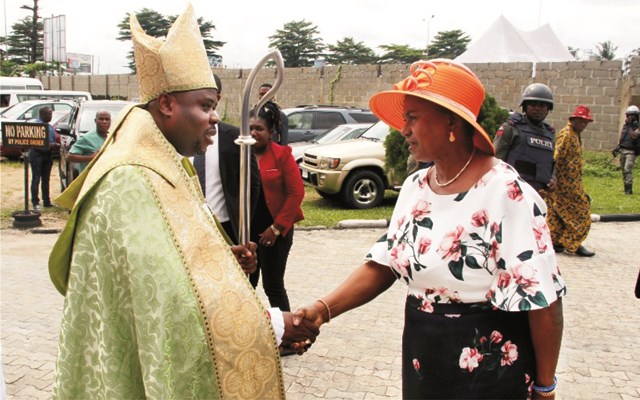
Cleric Tasks Stakeholders On Drug Abuse

Published

on

In concert with the realities now facing the nation, the Presiding Bishop of the Calabar-based Christian Central Chapel Int’l (CCCI), Bishop Emmah Isong, has charged the Federal Government and all stakeholders to holistically fight the menace of drugs abuse, saying it was the underlying cause of crimes and all forms of criminalities in the country.
The Clergy, who said it was difficult to fight and win the war against crime without first attacking drug abuse, made the remarks in Calabar, during the 7th Emmah Isong Annual Public Lecture, which had the theme, ‘Curbing Drug Abuse: A Major Panacea to Reducing Crime in Nigeria.’
He said the level of destruction witnessed during the hijacked End-SARS protest could not have been possible without impulsive effects of drugs, insisting that it would be practically impossible to win the war against crimes if governments at all levels and the society in general did not fight drug abuse first.
“We need to fight illicit use of drugs before going ahead to fighting crimes. We all saw the level of destruction that happened in Cross River and other places when the #EndSARS protest was hijacked by hoodlums. This couldn’t have been possible without the use of drugs.
“We have enough laws already on ground to arrest the menace of drug abuse; in fact, in the next 300 years we should not make another law on it, all we need is implementation of the existing laws and recommendations. Our problem is the lack of political will by leaders and the led; we all need to come together and change the narrative by stopping the definition of government as a particular person but seeing it as you and I,” he stated.
Bishop Isong disclosed that the annual public lecture was his platform to answer many unanswered societal questions, and insisted that it was foolhardy to pretend that substance abuse, which he said led to multiplication of cult groups, kidnapping, armed robbery and all manner of criminalities, was not a huge challenge in the society.
The guest lecturer, Mr . Rekpene Bassey, who spoke extensively on the subject matter, said people abused drugs for various bio-psychosocial reasons, lamenting that drug abuse was increasing by the day.
Bassey who was a one-time Cross River State Security Adviser, said “A survey carried out in 2017 by the National Bureau of Statistics (NBS), Federal Ministry of Health and United Nations Office on Drug and Crimes (UNODC) disclosed that 14.4 percent of persons between the ages of 15 and 64 were involved in the use of dangerous drugs.
“It further revealed that while 66 per cent of children on the streets are on drugs, 88 per cent of these children are actively involved in crime. In the next 25 years, if nothing is done, over 100 million Nigerians will be involved in drug abuse.
“Other factors that give vent to crime include huge unemployment, proliferations of small arms and light weapons, endemic corruption, staggering poverty, poor policing, lack of political will to fight crime and poor criminal intelligence.”
To reduce drug abuse, Bassey recommended sustained campaigns on drug demand reduction (DDR) and drug supply reduction (DSR), as well as introduction of drug abuse awareness programmes in Nigeria’s educational curriculum.
He further advised parents and guardians to monitor their children and wards closely so as to be able to detect their use of drugs on time.


By: Friday Nwagbara, Calabar

Continue Reading

Niger Delta

850-bed UCTH overstretched, services 5m patients – CMD

Published

on

The Chief Medical Director (CMD) of the University of Calabar Teaching Hospital (UCTH), Prof. Ikpeme Ikpeme, has said the 850-bed hospital is overstretched, as it currently serves over five million patients.
He disclosed this on Friday during a media tour of the facility to showcase ongoing renovations and facelift in the hospital.
The CMD noted that, aside being the only tertiary healthcare facility servicing the state, UCTH also serviced neighbouring states of Akwa Ibom and Ebonyi.
He said the hospital also received referrals from neighbouring countries, including Cameroon, Equatorial Guinea and Central African Republic.
According to him, the 850-bed hospital faced persistent space constraints because of increasing patients inflow and expanding healthcare demands.
“This hospital currently operates 62 clinical and non-clinical departments as well as  between 30 and 38 wards covering medical, surgical, paediatric, orthopaedic and specialised services.
“Most wards have undergone facelift, remodelling, or complete renovation to improve patient care and working conditions for healthcare professionals”, he said.
He disclosed that the hospital was constructing a new 106-bed emergency medicine facility to address the rising demand for healthcare services.
According to him, the facility will include trauma bays, intensive care units, neonatal wards, and three fully equipped trauma theatres.
Speaking on the remodeled wards, Ikpeme explained that they followed modern nursing principles, allowing one nurse to attend to a maximum of 10 patients.
He said relatives would be restricted to designated waiting areas to reduce interference with medical procedures and improve emergency response efficiency.
The CMD noted that the hospital had strengthened specialist services in orthopaedics, neurosurgery, obstetrics, radiology, and minimally invasive surgery.
“UCTH now performs hip and knee replacements, arthroscopy, sports medicine, and complex brain tumour surgeries.
“Our surgeons also conduct keyhole procedures for appendectomy, hysterectomy and other conditions with faster patient recovery periods,” he said
In power, the CMD said the hospital relied on solar power from a seven-megawatt plant, constructed by the Federal Government at the University of Calabar, as well as public power supply, and generators to sustain its operations.
He appealed to governments, organisations, and philanthropists to support infrastructure expansion, equipment procurement, and specialised healthcare projects.
The CMD said the hospital required additional incubators, ward expansions, and a stand-alone amenity facility for private healthcare services.
He used the opportunity to dismiss allegations of ethnic discrimination, insisting that the hospital does not reject workers or patients based on tribe or origin.
According to him, the institution recently honoured an Igbo pioneer physician by naming a ward after him in recognition of decades of service.
The CMD said the hospital maintained strict disciplinary procedures to address negligence, poor attitude, and unethical conduct among staff.
The Tide’s source reports that some of the units visited include, intensive care unit, Department of Radiology, Urology Clinic, and Opthalmology Clinic.
Continue Reading

Niger Delta

Police Burst Child Trafficking Syndicate In A’Ibom … Nab 3 Suspects

Published

on

The Police Command in Akwa Ibom State says it has busted a child trafficking syndicate and arrested three suspects for conspiracy and unlawful sale of a newborn baby in the State.
The State’s Police Public Relations Officer (PPRO), DSP Timfom John, who disclosed this in a statement in Uyo on Friday, said the three female suspects were arrested on Wednesday at about 1900hrs.
She said a complainant reported that his wife gave birth to a baby boy on May 7 and shockingly, shortly after delivery sold the newborn child to one of the suspects for N145, 000.
“Upon receipt of the report, operatives immediately swung into action, leading to the arrest of the suspects and the successful recovery of the baby boy.
“The suspects reportedly confessed to the crime during interrogation, while investigation has been expanded to identify and apprehend all individuals connected to the trafficking syndicate”, John said.
She said the State’s Commissioner of Police, Baba Azare, reiterated the Command’s commitment to sustaining aggressive intelligence-led policing in the state.
Continue Reading

Niger Delta

A’Ibom Launches Operation Crack Down Scrap Dealers 

Published

on

The Akwa-Ibom State Government has launched a statewide crackdown on unregistered scrap dealers and scavengers, shutting down illegal operations and arresting operators accused of violating environmental and public safety regulations.
The enforcement operation, led by the Akwa Ibom State Environmental Protection and Waste Management Agency (AKSEPWMA), followed the implementation of the state’s Waste Metal Scrap Law 2026, officials said.
AKSEPWMA Chairman, Obong Prince Ikim, said the exercise was aimed at regulating the scrap sector, protect the environment, and prevent criminal groups from operating under the guise of waste collection and metal trading.
“If you want to do scrap business, you must register,” Mr. Ikim said during the operation in Uyo, the state capital.
“Many people now hide under scrap trading to perpetrate nefarious activities”, he said.
According to him, dump site operators and scrap dealers who failed to register with the government risked closure and prosecution.
Authorities accused some operators of involvement in vandalism of public infrastructure and indiscriminate waste disposal, adding that investigations had uncovered criminal activities linked to several dump sites across the state.
“Some people vandalise government facilities in the name of scrap business and encourage indiscriminate dumping of refuse,” Mr. Ikim said.
He added that the state government and security agencies would continue efforts to enforce compliance and maintain public order.
“The Commissioner of Police has zero tolerance for criminality, and the Governor wants Akwa Ibom people to sleep with their eyes closed. We will fish out every defaulter”, he said.
Police officials involved in the operation said investigations showed that some criminal suspects used scrap yards and refuse dump sites as cover for illegal activities.
CSP Okwuzulike Vincent of the Itam Police Station said some suspects pretended to be mentally unstable while hiding ammunition and other suspicious items in makeshift shelters around dump locations.
The police officer praised the environmental agency for what he described as proactive efforts to sanitise the sector and pledged continued cooperation between law enforcement and the agency.
Officials said some first-time offenders arrested during the operation were released after profiling and signing undertakings, while repeat offenders would face prosecution.
Continue Reading

Trending