
Politics
Reps Move To Protect Child Rights

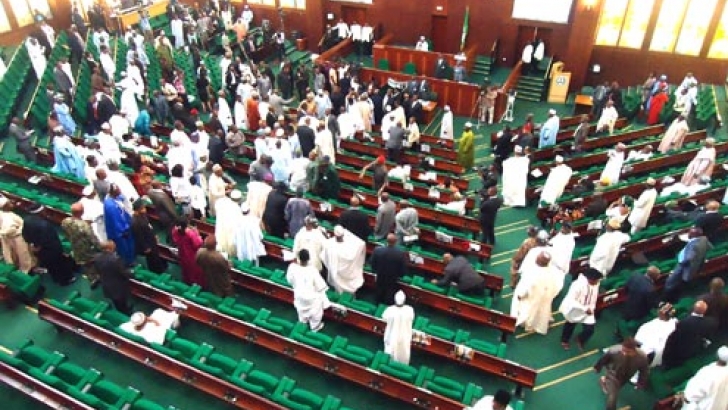
The House of Representatives has begun the process of eradicating child destitution and child rights violations in the country with a public hearing to harvest stakeholders’ contributions for the process.
The event, which held in Abuja yesterday was carried out by the House Committee on Poverty Alleviation.
The hearing was on the motion, “Need to Eradicate Child Destitution and Remove Beggars from Nigerian Streets through Provision of Standardised Education System and Improved Livelihood”.
Declaring the event open, the Speaker of the House, Rep. Femi Gbajabiamila, recalled that in 2003, the Child Rights Act was assented to by President Olusegun Obasanjo.
The Speaker, however, said that unfortunately, 17 years later some 11 states had yet to enact the law to protect children in the states.
According to him, the Child Rights Act is the basis upon which the Nigerian child ought to be protected and its implementation meant a lot to the future of the Nigerian state.
Gbajabiamila said that in addition to the Child Rights Act, the Universal Basic Education Act was also to make provision for compulsory, free universal basic education for all children of primary and junior secondary school age in the country.
The lawmaker said that the Act further sought to provide punishment for parents who failed to comply with its provisions.
“It is for the reason of ensuring improved welfare and acting in the best interest of the Nigerian child that this motion was considered by the House in plenary.
“And, thereafter, the motion was referred to the Standing Committee on Poverty Alleviation for today’s public hearing.
“This hearing, therefore, seeks to obtain and aggregate submissions from various stakeholders to assist the Legislature foster ways of protecting the rights of the child to education, basic needs and overall access to all they need to have a good life.
“The notion, canvassed by the Universal Basic Education Commission (UBEC) that about 13.2 million Nigerian children are out of school, is no doubt worrisome.
“It presents a clear picture of the 21st and 22nd Century Nigeria where a large part of the population or labour force may not be employable,” he said.
Gbajabiamila added that he was positive that the discussions that would ensue would be rich and contribute immensely in assisting the Legislature to intervene adequately.
He enjoined all the participants to consider the issue of child destitution as one that required urgent steps.
According to the Speaker, it is like a keg of gun powder waiting to explode; it requires urgent steps to tackle the obvious menace.
“At the end of the day, it is expected that we shall all come to consensus as to where we need to take further actions that will see us embracing those decisions that are in the
best interests of the child,” the speaker said.
The Chairman of the committee, Rep. Abdulahi Salem (APC- Sokoto), said that the public hearing was organised to further consider the plight of the street child.
He said that the hearing was organised in fulfilment of the legislative procedure that was required to assist in taking far-reaching and adequate resolutions on the issue of child destitution and street begging.
According to Salem, there is no gainsaying the fact that the twin issues of child destitution and street begging are those that have come to stare us right in the face today.
“This means that the quicker we find solutions to these problems, the better for our society.
“The fact that in addition to the legislative interventions taken to address these issues, this motion is coming at a time when it has become imperative to enforce all statutory provisions concerning the protection of the Nigerian child, including poverty reduction strategies.
“l thank the mover of the motion and pledge on behalf of my colleagues to restate our commitment toward poverty alleviation in the country,” he said.
Mr Salam Abdulrazak, Director, Community Development Sources and Special Projects, National Youth Service Corps (NYSC), recommended Agro-training for the destitute.
He said that such training would go a long way to change the narrative and keep the destitute informed, while also providing education for them.
He said that the Federal and state governments could collaborate to provide land for the destitute to be engaged productively.
Abdulrazak noted that the NYSC was in a good position to implement such a programme as it was present in all local government areas with corps members to do the job.
Representatives of the National Bureau of Statistics, Federal Ministry of Agriculture and Rural Development, National Agency for Prohibition of Trafficking in Persons (NAPTIP), UBEC, and Alleviation Advocacy and Justice Institute participated.



The Independent National Electoral Commission (INEC) has extended the deadline for political parties to submit the list of candidates for the 2027 governorship and state Houses of Assembly elections from Saturday, August 8, to Tuesday, August 11, 2026.
The commission announced the extension in a statement issued on Saturday and signed by the National Commissioner and Chairman of its Information and Voter Education Committee, Mohammed Haruna.
According to INEC, the decision followed appeals by political parties for additional time to complete the submission process through the dedicated online portal.
“The submission window, which according to the revised Timetable and Schedule of Activities for the General Election was originally scheduled to close on Saturday, 8th August, 2026, has been extended to Tuesday, 11th August, 2026,” the commission said.
In a a related development, INEC announced the suspension of PVC collection in Osun State ahead of the August 15 governorship election.
The commission said voters who applied for replacement of lost, damaged or defaced Permanent Voter Cards would have until midnight on Sunday, August 9, to print downloadable copies of their cards.
The electoral body explained that the deadline was necessary to enable it compile data on downloaded PVCs and produce final statistics on the total number of cards collected ahead of the election.
INEC said PVC collection in Osun commenced at the Registration Area level from July 22 to 28, 2026, but was extended to July 31 following complaints about large crowds and difficulties experienced by voters at collection centres.
The exercise subsequently moved to the local government level and ran from August 1 to 7.
The commission also disclosed that replacement downloadable PVCs had been made available to voters in Odo-Otin and Ife Central Local Government Areas following the theft of cards during attacks on the two collection centres.
It stressed that the stolen cards could not be used to vote.
INEC reassured Osun residents of its preparedness for the August 15 governorship election.
“The commission reiterates that the stolen cards cannot be used to vote.
“INEC reassures the people of Osun State of its readiness to conduct a free, fair, credible and inclusive governorship election on 15th August, 2026,” the statement said.
The commission said the deadline, initially set for Saturday, 8 August, has been extended to Tuesday, 11 August 2026, following appeals from political parties for more time.
INEC also announced that the window for voters who applied to replace lost, damaged or defaced PVCs to download their replacement cards will close at midnight on Sunday, 9 August.
The move is to enable the commission compile final PVC collection figures ahead of the 15 August Osun governorship election.
INEC said replacement downloadable PVCs have also been provided to affected voters in Odo-Otin and Ife Central Local Government Areas after hoodlums carted away cards from two collection centres, stressing that the stolen cards cannot be used to vote.
The commission reaffirmed its readiness to conduct a free, fair, credible and inclusive election in Osun State.
Gov. Kefas made the remarks over the weekend at the Federal Medical Centre (FMC), Jalingo, during the flag-off of the second phase of the Renewed Hope Medical Outreach in Taraba State, organised as part of activities marking Prof. Yilwatda’s 58th birthday.
The governor commended Prof. Yilwatda for choosing to mark his birthday by providing medical care to people in need.
“What Professor Nentawe did is a powerful demonstration of what leadership should be,” Gov. Kefas said.
He assured that his administration would continue to support initiatives that complement government efforts to improve healthcare delivery and the wellbeing of residents.
Speaking at the event, Prof. Yilwatda called on Nigerian leaders to embrace the culture of giving and use their positions to touch the lives of the less privileged.
He said his decision to celebrate his 58th birthday in Taraba State was deliberate and informed by the needs of underserved communities, particularly people who face difficulties accessing healthcare because of distance and financial constraints.
According to him, the intervention followed a needs assessment and was extended across the three senatorial districts of the state.
He said the exercise commenced on August 3 at Takum General Hospital and covered the Federal University Teaching Hospital, Wukari; First Referral Hospital, Sunkani, Ardo-Kola Local Government Area; General Hospital, Bali; General Hospital, Gembu; and FMC Jalingo.
Prof. Yilwatda said the intervention provided medical services to thousands of beneficiaries, including people who required surgical procedures.
He said sustainable national development could only be achieved when strong institutions placed Nigerians at the centre of development.
“Leadership is about service,” he said, urging political and public leaders to make giving back to society an important part of their responsibilities.
He reaffirmed his commitment to serving Nigeria and its people, saying his personal vision was to make every day of his life useful to humanity.
“Every day that I live, the vision is: let it be useful to humanity,” he said.
The Taraba State Commissioner for Health, Dr. Bordiya Buma, commended the initiative, saying it was consistent with the Renewed Hope agenda and efforts to strengthen healthcare delivery in the state.
Dr Buma said the second phase followed the successful completion of the first phase, which was conducted simultaneously in six local government areas, with two LGAs selected from each of the three senatorial districts.
According to him, more than 10,000 patients were attended to during the first phase, including people with medical and surgical conditions.
He disclosed that 327 general surgeries, 71 eye surgeries and 575 dental procedures were carried out during the exercise.
The commissioner expressed appreciation to President Bola Tinubu for the Renewed Hope Medical Outreach and thanked Prof. Yilwatda for supporting the initiative and choosing Taraba State as a beneficiary.
The Minister of Health and Social Welfare, Prof. Muhammad Ali Pate, also commended Prof. Yilwatda for choosing Taraba State to mark his 58th birthday through a medical outreach.
Prof. Pate said making healthcare the centrepiece of the birthday celebration was significant because health affects everyone.
-

 News3 days ago
RSG Targets Nine Million Residents in Mosquito Net Distribution Campaign
-

 Oil & Energy2 days ago
Aiyedatiwa Signs New Electricity Bill
-

 Maritime2 days ago
Marine Minister Commends President Tinubu On NPERA Bill Assent
-

 Oil & Energy2 days ago
NLNG Commissions Research And Innovation Centre In RSU
-

 News3 days ago
KenPoly Holds Eight Convocations, August 29
-

 News3 days ago
RSG Begins Another Phase of Projects Commissioning Today
-

 News3 days ago
RMAFC Completes Revenue Sharing Review, Proposes New Pay
-

 Maritime2 days ago
NAGAFF Petitions IGP Over Alleged Maritime Police Harassment