
Politics
…As Kogi CP Gets No Confidence Vote

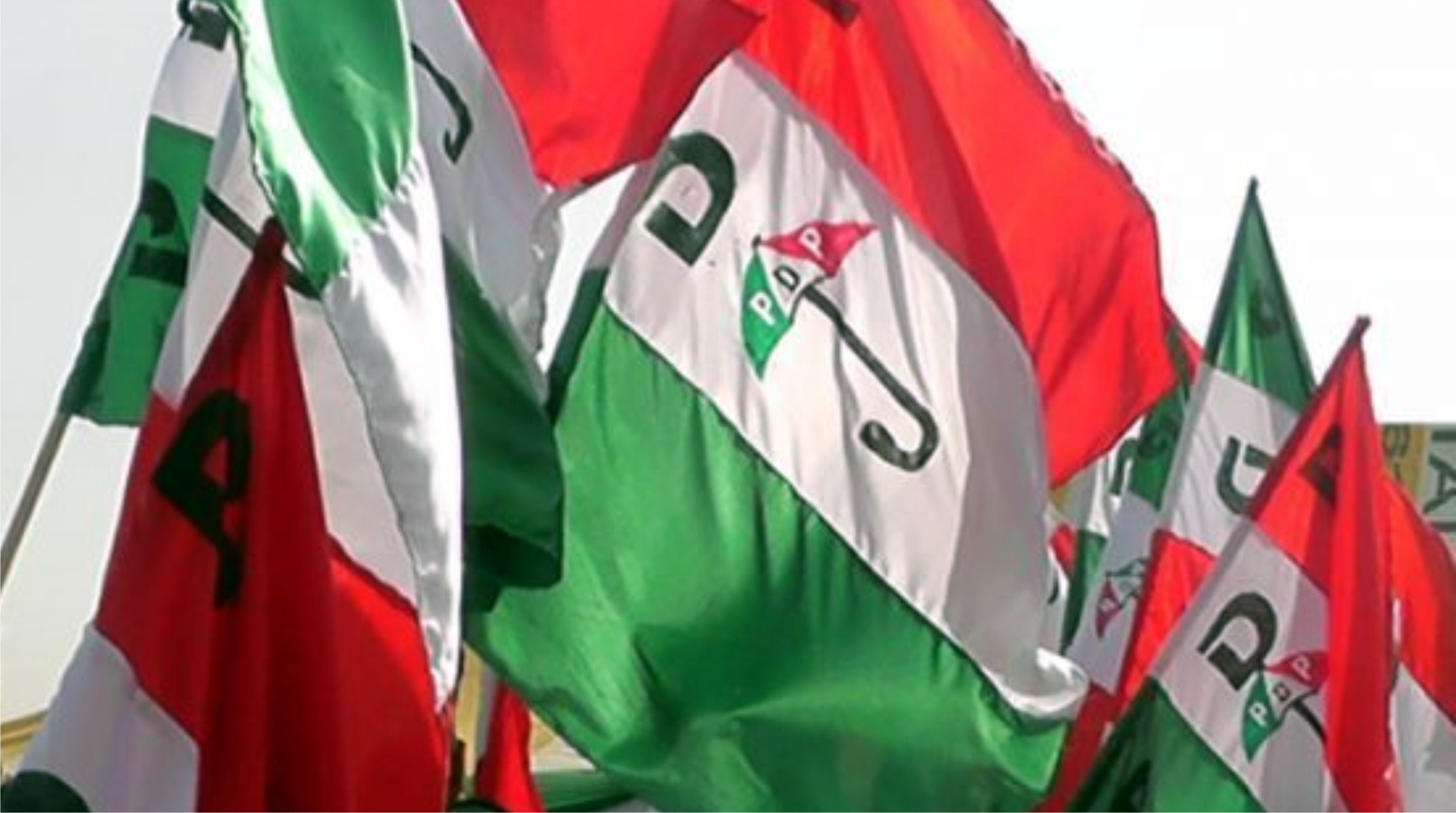
Peoples Democratic Party (PDP) Camapign Council in Kogi State has passed a vote of no confidence on the State Police Commissioner, Busari Hakeem and warned that with his presence, Kogi people should not expect rancour-free election by November 16.
Deputy Director, Public Communication of the Council, Austin Okai Usman in a statement said the police activities in the state have been reduced to taking instructions from the APC- led government in the state.
The council noted that with serious concern, the activities of the state police command under the current CP, has reduced the contest to a battle between the Police and PDP.
“ This is a clear indication that virtually all government officials in Kogi and top APC members and their thugs, were being protected and at the same time using the state police Commissioner’s men to chase, harass, intimidate and threaten to kill PDP members across the state”
The council said the police hierarchy under Busari Hakeem lacked the partial stance to supervise and monitor the election while urging the IG to urgently effect his removal without further delay to avoid breakdown of law and order in the state.
The PDP also expressed serious reservation on the continuous detention of DCP Ejeh Suleiman Abutu in SARS custody who was abducted by APC private army from his residence, taken to Dekina Governor’s lodge, tortured for confession under duress and later forced the police hierarchy to accept the records of the illegal activities of Bello/Onoja’s men.
PDP also appealed to the IG to without further delay remove the police Commissioner in the interest of fair play, security of lives and properties and to avoid reprisal attacks from any side of the political divide, particularly the PDP.
The council said it has also been informed of the plans by the state government to enlist and incorporate the army on special operation, into the unholy desire to retain power at all costs.
It also asked the Commandant, Army Records, Major General Adewale Ogunkale to closely monitor the activities of his men, so as to insulate them from the ongoing infiltration of security agents by the state government.
But when contacted for his reaction, the CP expressed sadness that in spite of all he was doing with his men to ensure a free and fair election, some people are still castigating him, stressing that why must it be the PDP alone in all the political parties that is always complaining.
His words: “ Honestly, PDP is not fair to me for accusing me wrongly; they asked for police security, we provided them, we have never treated any party above the other and if any of my men are caught conducting themselves in a way that is not professional, let them call my attention to it and we will deal with them.
“ I know this is the time of election and every party is using all means to get power. I Know a man was arrested with guns, they should allow the police to do their job; if he is not found wanting, he would be released, but let them not give a dog a bad name in order to hang it”.



The Commission, in a statement on Wednesday, claimed that there were plans by the same group to escalate a smear campaign against its Chairman, Ola Olukoyede, to frustrate ongoing investigations and prosecutions involving prominent individuals.
The statement endorsed by the agency’s spokesman, Mr Dele Oyewale, claimed that the action was intended to distract the Commission through unfounded allegations of political bias in the discharge of its duties.
The EFCC warned that it would not stand by and watch “those recruited into this ignoble enterprise” or allow any attempt to derail it from “the patriotic task of improving public accountability in Nigeria.”
The Commission made it clear that those recruited into this venture were under close watch, adding that it would not tolerate any attempt to distract it from the patriotic task of improving public accountability in Nigeria.
“The EFCC reiterates its non-political stance in all its activities. Facts on the ground clearly show that any political actor belonging to the ruling party or opposition party, with corruption baggage, has no hiding place from the operational radar and dynamics of the Commission.
“As a matter of fact, several strong members of the ruling and opposition parties are either facing trial before the courts or being investigated by the Commission.
“It is needful that Nigerians appreciate the fact that the Commission is keeping faith with its Establishment Act in all its operations.
“Therefore, the Commission reiterates its commitment to justice, without fear or favour, in the fulfilment of its mandate,” the statement pointed out.
Senator Yusuf Datti Baba-Ahmed has dismissed speculation about a possible defection from the Labour Party (LP), declaring that he will not follow his former principal, Mr Peter Obi, to any new political platform ahead of the 2027 general election.
Speaking in Abuja on Wednesday, Senator Baba-Ahmed said his political allegiance remains firmly with the LP, the platform on which he emerged as vice-presidential candidate in the 2023 election. He stressed that his future political aspirations are anchored on party loyalty and personal conviction, not shifting alliances.
The former senator representing Kaduna North stated that although he shared a joint ticket with Mr Obi in the last presidential race, he has no intention of joining him following Mr Obi’s recent alignment with the African Democratic Congress (ADC), a party now being positioned by an opposition coalition to challenge the ruling All Progressives Congress (APC).
Addressing journalists at the LP national headquarters, Senator Baba-Ahmed made it clear that he would not take the same political path, insisting that his decision was informed by long-term goals and a clear sense of purpose.
He expressed scepticism about the ADC-led coalition, describing its promoters as “disgruntled politicians” and arguing that the platform does not offer the kind of political vision Nigeria urgently requires.
Senator Baba-Ahmed also reaffirmed his commitment to national service, noting that he remained willing to contribute meaningfully to efforts aimed at fixing the country and would make himself available for service as the 2027 elections approach.
While acknowledging his past partnership with Mr Obi, he emphasised that political choices must be guided by principles rather than personal relationships.
According to him, his priority is to strengthen the LP and position it as a credible and enduring alternative for Nigerians.
It would be recalled that Mr Obi recently exited the LP and embraced the ADC as part of a broader opposition coalition seeking to unseat the APC in the next general election.
The Bayelsa State chapter of the All Progressives Congress (APC) under the leadership of the State Governor, Senator Douye Diri, has endorsed President Bola Tinubu for the 2027 presidential election.
The endorsement was made on during a special stakeholders meeting of the party convened by Governor Diri in Yenagoa, the State capital.
Senator Konbowei Benson, incumbent Senator representing the Bayelsa Central, moved the endorsement motion, and was seconded by a former Speaker of the House of Assembly and one time deputy governor, Peremobowei Ebebi.
The Tide reports that Chairman of the new caretaker committee of the party, Dr Dennis Otiotio, Senator representing Bayelsa East, Chief Benson Agadaga, and the Minister of State for Petroleum Resources (Oil), Senator Heineken Lokpobiri, attended the endorsement meeting.
Other attendees were, Managing Director, Niger Delta Development Commission (NDDC), Dr Samson Ogbuku, Managing Director, Niger Delta Basin Development Authority (NDBDA), Prince Ebitimi Amgbare, other stakeholders as well as the ex-officio member (South South) of the APC National Working Committee, Hon. Godbless Diriware.
The Tide also gathered that the meeting was the first expanded stakeholders gathering convened by the governor since becoming a member and leader of the party in the state in October 2025.
In his speech, Governor Diri expressed delight that the State’s APC was one big family which has resolved to work together to deliver President Tinubu for another term in office.
He underscored the need for the members to imbibe the spirit of forgiveness, humility and rise above politics of bitterness and divisive tendencies for the sake of peace, development and progress of the state.
The governor also urged the members to play by the rules and engage in politics of consultation, stating that those interested in political offices in the next election should shelve their ambitions for now.
“Here we are today in a very big family of the APC. Let me use this opportunity to appreciate the old members of the party for the reception accorded me and other Peoples Democratic Party members who crossed over. It was a welcome like no other.
“Political parties are vehicles for development. Let us truly be progressives. Whatever positions you want to contest for, whether governorship, House of Assembly or National Assembly, please put it on hold for now. Power comes from God. What should be uppermost is that we are all gathered here to make sure that President Tinubu returns for a second term”, he said.
In a brief remark, Senator Lokpobiri expressed joy to be part of the meeting and acknowledged that the Bayelsa APC now had one united and indivisible objective to wholly deliver the party for all elective offices in 2027.
Speaker of the State House of Assembly, Rt. Hon. Abraham Ingobere, former APC governorship candidate in the state, Mr David Lyon, and Prince Ebitimi Amgbare lauded the governor for his maturity, noting that his inclusive governance style would lead the party to achieve its objectives.
Also, the APC Caretaker Committee Chairman, commended Governor Diri for uniting all facets of the party’s political leadership in the state, which he noted had been fragmented for over a decade.
Dr Otiotio stated that the purpose of the meeting was to enjoin members and supporters to participate in the party’s electronic membership exercise in order to capture genuine voters.
Meanwhile the stakeholders observed a minute silence in honour of the former Bayelsa West Senatorial District representative in the 5th National Assembly, Senator John Brambaifa, who died on Saturday, January 3, 2026 in Abuja.
By Ariwera Ibibo-Howells, Yenagoa
-

 Politics1 day ago
EFCC Alleges Blackmail Plot By Opposition Politicians
-
Rivers1 day ago
Rivers Police Commissioner Condemns Vigilante Group Over Aluu Attack
-
Politics1 day ago
Datti Baba-Ahmed Reaffirms Loyalty To LP, Forecloses Joining ADC
-
Business1 day ago
Industrialism, Agriculture To End Food Imports, ex-AfDB Adviser Tells FG
-
Politics1 day ago
Bayelsa APC Endorses Tinubu For Second Term
-
Business1 day ago
Cashew Industry Can Generate $10bn Annually- Association
-

 Sports1 day ago
J And T Dynasty Set To Move Players To Europe
-
Business1 day ago
AFAN Unveils Plans To Boost Food Production In 2026