
Politics
Of Governance And Clamour For Unicameral NASS

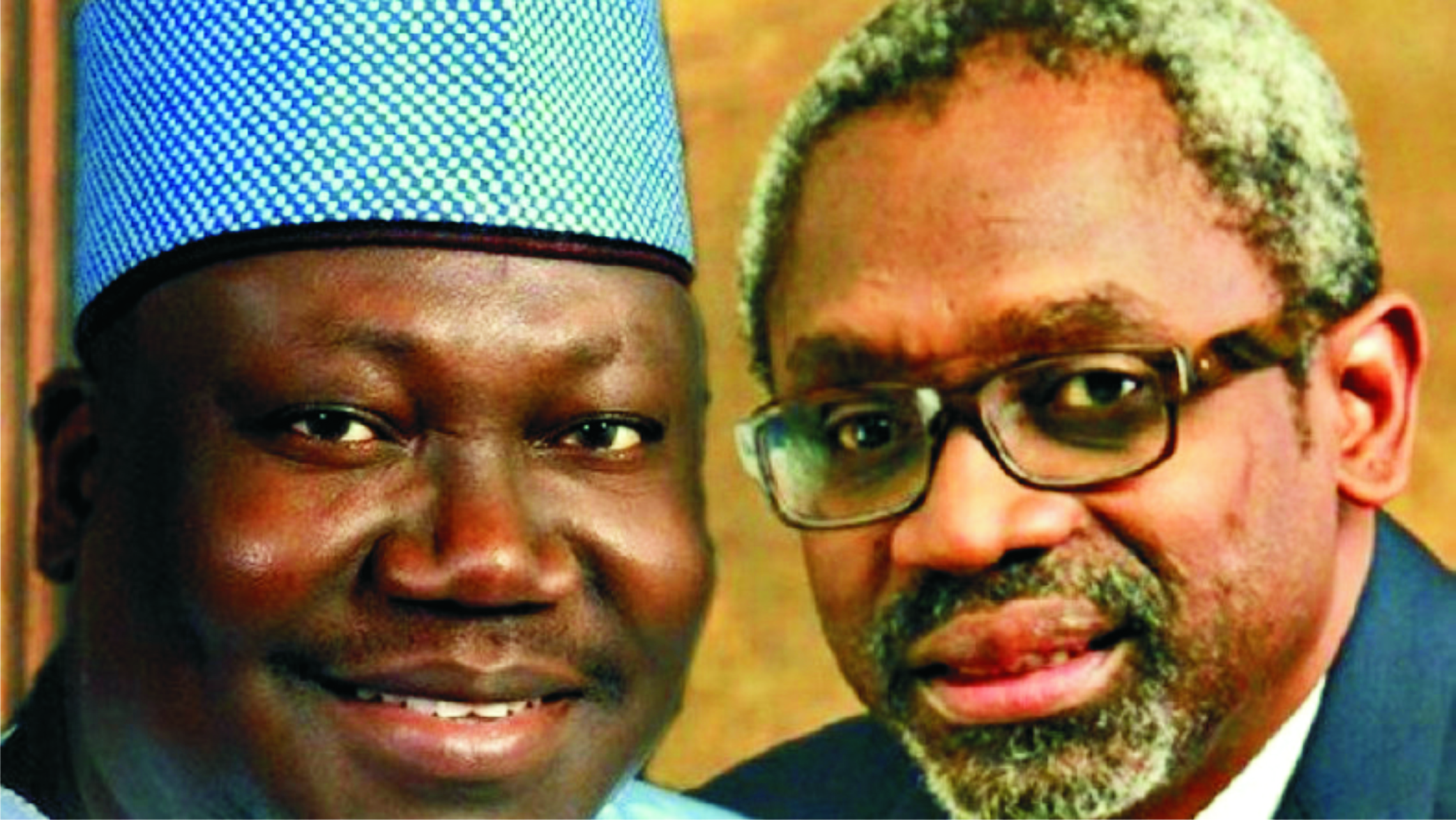
Although the heavy cost of maintaining Nigeria’s 469 federal lawmakers has always been a source of concern, “sitting politicians’’ have joined in the campaign for the reduction of the number of federal legislators.
In fact, one of the converts even suggested the scrapping of the Senate, as according to him, it is the House of Representatives that represents.
The converts: Gov. Kayode Fayemi of Ekiti; Sen. Rochas Okorocha, former governor of Imo and Chief Osita Chidoka, former Minister of Aviation, made their suggestions at different fora.
Chidoka who advocates for a unicameral legislature, made the suggestion after President Muhammadu Buhari presented the 2020 budget.
“In Nigeria, we need a unicameral legislature with six members each from the 36 states and two members from FCT.
“The legislature with 218 members will be less than 50 per cent of current members and term limit of three terms.
“The 2020 budget for the National Assembly (NASS) is N125bn, higher than the combined budget of Education N48 billion (excluding UBEC and TETFUND), Health N46 billion and Social Investment N30 billion.
“Reducing National Assembly members by half will provide over N60 billion annually for the social sector, that will be 600 billion over 10 years.”
Chidoka said the new National Assembly would be both efficient and economical.
He described the budget of N125 billion for the National Assembly as “hugely extravagant,” in an economy adjudged to have over 100 million poor people with gross infrastructure deficit.
The former Minister of Aviation said that funds saved from the contraction would be available for investment on policies and projects that would serve the common interest of the greater number of the population.
On his part, Fayemi advocated for the scrapping of the Senate in order to save cost and reduce financial burden on the government.
He also advocated for the adoption of Stephen Orosaye’s report which recommended the merging of federal government’s agencies that perform similar functions.
Fayemi said the type of legislative system that would be more productive for Nigeria in this current economic situation is a unicameral legislature.
“As it stands, the country’s legislative arm consisting of 109 Senate members and a 360-member House of Representatives, on yearly basis gulps millions of Naira.
“We do need to look at the size of government in Nigeria, and I am an advocate for a unicameral legislature.
“What we really need is the House of Representatives because that is what represents.
“You have three senators from little Ekiti and you have three senators from Lagos State, I guess the principle is not proportionality, but that if you are a state, you get it automatically.
“But I think that we can do away with that. There are several things that we can do away within the government,” he said.
Okorocha, the immediate past governor of Imo, now the Senator representing Imo West, on his part called for the reduction in the number of federal lawmakers representing a state.
He suggested that a Senator and three members of House of Representatives should represent each state.
“I want one senator and three House of Representatives members per state, which will cut expenses.
“A Senator and three House of Representatives members can do what many have been doing.’’
He said that the reduction in the number of representatives from the states would help cut cost and ensure effective representation.
While advocating for ways to cut cost and ensure effective representation, Okorocha said he would sponsor a bill that would seek for the reduction of the number of Senators and House of Representatives members for each state.
The Conference of Nigeria Political Parties (CNPP), has endorsed the suggestions for the reduction of the number of federal lawmakers.
The CNPP via a statement from its Secretary-General, Willy Ezugwu, said Okorocha spoke the truth concerning the need to reduce cost of running the National Assembly.
“The former governor simply told Nigerians the truth when he said what three Senators from a state can do; one lawmaker is capable of handling the same.
“Like Sen. Okorocha asked, what is too sacrosanct that Senators and House of Representatives members are doing that only a Senator per state can not do?’’
Also, two professors of political science at the University of Nigeria Nsukka (UNN), Jonah Onuoha and Aloysius Okolie, agreed with the advocates for unicameral legislature, which they reiterated would reduce the cost of governance.
Onuoha, who is the Head, Department of Political Science, said bicameral legislative system is not cost effective, especially in a country like Nigeria, where federal lawmakers receive bogus salaries and allowances.
“It takes huge amount of money to maintain bicameral legislative system, especially in a country like Nigeria where federal lawmakers receive bogus salaries and allowances monthly.
“Bicameral legislative system is not only costly but delays legislative processes of passing bill into law, since the bill will pass through the two chambers.’’
Onuoha, who is also the Director of American Studies in UNN, urged the country to adopt unicameral legislative system as it is cost effective.
“If the country settles for unicameral, the extra money it could have spent in paying salaries, allowances and maintaining the two chambers which runs into billions can be used to carry out capital projects,” he said.
He said if the country insisted on running bicameral legislative system, the number of lawmakers should be reduced.
Okolie in his contribution said that it was as result of bicameral legislative system that every year the budgetary allocation to the National Assembly had remained the highest.
“I subscribe to opinions in some quarters that the country should adopt unicameral legislative system as it will reduce the cost of running government as well as quicken legislative processes.
“The country is spending much to pay salaries, allowances and maintaining the two chambers — 109 Senators and 360-members of House of Representatives,’’ he said.
Okolie, former Chairman, Academic Staff Union of Universities, UNN branch, also said that as part of measures to reduce cost of running the government, the country should return to the regional structure.
“If we have one federal parliament and one regional parliament in each of the six geo-political zones, it will go a long way in cutting down cost of running the government,” Okolie said.
However, a legal practitioner, Mr Dele Igbinedion, said that people should not clamour for unicameral legislature just for cutting cost, adding that the issue is not whether or not a bicameral legislature is good or bad.
“I believe the bicameral system should remain because it has been proven to be sustainable and necessary. The process of law making is a very serious business which cannot start and end within a short time.
“The problem with the unicameral system which we have at the state level is that a bill can be introduced and passed the same day and sent to the governor for assent.
“This is not the case in the National Assembly; the two chambers must meet and possibly form a joint committee to look at the bill before sending it for presidential assent.
“The rigorous process a piece of legislation has to pass through forms part of the beauty of democracy.
“I think Nigerians should stop looking at the legislature each time there is a slight challenge and asking if we really need that arm of government.
“The judiciary often doesn’t respond to executive excesses, except there is a case it initiates, but in the legislature, a member can raise it as a matter of urgent public importance, national importance or ethics and privileges, and the attention of the parliament can be brought to it.’’
Apparently, Igbinedion was surmising that many state assemblies have become rubber stamps because the governors could easily “conquer’’ them, because it is only a single chamber.
Stakeholders say that unicameral and bicameral legislature have their advantages, but the country should settle for an option that cuts costs and wastages.
Ukoh writes for News Agency of Nigeria(NAN).
Obike Ukoh

Politics
Alleged Coup: Protests Rock N’Assembly As Detained Officers’ Children, Wives Demand Justice


Scores of children and wives of military officers detained over an alleged coup plot yesterday staged a peaceful protest at the National Assembly, demanding a speedy trial and the release of the accused officials.
The protesters who gathered at the entrance of the National Assembly complex, moved in a slow procession while clutching placards with inscriptions such as “Don’t Kill Our Daddies,” “Detention Without Trial is Injustice,” and “Six Months of Torture: Enough Is Enough.”
Amid tears and trembling voices, the children appealed for justice and access to their detained fathers, many of whom they said they had not seen for months.
The appeal was made during a press briefing in Abuja attended by no fewer than 20 wives and several children of the detained officers, including a two-month-old baby.
The families were accompanied by human rights lawyer, Deji Adeyanju and activist Omoyele Sowore.
At the briefing, the families lamented that the officers had been held for over 160 days without trial or contact with their relatives, describing the situation as a violation of their fundamental rights.
Speaking on behalf of the families, Memuna Bashiru said the prolonged detention had thrown their households into uncertainty and emotional distress, noting that while allegations had been widely publicised, families remained in the dark about the fate of their loved ones.
The arrest of the indicted officers was first announced on October 4, 2025, by the then Director of Defense Information, Brigadier General Tukur Gusau, who disclosed that 16 officers were taken into custody for alleged breaches of military regulations and acts of indiscipline.
However, an interim investigation later suggested the existence of a clandestine network of officers, allegedly coordinated by a senior Army officer, which had begun preliminary planning for a coup.
According to the report, the alleged plot involved surveillance of key national assets, including the Presidential Villa, Armed Forces Complex, Niger Barracks in Abuja, and major international airports, with October 25, 2025, cited as the planned date for the operation.
Those reportedly in custody include Brig Gen M. A. Sadiq, Col M. A. Maaji, Lt Col S. Bappah, Lt Col A. A. Hayatu, Lt Col P. Dangnap, Lt Col M. Almakura, Maj A. J. Ibrahim, Maj M. M. Jiddah, Maj M. A. Usman, Maj D. Yusuf, Capt I. Bello, Capt A. A. Yusuf, Lt S. S. Felix, Lt Cdr D. B. Abdullahi, Sqn Ldr S. B. Adamu and Maj I. Dauda.
The alleged plot, according to findings, targeted senior government officials, including President Tinubu and Vice President Kashim Shettima.

In a statement issued yesterday, the party’s National Publicity Secretary, Mr Felix Morka, said the exercise would take place in all wards and designated centres nationwide.
He called on existing members to update their records, while encouraging new entrants to join the party through the digital platform.
“As the electronic membership registration exercise resumes in all wards and designated locations nationwide, we urge existing members to validate their membership while new members are encouraged to register and join the progressive family,” Mr Morka said.
According to him, eligibility for registration is limited to individuals aged 18 and above who possess a valid National Identification Number (NIN).
The party said the initiative is part of efforts to modernise its operations by transitioning to a digital database that would enhance record accuracy and accessibility.
Mr Morka noted that the e-registration would “digitise the party’s membership register, ensure the integrity of records, and enhance efficient access to membership data for planning and management decisions.”
He added that the move is also aimed at promoting internal democracy within the party and strengthening its commitment to democratic innovation.
The APC had previously introduced electronic registration as part of broader reforms to streamline its membership system and improve organisational efficiency.
-
 Editorial14 hours ago
Domesticate FG’s Exit Benefit Scheme
-

 News15 hours ago
DHQ Confirms Deaths Of Terrorists, Soldiers In Borno Attack
-

 News11 hours ago
RSU Unveils Five-Year Strategic Dev Plan …Calls For Collective Commitment To Institutional Excellence
-
Rivers14 hours ago
Dep Gov Seeks Collaboration, Transparency Between RIVCHPP, PHCMB
-
Nation11 hours ago
Rumuji Youth Leader Condemns Protest, Disowns Alleged Government Empowerment Claim
-
 Featured13 hours ago
FG Reaffirms Nigeria’s Stability As US Embassy Suspends Visa Appointments In Abuja Office
-
Business15 hours ago
NPF Disburses ?21.68m To Fallen Heros’ Families …Reinforce Welfare Commitment
-

 Nation11 hours ago
Haniel Jack Foundation Awards Five Rivers Indigenes Scholarship