Connect with us

Business

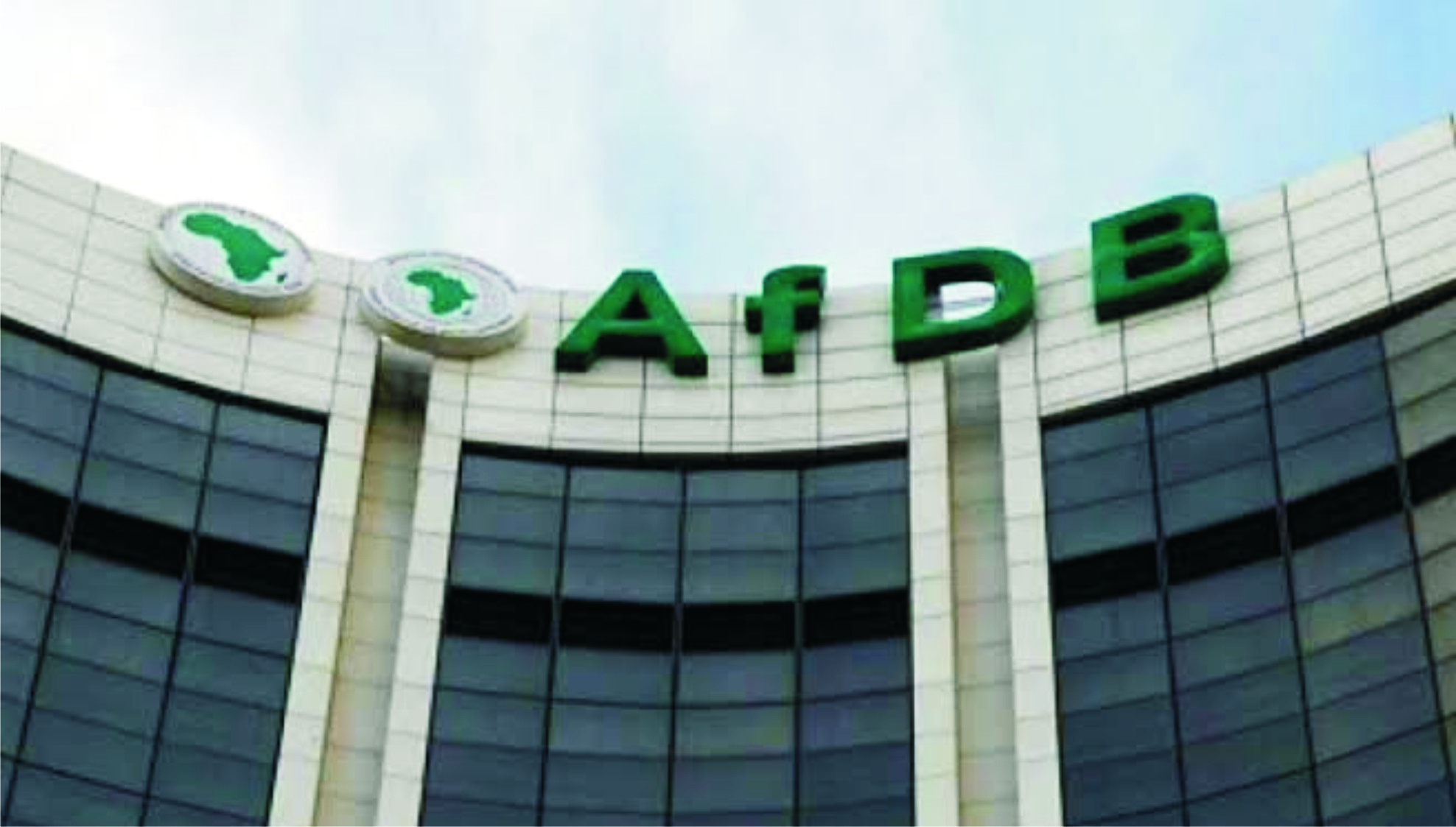
AfDB Tasks Nigeria, Others On Job Creation

Published

on

The African Development Bank (AfDB), has urged Nigeria and other African countries to make conscious efforts at job creation to absorb the increasingly growing labour market on the continent.
Senior Director, Nigeria Country Department, AfDB, Mr Ebrima Faal said this last Monday in Abuja at the launch of the bank’s report on “Creating Decent Jobs: Strategies, Policies, and Instruments’’.
Faal said that the current job crisis confronting the country and the continent as a whole had the potential to exacerbate its current economic, political and social problems.
According to him, Africa’s megatrends are compelling in many ways; but particularly in terms of Nigeria’s rapidly growing population, projected to reach 2.5 billion by 2050.
“While this can be a major asset constituting the source of workforce for economic and social development by creating decent jobs and empowering economic activities, it also has the potential to exacerbate the current economic, political and social problems,” he said.
The AfDB official emphasised that the unemployment crisis could render the population vulnerable to illegal activities and fuel migration within and from Africa.
Faal said: “the growth in the African labour force is the fastest globally, but successive years of robust macro-economic policies have not created the jobs required to absorb the increasingly growing labour market entrants or led to sufficient poverty reduction.
“The observed structural changes do not seem to be growth enhancing and lack an employment generation capability.”
He said that quality jobs were low as more people were drawn into the informal, predominantly family operated businesses.
“We see that about 82 per cent of African workers are in working poverty, compared to the world average of 39 per cent.
“What is worse, the youths who constitute majority of the population in all countries are carrying most of the burden of the labour market crisis,’’ Faal said.
According to him, the situation for Nigeria is much more frightening.
“The world population review estimates that Nigeria’s population is expected to double from about 200 million today to 401.3 million people by 2050.
“Youth population in Nigeria has tripled over the past 40 years and if not checked, it would exceed 130 million by 2063.
“And, this will need decent jobs to forestall a catastrophe beyond the magnitude we are currently experiencing,’’ he said.
Faal further quoted the National Bureau of Statistics, as saying that Nigeria has some of the highest unemployment rate of 23.1 and underemployment rate of 20.1 per cent in Africa.
“The figures are even more worrying for women with an unemployment rate of 26.6 per cent and 29. 7 for youths,” he said.
Faal therefore advocated bold political will and concerted sustainable policy efforts to facilitate Federal Government’s declaration that it would create 100 million jobs in Nigeria within 10 years.

Continue Reading

Business

Boat Mishap Kills Pastor, Wife And Church Members  In Brass Water

Published

on

A boat accident in Bayelsa state has killed a serving Pastor, Wife and other church members along Brass waterways
The sad incident happened at Odioama in Brass local government area of Bayelsa State when the Pastor, wife and  members of his church were in a programme.
?
?Tide confirmed that the lifeless body of the Pastor’s wife has been found and deposited in a mortuary while the remains of her husband ,the Pastor is yet  to be recovered
as search party are still ongoing.
Although the real cause of the boat Mishap is not yet known as at the time of this report,  our Correspondent gathered  that the identities of the Pastor, wife and church members were not disclosed to the public.
The mishap, Tide gathered occurred on Friday morning when the church members were on a boat transit
The Bayelsa State government and the state police command are yet to issue official statement’s  on the sad accident
By: CHINEDU WOSU
Continue Reading

Business

Rivers Workers Seek Scrapping Of Contributory Pension Scheme

Published

on

The Rivers State Council of  Nigeria Civil Service Union has called on the State Government to urgently scrap the contributory pension scheme, describing it as unfavourable to long-serving civil servants in the state.
Chairman of the union, Chukwuka Osuma, said this in an interview with newsmen in Port Harcourt,  recently.
Osuma said the current pension structure has continued to worsen post-retirement hardship for workers.
He noted that  the contributory pension scheme had failed to provide adequate retirement security for workers who had spent many years in service, especially those approaching retirement age.
According to him, civil servants who had served for more than 20 years were among the worst affected under the scheme, insisting that many retirees could no longer cope with prevailing economic realities.
He also  informed that the Union has made moves to showcase their concerns, pleading with Governor Siminalayi Fubara to abolish the pension policy and introduce a more favourable arrangement for affected workers.
“The union was not opposed to pension reforms, the contributory scheme should only apply to newly employed workers or those with fewer years in service”, he said.
Osuma explained that workers who had already spent decades in the civil service ought to remain under a more secure pension structure capable of guaranteeing stability after retirement.
The labour leader further noted that inflation and the rising cost of living had continued to erode the value of retirement savings, thereby increasing the suffering of pensioners across the country.
He also appealed to the state government to consider extending the years of service in the civil service from 35 to 40 years and the retirement age from 60 to 65 years.
Osuma argued that such adjustment had become necessary in view of present-day economic realities and changing conditions in the workplace.
The unionist also reviewed that similar policies had already been adopted in some sectors and jurisdictions, expressing optimism that the State could also implement the reforms for the benefit of workers.
He however, commended Governor Fubara for approving an N85,000 minimum wage for workers in the state, noting that the amount was above the national benchmark of N70,000.
Osuma also acknowledged the government’s efforts in the area of workers’ promotions and bonuses, but insisted that pension reforms and extension of years of service remained critical to the long-term welfare and stability of civil servants in Rivers State.
By: King Onunwor
Continue Reading

Business

FG Begins South-West Tour To Promote New Cooperative Bank

Published

on

The Federal Government has launched the South-West zonal engagement and ministerial advocacy tour on the Cooperative Bank of Nigeria share capital mobilisation, sensitisation and cooperative sector digitalisation.
 Reports say the initiative was launched through the Federal Ministry of Agriculture and Food Security.
According to reports, the advocacy tour, organised by the ministry’s Federal Department of Cooperatives, began on Monday in Lagos.
Speaking at the event, the Minister of State for Agriculture and Food Security and Supervising Minister of Cooperative Affairs, Dr Aliyu Abdullahi, said the initiative was part of President Bola Ahmed Tinubu’s Renewed Hope Agenda.
Abdullahi described the exercise as a strategic effort to reposition the cooperative sector as a key driver of inclusive economic growth, financial inclusion, enterprise development, food security and national prosperity.
“Today represents a defining moment in our collective determination to reposition the cooperative sector as a major driver of inclusive economic growth, financial inclusion, enterprise development, food security and national prosperity,” he said.
The minister noted  the modern cooperative movement in Nigeria originated in the South-West following the 1934 Strickland Report, which led to the enactment of the Cooperative Societies Ordinance of 1935.
According to him, the decision to commence the sensitisation and share capital mobilisation tour in the region is symbolic, as it marks a return to the roots of cooperative development in the country.
Abdullahi said the advocacy tour was a direct outcome of resolutions reached at the 8th Regular Meeting of the National Council on Cooperative Affairs held in Abuja in March 2026.
He said the council approved the Renewed Hope Cooperative Reform and Revamp Programme, a comprehensive framework designed to strengthen the cooperative sector and align it with the administration’s goal of building a one-trillion-dollar economy.
“The reform programme focuses on seven strategic pillars, including governance reforms, cooperative financing and the establishment of the Cooperative Bank of Nigeria, digitalisation, capacity building, value chain development, inclusion of youths, women and persons with disabilities, and strategic partnerships,” he said.
He said the establishment of the Cooperative Bank of Nigeria and the digitalisation of the cooperative sector were the two major transformational initiatives under the programme.
“The Cooperative Bank of Nigeria is aimed at rebuilding a strong cooperative financial system capable of supporting cooperators, farmers, artisans, traders, SMEs, youths, women and persons with disabilities with accessible and affordable financial services,” he said.
Abdullahi emphasised that the proposed bank would be government-enabled but not government-funded.
“Government is not establishing the bank as an owner, nor will it rely on Treasury Single Account funds.
“The role of government through the FMAFS is to provide policy support, stakeholder coordination, regulatory facilitation and an enabling environment under the Renewed Hope Cooperative Reform and Revamp Programme,” he said.
Also speaking, the Lagos State Commissioner for Commerce, Cooperatives, Trade and Investment, Mrs Folashade Ambrose-Medebem, reaffirmed the state government’s commitment to cooperative sector transformation.
She described cooperatives as critical tools for promoting inclusive growth, grassroots productivity, food security, financial inclusion and community wealth creation.
Ambrose-Medebem said Lagos State would continue to support reforms and collaborate with stakeholders to ensure the successful implementation of the Renewed Hope Cooperative Reform and Revamp Programme (2025–2030).
“Together, let us build a cooperative ecosystem that is modern, transparent, digitally enabled, financially inclusive and globally competitive.
“Let us build cooperatives that not only mobilise savings, but also mobilise prosperity,” she said.
Continue Reading

Trending