
Politics
Apply Aburi Accord, Divide Nigeria Now – Agbakoba Tells Buhari

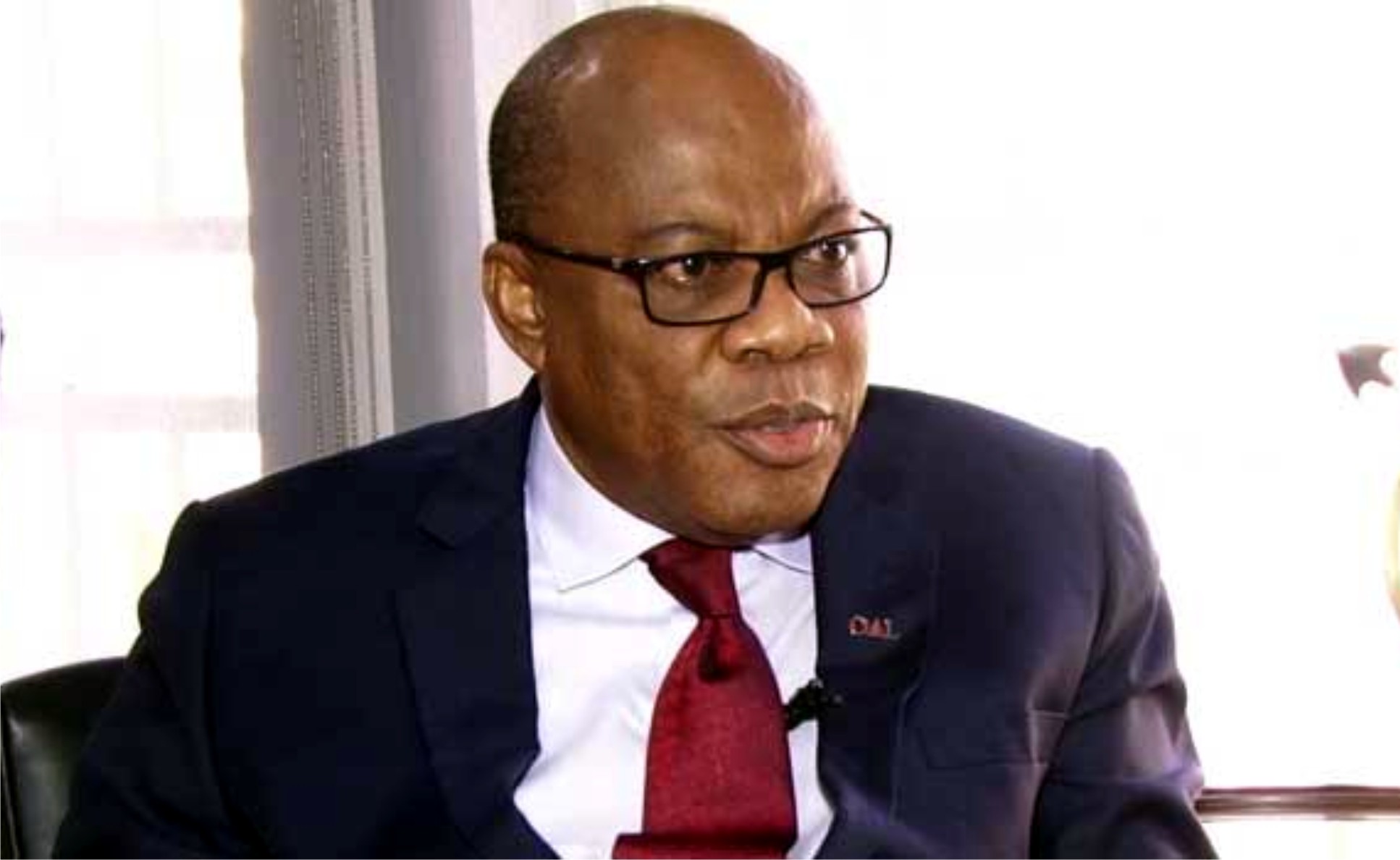
Former President of the Nigerian Bar Association, NBA, and human rights activist, Olisa Agbakoba (SAN), has told President Muhammadu Buhari to divide the country into eight regional structures.
Agbakoba, one of the greatest heroes of democracy in Nigeria, noted that there are so many unclear issues in Nigeria about how people of the country want to organise themselves and how they want to live together.
The senior lawyer told reporters at the weekend that insecurity and other serious issues facing the country “can’t [be] fully arrested,” if the central government remains so strong as it is now.
He added: “This is because community policing or state policing is a tactical tool to deal with the problem, but the strategic tool is the bigger question of the national question.
“There are so many unclear issues in Nigeria about how we want to organise ourselves, how we want to live together, this is what some people have called the restructuring question, some call it the national question, but I call it devolution of powers question.
“Whatever it’s called that is the central issue that needs resolution so that even if you use tactical tools like community policing, but the bigger issue remains then I don’t know if we can resolve it.
“What Nigeria needs is space, there are diverse ethnicities and they are living in such close proximity that one ethnic community is in the face of the other with counter-cultures, counter-religious beliefs and that is not healthy. Even in America in spite of all their advanced democracy, they take care of diversities.
“So, I think if I were to advise the president, for instance, the first thing to do is create space…,identify the ethnic regionalities, create eight big blocs, even though we have 6 to make it 8.
“And then I will give them the power to do things at their own local level, it’s called the principle of subsidiarity; let them work at their own local level. Subsidiarity is where people engage themselves at the local level such that you find in Wales, Scotland, Ireland and England.
“Part of the challenge they had when they were living closely was to create an act of settlement of 1705, that was when peace began to come and each of the regions recognised themselves.
“They all had their own prime ministers and they call them first ministers, so the prime minister of the UK is the one we see internationally, but on local matters like school, refuse collection, education, agriculture, employment, health issues, it’s local.
“So, imagine where eight of the regional structures in Nigeria were fending for themselves at their local level and not depending on federal allocation from Abuja, things will be different.
“Immediately they will take control of what is around them, they will create state police, they will create the relevant security apparatus to deal with any threat, therefore, you don’t need one Chief of Army Staff, and they don’t need one Inspector General of Police to be running around entire Nigeria.
“For instance…say in the South-south region, they will have all the relevant apparatuses to deal with whatever situation that they need to survive as a region.
“They could have courts; they might like to have a Supreme Court of the South-south where cases end in the Supreme Court of the South-south, so they do not have to go to the Supreme Court of Nigeria because the Supreme Court of Nigeria has no business dealing with issues arising from there.
“That is the kind of space I think that should be paramount in the issue concerning where Nigeria is heading to.
“Because that discussion is not on the table, all these ethnic issues flare up as major national insecurity challenge. So, that is what I will do or suggest if I had the opportunity to advise on it. The Federal Government is too strong”.
“The Federal Government is actually not a Federal Government, ours is a unitary government because the states have no power on the legislative list so there are 68 items on the Exclusive List and as the name implies in Exclusive List only the Federal Government handles it.
“There is 30 on the Concurrent List, concurrent is between the federal and the state to legislate, but if the Federal Government legislates then pursuant to what is called the doctrine of covering the field the state is not allowed to do anything. In other words, the states have no legislative authority, that creates a problem.
“Why should the Federal Government be dealing with Universal Basic Education for primary schools? What is the Federal Government responsibility with that? I don’t understand.
“What is the Federal Government responsibility with setting up a JAMB process so that you equalize educational activities, but if my grandchild from Anambra scores 282, but my friend’s grandson from Zamfara scores 100, my friend’s grandson gets into the university, but my own does not get in. Why don’t you simply say ….look each region can just organize itself and take your examination?
“So, it is this centrifugal federalism, that means federalism that has a pyramid that has only one leader that is our problem.
“We just have to blast the structures and allow regional leaders as we had under the 1960 Constitution. So, when you have regional leaders you will have people who will like to play regional politics or regional law.
“There is no reason, for instance, in my own profession the eight regions I propose should not be awarding SAN to their best lawyers. Why must it only be Abuja? In the UK, the SAN in England is different from the SAN in Scotland.
“So, the formula that worked for Nigeria was to recognize the differences and I think the best example of the agreements that we can apply is the Aburi Accord.
“The Aburi Accord recognized that Nigeria’s problems were as a result of our diversity not being well managed. We need to manage our diversity that is the way we can move forward.”



Alhaji Mohammed Kasim, the candidate of the Peoples Democratic Party (PDP), has won the Gwagwalada Area Council chairmanship election in the Federal Capital Territory (FCT).
Philip Akpeni, the Returning Officer of the Independent National Electoral Commission (INEC), announced the results on Sunday morning.
Alhaji Kasim polled 22,165 votes to defeat Alhaji Yahaya Shehu of the All Progressives Congress (APC), who polled 17,788 votes.
Alhaji Biko Umar of the All Progressives Grand Alliance (APGA) scored 1, 687 to come in third place.
“I am the returning officer for the 2026 FCT Area Council, Gwagwalada chairmanship held on Feb. 21, 2026,” Akpeni said.
“That Mohammed Kasim of PDP, having certified the requirements of the law, is hereby declared the winner and is returned elected.”
In the Abuja Municipal Area Council (AMAC), Hon. Christopher Maikalangu, the APC candidate, was declared the winner of the chairmanship poll with 40,295 votes.
Andrew Abue, the Collation Officer for AMAC, said Hon. Maikalangu, who is the incumbent AMAC chairman, was returned elected having scored the highest number of votes cast.
The African Democratic Congress (ADC) came second with 12,109 votes, while the Peoples Democratic Party (PDP) polled 3,398 votes.
According to Abue, the total number of valid votes in the chairmanship poll was 62,861, while the total votes cast stood at 65,197.
He added that the number of registered voters in AMAC was 837,338, while the total number of accredited voters was 65,676.
Meanwhile, the Independent National Electoral Commission (INEC) has declared Mr. Joshua Ishaku of the All Progressives Congress (APC) as the winner of the Bwari Area Council Chairmanship election.
Announcing the result on Sunday in Bwari, the Returning Officer for the election, Prof. Mohammed Nurudeen, stated that Ishaku polled a total of 18,466 votes to emerge victorious in the February 21, 2026 poll.
“I am the Returning Officer for the 2026 FCT Area Council, Bwari chairmanship held on Feb. 21, 2026. That Joshua Ishaku, having satisfied the requirements of the law, is hereby declared the winner and is returned elected,” Nurudeen said.
According to the results declared, the candidate of the African Democratic Congress (ADC) secured 4,254 votes, while the Zenith Labour Party (ZLP) polled 3,515 votes to place second and third respectively.
The declaration adds to the series of results emerging from the 2026 FCT Area Council elections, as political parties assess their performance ahead of future contests.
INEC UPLOADS 2,602 OF 2,822 FCT CHAIRMANSHIP RESULTS ON IReV
The Independent National Electoral Commission (INEC) had uploaded 2,602 out of the 2,822 expected polling unit results from Saturday’s chairmanship elections in the Federal Capital Territory (FCT) as at 5:55am on Sunday, data retrieved from its Result Viewing Portal (IReV) showed.
According to The Tide source, the figure represents an overall upload rate of about 92.2 per cent across the six area councils of the territory.
A council-by-council breakdown indicates that Municipal Area Council recorded the highest number of submissions in absolute terms, with 1,309 of 1,401 polling unit results uploaded, representing 93.43 per cent.
In Gwagwalada Area Council, 330 of the expected 338 polling unit results had been uploaded, representing 97.63 per cent — the highest upload rate among the six councils.
In Bwari Area Council, INEC uploaded 463 of 485 polling unit results, translating to 95.46 per cent.
In Abaji Area Council, 129 of 135 polling unit results had been uploaded as at 5:55am, representing 95.56 per cent.
In Kwali Area Council, 164 of the expected 201 polling unit results were available on the portal, representing 81.59 per cent.
In Kuje Area Council, 207 of 262 polling unit results had been uploaded, representing 79.01 per cent — the lowest rate among the six councils as at the time of review.

In a statement signed by its Chairman, Emeka Nwankpa, and Secretary, Dapo Okubanjo, the group described the swift assent as a clear demonstration of political will to strengthen Nigeria’s electoral process ahead of the 2027 general elections.
“We see the decision by President Bola Tinubu to sign the reworked 2022 Electoral Act into law within a few hours of its passage as a demonstration of political will to ensure an improved electoral process which the new law envisages,” the group said.
The TMSG expressed confidence that the development would enable the Independent National Election Commission (INEC) to quickly align its operations with the new provisions in preparation for the 2027 polls.
The group noted that the provision for electronic transmission of results had been contentious but described its codification in the law as a significant step forward.
“So, for the first time, the country’s electoral law would be recognising the use of the Bi-modal Voter Accreditation System (BVAS) and the result viewing portal, IREV, which were just INEC guidelines in 2023,” it stated.
According to the TMSG, although the Act provides for electronic transmission of results from polling units to the IREV portal, it also makes room for manual transmission of Form EC8A result sheets as a backup in the event of technological failure.
“Unlike some Nigerians, we do not see anything wrong with the fallback plan but we agree with the President that no matter how beautiful a process is with improved technology, the onus lies on the people manning it to show good faith and ensure that the votes of the people really count at the end of the day,” the statement added.
The group highlighted other key provisions in the amended law, including the streamlining of party primaries to either consensus or direct primaries, early release of funds to INEC, reinforced measures against over-voting, and stiffer sanctions for electoral offences such as falsification of results.
It also pointed out that the mandatory notice period for elections has been reduced from 360 days to 300 days, giving INEC more flexibility in adjusting the timetable for the 2027 elections, especially where it may clash with Ramadan.
The TMSG further observed that the President’s decision to sign the bill days before the forthcoming Area Council Election in the Federal Capital Territory (FCT) underscores his desire for the law to take immediate effect.
“And by signing the amendment bill a few days before the Area Council Election in the Federal Capital Territory (FCT), it is obvious that the President is keen on ensuring that the 2026 Electoral Act takes immediate effect.
“Nigerians would also have an opportunity to see some of the key provisions of the new electoral law become operational, especially the electronic transmission of results,” it said.
The group expressed optimism that the current INEC leadership would leverage the new legal framework to deliver a more credible and widely acceptable electioneering process than in previous electoral cycles.

-
Maritime3 days ago
Nigeria To Pilot Regional Fishing Vessels Register In Gulf Of Guinea —Oyetola
-
Maritime3 days ago
Customs Declares War Against Narcotics Baron At Idiroko Border
-

 Sports3 days ago
Gombe-Gara Rejects Chelle $130,000 monthly salary
-
Maritime3 days ago
NIMASA,NAF Boost Unmanned Aerial Surveillance For Maritime Security
-

 Sports3 days ago
TEAM RIVERS SET TO WIN 4×400 ” MORROW” …Wins Triple jump Silver
-
Maritime3 days ago
NIWA Collaborates ICPC TO Strengthen Integrity, Revenue
-

 Sports3 days ago
NPFL Drops To 91st In Global League Rankings
-

 Sports3 days ago
NPFL Impose Fines On Kwara United Over Fans Misconduct