
Featured
9th NASS Leadership: PDP Makes Choice, Today …Arewa Youths Warn Against Lawan’s Emergence …NASS Management Adopts Secret Ballot …As Nigerians Move Against NASS N4.68bn Welcome Package

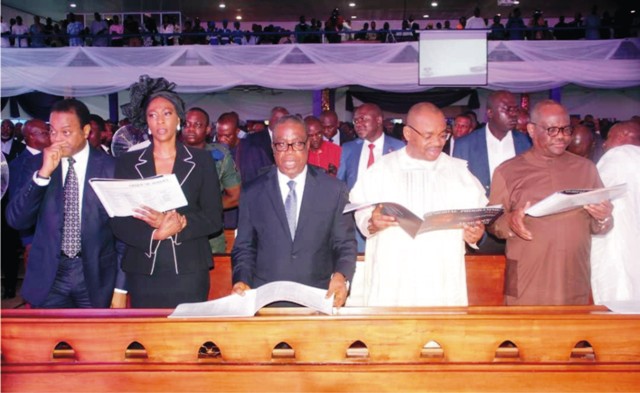
The leadership of the PDP will today decide on who to endorse among those aspiring to be Senate President and Speaker of the House of Representatives, the PDP Deputy National Publicity Secretary, Mr Diran Odeyemi, has said.
In an interview with newsmen in Abuja at the weekend, Odeyemi stated that the party leadership wanted to make the endorsement a last-minute affair.
He said, “They want to take the decision today. They want (to make) it a last-minute affair but the horse trading and underground work are ongoing.”
Odeyemi, however, added that the possibility of the PDP presenting candidates for offices of the Senate President and the Speaker of the House of Representatives should not be ruled out.
He said, “On whether we are likely to present a candidate, it depends on the situation of things generally. Anything can happen, anything can crop up. You do not rule out anything.
“In politics, 24 hours is still a long time. When Bukola Saraki became the Senate President, was Nigeria expecting it that he would win the election or that he would become the Senate President? No! Anything can happen, it depends on the strategy. We are keeping our strategy close to our chest. So we cannot say yes or no that the PDP will be presenting candidates.”
He also denied any division among the PDP senators, adding that the party had not decided who to endorse.
Meanwhile, the Arewa Youth Consultative Forum (AYCF) yesterday warned Nigerians against allowing Senator Ahmed Lawan, to become the President of the ninth Senate.
The AYCF linked the support Lawan is currently getting from some chieftains of the All Progressives Congress (APC) as related to the secret pursuit of personal ambitions ahead of 2023 general elections.
In a statement to newsmen yesterday by Yerima Abbas Shettima, the President of AYCF, the forum fingered Asiwaju Bola Ahmed Tinubu, the national leader of the APC, and Nasir El-Rufai, the governor of Kaduna state, as being behind Lawan’s ambition in a desperate move ahead of 2023 polls.
The statement added, “We advise the Tinubus and Elrufais of this world to shove aside any desperate move on 2023 and allow a level-playing field for all political offices.
“No one should hide behind any political party to turn Nigerians into mere manipulable pawn. That will be undemocratic imposition and totally unacceptable,” Shettima said.
The group recalled how it predicted that Senator Danjuma Goje would step down when he is pressured into submission using his pending case at the Economic and Financial Crimes Commission (EFCC).
“We also declared that he could alternatively be forced to step down from the race in exchange for his freedom from EFCC’s hot chase,” it stated.
“We are happy to inform all Nigerian progressives that we have been vindicated in all the public declarations we made recently on the contentious seat of the Senate presidency.
“It is obvious that the desperation to make the road to Senate presidency smooth for Tinubu’s acolyte (Sen Lawan), Buhari’s foot-soldiers, especially Governor Nasir El-Rufaiare coming up with a new narrative to pull a blind wool over our eyes.
“The Kaduna governor is trying to sell a dummy to Nigerians that the Attorney General of the Federation (AGF) has done the needful regarding Goje’s case with the EFCC.
“And we ask: Which attorney-general, when all ministers have since resigned?
“What is the meaning of taking a case that was under investigation by an independent body, to an attorney-general who is not the judge in the court handling the Senator Goje case?
“These are questions begging for answers and we are tempted to assume that the EFCC is about to be hindered from continuing with the case because Chief Tinubu, who has been pushing Buhari harder, has vested interest to do with his 2023 presidential ambition,” AYCF claimed.
There were clear indications on Saturday that the election of the presiding officers of the 9th National Assembly will be conducted by secret ballot method tomorrow.
A senior member of the management team of the federal parliament told newsmen on condition of anonymity on Saturday that the elected lawmakers had already been given House Rules stipulating the voting method.
He said, “There were attempts to amend the rules of both chambers to give room for a secret ballot but the idea was frustrated by the outgoing leadership.
“I’m aware that advocates of the secret ballot method mounted pressure on the outgoing Senate President, Bukola Saraki, and Speaker, Yakubu Dogara, and stressed the need to amend the rules in line with the global practices.
“There is no way management will come up with a voting method different from what is contained in the rule book distributed to elected members since April.”
Investigation revealed that the members of the Ahmad Lawan Campaign Organisation had soft-pedalled on their agitation for an open poll.
A member of the group, who spoke on condition of anonymity, on Saturday, said, “We are winning almost unopposed; so, there is no basis for argument over voting method again.”
Attempts to speak with the Director of Information, Rawlings Agada, on the issue, failed on Saturday as calls made to his mobile did not connect.
He had also not responded to the text message sent to him as of the time of filing this report on Saturday.
But speaking with newsmen on the telephone last month, the Director of Public Affairs, National Assembly, MrYahaya Dan-Zaria, said the Standing Rules of the chambers prescribed an open-secret system, which would be adopted for the next poll.
“Of course, an open-secret ballot; that is what their rule says. It is not from us; it is their rule,” Dan-Zaria had stated.
However, one of the aspirants to the position of the Deputy Senate President, Ovie Omo-Agege, told journalists on Saturday that he would resist attempts to adopt secret ballot method.
Omo Agege stated, “In 2015, to the extent that the 2011 rules were not amended that ought to be the operative rule for use in the 8th Senate because it is the valid and subsisting rule. I can tell you there was never a time when this 8th Senate amended the 2011 rules.
“So what that means is that the 2015 amended rule is a Saraki rule. It is Saraki Standing Order; it is not the 8th Senate Standing Order and I can assure you it would not be used on Tuesday because it is not valid.”
When journalists reminded him that the same Standing Order was used throughout the life of the 8th Senate, he said, “Well, anybody can distribute anything. Its use will be determined on Tuesday.
“I have support from the APC caucus; I have the support of the leadership and the caucus of the party. I also have the support of the executive arm. As we go into this contest, I am very confident that come Tuesday, I will emerge as the next Deputy Senate President.”
Meanwhile, the preferred candidate of the APC for the position of Senate President in the 9th National Assembly, Senator Ahmad Lawan, said he had the endorsement of 99 senators-elect who would vote for him tomorrow.
Lawan stated this on Saturday in Abuja where the names of the APC senators, who had endorsed him, were read out.
The implication of Lawan’s claims is that only seven senators-elect across the parties that have representatives in the 9th National Assembly might not vote for him.
The endorsement list contained the names of 60 APC senators-elect and one member of the Young Progressives Party, Ifeanyi Ubah.
Lawan explained, after the list was read by the secretary of his campaign organisation, Senator Barau Jibrin, that only two out of the 62 APC senators-elect had yet to endorse him.
He also said about 38 out of the PDP senators-elect had promised to vote for him on June 11.
Lawan said he would not make public the list of PDP Senators-elect who had signed up the endorsement list with him for obvious reasons.
He said, “For my colleagues in the APC, this is the first time that members of the National Assembly, whether in the House of Representatives or in the Senate of a particular party, would come together in this unanimous way to endorse a candidate for the office of a Presiding Officer.
“The APC, as of today, stands at 62 senators-elect and the PDP 44 members.
“We have two cases undetermined in Imo State. But one was almost determined yesterday (Friday); that of senator-elect, Rochas Okorocha, when the court said INEC should give him his return certificate.
“That will take the number of APC senators-elect to 63; and of course, YPP, one.
“Out of the 62 with returned certificates in APC, 60 have signed here. But you know, we will love to have the 62 signed.
“We are not prepared to fight each other. We will do everything possible to bring everybody on board because we don’t want distraction.”
He maintained that he was not imposed on the parliament.
Lawan said, “The trouble we have gone through tells a story. We are not an imposition because everybody here wrote their name and signed.”
But an aspirant to the position of the Senate President, Senator Ali Ndume, has said he does not believe in endorsement.
Ndume, who was reacting to the claims by his co-contestant, Lawan, that 99 senators-elect had endorsed him, told journalists on Saturday that his colleagues would vote according to their conscience on Tuesday.
He said, “Well, I have said before that I am not looking for endorsement but looking for votes on election day.
“You know clearly that there is a difference between endorsement and election.
“Recall too that in 2015 that the story of endorsement was canvassed.
“He (Lawan) had the endorsement but what happened on the floor of the Senate was different.
“I believe that my colleagues shall vote according to their conscience and they shall vote for a candidate that is more suitable for the position of the Senate President.
“I am not bothered about endorsement; rather am more worried about the election.”
Meanwhile, as part of his strategy to clinch the Speaker’s seat, the Minority Leader of the House of Representatives, Mr Femi Gbajabiamila, has offered 60 PDP’s members-elect positions of chairmen and deputy chairmen of committees to vote for tomorrow.
The Director-General of the Femi Gbajabiamila/Ahmed Wase Campaign Organisation, Abdulmumin Jibrin, disclosed this in an interview with journalists in Abuja on Saturday.
Jibrin said the 60 PDP members had accepted the offer and had started working with their colleagues in the ruling All Progressives Congress to ensure that Gbajabiamila, who is the preferred candidate of the APC, emerges victorious.
He said, “Before Femi’s endorsement by the party, the President, the governors, the majority of us the lawmakers had agreed that he is the Speaker that we want. It was after that decision that other endorsements came.
“As it is today, he has a massive support across party lines. In 2015, the APC was just only guarding its votes because we believed then that we had the number to win the election.
“But this time round, the APC is more comfortable because we have more numbers with our 223. In spite of that, our campaign is more aggressive towards poaching the PDP members than the aggression of the PDP members trying to poach our members.
“But as a safety net, we already have over 60 members of the PDP working with us. There is nothing you can do to change the minds of these PDP members because their support is based on their conviction that Gbajabiamila and Wase are the best to occupy those position at this time.
“On the aspect of responsibility in the parliament, we are always reluctant mentioning this but it is the reality, sharing of committees and the rest. We have offered 60 positions.
“If not that the party has been broken into two factions, it is what we would have offered to all of them, but since we have concluded with one faction, we have given them that offer and they have accepted it.”
Jibrin also boasted that the camp was not bothered about the voting method to be adopted for the election, whether open or secret ballot.
In the meantime, the South-South zone of the APC, on Saturday, said it had resolved to support the aspiration of Omo-Agege as the Deputy Senate President in the 9th Assembly.
The party’s Zonal Working Committee in a statement by its National Vice-Chairman (South-South), Chief Hilliard Eta, and Zonal Secretary, Mr David Okumagba, said they took the decision after deliberating on the senators-elect from the zone that had shown an interest in vying for the position.
The statement noted that after the deliberating on the candidacy of Senator Francis Alimikhena from Edo State and Omo-Agege from Delta State, it settled for the latter because the National Chairman of the party, Mr Adams Oshiomhole, was from Edo State.
It read in part, “However, considering the current zoning of political offices in our zone, whereby Edo State produced the current National Chairman of our party, Adams Oshiomhole, and other considerations, it became imperative that our zone supports the candidature of Senator OvieOmo-Agege for the office of the deputy senate president.”
In a related development, more than 1,500 concerned Nigerians, Socio-Economic Rights and Accountability Project (SERAP), BudgIT and Enough is Enough Nigeria (EiE) have filed a lawsuit asking the Federal High Court to restrain, prevent and stop the National Assembly Service Commission from paying the incoming members of the 9th National Assembly individually and/or collectively over N4.68 billion as ‘welcome package’.
SERAP, BudgIT and EiE, suing for themselves and on behalf of 1,522 concerned Nigerians, stated that: “The Revenue Mobilization, Allocation and Fiscal Commission (RMAFC) has failed to do any downward review of salaries and allowances of members of the National Assembly since 2007 in spite of the economic downturn in Nigeria. Yet, the commission is statutorily required to review the pay of the lawmakers, in conformity with the country’s economic realities and to achieve fiscal efficiency.”
In the suit number FHC/L/CS/943/2019 filed before the Federal High Court in Lagos, the plaintiffs argued: “Given many years of extreme poverty in the country, and the inability of several state governments to pay salaries of workers and pensions, the refusal or failure of the Revenue Mobilization, Allocation and Fiscal Commission to review and cut the salaries and allowances of members of the National Assembly is a gross violation of the 1999 Nigerian Constitution (as amended) and the commission’s own Act.”
Joined as defendants in the suit are the Senate President, Speaker of the House of Representatives, National Assembly Service Commission and Revenue Mobilization Allocation and Fiscal Commission (RMAFC).
The plaintiffs also argued that: “The duty of the RMAFC to review the salaries and allowances of members of the National Assembly is mandatory and the Commission cannot choose not to comply. Therefore, the failure or refusal by the Commission to comply with its own Act amounts to arbitrariness.
The suit reads in part: “Unless the reliefs sought by the plaintiffs are granted, the defendants and members of the National Assembly will continue to benefit from these outrageous salaries and allowances, in breach of the law and at the expense of millions of Nigerians living in extreme poverty.
“The amounts budgeted as payment for furniture and accommodation allowance to members of the 9th National Assembly negates the oath of office under the Seventh Schedule of the 1999 Constitution by members to perform their functions in the interest of the well-being and prosperity of Nigeria.
“The National Assembly comprises of 469 members – with 109 in the Senate and 360 in the House of Representatives. These public officers form a very tiny percentage of about 200 million Nigerians. Members are still eligible to collect huge sums of money as monthly allowances and severance pay at the end of their respective terms.
“The RMAFC is required to advise the Federal, State and Local Governments on fiscal efficiency and methods by which their revenue is to be increased. Prescribing N9,926,062.5 and N10,132,000:00 to members of the House of Representatives and Senate respectively, as furniture and accommodation allowance, is not in tandem with the Commission’s statutory mandate and advisory roles on fiscal efficiency.
“The action of members of the National Assembly in ‘rubber-stamping’ the passage of the Certain Political, Public and Judicial Office Holders [Salaries and Allowances] [Amendments] Act 2008 is also in clear breach of the Code of Conduct for Public Officers, particularly paragraph 1 of the Code of Conduct for Public Officers which provides that ‘a public officer shall not put himself in a position where his personal interest conflicts with his duties and responsibilities’.
“It can be inferred that in passing the Certain Political, Public and Judicial Office Holders [Salaries and Allowances] [Amendments] Act 2008, members of the National Assembly more or less appropriated these payments as allowance to themselves, thereby bringing about conflict of their personal interests with national interest of fiscal efficiency, a conflict eventually resolved in favour of personal interest.”
No date has been fixed for the hearing of the suit



Rivers State Governor, Sir Siminalayi Fubara, yesterday extended interim relief measures to the people of Bille Kingdom as the government intensifies efforts to address the ongoing environmental degradation affecting the area.
This was contained in a statement by the Head of Information and Public Relations Unit, Office of the Secretary to the State Government, Juliana Masi, yesterday.
The governor, during a working visit to Bille Kingdom in Degema Local Government Area, reassured residents of his deep concern for their health and well-being.
He reiterated his administration’s commitment to finding a lasting solution to the persistent gas emissions observed in the community’s land and water sources since November 2025.
Represented by the Secretary to the State Government, Dagogo Wokoma, the governor announced immediate interventions to address urgent needs.
Some of the relief measures include the provision of potable water and essential medical services through the release of ?100 million as palliative support for the affected community.
According to the SSG, “Governor Fubara remains deeply committed to the welfare of the people of Bille Kingdom. Although unable to attend in person due to pressing state engagements, he is fully aware of the situation and determined to tackle the root cause of the environmental challenge”.
The governor assured residents that the state government would not relent in its efforts to provide a permanent solution to the gas emissions, emphasizing that the current intervention is only a temporary measure to ease the suffering of the people.
He further urged members of the community to remain law-abiding and continue supporting his administration, noting that he has consistently demonstrated a track record of fulfilling his promises.
Earlier, the Chairman, Council of Chief for Bille Kingdom, Chief Bennet Dokubo, expressed joy over the State visit, describing Fubara as a leader who listens to the plight of the people.
He urged the governor to critically look into the gas emission which he described as dangerous to human health.
“If we take you into the river, we notice that the entire environment is bubbling and smelling.
“We most humbly urge you to critically look into this situation. This is something strange we have never experienced before. It is not good for human health,” the monarch stressed.

The Federal Government has declared tomorrow (Friday) and Monday, April 6, 2026, as public holidays to mark this year’s Easter celebration.
Minister of Interior, Olubunmi Tunji-Ojo, made the declaration on behalf of the Federal Government through a statement signed by the Permanent Secretary in the ministry, Dr Magdalene Ajani.
The ministe congratulated all Christians in Nigeria and in the diaspora on the joyous occasion of Easter, and urged Nigerians to imbibe the virtues of selflessness, forgiveness, forbearance and love as exemplified by the life and teachings of Jesus Christ.
He reiterated that the goal of the government remains to make decisions that would bring about national rebirth, economic growth, and shared prosperity.
The Tide reports that good Friday will be marked tomorrow, while the Easter Sunday will be celebrated on Sunday across the world.

Rivers State Governor, Sir Siminalayi Fubara, has charged the newly appointed Secretary to the State Government (SSG) and Chief of Staff (CoS) to carry out their duties with discipline, loyalty and a firm commitment to the success of the administration and the wellbeing of the people of Rivers State.
The governor warned that any involvement in unauthorised nocturnal meetings or any conduct capable of embarrassing the government will attract immediate dismissal.
Fubara gave the warning yesterday shortly after the newly appointed Secretary to the State Government (SSG), Dr Dagogo S.A. Wokoma and the new Chief of Staff (CoS), Barrister Sunny Ewule, were sworn in at the Executive Council Chambers of Government House, Port Harcourt.
As part of the ceremony, the Chief Registrar of the State High Court, David Ihua-Maduenyi administered the Oath of Allegiance and Oath of Office on the duo before the governor gave his charge.
Addressing the appointees, Fubara reminded them that their elevation to the new positions was a call to service and not a platform for political grandstanding or the pursuit of personal ambition.
He stressed that their foremost responsibility should be to themselves and to the people of Rivers State, stressing that their conduct must always reflect integrity, restraint and dedication to public good.
Speaking directly to Dr. Wokoma, whom he described as an accomplished academic and mathematician, the governor expressed confidence in his intellectual depth and capacity to deliver on the new assignment.
The office of the Secretary to the State Government, Fubara stressed, demands thoroughness, discipline and a deep sense of responsibility. He charged the SSG to represent the State with honour at all times.
“Your duty includes representing the state government. You need to represent us in a way and manner that will bring honour to us.
“What is important to this administration is to see that the good works that we started and the ones that we met, are concluded in a way that will bring progress and development to our dear state,” he stated.
Turning to the new Chief of Staff, the governor explained that he is expected to ensure smooth administrative coordination, managing official engagements effectively and safeguarding the image of the Government House.
He underscored the sensitive and personal nature of the role and emphasised that the position operates strictly under the authority of the governor.
Fubara stressed that the role does not permit independent political engagements or private strategy meetings without his knowledge and consent.
“Let me sound it here very clearly. Your duty is to make sure that you handle the administrative duties and image making roles perfectly well, liaising with whoever is coming for any official assignment here.
“If you involve yourself in nocturnal meetings and all those things, I will sack you. I’m very serious. What is important to me today is peace, progress and prosperity of this state. I’m not going to compromise anything for it,” he said.
The governor cautioned that involvement of the new appointees in any action capable of bringing the government or his office to disrepute would attract appropriate sanctions.
While congratulating the new appointees, Fubara expressed optimism that they would justify the confidence reposed in them.
He called on all public officials to work together in unity, observing that collective success is stronger and more enduring than individual achievement.
The governor who also addressed the Permanent Secretaries present at the ceremony, directed those of them who have reached retirement age to start preparing their handover notes without delay.
The notice, he said, was not intended to scare anybody but to prepare their minds towards the inevitability of exiting the service one day and to pave way for an orderly transition.
He warned against any attempt to engage in financial misconduct or last-minute irregularities, stressing that he was closely monitoring the system to ensure strict enforcement of accountability rules.
-
Opinion5 days ago
Ozoro Festival: Tradition or Tyranny?
-
News2 days ago
Decentralizing Pipeline Surveillance Poses Greater Dangers To Niger Delta …. Group Warns
-

 Politics3 days ago
APC Resumes Electronic Membership Registration Nationwide
-

 Rivers3 days ago
Court Rules Out Interim Administration In Jumbo House, Bonny
-
Politics5 days ago
RIVERS WOMEN RALLY SUPPORT, CONTINUOUS PRAYERS FOR TINUBU
-
Politics5 days ago
AKPABIO, DIRI, OBOREVWORI, OTHERS VOW TO REELECT TINUBU …AS GIADOM RETAINS APC ZONAL CHAIR
-
 Business2 days ago
33 Banks Raise N4.65tn As Recapitalisation Ends
-
Politics5 days ago
Viral 2027 Nomination Forms Price List Fake, Misleading – APC