
Politics
8th Senate: An Appraisal

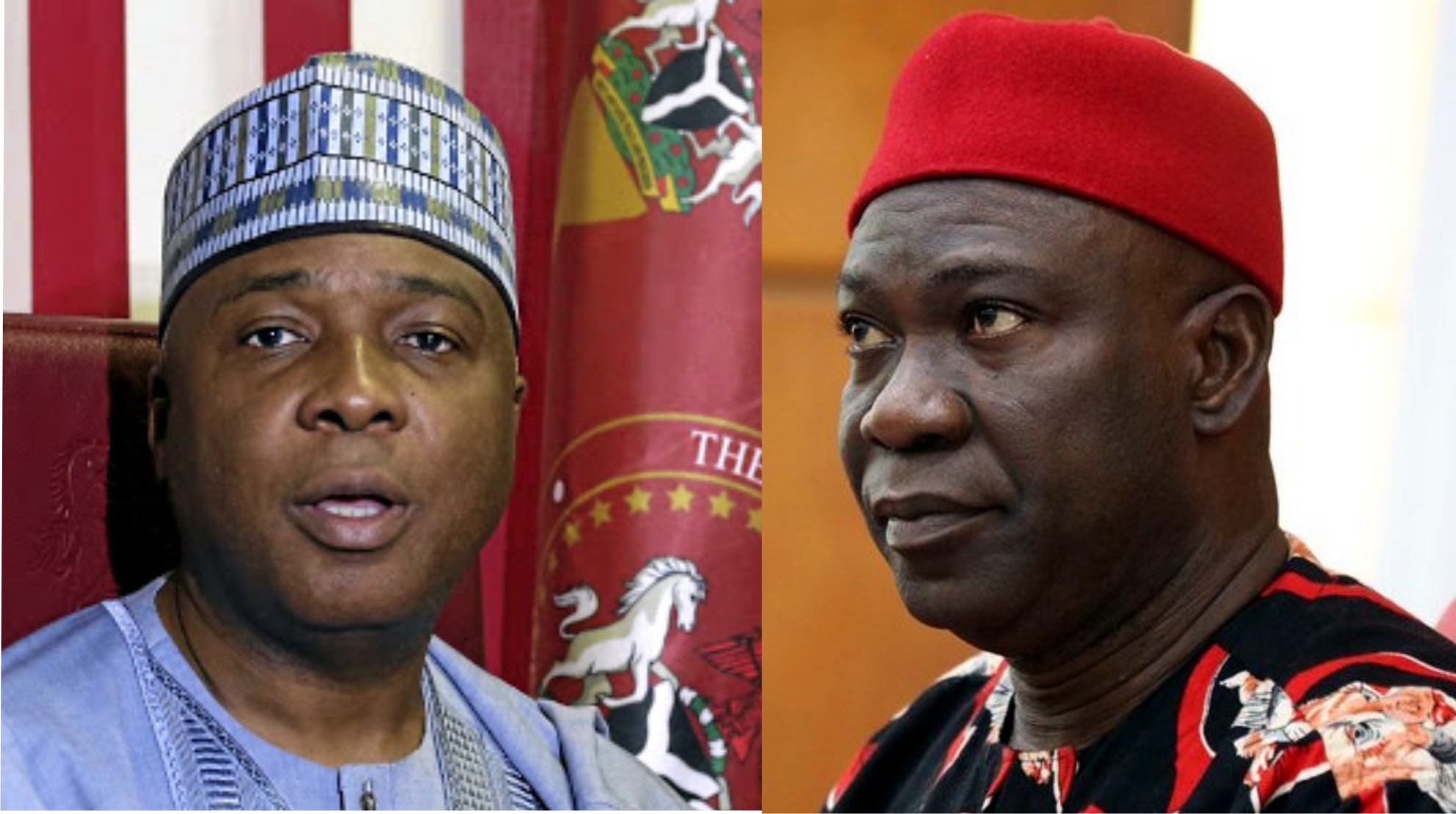
As the 109 senators of the 8th senate bowed out on June 6 after four years of legislative activities, political analysts have commended their performance in spite of the tumultuous beginning of the session in 2015.
They observed that although the session was characterised by some challenges, most bills passed by the lawmakers had direct impact on the economy.
According to the 8th senate bill progression chart, over 200 bills were passed.
Some of the bills passed by the 8th senate are:
Discrimination Against Persons with Disabilities (Prohibition) Bill 2015, North East Development Commission (NEDC) (Est, etc) Bill 2015, Counterfeit and Fake Drugs and Unwholesome Processed Foods (Miscellaneous Provision) Amendment Bill 2015, Petroleum Industry Governance Bill 2016, Sexual Harassment in Tertiary Educational Institution Bill 2016, Not-Too-Young-To-Run Bill, among others.
The Senate also adopted bills passed by the House of Representatives. Some of them are: Federal Capital Territory Hospitals Management Board (Establishment, etc.) Bill, 2016, Senior Citizen Centre Bill, 2016, and Compulsory Treatment and Care of Victims of Gunshots, Bill 2016.
The Executive Director, Youth Initiative for Advocacy Growth and Advancement (YIAGA-AFRICA), Mr Samson Itodo, commended the senate for passing the Not-Too-Young-To-Run Bill, which has been signed into law by President Muhammadu Buhari.
Itodo, a co-convener of the Not-Too-Young-To-Run Movement, said though the 8th Assembly had challenges, they performed creditably.
On his part, Chief Mike Ozhekhome (SAN), said the 8th National Assembly was the best in the legislative history of the country.
He said it performed creditably in terms of productivity and insistence on being independent.
He said: “In the entire legislative history of Nigeria, the 8th Aational Assembly passed the largest number of pro-masses motions, resolutions and bills than any legislature before it.
“Future National Assembly should and must take a cue from the 8th National Assembly, that the assembly is an independent arm of government, specifically created by Section 4 of the 1999 Constitution.
“They should make laws for the peace, order and good governance of Nigeria.
“Though expected to cooperate with the executive, it must not do so at the expense of its own independence as an arm of government that participates in the inbuilt constitutional checks and balances.
“It is not a rubber stamp to executive desires. Any National Assembly worthy of its name, must rise up and use its oversight powers under Sections 88 and 89 of the 1999 Constitution, to check the excesses of the judicial and executive arms of government,” he said..
In the same vein, Executive Director, Foundation for Persons Living with Disabilities, Mrs Pat John-Oseh, hailed the legislators for passing the Disability Bill.
Dr Abiola Akiyode-Afolabi, the Chairperson, Transition Monitoring Group (TMG), said the 8th Senate passed vital bills that contributed to the country’s development.
“Examples of those bills are the Not-Too-Young-To-Run Bill and the Disability Bill, which have been signed into law.
“Those two bills came out very clearly as bills that have contributed to Nigeria’s growth and development. Also, the Minimum Wage Bill signed into law is another one.”
Akiyode-Afolabi, however, rated the Senate low in terms of other legislative activities, noting that though the Senate passed a number of bills that were beneficial, it failed in other areas.
She said the lawmakers did not fully address issues bothering on the petroleum sector, the electoral system, among others.
“The Senate did not do much to push for passage of the Gender and Equal Opportunity Bill which has to do with women.
“In the last election, women suffered a lot of violence, they suffered a lot of discrimination and you can see that the seven per cent of women in the National Assembly is reducing to five per cent in terms of the number of women representation.
“A critical law of that nature is what the National Assembly should have taken cognisance of,” she said.
The TMG chairperson noted that delay in budget passage also characterised the 8th National Assembly.
“Year in, year out, they refused to pass budget at the time when it will be right to address the yearnings and aspirations of the Nigerian people.
“So there were lots of politicking that they actually left those things they were supposed to do as members of the national assembly
“So in terms of that, I will rate them very low because they had all the opportunity to help better the lives of Nigerian people, but they did not, “she said.
On their part, some lawmakers, who appraised their performance within the period, lamented declined assent to some bills that would have impacted positively on the country.
Sen. Foster Ogola (PDP-Bayelsa), said the 8th Senate performed creditably in all its ramifications.
“This 8th Senate has performed beyond expectation. We have passed more bills than all the previous senates put together.
“Even in terms of public discourse, we have done more because the Ethics and Privileges Committee has the highest record of public complaints they have handled,” he said.
Ogola pointed out that “ just recently, the bill I sponsored for the Federal College of Education Agoro, Bayelsa, went through third reading.
“Also, five tertiary institutions bill received third reading, including mine,’’ he said.
The lawmaker commended the Senate for passing the redrafted Petroleum Industry Governance (PIG) Bill, which President Buhari earlier declined assent to.
He said in spite of the fact that it was one of the critical bills that were transmitted but not assented to, the Senate deemed it necessary to pass it through third reading, a second time, with the hope that it would be assented to.
“Most importantly, we finalised the Petroleum Industry Governance Bill, though we could not pass the other tranches,” he said.
Senate Solomon Adeola(APC-Lagos), said there was no doubt that the 8th Senate started on a rancorous note.
According to him, the seeming frosty relationship between the leadership of the Senate and the executive affected the performance of the senate in some aspects.
He said: “The instability of the Senate lingered for about a year and a half, slowing down legislative activities within the period.
“Within the period, there was also change of leader of the Senate, causing another round of distraction.
“However, we were able to contribute our quota as lawmakers because we believe that Nigeria is bigger than anyone.
“With that in mind, we were able to bury our differences to focus on the project Nigeria.
“Over 200 bills were passed by the Senate and that is commendable, and it shows we were committed to contributing our quota to nation building,” he said.
Adeola said his expectation for the 9th Senate was to see a Senate that would be acceptable to all Nigerians and a leader that would carry everybody along.
He noted that for the policies of government to be properly implemented, there was a need for collaboration between the legislature and executive.
“We will be coming to the 9th Senate to pursue the agenda of the APC for national development,” he said.
Sen. Matthew Urghoghide (PDP-Edo), said all senators of the 8th Senate worked hard to ensure what was expected of them statutorily was achieved.
According to him, the 8th Senate has set a standard that subsequent sessions will work hard to achieve.
Urghoghide noted that “in a bid to ensure that the workload is cleared, we revisited even bills that were declined assent to and passed them through third reading a second time.
“We expect that the 9th Senate would do better.”
He advised the 9th Senate leadership to ensure checks and balances for a robust and sustainable democratic rule.
Senate President Bukola Saraki, in his farewell speech to mark the end of the 8th Senate, thanked his colleagues for demonstrating patriotism by protecting the sanctity of the legislature.
He said although some of them had to pay dearly for daring to defend the Constitution of the Federal Republic of Nigeria, it was worth it.
He said he was bowing out a fulfilled man, knowing that in spite of the hiccups experienced in the life of the Senate, the achievements recorded could not be matched.
“Distinguished colleagues, as we come to the final plenary and the last few days of the 8th Senate, it is a victory in itself that we are seeing the journey to its momentous end.
“That I am here today, that you are here today, is a victory for democracy. It is a testament to what people can do when they come together for the greater good.
“This is also one of those occasions when the Supreme Creator reminds us, once again, that power does not reside in any one person.
“Let me thank each and every one of you for your contributions toward making this the historic Senate that it is.
“When I think of the many trials and tribulations we have faced as an institution, and my own personal travails particularly at the Code of Conduct Tribunal, I am humbled.
“This is because none of our achievements would have been possible without the support and cooperation of the entire members of this chamber.
“The invasion of the National Assembly by armed security operatives in August 2018 will live in infamy.
He noted that the legislations passed in areas affecting the daily lives of citizens, the economy, education, security, anti-corruption, health and many more, would remain a benchmark.
According to him, working together, they achieved many “firsts” in the 8th Assembly saying, “we should rightly be proud of these, especially as they are imperishable legacies we are leaving for the people.
“Our many firsts include the National Assembly Joint Public Hearing on the Budget, which we started with the 2016 Appropriation Bill.
“The engagement of the private sector and other stakeholders in crafting the economic legislative agenda was a watershed.
“For the first time, there were meetings and interactions with members of the public which were not previously the norm.
“One such interaction was the Public Senate, which gave the youth the opportunity to spend a day with me as President of the Senate.
“I have pleasant memories of my reading to an audience of small children inside my office, where, in the true spirit of Children’s Day, the kids themselves were the dignitaries.
With the curtain drawn on the 8th National Assembly, the Senate particularly will be remembered among many intriguing moments, for the drama that characterised emergence of its principal officers in 2015, where a deputy senate president emerged from a minority party, without any accord.
. Ijuo and Agbaje write for NAN.
Cecilia Ijuo, Taiye Agbaje

Politics
Alleged Coup: Protests Rock N’Assembly As Detained Officers’ Children, Wives Demand Justice

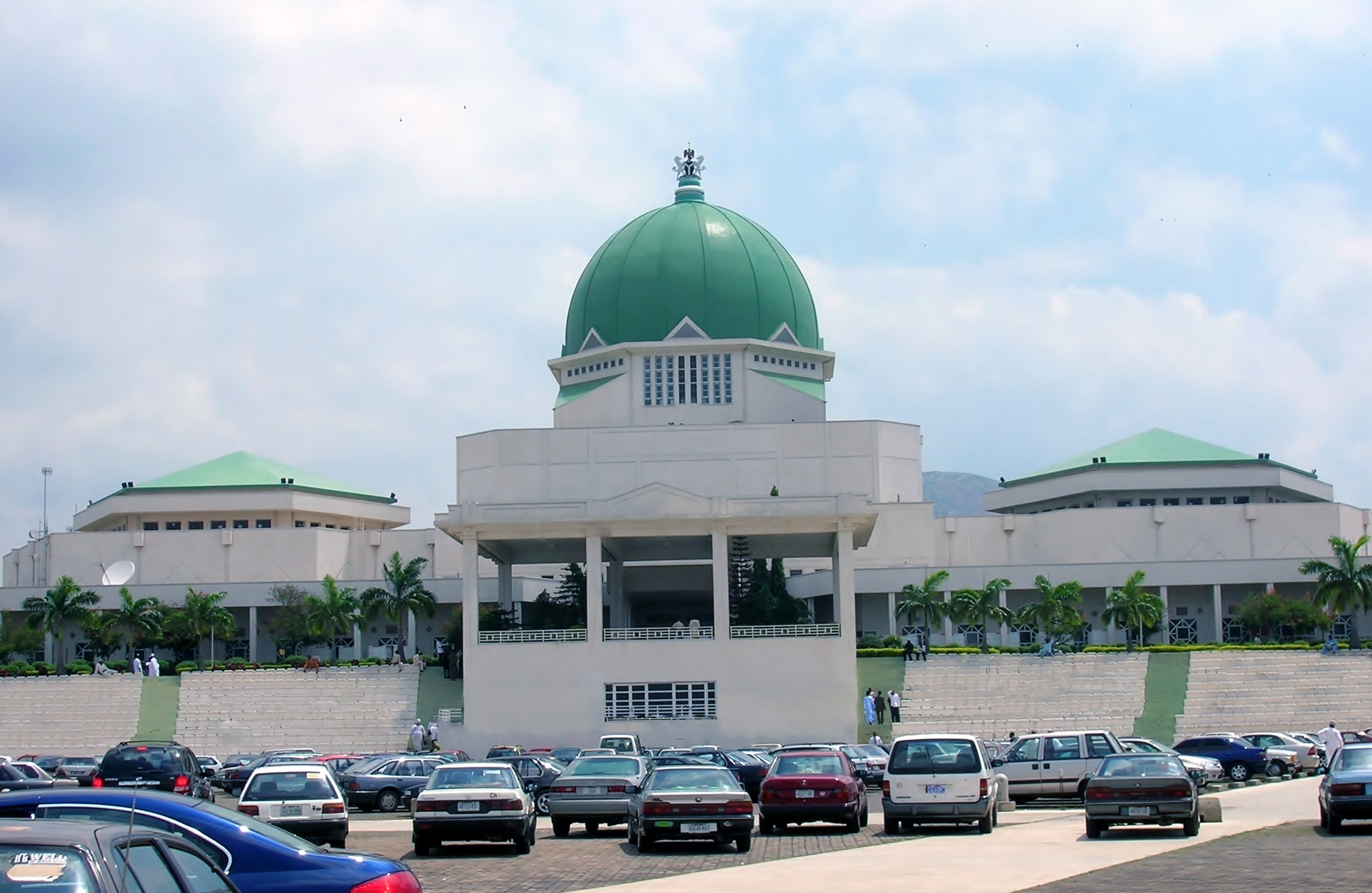
Scores of children and wives of military officers detained over an alleged coup plot yesterday staged a peaceful protest at the National Assembly, demanding a speedy trial and the release of the accused officials.
The protesters who gathered at the entrance of the National Assembly complex, moved in a slow procession while clutching placards with inscriptions such as “Don’t Kill Our Daddies,” “Detention Without Trial is Injustice,” and “Six Months of Torture: Enough Is Enough.”
Amid tears and trembling voices, the children appealed for justice and access to their detained fathers, many of whom they said they had not seen for months.
The appeal was made during a press briefing in Abuja attended by no fewer than 20 wives and several children of the detained officers, including a two-month-old baby.
The families were accompanied by human rights lawyer, Deji Adeyanju and activist Omoyele Sowore.
At the briefing, the families lamented that the officers had been held for over 160 days without trial or contact with their relatives, describing the situation as a violation of their fundamental rights.
Speaking on behalf of the families, Memuna Bashiru said the prolonged detention had thrown their households into uncertainty and emotional distress, noting that while allegations had been widely publicised, families remained in the dark about the fate of their loved ones.
The arrest of the indicted officers was first announced on October 4, 2025, by the then Director of Defense Information, Brigadier General Tukur Gusau, who disclosed that 16 officers were taken into custody for alleged breaches of military regulations and acts of indiscipline.
However, an interim investigation later suggested the existence of a clandestine network of officers, allegedly coordinated by a senior Army officer, which had begun preliminary planning for a coup.
According to the report, the alleged plot involved surveillance of key national assets, including the Presidential Villa, Armed Forces Complex, Niger Barracks in Abuja, and major international airports, with October 25, 2025, cited as the planned date for the operation.
Those reportedly in custody include Brig Gen M. A. Sadiq, Col M. A. Maaji, Lt Col S. Bappah, Lt Col A. A. Hayatu, Lt Col P. Dangnap, Lt Col M. Almakura, Maj A. J. Ibrahim, Maj M. M. Jiddah, Maj M. A. Usman, Maj D. Yusuf, Capt I. Bello, Capt A. A. Yusuf, Lt S. S. Felix, Lt Cdr D. B. Abdullahi, Sqn Ldr S. B. Adamu and Maj I. Dauda.
The alleged plot, according to findings, targeted senior government officials, including President Tinubu and Vice President Kashim Shettima.

In a statement issued yesterday, the party’s National Publicity Secretary, Mr Felix Morka, said the exercise would take place in all wards and designated centres nationwide.
He called on existing members to update their records, while encouraging new entrants to join the party through the digital platform.
“As the electronic membership registration exercise resumes in all wards and designated locations nationwide, we urge existing members to validate their membership while new members are encouraged to register and join the progressive family,” Mr Morka said.
According to him, eligibility for registration is limited to individuals aged 18 and above who possess a valid National Identification Number (NIN).
The party said the initiative is part of efforts to modernise its operations by transitioning to a digital database that would enhance record accuracy and accessibility.
Mr Morka noted that the e-registration would “digitise the party’s membership register, ensure the integrity of records, and enhance efficient access to membership data for planning and management decisions.”
He added that the move is also aimed at promoting internal democracy within the party and strengthening its commitment to democratic innovation.
The APC had previously introduced electronic registration as part of broader reforms to streamline its membership system and improve organisational efficiency.
-
 Editorial2 days ago
Domesticate FG’s Exit Benefit Scheme
-

 News2 days ago
RSU Unveils Five-Year Strategic Dev Plan …Calls For Collective Commitment To Institutional Excellence
-
 News2 days ago
DHQ Confirms Deaths Of Terrorists, Soldiers In Borno Attack
-

 News2 days ago
Tinubu Commissions Bayelsa Gas Turbine, Other Projects Today
-
Business2 days ago
Niger Delta Investment Summit Targets $5bn Inflows, 500,000 Jobs
-
Rivers2 days ago
Dep Gov Seeks Collaboration, Transparency Between RIVCHPP, PHCMB
-
Nation2 days ago
Rumuji Youth Leader Condemns Protest, Disowns Alleged Government Empowerment Claim
-

 Nation2 days ago
Haniel Jack Foundation Awards Five Rivers Indigenes Scholarship