
Featured
60 Bayelsa Communities Submit Oil Spills Evidence To Panel

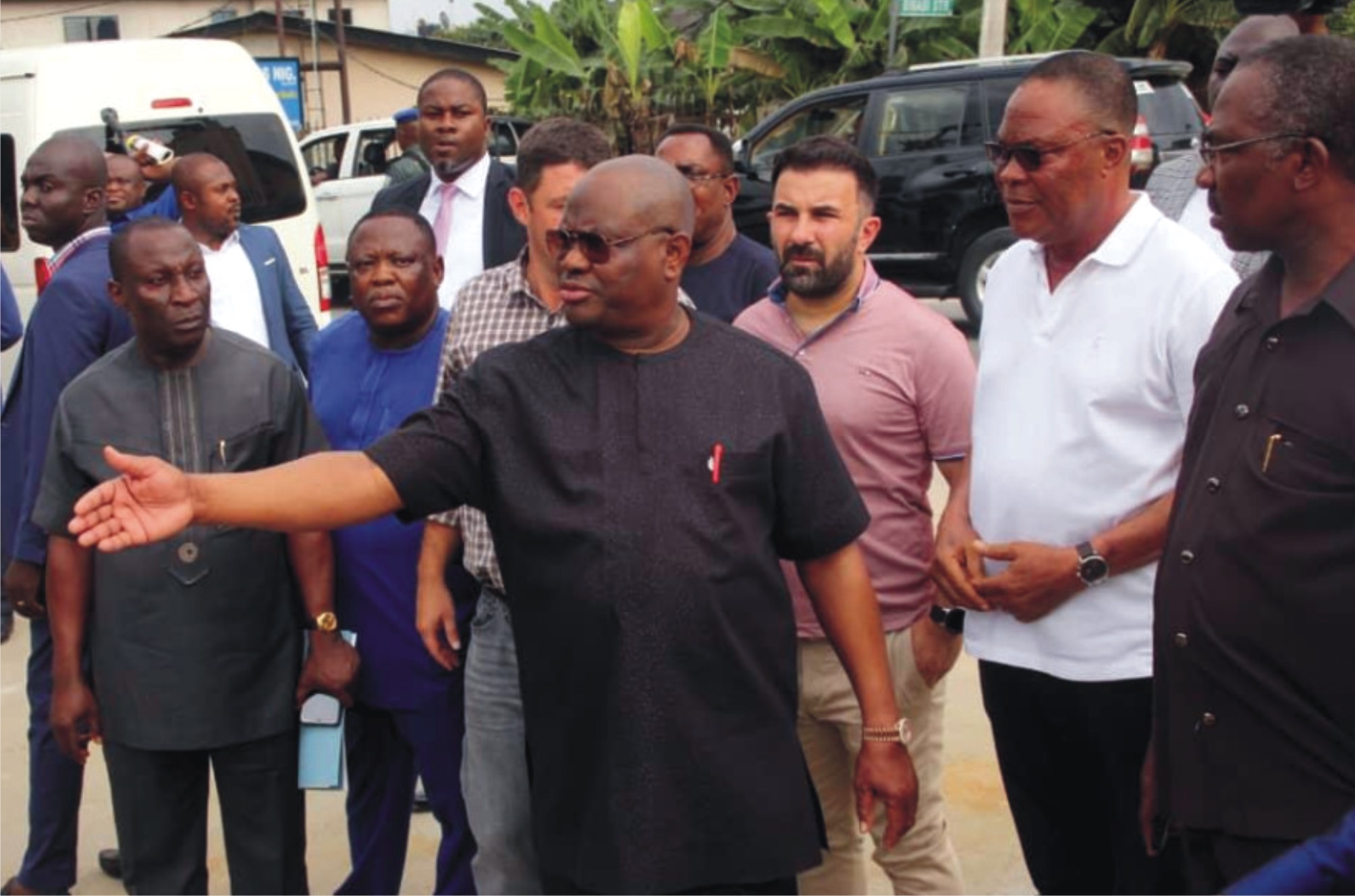
No fewer than 60 communities and groups have presented evidence of oil-related devastation to the Bayelsa State Oil and Environmental Commission (BSOEC) chaired by the Archbishop of York, Dr. John Sentamu.
The 10-man panel inaugurated by the state Governor, Hon Henry Seriake Dickson in March this year rounded off the second round of its fact-finding investigative assignment at the weekend, during which it held roundtable sessions with non-governmental organisations and health experts.
It also visited six ravaged communities in Southern Ijaw, Brass and Yenagoa local government areas of the state.
The commission held a well-attended public evidence session last Friday as communities gave oral evidence of devastation and neglect by oil companies operating in their areas before submitting documented reports to the panel.
The traditional ruler of Agudama community, MC Kipasa, told the commission that they had recorded several oil spills from the operations of both Shell Petroleum Development Company (SPDC) and the Nigeria Agip Oil Company (NAOC), which have seriously affected his community.
“We don’t have fish in our river anymore. Even our land for farming is gone. Nothing is left for us due to these oil spills,” he lamented while thanking Governor Seriake Dickson for giving them hope by setting up the commission.
An Agbura community leader, Chief Igwe Napoleon, while giving evidence said the farmlands and river in his community have been polluted due to oil exploration activities and accused Shell of reneging on the terms of agreement signed with communities in the area.
Stephen Moses from Egbema-Angalabiri also gave evidence of the devastating effects of environmental pollution on his community.
He lamented that oil production had become a curse to his community instead of a blessing.
Hon. L. A. Eminah, who represented communities where the Obama oil with about 12 wells are located, also complained about the effects of gas flaring in the area, saying the heat from the flares had resulted in blurred vision among the locals.
Other speakers included DonatusGbame from Bakiri community in Ekeremor Local Government Area, Comrade Hitler Joseph from Okoroba community, Hon. Ken Again who represented the Amananaowei of Peretorugbene Federated Communities, Chief Shagari Edward of Ogbotobo Community, OjotoThankGod of Agbayama Community, Chief DSP Ikporo of Koluama community and Dr AwoliAnapurere, who is the public relations officer of the Oil and Gas Producing Areas Enlightenment and Empowerment Initiative.
Earlier in his presentatation, Prof.PainghaAlagoa, noted that there were numerous effects of oil spills on the communities, including but not limited to skin diseases, destruction of marine life, respiratory illnesses and chronic fatigue.
He said gas flaring in Niger Delta communities accounted for about 19.75% or one-fifth of the entire global flares and that the dangerous trend will take more toll if not adequately addressed.
In his remarks, the Chairman of the commission, Archbishop Sentamu, decried the lack of political will on the part of the Nigerian government in addressing the environmental devastation in the Niger Delta, saying the time had come for total cleansing and remediation of the affected communities.
“Change must happen even though the laws have not been effective and the issue of compensation have not been addressed. In some communities we visited, it looked like a bomb had been dropped but it was oil spillage.
Elizabeth Vincent, Yenagoa



Rivers State Governor, Sir Siminialayi Fubara, has dissolved the State Executive Council.
The governor announced the cabinet dissolution yesterday in a statement titled ‘Government Special Announcement’, signed by his new Chief Press Secretary, Onwuka Nzeshi.
Governor Fubara directed all Commissioners and Special Advisers to hand over to the Permanent Secretaries or the most Senior officers in their Ministries with immediate effect.
He thanked the outgoing members of the State Executive Council for their service and wished them the best in their future endeavours.
The three-paragraph special announcement read, “His Excellency, Sir Siminalayi Fubara, GSSRS, Governor of Rivers State, has dissolved the State Executive Council.
“His Excellency, the Governor, has therefore directed all Commissioners and Special Advisers to hand over to the Permanent Secretaries or the most Senior officers in their Ministries with immediate effect.
“His Excellency further expresses his deepest appreciation to the outgoing members of the Executive Council wishing them the best in their future endeavours.”
The Independent National Electoral Commission (INEC) yesterday told the National Assembly that it requires N873.78bn to conduct the 2027 general elections, even as it seeks N171bn to fund its operations in the 2026 fiscal year.
INEC Chairman, Prof Joash Amupitan, made the disclosure while presenting the commission’s 2026 budget proposal and the projected cost for the 2027 general elections before the National Assembly Joint Committee on Electoral Matters in Abuja.
According to Amupitan, the N873.78bn election budget covers the full conduct of national polls in 2027.
An additional N171bn is needed to support INEC’s routine activities in 2026, including bye-elections and off-season elections, the commission stated.
The INEC boss said the proposed election budget does not include a fresh request from the National Youth Service Corps seeking increased allowances for corps members engaged as ad-hoc staff during elections.
He explained that, although the details of specific line items were not exhaustively presented, the almost N1tn election budget is structured across five major components.
“N379.75bn is for operational costs, N92.32bn for administrative costs, N209.21bn for technological costs, N154.91bn for election capital costs and N42.61bn for miscellaneous expenses,” Amupitan said.
The INEC chief noted that the budget was prepared “in line with Section 3(3) of the Electoral Act 2022, which mandates the Commission to prepare its election budget at least one year before the general election.”
On the 2026 fiscal year, Amupitan disclosed that the Ministry of Finance provided an envelope of N140bn, stressing, however, that “INEC is proposing a total expenditure of N171bn.”
The breakdown includes N109bn for personnel costs, N18.7bn for overheads, N42.63bn for election-related activities and N1.4bn for capital expenditure.
He argued that the envelope budgeting system is not suitable for the Commission’s operations, noting that INEC’s activities often require urgent and flexible funding.
Amupitan also identified the lack of a dedicated communications network as a major operational challenge, adding that if the commission develops its own network infrastructure, Nigerians would be in a better position to hold it accountable for any technical glitches.
Speaking at the session, Senator Adams Oshiomhole (APC, Edo North) said external agencies should not dictate the budgeting framework for INEC, given the unique and sensitive nature of its mandate.
He advocated that the envelope budgeting model should be set aside.
He urged the National Assembly to work with INEC’s financial proposal to avoid future instances of possible underfunding.
In the same vein, a member of the House of Representatives from Edo State, Billy Osawaru, called for INEC’s budget to be placed on first-line charge as provided in the Constitution, with funds released in full and on time to enable the Commission to plan early enough for the 2027 general election.
The Joint Committee approved a motion recommending the one-time release of the Commission’s annual budget.
The committee also said it would consider the NYSC’s request for about N32bn to increase allowances for corps members to N125,000 each when engaged for election duties.
The Chairman of the Senate Committee on INEC, Senator Simon Along, assured that the National Assembly would work closely with the Commission to ensure it receives the necessary support for the successful conduct of the 2027 general elections.
Similarly, the Chairman of the House Committee on Electoral Matters, Bayo Balogun, also pledged legislative support, warning INEC to be careful about promises it might be unable to keep.
He recalled that during the 2023 general election, INEC made strong assurances about uploading results to the INEC Result Viewing portal, creating the impression that results could be monitored in real time.
“iREV was not even in the Electoral Act; it was only in INEC regulations. So, be careful how you make promises,” Balogun warned.
The N873.78bn proposed by INEC for next year’s general election is a significant increase from the N313.4bn released to the Commission by the Federal Government for the conduct of the 2023 general election.

President Bola Tinubu yesterday expressed grief over the death of a former President of the Academic Staff Union of Universities and one of Africa’s foremost literary scholars, Professor Emeritus Biodun Jeyifo.
Jeyifo passed away on Wednesday, drawing tributes from across Nigeria and the global academic community.
In a condolence message to the family, friends, and associates of the late scholar, Tinubu in a statement by his spokesperson, Bayo Onanuga, described Jeyifo as a towering intellectual whose contributions to African literature, postcolonial studies, and cultural theory left an enduring legacy.
He noted that the late professor would be sorely missed for his incisive criticism and masterful interpretations of the works of Nobel laureate, Professor Wole Soyinka.
The President also recalled Jeyifo’s leadership of ASUU, praising the temperance, foresight, and wisdom he brought to the union over the years.
Tinubu said Jeyifo played a key role in shaping negotiation frameworks with the government aimed at improving working conditions for university staff and enhancing the learning environment in Nigerian universities.
According to the President, Professor Jeyifo’s longstanding advocacy for academic freedom and social justice will continue to inspire generations.
He added that the late scholar’s influence extended beyond academia into political and cultural journalism, where he served as a mentor to numerous scholars, writers, and activists.
Tinubu condoled with ASUU, the Nigerian Academy of Letters, the Wole Soyinka Centre for Investigative Journalism, the University of Ibadan, Obafemi Awolowo University, Oberlin University, Cornell University, and Harvard University—institutions where Jeyifo studied, taught, or made significant scholarly contributions.
“Nigeria and the global academic community have lost a towering figure and outstanding global citizen,” the President said.
“Professor Biodun Jeyifo was an intellectual giant who dedicated his entire life to knowledge production and the promotion of human dignity. I share a strong personal relationship with him. His contributions to literary and cultural advancement and to society at large will be missed.”
Jeyifo was widely regarded as one of Africa’s most influential literary critics and public intellectuals. Among several honours, he received the prestigious W.E.B. Du Bois Medal in 2019.