
Featured
Inspection Of INEC Server, Card Reader: Tribunal Reserves Ruling In Atiku, PDP Request …APC Asks Court To Dismiss Suit

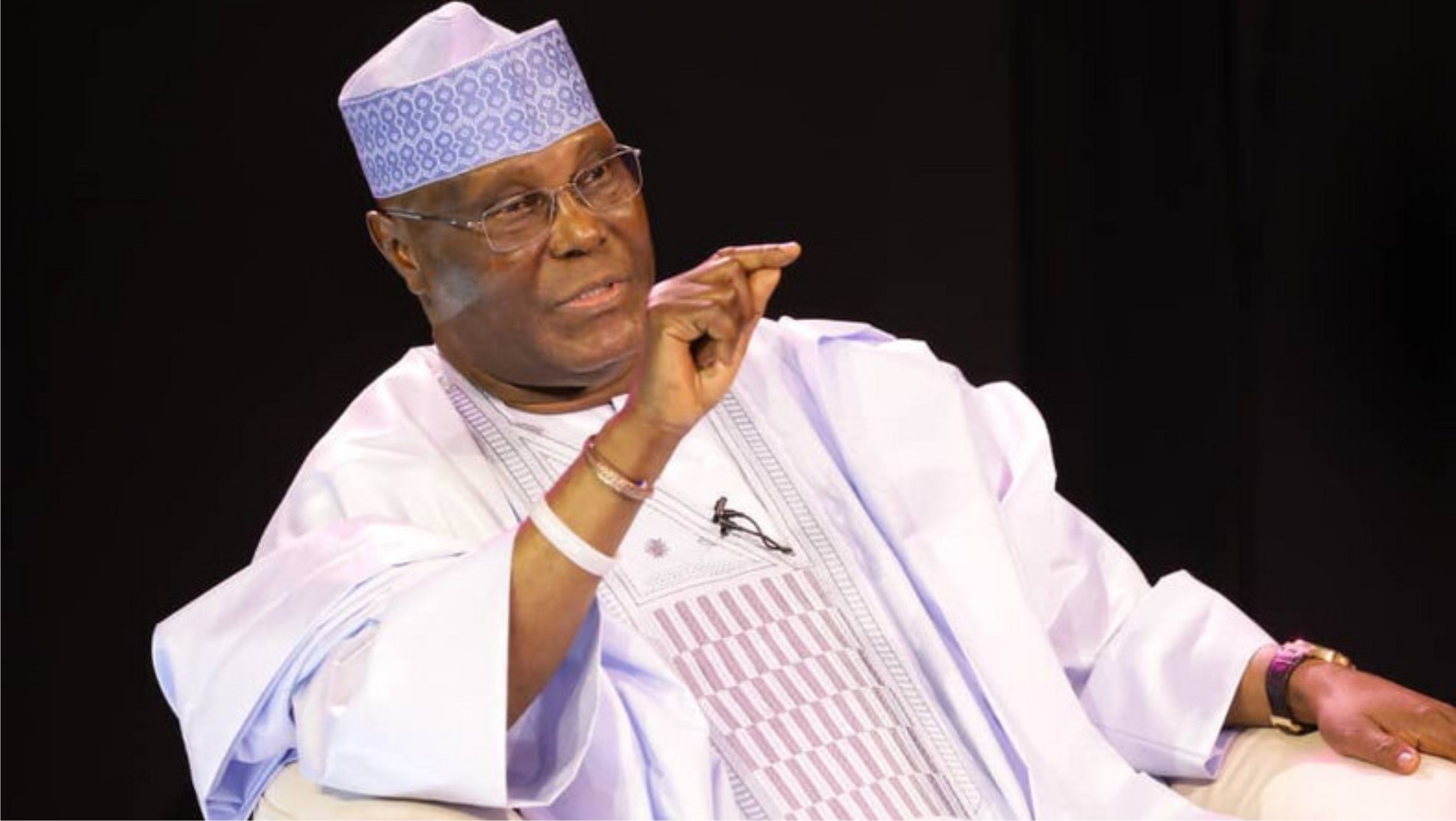
The Presidential Election Petition Tribunal (PEPT) sitting in Abuja, yesterday, reserved ruling on the application filed by Atiku Abubakar and the Peoples Democratic Party (PDP) for access to inspect the server and data of smart card readers used by the Independent National Electoral Commission (INEC) in the conduct of the February 23 presidential election.
The presiding justice of the five-man panel, Justice Mohammed Garba, reserved date for ruling in the application shortly after the counsel in the matter adopted and argued their brief of arguments in the suit.
Garba said the panel would communicate the date of the ruling to the parties’ lead counsel once they are ready.
In moving the motion for inspection of the INEC server and other electoral materials, one of the lead counsel to Atiku and the PDP, Chief Chris Uche (SAN), said the request is essential to their petition challenging the return of President Muhammadu Buhari at the election.
The petitioners had in their petition stated that by the figures obtained from INEC’s server, they and not Buhari and the third respondent, All Progressives Congress (APC), won the presidential election held on February, 23 this year.
According to the figures allegedly obtained from the server, Atiku said he scored 18,356,732 votes as against that of Buhari, whom he said polled 16,741,430.
Uche told the tribunal that the inspection of the server and data is necessary in the interest of justice, transparency and neutrality on the part of the first respondent, INEC.
Responding, the lawyer to INEC, Yunus Usman (SAN), vehemently opposed the application for inspection on the grounds that the Court of Appeal had on March 6 refused the prayers of the petitioners to inspect INEC server and smart card readers.
He maintained that the court having refused the prayers lacked jurisdiction to revisit the same application.
Usman therefore urged the tribunal to dismiss the application, adding that: “We do not have server.”
The lead counsel to Buhari, Chief Wole Olanipekun (SAN) and that of the APC, Lateef Fagbemi (SAN), also made similar argument in opposing the application for inspection.
Olanipekun told the tribunal that it lacks jurisdiction to overule itself, while Fagbemi urged the tribunal to be wary of making an order which it is not capable of enforcing, because INEC has said it has no server.
Consequently, Justice Garba announced that the ruling in the application is reserved to a date to be communicated to parties and adjourned the pre-hearing of Atiku and PDP’s petition till June 24.
Earlier, the tribunal heard the motions filed by INEC, President Buhari and APC urging it to dismiss the petition of the Hope Democratic Party (HDP) and its presidential candidate, Chief Ambrose Oworu, for being incompetent and abuse of court processes.
Olanipekun, in his argument, said that there was no petition filed by the party before the tribunal because what was served on the respondents is a petition against referendum which the court lacked jurisdiction to entertain.
The tribunal however reserved ruling to a date to be communicated to parties in the suit and adjourned the pre-hearing of the HDP’s petition till June 23.
Atiku, who is the presidential candidate of the PDP in the February 23 presidential election and his party are among the three other political parties and their presidential candidates currently seeking the nullification of President Buhari’s victory at the presidential poll.
The forth petitioner, Geff Ojinaka and his party, Coalition for Change (C4C), had without reason on June 10, applied to withdraw their petition against the election of Buhari.
The application, which was not objected to by the respondents in the suit, was accordingly dismissed, leaving that of the PDP, Hope Democratic Party (HDP) and the Peoples Democratic Movement and that of their candidates.
Meanwhile, the All Progressives Congress (APC) yesterday prayed the Presidential Election Petition Tribunal to strike out Atiku Abubakar’s petition against President Muhammadu Buhari’s re-election because the former vice president “is not a Nigerian by birth.”
Mr Abubakar, a former vice president, contested the February 23 general election on the platform of the Peoples Democratic Party (PDP).
The presidential candidate of the PDP and his party approached the tribunal seeking his declaration as the rightful winner of the election.
Lateef Fagbemi, Counsel to the APC made the call while responding to the petitioners’ motion seeking the striking out of APC’s reply to the petition.
“My Lord, I am opposing this application on the qualification of the first petitioner (Abubakar). I am standing by the proof we have supplied in our reply.
“The candidate of the Peoples Democratic Party in the Feb.23 presidential election was not qualified to contest the election in the first place.
“I therefore, pray the tribunal to strike out the petitioners’ application for lacking in competence and merit,’’ Mr Fagbemi said.
The third respondent (APC) insisted that Mr Abubakar was not a citizen of Nigeria by birth and ought not to have even been allowed in the first place to contest the election.
Counsel for the petitioners, Chris Uche, argued that historic records showed that the former vice president was a citizen of Nigeria by birth.
Mr Uche, therefore, urged the panel to discountenance Mr Fagbemi’s submission by granting the application.
The motion filed by the petitioners seeking access to inspect the server and other election materials used by the Independent National Electoral Commission (INEC) was also heard.
Mr Uche had told the tribunal to grant the application as doing so would be in the interest of justice and transparency.
Our source reports that the application was vehemently objected to by all the counsel to the respondents.
On his part, Yunus Usman, SAN, counsel for INEC, said the application was dead before arrival, adding that the electoral body did not collect the results of the election through a server.
“My Lord, the commission did not deploy such technology infrastructure in the last general election,’’ he said.
Wole Olanipekun, counsel for Mr Buhari said the application was laughable, adding that the Court of Appeal in Abuja had ruled against similar application brought to it by the same parties.
“We also wanted such information if the technology was used, but our application demanding access to the server was dismissed. We have attached the enrolled order in our reply,’’ Mr Olanipekun said.
Similarly, Mr Fabgemi, counsel for APC aligned himself to the argument advanced by Messrs Usman and Olanipekun, adding, however, that no provisions in the country’s statute books allowed the request made by the petitioners.
The APC had particularly faulted the claim by the petitioners that they obtained the authentic results of the election from a server maintained by INEC showing that they won.
The electoral body on February 27 announced the second respondent (Buhari) of the APC winner of the election scoring 15,191,847 votes to defeat his closest rival, Atiku, with 11,262,978 votes.
However, the PDP in an affidavit claimed that its candidate instead polled a total of 18,356,732 votes defeating Buhari who scored 16,741,430 votes.
Justice Mohammed Garba reserved ruling on the motions.
The judge went ahead to adjourn further proceedings on the petition until June 24.
HDP’s case
In another development, nine motions and counter affidavits were adopted and argued in the petition by the Hope Democratic Party (HDP) and its presidential candidate, Albert Owuru, instituted against Mr Buhari’s re-election.
Oliver Eya, Counsel for the petitioners had urged the tribunal to cancel the February 23 presidential election on account of alleged deceit by INEC.
Mr Eya explained that shift in the date of the election from February 16 was a clear ploy by the commission to encourage electoral fraud.
He also submitted that the petitioners had conducted a nationwide referendum on February 16 and won the election.
Mr Eya, therefore, prayed the tribunal to grant the motion and go ahead to also declare his clients as winners of the election.
The application came under heavy fire by counsel to the respondents.
Mr Usman, counsel to INEC said the motion was incompetent for failing to include Vice President Yemi Osinbajo as a party to the suit.
Mr Usman also said that the reasons for the shift in the date of the election was discussed with all stakeholders and approved by them before the commission went ahead to announce it.
Justice Garba adjourned hearing in the petition until June 20.
Also, former Vice President, Atiku Abubakar, has said that an administration that cannot deliver on its promises of change and has rendered the country almost comatose cannot be a true friend of June 12 struggle.
In a statement issued in Abuja to mark Democracy Day, the presidential candidate of the Peoples Democratic Party (PDP) in the February election said it is not enough to declare June 12 Democracy Day.
He noted that the significance of the celebration of June 12, 1993, Presidential Election is a reminder of the nation’s history to becoming a democratic country.
His statement added: “On this day twenty-six years ago, Nigeria voted for democracy against the jackboot notion of oppressive totalitarianism.
“The collective decision by Nigerians to elect democracy on that day was not to aggrandize the political elite or to replace the military dictatorship with civilian autocracy. No! The choice of democracy was to restore power to the people.
“Suffice it to state that the idea of June 12 is not merely to declare it as a Democracy Day – much as celebratory and commendable it might seem. The idea behind the event of June 12, 1993, embodies something much more bigger than that.
“It was a threshold moment in our national life that demands of us as democrats to do a soul searching and ask the salient question of all time: how better off are Nigerians?
“It is not enough to declare June 12 a Democracy Day when the government of the day is disrespectful of the rule of law and wantonly disregards court orders on issues that border on fundamental human rights.



Governor of Rivers State, Sir Siminalayi Fubara, says Nigeria needs God-fearing leaders for the nation to move in the right direction and make meaningful progress.
The Governor stated this yesterday when he received in audience, the World President of the Seventh Day Adventist Church, Pastor Erton Kohler; his wife, Andriene Marques Kohler; daughter Mariana Marques Kohler and a retinue of ministers of the church at Government House, Port Harcourt.
Fubara who hailed the Seventh Day Adventist Church for its contributions to education and the grooming of future leaders in Nigeria, expressed delight that the Church had over the years, been investing in education at various levels and currently runs two universities in the country.
He commended the church for not only using its institutions to spread the gospel of Christianity but to groom future leaders for the country.
According to him, religion should not be just about defending one’s faith, but also making meaningful impact on the lives of the people.
He said that by floating these educational institutions, the church has demonstrated capacity to support Nigeria in the task of producing not only educated people but a breed of God-fearing leaders.
“Our country is where it is today because we lack the fear of God. If you have the fear of God, there should be a limit to what you can do because you understand the supremacy of God. But when God is not in your equation, you’ll go beyond the line and that is what has brought us to where we are today.
“So, I feel very happy that you are contributing to the development of our future leaders in this country. We need the right people being in the right place; prepared properly with good minds; that is what we need, not just in Nigeria but round the whole world.,” he said.
Governor Fubara further observed that the absence of God-fearing people in high places to take the right decisions that could impact positively on the society, has also given rise to other problems such as social inequality, poverty, corruption and criminality. According to him, Nigeria needs a system where the average parent could afford quality education for their children and a guarantee that upon graduation, the average child will have the capacity to compete favourably with anybody, anywhere in the world.
“If we have a situation where the little money that you’re being paid as wage can also afford you quality healthcare and after working at least for 15-20 years, you have a roof over your head, tell me why you should be involved in any kind of crime? At that point, you’ll feel secured and this attitude of insecurity about the future that leads to all the social vices we have today won’t be there,” he said.
Governor Fubara expressed appreciation to the delegation for the visit and for their prayers for Rivers State, assuring them of his continued support for their programmes in the state.
Leader of the delegation and World President of the Seventh Day Adventist Church, Pastor Erton Kohler said he was in Nigeria for a special conference of the church during which thousands of the church’s ministers will be undergoing an empowerment programme to further equip them for the task of herding their flocks and serving the society.
He expressed gratitude to the Governor for the warm reception accorded his entourage, saying the memory of the visit will linger in his mind for a lifetime.
Kohler disclosed that the Church has over twenty -four million (24,000,000) members and more than 182,000 places of worship, spread across 212 countries of the world.

The Rivers State House of Assembly has approved the 2026–2028 Medium Term Expenditure Framework (MTEF) submitted by Governor Siminalayi Fubara.
This reaffirms the lawmakers’ commitment to enacting laws and taking legislative actions geared towards the overall development of the State.
The Assembly gave the approval during its Second Legislative Sitting of the Fourth Session held last Friday.
Speaking on the MTEF document during plenary, the House Speaker, Rt. Hon. Martin Amaewhule, noted that by the provision of Section 10(1)(b) of the Rivers State Fiscal Responsibility Law No. 8 of 2010, the MTEF ought to have been laid before the House in September 2025.
Amaewhule explained that traditionally, the document is expected to be presented four months before the commencement of the next financial year and immediately after the expiration of every three-year fiscal cycle.
He, however, stated that in the interest of the State and its people, the House considered it necessary to deliberate on the document, describing it as a precursor to the 2026 Budget Estimates.
The Speaker expressed concern that the year had already progressed significantly before the presentation of the framework.
During deliberations on the document, members examined the assumptions and projections contained in the MTEF and observed that strict adherence to the outlined fiscal parameters would ultimately serve the interest of Rivers people.
The lawmakers maintained that effective implementation of the framework would promote prudent financial management and enhance developmental planning across the State.
Following the debate and positive consideration by members, the Speaker put the question to the House and members voted overwhelmingly in support of the approval of the MTEF.
Meanwhile, during the same sitting last Friday, the House also received a petition from the Chairman of Obio/Akpor Local Government Council, Dr. Gift Worlu.
The petition was presented by the member representing Obio/Akpor Constituency II, Hon. Emilia Amadi.
According to the petition, concerns were raised over an imminent security breach, threats to lives, destruction of property and alleged forceful takeover of property by some lawless persons within parts of the Local Government Area.
Presenting the petition before the House, Hon. Amadi appealed to the lawmakers to revisit the matter and take necessary steps aimed at safeguarding lives and property in the affected communities.
The House is expected to further deliberate on the petition and consider measures to address the concerns raised in order to sustain peace and security in the area.
King Onunwor
Featured
JUNE 12: Democracy Remains Nigeria’s Strongest Path To Unity, Progress, Says Fubara ….Extols Abiola, Wife


Governor of Rivers State, Sir Siminalayi Fubara, has reaffirmed that democracy remains the most effective system of government for Nigeria, given the country’s rich diversity of ethnic, religious, and cultural identities.
In a goodwill message to Nigerians on the occasion of the 2026 Democracy Day celebration, Governor Fubara said June 12 represents far more than a historic date; as it embodies the enduring struggle, sacrifice, and collective aspiration of Nigerians for freedom, justice, and representative governance.
The Governor extended warm felicitations to Nigerians at home and in the Diaspora, paying tribute to the heroes and heroines of the democratic struggle, particularly Chief MKO Abiola, his wife, Kudirat Abiola, and countless others whose courage and sacrifices helped secure the democratic freedoms Nigerians enjoy today.
According to him, “June 12 is a reminder of the price paid for the democracy we enjoy today. The sacrifices made by Chief MKO Abiola, Kudirat Abiola, and many other patriots who laid the foundation for the democratic journey we continue to enjoy today. Their commitment to the principle that power must ultimately reside with the people remains a source of inspiration for every generation of Nigerians.”
Governor Fubara noted that thirty-three years after the historic June 12, 1993 election, Nigeria’s democratic experiment has continued to evolve despite challenges and setbacks.
“Our democratic journey has not been without difficulties, but the resilience of our institutions and the determination of our people have kept the nation moving forward. The ability to express differing opinions, engage in constructive debate, and peacefully choose leaders through the ballot remains one of the greatest achievements of our nation,” he said.
Governor Fubara stressed that democracy provides the best framework for managing Nigeria’s diversity and transforming it into a source of national strength.
“Nigeria’s diversity should never be seen as a weakness. Properly harnessed, it is our greatest asset. Democracy offers us the opportunity to build consensus, promote inclusion, strengthen national unity, and create the conditions for sustainable development and shared prosperity,” he said.
Governor Fubara commended President Bola Ahmed Tinubu, for his commitment to the Renewed Hope Agenda and ongoing efforts aimed at economic revitalization, strengthening security, and deepening democratic institutions across the country.
He reiterated the readiness of Rivers State to continue partnering with the Federal Government in advancing policies and programmes that improve the lives of citizens through infrastructure development, job creation, enhanced security, quality education, healthcare delivery, and good governance.
The Governor further called on Nigerians, regardless of political affiliation, ethnic background, or religious belief, to use the occasion of Democracy Day to renew their commitment to the Nigerian project and the ideals that underpin democratic governance.
“Democracy must not be viewed merely as a periodic electoral exercise. It must be reflected in our daily commitment to accountability, transparency, tolerance, justice, respect for the rule of law, and responsible leadership. As citizens and leaders, we all share a collective responsibility to strengthen our democracy and build a nation that future generations will be proud to inherit,” he said.
Governor Fubara expressed optimism about Nigeria’s future, urging citizens to remain united, hopeful, and committed to the values of peace, dialogue, and national development.
“Together, we can build a stronger, more inclusive, and more prosperous Nigeria where every citizen has the opportunity to thrive and contribute meaningfully to national progress,” he said.
-

 News4 days ago
Soldier, Police Officer Killed As Army Rescues Nine Abductees In Zamfara
-
 News4 days ago
Fubara Reaffirms Commitment To Creating Conducive Environment For Business Growth …Commissions Paint Manufacturing Plant
-

 Sports4 days ago
Fifa Scraps Controversial World Cup in Plan
-

 Business4 days ago
FG Grants Customs Duty, VAT Exemptions On Imported Electric, Gas Vehicles
-

 News4 days ago
PH NBA Election: Committee Uncovers Over 500 Padded Names On Voters’ Register
-
Sports4 days ago
INEC Seeks Media Partnership, Declares Readiness For Osun Guber Poll
-

 Business4 days ago
Vet Doctors Vow Support To Check Rabies Spread In Rivers
-
Politics4 days ago
COUNCIL BOSS RECEIVES RETURNING STAKEHOLDERS TO RAINBOW COALITION IN RIVERS LGA