
Featured
Battle For NASS Leadership Intensifies …I Am Still In The Race For Senate President -Ndume …Gbajabiamila Escapes Court’s Disqualification …We’ve Established Gbajabiamila’s Criminal Case In US -Lawyers …As PDP Reps Deny Endorsing Gbajabiamila

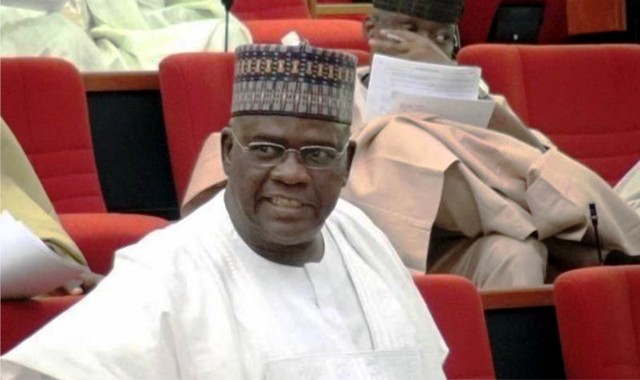
Senator Danjuma Goje (APC-Gombe Central) has stepped down to allow Senator Ahmad Lawan (APC-Yobe) to contest for the Presidency of the 9th Senate.
Goje, who made the announcement after a meeting with President Muhammadu Buhari in Aso Rock Villa yesterday, said he was stepping down in the national interest.
He thanked his supporters and associates across the country, who had been urging him to declare for the Senate Presidency.
Goje said, as an elder statesman in the Senate for a long time, he should be able to appreciate leadership coming from the party elders, adding that in spite of the calls from his supporter, he had because of his loyalty to the president and for the interest of the party, decided to step down from the race.
“Even though he had enormous respect and following, he has willingly chosen to respect the wishes of the party and president, is the best position any politician could take,’’ he said.
He thanked those who had been working behind the scene to try and broker the understanding, adding that the race had been changed for the better.
Meanwhile, one of the major contenders for the position of the Senate President in the incoming Ninth National Assembly, Senator Ali Ndume (APC-Borno) has reiterated his resolve to contest on the floor of the Senate on June 11.
Ndume, who stated this in an interview with journalists, yesterday, also said he had no reason to visit President Muhammadu Buhari at the Presidential Villa in order to step down for Senator Ahmad Lawan, who is the candidate of the All Progressives Congress for the position.
The former Senate Leader also dismissed a social media report that he was invited to the Villa by Buhari who directed him to stop his aspiration to contest for the Senate President position.
The lawmaker said this while contributing to the valedictory session to mark the end of legislative business for the Eight Senate, yesterday.
The Borno-born politician said that the difference between democracy and military government was the independence of parliament.
Ndume said: “We had loads of disagreements. I respect your resilience and your ability to stand for what you believe in. We started together and we were doing fine. What happened was part of the learning process.
“I see a dangerous thing coming. The only thing that makes democracy different from military rule is the Parliament. We need to ensure the independence of the Parliament.
“If we take away the Parliament, what we have is not democracy. I am one of those that were controversial in the last four years. Within the process, we may have offended one another. I take nothing personal.
“This institution is very important. Let us protect the sanctity of the parliament. This is the Nigerian Senate. There is no APC or PDP Senate. This is the Senate of the Federal Republic of Nigeria.
“We will continue to support the other side but we must work at all times to protect the sanctity of the institution of the parliament. We must continue to enhance the sanctity of the Senate at all times.”
Meanwhile, An FCT High Court, Jabi, yesterday refused to bar Mr Femi Gbajabiamila, a top contender of the Speakership of the 9th House of Representatives, from going ahead with his ambition.
The suit with No. M/6810/2019 was filed before the court by way of motion on notice by Mr Ikenga-Imo Ugochinyere and the Action Peoples Party (APP) on May 30.
Other respondents in the suit are Clerk of the National Assembly, the Independent National Electoral Commission (INEC) and the Inspector General of Police.
Justice Charles Agbaza refused to grant the order in an ex-parte motion with No. M/6809/2019 seeking an interim injunction restraining Gbajabiamila from contesting for the speaker of the 9th National Assembly and other principal offices, our correspondent reports
The Judge also refused to grant the fifth order praying the court for an interim injunction restraining the National Assembly from recognising the candidacy of Gbajabiamila for the speakership position or swearing him in peradventure he wins the election.
Justice Agbaza, however, ruled that the defendants should be served the court processes by way of substituted means instead of restraining Gbajabiamila which was part of the orders sought before the court.
The Judge also granted an order of accelerated hearing and adjourned until June 14 for hearing in the suit.
Meanwhile, the claimants, Ugochinyere and his party had alleged in the suit that Gbajabiamila, the member representing Surulere 1 Federal Constituency of Lagos State had been convicted and sentenced to prison.
The claimant alleged that Gbajabiamila had been convicted for the offence of involving in dishonesty and fraud by the Supreme Court of State of Georgia, United States of America in suit No. S06Y0829.
Ugochinyere alleged in the suit that Gbajabiamila gave false information in Form CF001 that he has no criminal allegation or sentence submitted to INEC in 2011 and 2018.
The claimant added in the suit that while the defendant was living in the United States of America, he was subjected to investigation by the Investigative Panel of the State Disciplinary Board for violation of Georgia Rules of Professional Conduct.
Ugochinyere alleged that the offence against Gbajabiamila arose out of the defendant involvement in the case he has between MsHadyatou Barry and her sister Yaye, who were involved in an accident in 2001 and engaged the service of the defendant.
The claimant alleged in the suit that the Gbajabiamila later settled the case for the two sisters, received a cheque of 25, 000 dollars but failed to communicate and remit the share due to them.
Also, a civil rights movement under the aegis of Coalition of Public Interest Lawyers and Advocates (COPA), yesterday, claimed that it was in possession of all documents and evidences which established a clear case of fraudulent dishonesty and abuse of trust against a member of the House of Representatives-elect, Hon Femi Gbajabiamila.
The organisation also faulted the refusal of Gbajabiamila to address allegation of imprisonment, perjury and stealing levelled against him through a proxy and former chairman of the House of Representatives Committee on Appropriation, Hon Abdulmumuni Jibrin.
The Convener of COPA and human rights activist, Pelumi Olajengbesi, told journalists during a press briefing in Abuja, yesterday, that the best opinion left now was for President Muhammadu Buhari to direct security agencies to undertake an in-depth investigations into the allegations against Gbajabiamila.
“COPA is in possession of all documents and evidences that establishes a clear case of fraudulent dishonesty and abuse of trust against Femi Gbajabiamila. The facts against Gbajiamila are, in fact, readily available to the public as they were established in a Court of Record with same being accessible to the public, and are attached herein for the avoidance of doubt.
“We have established correspondence with the Supreme Court of Georgia and we have documents of Disciplinary Case No. S06Y0829 and the family of the victim of Gbajiamila’s fraud, Hadyatou Barry and also Vesta with P. O. Box 23410 Nashville TN, 31202, the insurance company that paid the claim misappropriated by Femi Gbajabiamila”, he stated.
According to him, such investigation by security agencies would “prevent Nigeria from embracing a reputation crisis even before the 9th National Assembly takes off.”
Olajengbesi said, “On Wednesday, June 5, 2019, Nigerians were treated to a classic case of political masturbation when the touted candidate of the ruling All Progressives Congress, Femi Gbajabiamila, chose to spit in our faces rather than respond to the weighty issue of fraud levied against him.
“For several weeks now, Gbajabiamila has been assailed with mounting cases. But, perhaps, in tandem with its public image of fighting corruption with insecticides when it concerns an opposition party members, virtually all the top echelon of the APC have continued to look the other way.
“Even Gbajabiamila adopted the same whimsical attitude, until a combination of civil society, opposition political parties and citizens’ outcry compelled him to promise a ‘world press conference’ during which he would tackle the issues.
“It was, therefore, with utmost shock that come the D-day, instead of having Gbajabiamila mount the rostrum, a motley crowd of APC lawmakers gathered at the elitist Transcorp Hilton, to instead trifle with the issues.
“As a coalition of public spirited officers in the temple of justice, we insist that nobody should be allowed to put his personal integrity at stake, least of all the image of Nigeria and Nigerians for a man who is being gripped with weighty allegations.
In another development, members of the Peoples Democratic Party (PDP) in the House of Representatives have debunked media reports that they had endorsed Hon. Femi Gbajabiamila or any other candidate for the speakership position for the incoming 9th National Assembly.
In a statement, yesterday, in Abuja, the House Minority Leader, Hon. Leo Ogor, described such reports as the handiwork of propagandists and mischief-makers, clarifying that PDP lawmakers had neither endorsed Gbajabiamila nor any other speakership candidate for that matter.
The statement reads, “In our Eid-el-Fitri message, we felicitated with all our Muslim brothers and sisters across Nigeria, and emphasised the significance of worthy virtues, stating that our members may participate in meetings, strategy sessions and other activities of speakership aspirants to come back to the caucus with convincing assessments.
“While some publications disseminated accurate and objective report, few others fabricated a completely new angle with one even using a deliberately fictitious and grossly erroneous headline in a manner that suggests being used for the ruling party’s usual misinformation and propaganda.
“Contrary to what has been sensationally reported by some, at no time did we give our members a directive to vote for any APC speakership aspirant; I hereby categorically dissociate myself and the PDP House caucus from the false comments being attributed to us as participation in meetings should not be deliberately misinterpreted as a directive on voting,” Ogor said.
The minority leader pointed out that the PDP House Caucus has remained solidly united although it has continued to grant audience to various speakership aspirants who were currently consulting them.
Meanwhile, the former Abia State Governor, Orji Uzor Kalu, has insisted that he would run for the position of Deputy Senate President even if the All Progressives Congress (APC) opposes his ambition.
He said this when he appeared on Channels Television’s Sunrise Daily, yesterday.
“Let me be honest with you, even if the party asks me not to run, I will run on the floor of the House. This is one position I have to run for because you cannot leave the South-East alone, you can’t leave them behind,” Kalu said.
He further stressed that giving the South-East a worthy position was in line with ensuring that the nation was ruled with equity.
“We are in the process of doing the right thing, and the East will be given a place in the scheme of things. I am asking that the East should be given the Deputy Senate President.
“There is a high level of discussions about that, and I’m sure that it would be a law in the House,” he added.



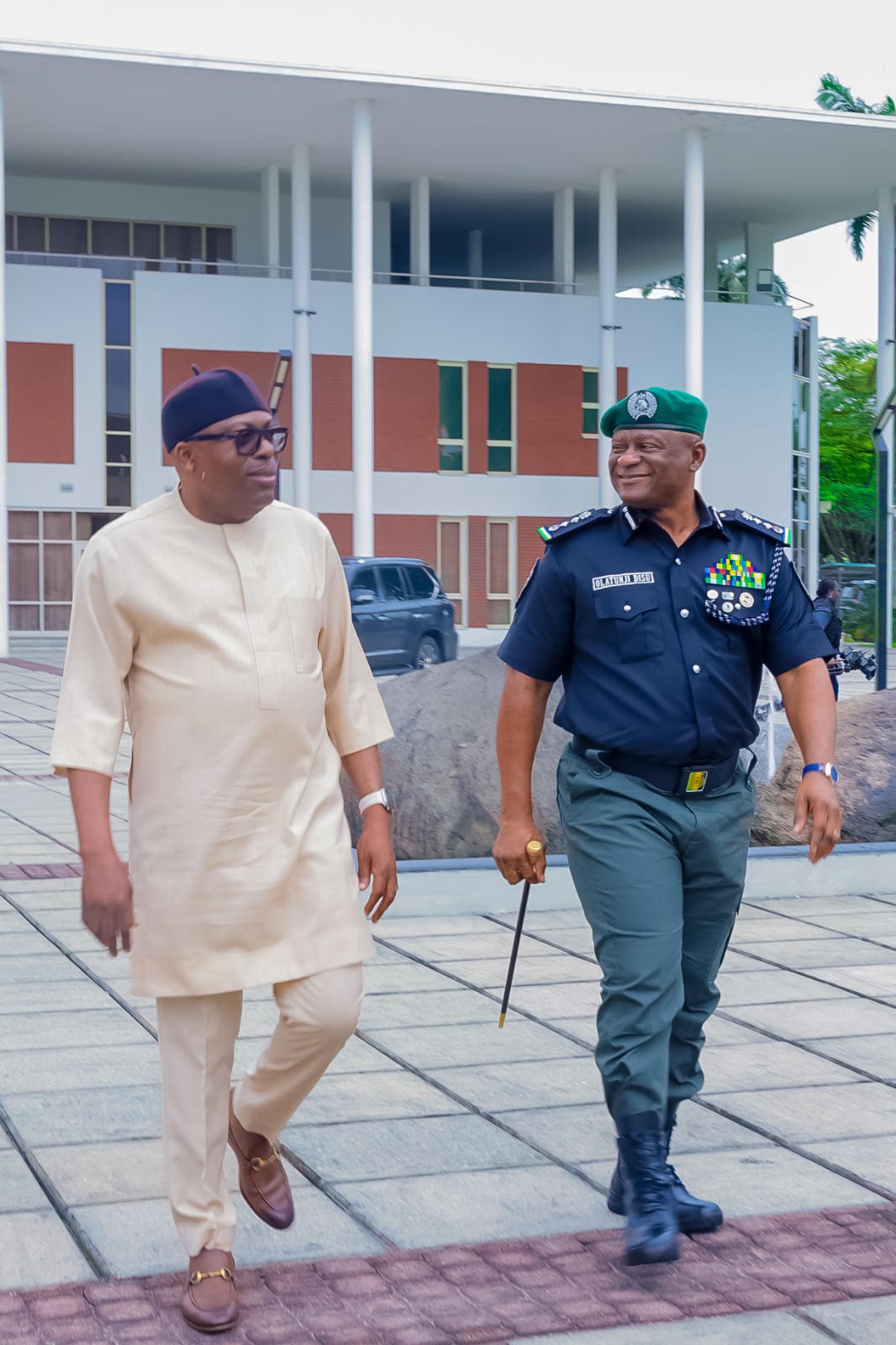
The Rivers State Government has called on stakeholders, community leaders, parents and relevant education authorities to intensify efforts to identify and enrol out-of-school children across Nigeria, stressing that every child deserves access to quality and inclusive education.
Governor Siminalayi Fubara made the call, yesterday, during the regional campaign on engaging community structures to promote the enrolment of out-of-school children and the regional flag-off of the 2026/2027 enrolment drive for southern states, held in Port Harcourt.
Represented by the Secretary to the State Government, Dr Dagogo Wokoma, Governor Fubara reaffirmed that education remains a fundamental pillar of sustainable development and emphasised the need to ensure that no child is left behind because of economic hardship, social background or other barriers to schooling.
He noted that expanding access to education was essential to promoting sustainable development, social inclusion and equal opportunities, enabling children to reach their full potential and contribute meaningfully to society.
The governor urged participating states and communities to translate their commitments into concrete and measurable actions by reaching vulnerable children, strengthening community engagement and encouraging parents and guardians to make their children’s education a priority.
He reiterated the state government’s commitment to initiatives aimed at expanding access to education, particularly for children excluded from formal schooling.
“Rivers State remains committed to supporting initiatives that expand access to inclusive and quality education, particularly for vulnerable children who may have missed the opportunity to attend formal schools,” Fubara stressed.
Also speaking, the Executive Secretary of the Universal Basic Education Commission (UBEC), Aisha Garba, described the growing number of out-of-school children as one of the major challenges confronting the education sector.
She called for a collective and collaborative approach among governments, communities, parents and other stakeholders to address the problem, stressing the need to ensure that no Nigerian child is denied the fundamental right to education.
The programme was organised by the Universal Basic Education Commission in collaboration with the Rivers State Government, as part of efforts to strengthen community participation and promote school enrolment across the southern states for the 2026/2027 academic session.

The Federation Account Allocation Committee (FAAC) has shared the sum of N2.428 trillion among the Federal Government, 36 states government and the 774 Local Government Councils (LGCs) as revenue for the month of September.
The Director, Press and Public Relations, Office of the Accountant-General of the Federation (OAGF), Mr Bawa Mokwa, said this in a statement in Abuja, yesterday.
Mokwa said the allocation was approved by FAAC at its October meeting held in Abuja.
He said the N2.428 trillion distributable revenue comprised of statutory revenue of N1.672 trillion, distributable Value Added Tax (VAT) revenue of N756.587 billion.
Mokwa quoted the FAAC communiqué as saying that total gross revenue of N3.913 trillion was available in the month of September 2026.
He said a total deduction for cost of collection was N131.758 billion while total transfers, refunds and savings of N1.352 trillion.
According to him, a gross statutory revenue of N3.096 trillion was received for the month of September 2026.
“This was higher than the sum of N2.850 trillion received in the preceeding month by N246.384 billion.
“Gross revenue of N816.872 billion was available from the Value Added Tax (VAT) in September 2026.
“This was lower than the N834.843 billion available in the month of August 2026 by N17.972 billion,” he said.
Mokwa explained that the Federal Government received N832.242 billion and the state governments received the sum of N799.872 billion.
He said the LGCs received N560.660 billion, while the sum of N236.049 billion (13% of mineral revenue) was shared to the benefiting state as derivation revenue.
Mokwa said in the N1.672 billion distributable statutory revenue, the Federal Government received N756.583 billion and the State Governments received N383.749 billion.
He said the LGCs received N295.855 billion and the sum of N236.049 billion (13% of mineral revenue) was shared to the benefiting States as derivation revenue.
The director said from the N756.587 billion distributable Value Added Tax (VAT) revenue, the Federal Government received N75.659 billion, the State Governments received N416.123 billion and the LGCs received N264.805 billion.
“In September 2026, Petroleum Profit Tax (PPT), Hydrocarbon Tax (HT), Petroleum Royalties, Import Duty, CET Levies and Excise Duty increased significantly.
“Also, Companies Income Tax (CIT), CGT & SDT, Value Added Tax (VTA), Mineral Royalties, and Gas Flared Penalty, Rental Gas Flared Fee and Misc. Oil Revenue decreased considerably,” he said.
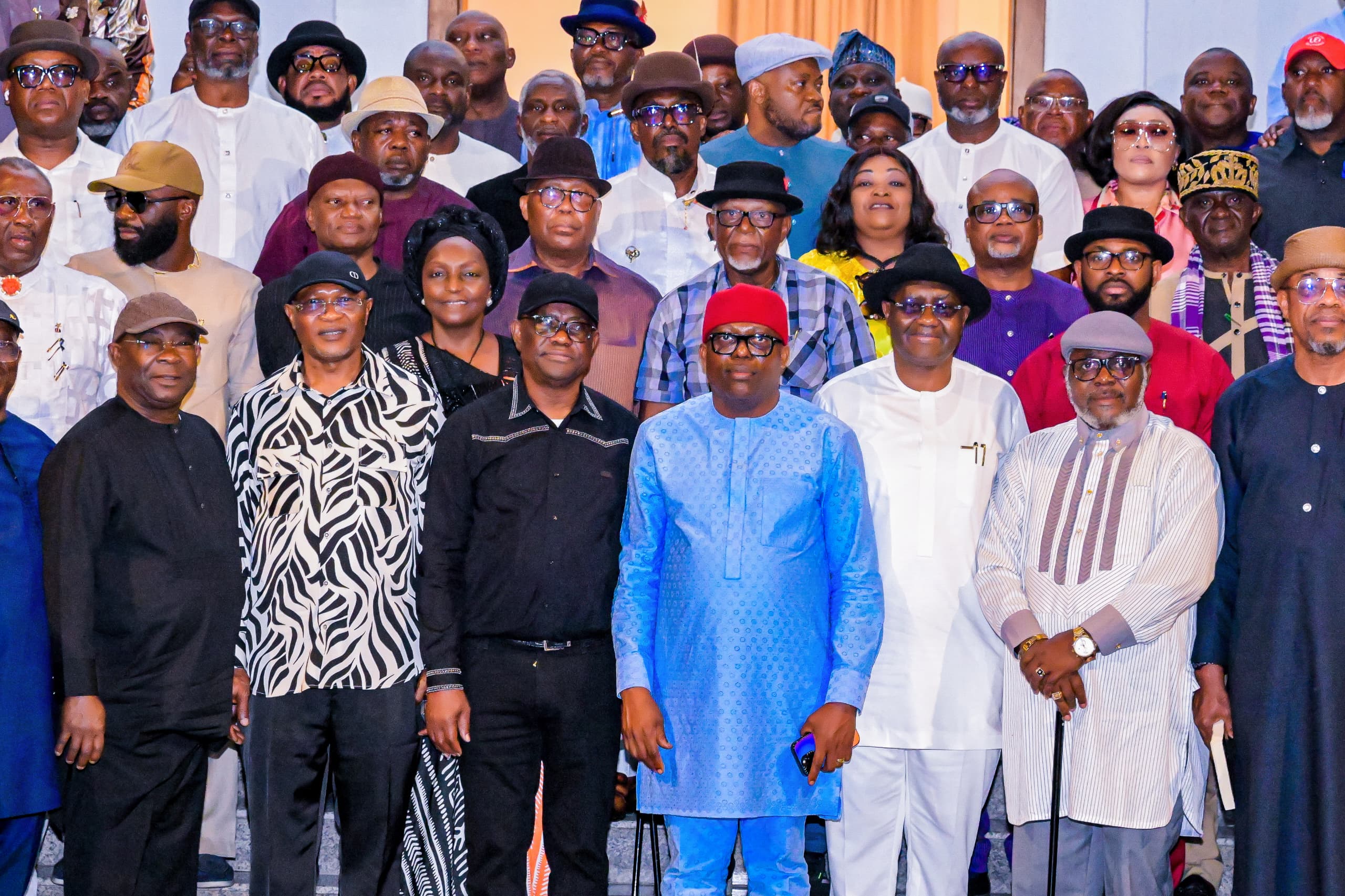
The Nigeria Labour Congress (NLC) has given the Federal Government a two-week ultimatum to reduce the price of petrol, commence renegotiation of the national minimum wage and implement outstanding agreements with workers.
The ultimatum followed a joint meeting of the National Executive Council and Central Working Committee of the NLC held at the Olaitan Oyerinde Hall, Labour House, Abuja.
In a communiqué signed by the NLC President, Joe Ajaero, and made available to newsmen, yesterday, the union said the two-week ultimatum would commence on Friday, October 9, 2026.
It warned that failure by the government to meet its demands would compel the Congress to take further action.
The NLC specifically demanded that the government reduce the price of Premium Motor Spirit to the level it was when the current national minimum wage was signed into law in 2024.
It also demanded the immediate commencement of negotiations for a new minimum wage, implementation of the February 5, 2026, Terms of Settlement reached with the Joint Health Sector Unions and Assembly of Healthcare Professionals, and action on the demands of the Joint Public Sector Negotiating Council.
The Congress further demanded tax relief and immediate wage awards for workers, arguing that the measures were necessary to cushion the impact of rising living costs.
The NLC said, “The current national minimum wage has been rendered worthless by the relentless depreciation of the naira and the astronomical rise in the cost of living.”
It added that workers could no longer meet basic needs, including food, shelter, healthcare, transportation and education, on their current earnings.
The labour body, therefore, demanded that the Federal Government commence renegotiation of the national minimum wage before the end of October.
“NEC-in-session demands that the Federal Government commence the renegotiation of the national minimum wage before the end of this month,” the communiqué stated.
The Congress also linked the erosion of workers’ purchasing power to the high cost of petrol, saying the price of the commodity had continued to drive up transportation costs and the prices of other essential goods.
“The exorbitant pump price of petrol has had a cascading effect on the cost of transportation, food, and other essential goods, further deepening the hardship of workers and the masses,” it said.
The NLC further demanded that the government grant tax relief to workers and immediately introduce wage awards, describing the measures as “the bare minimum required to alleviate the suffering of Nigerian workers and restore a measure of dignity to their lives.”
The latest ultimatum escalates the labour movement’s pressure on the Federal Government after public-sector workers under the Joint National Public Service Negotiating Council embarked on a three-day warning strike earlier in October over rising living costs, petrol prices, wage awards and minimum wage negotiations.
The workers had demanded, among other measures, a reduction in petrol prices and the commencement of negotiations for a new minimum wage.
The NLC had also raised concerns in September over the declining purchasing power of workers, with Ajaero arguing that the N70,000 minimum wage had been overtaken by increases in the cost of food, transportation, housing, education and other essential expenses.
The current minimum wage was approved by President Bola Tinubu in July 2024 after negotiations involving the government, organised labour and the private sector.
Tinubu increased the Federal Government’s offer from N62,000 to N70,000 and agreed that the wage should be reviewed after three years rather than five years.
The NLC’s latest demand comes as the Federal Government announced fresh measures aimed at containing petrol-price pressures.
Yesterday, the Minister of Finance and Coordinating Minister of the Economy, Taiwo Oyedele, said the government was negotiating a ceiling of N1,350 per litre on the ex-gantry or landing cost of petrol, with monthly reviews, as part of measures to reduce price volatility.
The proposed ceiling does not mean petrol would necessarily sell at N1,350 per litre at filling stations.
The government also announced a 30-day discount on petrol dispensed by the Nigerian National Petroleum Company Limited (NNPCL), with priority given to public transporters.
Oyedele said the arrangement was not a return to subsidy but an effort to sell the product at cost.
However, the NLC is seeking a more substantial reduction, insisting that petrol should return to the price level that prevailed when the N70,000 minimum wage was enacted in 2024.
The Congress also called for the implementation of the agreement reached with JOHESU in February, as well as the demands presented by the Joint Public Sector Negotiating Council.
It warned that failure to respond within the two-week period would have consequences.
“Failure of which the NLC will be compelled to take remedial steps as would be directed by the relevant organs,” the communiqué said.
The union consequently directed its affiliates and allies to remain prepared for further action.
“NEC-in-session reaffirms the historical responsibility of the NLC to resist all forms of exploitation and oppression,” it stated, urging its affiliates to remain “on high alert and fully prepared to engage in decisive efforts against all anti-people policies.”
The development also comes amid fresh labour tensions in Abuja, where the FCT Council of the NLC commenced an indefinite strike on Wednesday over disputes with the FCT Administration concerning teachers’ promotion policies.
The council directed workers across public and private establishments to withdraw their services after the expiration of a seven-day ultimatum.
The latest NLC ultimatum puts renewed pressure on the Federal Government to address wage and fuel-price concerns as both sides grapple with disagreements over the implementation of previous labour agreements and measures to cushion the impact of economic reforms.
The NLC said its demands were aimed at protecting workers and the wider population from further deterioration in their standard of living, insisting that Nigerian workers must remain “resolute, organised, and uncompromising” in the struggle for improved living conditions.
-

 Niger Delta18 hours ago
Diri Restates Stance On Lagos-Calabar Coastal Highway
-

 Niger Delta18 hours ago
C’River, NUJ Pay Tribute To Late Guardian Editor
-

 News19 hours ago
NDLEA Recovers Tons Of Illicit Drug Consignments In Nine States
-

 Opinion17 hours ago
Checking Voter Apathy In Nigeria’s Electoral Process
-

 Sports15 hours ago
Nigerian Trio Target Titles At PFL Africa Finals
-
 Education15 hours ago
FCE Yola Graduates 3,555 Teachers , Seeks Upgrade to University
-
 Politics15 hours ago
2027: DICKSON’S EX-ALLY VOWS TO WORK AGAINST NDC INTEREST IN BAYELSA
-
 Politics15 hours ago
2027: GROUP PLEDGES 40,000 SUPPORTERS FOR COALITION CANDIDATES IN RIVERS