
Politics
Venezuela In Crisis

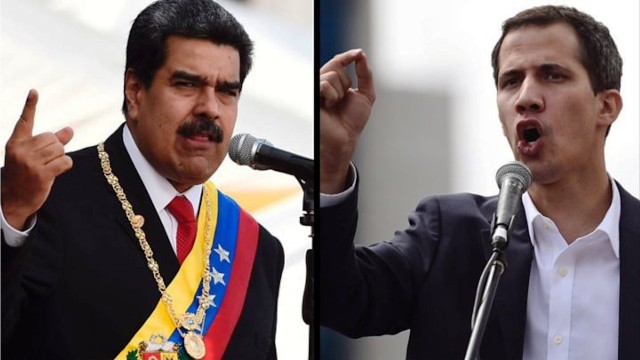
The crisis in Venezuela seems to be getting worse week by week following the disputed presidential elections held in May 2018 in which President Nicholas Maduro was re-elected.
Following the hues and cries, the national assembly become factionalised with the opposition controlled majority on the 10th of January 2019 recognising the parliamentary leader, Juan Guaido as the acting president of the country who eventually on the 23rd of January declared himself as the president of the country, a direct challenge to the incumbent president.
Why did this crisis start in the first place? According to political analysts, two major factors created this high level of political metability in venezuela a once prosperous and peaceful country. The first was the economic meltdown which began in 2010 under the presidency of the Late Hugo Chavez, and the non-compromising nature of the incumbent president Nicholas Maduro who the opposition claimed rigged the elections of 2014 and that of 2018. In addition to that, there are the allegations that apart from the rigging of the 2018 presidential elections, major opposition candidates were Prevented from running for offices.
As the political situation continues to deteriorate, the US, Bazil, Canada with some Latin American countries and some European Union countries have recognized Juan Guaido as President of venezuala while Russia,China, Cuba, Iran and their alised still recognise Nicholas Maduro as the legitimate president of the country.
As the tension continues to mount, some leading opposition figures have fled, some detained and attempts to factionalise the armed forces and the judiciary have so far failed and despite the sanctions imposed by the United States of America on venezuala, Maduro is still hanging on accusing the opposition for colluding with the American government for trying to overthrow his administration.
However, the opposition is not relenting in its effort to get rid of Maduro from office as the daily protest to oust him continues.
But what is quite worrisome is the unforeseen consequences of the action of the opposition. What if the protests turn violent and result in a civil war like that of Syria, which resulted in the destruction of over 40 per cent of the country’s infrastructure and displacement of millions of people. For now the scenario is relatively calm and hopefully the people of venezuela are more mature in their political outlook, that is both the opposition and members of the ruling party.
If Maduro were to be generally unpopular like Omar Al-Bashir of Sudan or Abdelaziz Bouteflika of Algeria he would have been removed from office long ago. In any case, every country is unique and what may work in country A, may not work out in Country B.
As the politicians lock horns for supremacy, one thing that they have tried to avoid with saner minds cautioning them is never to allow the country plunge into a civil war as dialogue and negotiations are always the best option in resolving issues. Otherwise, deadly armed merchants are waiting on the wings cash in whenever there is instability and the possibility of a civil war in any country.
The examples are many, that’s why even the United States of America is cautious in its approach to the crisis in Venezuela.
For a country to scide into such political crisis, several factors come into play such as personal ambition, the greed for power and foreign interest groups who might not like the politics of the incumbent in power or the possibility of creating chaos so that an individual or a politician who they believe will protect their interest will propped up to take over the reigns of government. So they are ever ready to use every means available to instigate crisis or cash on the existing crisis to achieve their aims by supporting a faction either through diplomatic support or financial inducement to bring about their desired change.
If people say that nobody benefits form chaos in the political life of any country, then we are still living in a fantasy world. Definitely, in every civil war, manufacturers of arms and ammunitions and providers of the necessary logistics and other accessories will hope to make sales and profit.
The economices of these countries will make improvements with job creation based on the increasing demands for their products and services. So one thing that should be paramount to the people of Veneuzuela is never to allow their country to become the next playground or battle field for any proxy war for merchants of death. They should learn from Libya, Somalia, Syria and Yemen.
They should also ask themselves why the western countries resolve their own political crisis without all these drama, bloodshed and the appeal for foreign support, whereas the reverse is the case for developing countries. It is only when we play into the hands of opportunists next target. Countries in Latin America have passed through violent revolutions after their independence from Spain and Portugal. They have also experienced brutal military dictatorships especially in the 20th century, and now that all of them are under democratic rule, there is no need or any of therebe it Venezuela to go book to the old path of bloodshed and war of attrition.
For any civil war to occur, it venezuala is only the people of venuzuela that will suffer the consequences and all what the United Nations will do is just to pass resolutions upon resolutions to end the conflict. Yemen is in a mess likewise Syria.
The future can still be better only if there is dialogue and trust.
Tonye Ikiroma-Owiye



Alhaji Mohammed Kasim, the candidate of the Peoples Democratic Party (PDP), has won the Gwagwalada Area Council chairmanship election in the Federal Capital Territory (FCT).
Philip Akpeni, the Returning Officer of the Independent National Electoral Commission (INEC), announced the results on Sunday morning.
Alhaji Kasim polled 22,165 votes to defeat Alhaji Yahaya Shehu of the All Progressives Congress (APC), who polled 17,788 votes.
Alhaji Biko Umar of the All Progressives Grand Alliance (APGA) scored 1, 687 to come in third place.
“I am the returning officer for the 2026 FCT Area Council, Gwagwalada chairmanship held on Feb. 21, 2026,” Akpeni said.
“That Mohammed Kasim of PDP, having certified the requirements of the law, is hereby declared the winner and is returned elected.”
In the Abuja Municipal Area Council (AMAC), Hon. Christopher Maikalangu, the APC candidate, was declared the winner of the chairmanship poll with 40,295 votes.
Andrew Abue, the Collation Officer for AMAC, said Hon. Maikalangu, who is the incumbent AMAC chairman, was returned elected having scored the highest number of votes cast.
The African Democratic Congress (ADC) came second with 12,109 votes, while the Peoples Democratic Party (PDP) polled 3,398 votes.
According to Abue, the total number of valid votes in the chairmanship poll was 62,861, while the total votes cast stood at 65,197.
He added that the number of registered voters in AMAC was 837,338, while the total number of accredited voters was 65,676.
Meanwhile, the Independent National Electoral Commission (INEC) has declared Mr. Joshua Ishaku of the All Progressives Congress (APC) as the winner of the Bwari Area Council Chairmanship election.
Announcing the result on Sunday in Bwari, the Returning Officer for the election, Prof. Mohammed Nurudeen, stated that Ishaku polled a total of 18,466 votes to emerge victorious in the February 21, 2026 poll.
“I am the Returning Officer for the 2026 FCT Area Council, Bwari chairmanship held on Feb. 21, 2026. That Joshua Ishaku, having satisfied the requirements of the law, is hereby declared the winner and is returned elected,” Nurudeen said.
According to the results declared, the candidate of the African Democratic Congress (ADC) secured 4,254 votes, while the Zenith Labour Party (ZLP) polled 3,515 votes to place second and third respectively.
The declaration adds to the series of results emerging from the 2026 FCT Area Council elections, as political parties assess their performance ahead of future contests.
INEC UPLOADS 2,602 OF 2,822 FCT CHAIRMANSHIP RESULTS ON IReV
The Independent National Electoral Commission (INEC) had uploaded 2,602 out of the 2,822 expected polling unit results from Saturday’s chairmanship elections in the Federal Capital Territory (FCT) as at 5:55am on Sunday, data retrieved from its Result Viewing Portal (IReV) showed.
According to The Tide source, the figure represents an overall upload rate of about 92.2 per cent across the six area councils of the territory.
A council-by-council breakdown indicates that Municipal Area Council recorded the highest number of submissions in absolute terms, with 1,309 of 1,401 polling unit results uploaded, representing 93.43 per cent.
In Gwagwalada Area Council, 330 of the expected 338 polling unit results had been uploaded, representing 97.63 per cent — the highest upload rate among the six councils.
In Bwari Area Council, INEC uploaded 463 of 485 polling unit results, translating to 95.46 per cent.
In Abaji Area Council, 129 of 135 polling unit results had been uploaded as at 5:55am, representing 95.56 per cent.
In Kwali Area Council, 164 of the expected 201 polling unit results were available on the portal, representing 81.59 per cent.
In Kuje Area Council, 207 of 262 polling unit results had been uploaded, representing 79.01 per cent — the lowest rate among the six councils as at the time of review.

In a statement signed by its Chairman, Emeka Nwankpa, and Secretary, Dapo Okubanjo, the group described the swift assent as a clear demonstration of political will to strengthen Nigeria’s electoral process ahead of the 2027 general elections.
“We see the decision by President Bola Tinubu to sign the reworked 2022 Electoral Act into law within a few hours of its passage as a demonstration of political will to ensure an improved electoral process which the new law envisages,” the group said.
The TMSG expressed confidence that the development would enable the Independent National Election Commission (INEC) to quickly align its operations with the new provisions in preparation for the 2027 polls.
The group noted that the provision for electronic transmission of results had been contentious but described its codification in the law as a significant step forward.
“So, for the first time, the country’s electoral law would be recognising the use of the Bi-modal Voter Accreditation System (BVAS) and the result viewing portal, IREV, which were just INEC guidelines in 2023,” it stated.
According to the TMSG, although the Act provides for electronic transmission of results from polling units to the IREV portal, it also makes room for manual transmission of Form EC8A result sheets as a backup in the event of technological failure.
“Unlike some Nigerians, we do not see anything wrong with the fallback plan but we agree with the President that no matter how beautiful a process is with improved technology, the onus lies on the people manning it to show good faith and ensure that the votes of the people really count at the end of the day,” the statement added.
The group highlighted other key provisions in the amended law, including the streamlining of party primaries to either consensus or direct primaries, early release of funds to INEC, reinforced measures against over-voting, and stiffer sanctions for electoral offences such as falsification of results.
It also pointed out that the mandatory notice period for elections has been reduced from 360 days to 300 days, giving INEC more flexibility in adjusting the timetable for the 2027 elections, especially where it may clash with Ramadan.
The TMSG further observed that the President’s decision to sign the bill days before the forthcoming Area Council Election in the Federal Capital Territory (FCT) underscores his desire for the law to take immediate effect.
“And by signing the amendment bill a few days before the Area Council Election in the Federal Capital Territory (FCT), it is obvious that the President is keen on ensuring that the 2026 Electoral Act takes immediate effect.
“Nigerians would also have an opportunity to see some of the key provisions of the new electoral law become operational, especially the electronic transmission of results,” it said.
The group expressed optimism that the current INEC leadership would leverage the new legal framework to deliver a more credible and widely acceptable electioneering process than in previous electoral cycles.

-
Maritime3 days ago
Nigeria To Pilot Regional Fishing Vessels Register In Gulf Of Guinea —Oyetola
-

 Sports3 days ago
Gombe-Gara Rejects Chelle $130,000 monthly salary
-
Maritime3 days ago
Customs Declares War Against Narcotics Baron At Idiroko Border
-
Maritime3 days ago
NIMASA,NAF Boost Unmanned Aerial Surveillance For Maritime Security
-

 Sports3 days ago
TEAM RIVERS SET TO WIN 4×400 ” MORROW” …Wins Triple jump Silver
-

 Sports3 days ago
NPFL Drops To 91st In Global League Rankings
-
Maritime3 days ago
NIWA Collaborates ICPC TO Strengthen Integrity, Revenue
-

 Sports3 days ago
NPFL Impose Fines On Kwara United Over Fans Misconduct