
Sports
Rivers At 52: ‘We Are Yet To Score A Goal But…’

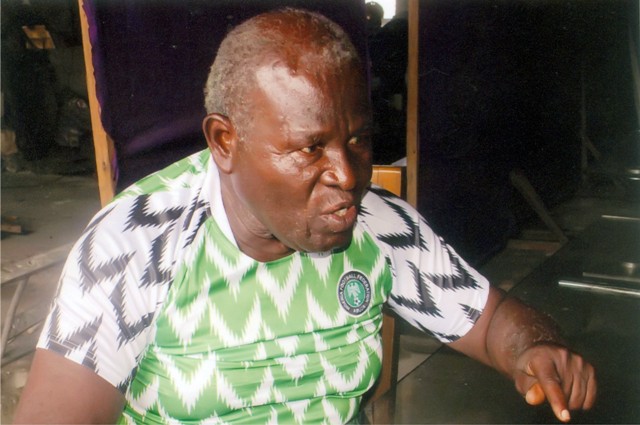
Sir, Rivers State will be 52 years in a week time, and we want to look at how far we gone and the future. Can you please introduce yourself to us?
I am Rev (Dr) Sokari Soberekon. I am a minister of the gospel. And when you hear (Rev) Doctor you will think I’am a graduate, but I am not. I have not been to the university before and I am illiterate academically, but literate in social and technology affairs. God gave me the tongue of the learned and I speak like a professor even though I am not one. I am very strong physically; I do sports, at my age, I can still break coconut with my fists. I am a sports trainer, and so I don’t drink alcohol. As a physical training instructor and I was also an activist, I was known as the roving parliamentarian in Rivers State. I used to move around the state telling indigenous and non-indigenous governors what’s needed in the state. This is the state I worked for and fought for: I fought for Rivers State financially and physically and spiritually. Today, I am glad I am alive because so many have died. We are very few that fought for Rivers State that is alive. Some of those alive include Dr (Col) Akobo, A. K. Horsfall and Alfred Diete-Spiff, our first military governor and Amanyanabo of Twon Brass. We also have Captain LongJohn and others who have worked for Rivers State. Even those alive today have not been recognised, but we still love Rivers State even though politicians have snatched power. But the sweet thing is I am alive to see Rivers State at 52 years.
For this nation to get independence, my father worked hard with Chief Dappa Biriye. In short, Chief Biriye was very young when he started fighting for Calabar, Ogoja, and Rivers States. Others that joined include GKJ Amachree. Infact Amachree was one-time president of the Congo Republic. He was a Nigerian from Buguma and Gen Aguiyi Ironsi was his ADC at the time.
Here in Nigeria before the independence the white men came and made agreement with us in the 1800s it was called Protective Agreement and they opened office in Calabar. Infact King Koko of Brass was fighting them to make sure he protects his business. The Europeans was coming out to capture people on slave trade. That was how the name “Brass” came about. Our people were shouting “Barasiyee” leave me alone “and so the Europeans named the place Brass.
However, I believe we must move forward and without restructuring it will be difficult. If we are sincere we must restructure this country to six political zones. Every zone must take care of what they have and pay tax to the government. And any attempt to privatise the oil and gas is robbing the people. Nigerian government since oil was found in commercial quantity in Oloibiri around January 1956 has not developed the Niger Delta the way it should be. Rivers State, Niger Delta have not been developed. The Igbos that have gas Oguta have not been developed as well and so if the FG goes and privatise they are robbing the people of what belongs to them. If they privatise they should give the people who own the resource to first own the resource. They can privatise but nobody should come and buy what I have here even when you have been using it they have not done the right thing by giving our people jobs and development. Usually a buyer must first of all look for his profits. So they should privatise, but let the owners fully participate, that to me is restructuring when the rightful owners take over what is their own. When the people run their resources they will pay government its tax at the central for defence, external affairs and so on.
Before the elections, I called that there should not be elections, but referendum for restructuring for a six political zone. After the referendum anybody that wants to be on his own should go, not with violence but with referendum, including the Niger Deltans.
The recent call for “Biafra” is a word borrowed from the Niger Delta “Biafra” is a Kalabari man’s name. He was a coast guard for the Amayanabo of Kalabari. He took white men to the rulers and from there they entered into treaty with the people they passed through Akassa to Nembe and from there to River Niger. That is why they called us Nigerians. That was how the name came about. Before there was nothing like Nigerian. It was the whiteman who called us Nigerians. We have our people in different communities with different government. We have Amayanabo of Okrika and his powers were limited to Okrika, he had no powers in Bonny. Emir of Kano had no powers in Kaduna. Oba of Benin ended in Benin he had no powers in Ibadan. But we were living together when the Whiteman came he centralised us and that is why I am saying no one should conquer anyone or that what you say must happen. No. Let us all live together in peace. But I will ask the youths not to sing war songs. There should be no war songs no violence. We should continue to talk with our mouth. During the days of the “Peoples Parliament” I met Governor Ukpo to site Rivploy at Bori. He is alive go and ask him and I spoke with my mouth. During that time I told them that my aim was to direct the sight and mind of the government to areas they may not see or think about. I was able to make Oyakilome to open Environmental Sanitation Authority and to stop night soilmen, it was my suggestion. At a time I was chairman of Taskforce on sanitation, me and late GB Fynecountry of great memory we worked selfless service to the people, but today nobody can remember us. What we have now is party politics, as far as you are our party man even when you are not the right person. Over the years we have seen many parties such as the NPN, NPP, GPP and PRP, all the NCNC and AG will come and go same as the PDP and APC will go but Rivers State will remain. Let us develop ourselves by restructuring and by decentralization, Okilo did decentralisation by building new towns here and there, moving away from Prot Harcourt and when he left that idea died. I commend Oyakilome for food production through School-to-Land. Today Ministry of Agriculture is not doing anything. All the food we eat now are from outside. Oyekilome opened School-to-Land, former governor Amaechi opened Banana Farm in Ogoni and those are steps in the right direction we should emulate that. Despite the fact that Amaechi through politics went off the track, he did a good job in building schools and improving education. He scored goals by building schools all over and teachers were employed. Today many of our graduates got job.
And most importantly, we must give honour to those that did great work. Ukpo built Nembe-Bonny jetty when I told him because at Nembe waterside there was no jetty there before but through my mouth Ukpo built it. My duty is to go as the little poor wise man and talk. President Shagari came here after Ambrose Alli took him to court asking for oil derivation and he lost all the case to Supreme Court. It was from there I took over the fight. One particular matter I took up was when they wanted to increase the price of petrol and I stood up and asked why must oil that is gotten and refined were be increased and we pay the same price as other Nigerians. That incident was published by The Tide and I believe you have it in your library. It’s annoying (laughing).
Now That Rivers State Is 52 Will You Say That We Have Had A Good Time From Creation To Now?
No, not yet. Apart from the Indigenous governors that did their best. Okilo tried, Diete-Spiff tried and Ada George came but his tenure was very brief. Infact we have not scored goal. We had been governed by many non-indigenous governors and because of their army uniform they were afraid to tell the centre what the people wanted. That was why when I was the moving parliamentarian, I was going round telling the government; this is what we want. I paid my money travelling round Rivers State telling the government through people’s parliament that this is what we want. If you go to Ministry of Information and ask of “Peoples Parliament” file you will see me. I even led Rivers State Youths to National Festival and took first two times, at Okpara Square we took first and at Ilorin we also took first. Patriotism was driving us at that time and I was not a staff of the government or Youth Ministry.
You’ve Talked About Restructuring and internally you have talked about agriculture and decentralisation. How Do You Want The Decentralisation To Be Done?
For development, Governor Wike has done so much on infrastructure that he is now called “Mr Project”, but what he has done is very much on roads. How many of us have cars? My people don’t ride on cars. So he should develop the people now. Rivers State should not have poor people. Alfred Diete Spiff brought in economic development to relief the people. Most of what was done was to resettle the people; they did not invest the money and sold abandoned property. I did not buy anyone though Rivers State Government has been liberal with me on land allocation. I was the first land lord on GRA Phase II and Phase III. The government was very liberal with me on land allocation, but the problem is money to develop them. I believe the Lord will do wonders I even want the government to help me now.
On derivation, I remember when President Shagari visited the state I told him to go that we are not voting him again and he said why and I said give us oil derivation and Okilo told him this is Rivers strongman and he said ok I will approve it, and he did. From then on I went to campaign for him without any money from him and he won before he was over thrown by the military government of Buhari and Idiagbor. So for Buhari to leave a legacy he should jettison politics and bring development to our side. He should restructure and he can be our president for four, five, tenures. Let the people manage themselves and report to him as it was by the colonial masters. We had the governors of Eastern, Northern and Western Region and Mid West Region. Infact my father was among those who fought for Calabar, Ogoja and Rivers State. I remember that both Azikiwe and Awolowo slept in our house and as young boy, I was hearing them talking. They asked that we be carved out from Eastern region as Mid-West was carved out from the Western Region. For them, that Ogoja, Calabar and Rivers can be a region. As Awolowo gave out Midwest, they wanted Azikiwe to carve out Calabar, Ogoja Rivers. That meeting was held at Buguma and they stayed in my father’s house. Azikiwe slept in our house and he would smoke cigarettes and throw to the people and many who were there were jumping on top of each other to pick the cigarettes. He never gave them anyone. Many able young men were jumping on each other to get cigarettes that, “Zik of Africa” smoked and threw to them. That wasn’t the right way to share his cigarettes because at that time cigarettes were 50 to 60 sticks in a cup. Even at that, the people carried him they did not allow him to walk on foot and they were shouting “Zik, “Zik”. I was there.
Now to what I was talking about agriculture, the state should empower the traditional rulers so that the farmers in that area can expand their activities, the state government can intervene by monitoring them and do researches. It’s unfortunate that as a state we don’t have one warehouse owned by Ministry of Agriculture or silos that are full of grains but billions of naira are voted yearly for agriculture and trailers daily come into Rivers State with food. They forget that whoever is feeding you is more superior to you. Our people are busy drinking hot drinks. Those days anybody who sells alcohol must have license. Today nobody is asking for such license and Ministry of Commerce can make revenue from there. Everywhere people are hawking alcohol now like sachet water which is wrong and you must be 18yrs old before you can enter into a licensed beer parlour to drink alcohol. But now five years old kids enter beer parlour to drink. The government should stand up and ban all roadside alcohol selling markets that are destroying our youths. Our youths should be meaningfully engaged through agriculture.
Are You Saying Agriculture Should Be The Way Out?
Yes, they should use the traditional institutions who would now call their people and make them go to farm to produce. Not by buying tractors and sharing and tomorrow you see them scrapped by the roadside. If you stand by the roadside everyday you will see how these women doing bush market business struggle to transport their goods from the rural villages to the city. How they go to the suburb with motorcycle and load garri, plantain, yams on vehicles. That is why when they come down here, they sell them at cut throat prices, because they don’t have public transport. All these small taxis and vehicles should be phased out. Those little buses should be sent to the rural areas. And those types that were used for political campaigns should be allowed to ply the roads that Mr Project have built, Mr Project have really built good road. But they should not destroy what has been built before. Today the governors suffer half truths. No patriotic advice, all they want to do is to build things fast and get their money. It’s unfortunate that those surrounding our governors are those who want to exploit the situation by telling them half truths.
Apart Developing Agriculture Using Traditional Rulers In The Rural Areas, What Else Can The Govt Do? The Governor Recently Gave N200m To Entrepreneurs As Interest Free Loan What Is Your View On That?
Good but those who are benefitting are they all trained to use that money. Remember trading is different agriculture is different. Agreed it’s a good step in the right direction, but if it’s loan that means it’s to be paid back. What about if the money is not paid back? I want to advise that such loans should not be given to party members because of the winner takes all attitudes of Nigerian politicians out there. If I were him, I would not give the opposition or PDP members but the actual people who needs the loan- the business people, traders, farmers.
Now if he wants to give money to his party supporters that should be different. Some of those given the loan now will go and buy a car. After the war, Governor Alfred Diete-Spiff gave loan at Ikwerre Road and some of the people went and married two wives. So for you to give loan to somebody you must see what he or she is doing. So before you give loan there must be a process of verification, not just putting peoples name. you are giving money to boost the economy. Shakespeare says whatever you are doing do it well. Most of us the elder statesmen also need government support. I am close to 80yrs and no longer strong to jump up and down, most of my properties are undeveloped; I was living on rent and recently I went to India to invite some partners to come and invest with me and they raised the issue of Boko Haram and herdsmen. Most of my grown children have graduated but have no jobs. And if the government does not come to my aid, I may go to the road to go and beg. I run a church but don’t believe in making money. We are very few congregation. So as I said earlier, that loan is a very good thing but it should go to the people that will use it well not those who will go and use it to marry new wives or buy new cars. If it’s for agriculture, you need to confirm what they are doing first before you give out the loan.
So I thank him for such efforts but he should be careful of sycophants. I remember a scenario where former Governor Okilo was told he was doing well till he went and inspected one road and have to put his hand on his head on discovering that he was being deceived. The governor was crying because what they told him and what he saw was different.
Apart From Agriculture Which Area Do You Thank The Governor Can Do And What Are Your Expectation In The Next Four Years?
I would want him to give serious attention to health. All over the place children and mothers are dying because they don’t have money to pay hospital bills. I will suggest that children and mothers health care should be free.
Already The Governor Is Building “Mother & Child Hospital” And It Will Soon Be Commissioned: Ok, that is a very good one, and it should be made free. Women lives are at stake during child birth. The problem is such that whether the husband has money or not, you can’t stop a woman from giving birth. So for Governor Wike to be father for now and for unborn children he should make that hospital free for women and children.
Secondly, he should give attention to public water provision. All over the state now “pure water” has become a big business. It’s regrettable that the water projects that were started long ago had been abandoned. Infact, the pipes that were laid before the Amaechi regime dug them out for the monorail along the UTC, Abonnema Wharf junction. For me, if government cannot give the citizens food, then it should try and provide potable water and mass transit buses and hospital. In education let the teachers were well paid. The teachers and nurses should be well taken care of.
In the judiciary, I think they have corrupt judges there. He should encourage the honest ones and retire the corrupt ones. I am talking with experience. If you are made a judge then you must be transparent because you are judging between a poor man and a rich man, but if you are corrupt you are bound to cause more harm than good in the society. If you look at the emblem of the judiciary you will see a lady with her eyes tied meaning that judges are impartial and we expected not to favour no one, no matter the situation. I could still recall my experience with late Justice Membere when I brought somebody to her who was accused of stealing Michelin tyres. The person was remanded in the prison yard. So I took my document to go and bail him. So we went to her with N12,000 for assistance. That money at the time could buy you three Volkswagen cars and so by the time we got to her house and told her why we came, I and the person who went with me was almost arrested. I was in trouble, but she said we should go that she doesn’t want our money. Those are the types of judges we want. I pray that God should bless those type of judges and I know there are also the bad ones and God will deal with them. Remember that Justice Bola Ige found her husband guilty in court, at that time Bola Ige was governor of Oyo State.
Another area is sanitation. They were doing great work before but of movement is not controlled, it will surely go above the power of the sanitation authority. People come into the city; some stay under the bridge and a lot of shops everywhere.


Pics 1: Fencing in action.
President of the Nigeria Fencing Federation, Adeyinka Samuel, has said the country will host a unique 2026 Commonwealth Fencing Championships as the first sub-Saharan nation to stage the tournament, Tidesports source reports.
The championship will be held in Lagos from August 9 to 14, with the federation announcing that Rugby School Nigeria will host the event.
The Commonwealth Fencing Federation formally awarded the hosting rights for the 2026 championships to Nigeria in March 2025.
“It is the third international tournament the country will host, having also become the first to stage a junior épée World Cup, which was held in Lagos in December 2024. Nigeria also hosted the 23rd African Fencing Championships last year.
Nigeria’s hosting will be unique in several ways. First, it will be the inaugural edition on African soil, giving it historic significance. Second, we are integrating development initiatives such as an international training camp to foster technical exchange. Finally, the event will showcase African hospitality, culture, and energy, offering athletes a rich experience beyond the competition,” Samuel said on Wednesday.
“Preparations have advanced steadily across competition planning, venue readiness, logistics, athlete services, and partnerships.”
He also noted that over 24 Commonwealth nations have already registered.
“We are organising a pre-championship international training camp in Lagos to unite athletes ahead of the competition. Everything is moving in the right direction, and our focus is on delivering a world-class event that reflects Nigeria’s ability to host major international tournaments.”
The last two tournaments hosted by Nigeria were held at Charterhouse Lagos, and Samuel explained the choice of Rugby School Nigeria for this championship.
“The venue was selected for its modern, state-of-the-art facilities and its proximity to hospitality, tourism, and entertainment hubs. This ensures athletes and officials will enjoy excellent accommodation, transport, and leisure options during their stay.”
While thanking the private sector for its support in organising the championship, the president also called for greater government intervention in the fast-growing sport.
“The private sector has shown encouraging support, with institutions like Rugby School Nigeria and companies such as Flour Mills of Nigeria backing the championships. However, stronger government involvement is needed. Hosting the 2026 Commonwealth Fencing Championships is a milestone achievement, and we believe institutional support will help Nigeria maximise the opportunity and deliver a truly memorable event.”
The final draw was concluded at CAF Headquarters in Cairo, Egypt, on Wednesday and posted on the body’s website.
Notably, hosts Morocco will face a North African showdown in Group A, drawn alongside Tunisia, Egypt, and Ethiopia.
Only the top two teams from each group will advance to the quarter-finals, making Group A particularly competitive.
Group B features former champions Côte d’Ivoire and Cameroon, alongside Uganda and debutants DR Congo.
In Group C, 2015 and 2017 champions and last year’s runners-up, Mali, will meet Angola, Mozambique, and Tanzania.
Group D is led by 2023 champions Senegal, who will face South Africa (2015 runners-up),
The eight quarter-finalists from the tournament will automatically qualify for the 2026 FIFA U-17 World Cup in Qatar.
The teams finishing third in each group will contest two play-off matches to determine the final two qualifiers, bringing the total number of African representatives at the global finals to ten nations.
2026 CAF U-17 Africa Cup of Nations – Groups:
- Group A: Morocco, Tunisia, Egypt, Ethiopia
- Group B: Côte d’Ivoire, Cameroon, Uganda, DR Congo
- Group C: Mali, Angola, Tanzania, Mozambique
- Group D: Senegal, South Africa, Algeria, Ghana
Tidesports source reports that Nigeria will not feature at the tournament for the second consecutive edition.
The Golden Eaglets suffered a 2-0 defeat to rivals Ghana in the semi-finals of the WAFU Zone B qualifiers in September 2025, dashing their hopes of advancing to the finals.
The Super Eagles of Nigeria will begin their title defence at the 2026 Unity Cup with a semi-final clash against Zimbabwe on May 26 at The Valley in South London, Tidesports source reports.
The four-nation tournament, which also features Jamaica and India, returns to its historic venue after the success of the 2025 edition in Brentford, where Nigeria emerged champions.
The competition, scheduled to run from May 26 to 30, blends elite football with cultural celebration, bringing together Afrocentric and global diaspora communities.
Nigeria’s opening fixture against Zimbabwe serves as a rematch of their recent encounters in the 2026 FIFA World Cup qualifiers, setting the stage for a highly competitive contest.
The winner will progress to the final on May 30, while the second semi-final between Jamaica and India will be played a day later.
President of the Nigeria Football Federation, Ibrahim Gusau, expressed confidence in the Super Eagles’ chances while acknowledging the quality of the opposition.
“The Nigeria Football Federation is pleased with another opportunity to see the Super Eagles compete at the highly exciting and entertaining Unity Cup Tournament,” Gusau said.
“As perennial champions, the Super Eagles will look to retain their title again this summer, even as they will not underrate the other participating teams viz India, Jamaica and Zimbabwe. The tournament promises to be explosive and that is the setting in which the Super Eagles thrive best.”
The Unity Cup will culminate in a finals day featuring both the third-place play-off and the final, alongside a festival atmosphere that includes cultural showcases, food exhibitions, and live performances.
Zimbabwe Football Association president Nqobile Magwizi described his nation’s participation as a landmark moment, highlighting the opportunity to compete on an international stage in England for the first time.
“The Unity Cup represents far more than a celebration of football and culture, it is a powerful platform that reflects Zimbabwe football’s growing ambition to compete, perform, and excel on the global stage,” Magwizi said.
With Nigeria seeking to retain their crown and rivals eager to make their mark, the opening clash against Zimbabwe is expected to set the tone for what promises to be a fiercely contested and culturally vibrant tournament.
-
 Editorial2 days ago
Domesticate FG’s Exit Benefit Scheme
-
 News2 days ago
DHQ Confirms Deaths Of Terrorists, Soldiers In Borno Attack
-

 News1 day ago
RSU Unveils Five-Year Strategic Dev Plan …Calls For Collective Commitment To Institutional Excellence
-

 News1 day ago
Tinubu Commissions Bayelsa Gas Turbine, Other Projects Today
-
Rivers1 day ago
Dep Gov Seeks Collaboration, Transparency Between RIVCHPP, PHCMB
-
Nation1 day ago
Rumuji Youth Leader Condemns Protest, Disowns Alleged Government Empowerment Claim
-
Business2 days ago
Niger Delta Investment Summit Targets $5bn Inflows, 500,000 Jobs
-
 Featured1 day ago
FG Reaffirms Nigeria’s Stability As US Embassy Suspends Visa Appointments In Abuja Office