
Featured
Reps Give Buhari 48hrs To End Insecurity …IGP Reads Riot Act To CPs, Others …Bandits, Kidnappers Have Taken Over Katsina -Masari …Expedite Action On Leah’s Release, Senate Tells Buhari


The House of Representatives has asked President Muhammad Buhari to, as a matter of national emergency, address the nation on what his administration is doing to Nigerians across the country, and do so within the next 48 hours.
According to the resolutions reached during yesterday’s plenary, areas to be highlighted in the address should include the president’s inability and that of his administration since inception to declare the killer herdsmen as terrorists.
Other areas are the inability of the armed forces under his watch to stop the reoccurring deaths of scores of innocent Nigerians annually from systematic attacks by killer herdsmen and alleged bandits and the gradual occupation of affected communities by these herdsmen despite countless assurances and statements by him promising to stop the attacks; his selective and ineffective responses to the killing of Nigerians by herdsmen especially in Benue State and his immediate measure to dislodge the killers.
Also demanded for mentioning in the address are the inability of the National Emergency Management Agency (NEMA) under his watch to immediately provide relief materials and rehabilitation of affected communities in line with their statutory mandate in spite of the N10 billion he announced had been provided; the inability of his administration through the Nigerian Communication Commission (NCC) and other relevant agencies or policy initiatives to enable proper communication network provision in affected communities and evidence of complicity of traditional rulers, political detractors and recently foreign miners in the perpetration of incessant killing of Nigerians.
The resolutions posited that failure to address the people within the stipulated period of 48 hours would leave it with an impression that the president and his “administration are incapable of permanently curtailing the incessant killing of innocent Nigerians by killer herdsmen.”
Similarly, the House averred that such a scenario would mean that the president and his administration have failed in their primary constitutional responsibility of ensuring the security and welfare of the citizens of Nigeria.
The resolutions followed the adoption of a motion titled: “Resurgence of the Incessant and Annual Massacre of Innocent Nigerians Across the Country by Alleged Bandits and Killer Herdsmen, the Gradual Occupation of Affected Communities by These Attackers And The Lack of Adequate Rehabilitation and Relief Materials”, sponsored by Hon. Mark Terser Gbillah (PDP, Benue).
Gbillah, in his presentation, told his colleagues that the country was disappointed that the government and the armed forces have failed to protect the people.
“The House is disturbed by the resurgence of attacks by killer herdsmen and alleged bandits in communities in Benue, Kaduna, Zamfara and other states of the federation from January 2019 till date which has resulted in the loss of hundreds of innocent lives and displacement of thousands of Nigerians who have fled their homes and means of livelihood for fear of losing their lives.
“The brazen nature of the attacks by the herdsmen and alleged bandits who attack these communities with impunity brazenly clad in military fatigues and audibly communicating with each other in Fulani as reported by eye witness accounts from the recent attacks in Kaduna calls for concern.
“Obviously emboldened by the inability of the Nigerian armed forces to curb their activities these killers have gradually progressed from attacking remote villages at night to sacking whole towns in broad daylight displacing residents and occupying affected communities
“Disappointed at the reactive responses of the Nigerian Armed Forces to these attacks under this administration and their inability to proactively attack the publicly known location of these herdsmen or establish a permanent base at restive locations in line with globally recognized rules of engagements. In instances like the one in Benue where army agrees to move personnel in closer proximity to the troubled spots the army requests for a location with proper communication coverages which is not the responsibility of a state government and requests for the state to cater for the welfare of her personnel.
“Worried about the inability of the National Emergency Management Agency, NEMA, under this administration to fulfil their statutory mandate of providing relief materials and rehabilitation to hapless displaced Nigerian citizens and their affected communities especially when this administration claims to have allocated N10 billion for required intervention in affected states of the federation which till date, this administration has not provided details or verifiable evidence of the actual utilization of these funds. Even a formal petition to NEMA by an elected representative of the community requesting urgent relief materials and rehabilitation has not been responded to by NEMA over one year later.
“Refuses to further condone the continuous killing of innocent Nigerians with impunity despite the plethora of motions and resolutions passed on the floor of the House and the Senate in this regard and will have no other option than to directly engage the President and Commander in Chief of the armed forces who has the primary responsibility for the security and welfare of every Nigerian citizen”, Gbillah said.
His motion was adopted with an additional prayer to constitute an ad-hoc committee to interface with the presidency regarding the issues and also engage the Minister of Defence, Chief of Defence Staff, Service Chiefs, Chairman and Executive Vice Chairman of NCC, related state governments and relevant stakeholders in a public hearing to determine permanent solutions to the killings.
On a related matter, the House also mandated its committees on Army, Human Rights, Justice and Police Affairs to probe the killings of some ad-hoc staff of the Independent National Electoral Commission, INEC in Rivers State during the last general elections.
The resolution followed the adoption of a motion moved by Hon. Kingsley Chinda from Rivers State, wherein he stated that during the elections, “there was palpable presence of heavily armed men of security agencies, including the Federal Special Anti-Robbery Squad (FSARS) and the Nigerian army in several places across the country including Rivers State with clear cases of harassment and intimidation of voters and electoral officials, and sporadic gunshots by men of the security agencies”.
In Chinda’s own words: “Dr Ferry Gberegbe, a lecturer with the Ken Saro Wiwa Polytechnic, Bori, Rivers State was shot in his lower abdomen by men of FSARS led by ACP Akin Fakorede and he died a few days later from the gun wound.”
He added that “also at Degema, one Mrs Ibisaki Amachree was shot dead by the Nigerian army”.
Chinda described the killing as “callous and inhuman”, and called the House to immediately investigate the incidents.
Adopting the motion, the House gave the committees two weeks within which to do their assignments and report back to the House for further legislative action.
Meanwhile, the acting Inspector-General of Police, Mr Mohammed Adamu has threatened to sanction Commissioners of Police in charge of state commands over dereliction of duty.
Adamu gave the warning at a meeting with officers on the rank of commissioner and above, yesterday in Abuja.
“I charge you all as you return to your various commands to renew your sense of commitment to duty and demonstrate requisite professional leadership needed to roll back the trend of crimes in your commands,” he said.
He enjoined them to evolve new strategies and approaches to crime management.
“You must learn to harness the strength within to neutralize all forms of crimes and security threats.
“The only way we can stay ahead of criminals is to continually generate actionable criminal intelligence to support our ant-crime functions,” he said.
The police boss said that the only way to achieve this was to cultivate partnership and confidence by returning policing to the people.
He said that while some of the commissioners have done well in their commands, some have not.
Adamu said that the current security challenges in the country had made non-performance unacceptable to the force.
He said the leadership of the force would strive to support and motivate them to effectively discharge their duty.
The police boss said that with the current security challenges in the country, it was the duty of personnel of the force to rededicate themselves to their constitutional mandate.
“The threats appear challenging but I can assure you that they are surmountable and we shall provide the requisite leadership needed to address them,” he said.
“We, however, cannot do it alone. We seek the citizens’ supports and we trust that you shall all partner with us to present a common front in the war against criminals,” he said.
Adamu said that “Operation Puff Adder” was conceptualised to further complement the functions of the commissioners at the commands.
He said that the initiative, which was launched on April 5, was yielding results with the arrest of 46 suspects, rescuing of two victims and killing of 10 suspects.
Others are: 1,300 AK-47 live ammunition, 10 extra rifle magazines, 28 live cartridges, recovery of 18 AK-47 rifles and nine locally made fabricated weapons.
He alleged that some traditional rulers in Zamfara were also involved the mining business that had contributed to the security problems in the state.
He said that the meeting would review the progress so far made by the initiative in response to the resurgence of kidnapping, armed robbery, banditry and other heinous crimes.
Also, Governor Aminu Masari of Katsina State has lamented that bandits have taken over his state.
Masari spoke to the acting Inspector General of Police (IGP) Muhammed Adamu, on Wednesday.
The Governor said his government has met with the eight Local Government chairmen to keep them informed, adding that he will do whatever possible to see to the final onslaught on the bandits.
He said the IGP was coming in a period of anxiety and apprehension.
Masari said that Katsina State has supported and will continue to support the ongoing ‘Operation Puff Adder’ with funds, logistics and accommodation.
He also announced a donation of 12 vans to the police.
The Deputy Governor, MannirYakubu, spoke on behalf of Governor Masari, said kidnappers and the bandits have taken parts of Katsina and destroyed properties at will.
He said, “These bandits strike at will, maim at will, destroy lives and property at will.
“In other parts of the state, we also have kidnappers who not only take people on the road but in the comfort of their homes.
“Unfortunate incidence of the governor’s in-law who was taken in the comfort of her home.”
The eight local government areas are: Jibia, Batsari, Safana, Dan-Musa, Faskari, Sabuwa, Dandume and Kankara.
In a related development, the Senate, yesterday, asked the Federal Government to expedite action on the freedom of Leah Sharibu, the student of Science Secondary School Dapchi, Yobe State, who has been in captivity of the Boko Haram insurgents since February last year.
A splinter group of Boko Haram insurgents had, on February 19, 2018, abducted 115 girls from the school but released 109 a month after, claiming that five out of the abducted girls died in captivity while Leah Sharibu was held back for refusing to renounce her faith.
Since then, both federal and state governments had promised Leah’s parents that she would be released from captivity but nothing was being done on the issue 13 months after.
The senator representing Kaduna Central, Shehu Sani, drew the attention of his colleagues to Leah’s plight, through a point of order, yesterday, stressing the need to urge the Federal Government to expedite action on rescuing the girl.
Sani said, “Fourteen months of Leah Sharibu in the captivity of Boko Haram insurgents and five years of the yet to be released Chibok girls calls for national concern and urgent need by relevant authorities to do all within their powers in getting them released.
“What perhaps may be the most important strategy to be adopted in getting Leah and others out of captivity is the option of dialogue with the their abductors.
“It has worked in so many other places where similar abductions took place like Afghanistan, Pakistan and other nations being terrorised by the Talibans.
“Though government cannot be said not to have taken actions in getting Leah and others released, but there is need for it to redouble and expedite actions in that direction.
“This is because parents and relatives of the abductees should be freed from psychological trauma they must have been facing and for the abductees to know that they have a country that cares for them”.
Sani’s motion was not subjected to debate because it was raised under self explanation but the Senate President, Bukola Saraki in his remarks, said all efforts must be made by the Federal Government in getting Leah and others released.
However, the Senate, yesterday, confirmed three new ambassadorial nominees recommended to it by President Muhammadu Buhari early this year.
Nneka Amaechi-Nnadi, Abuja



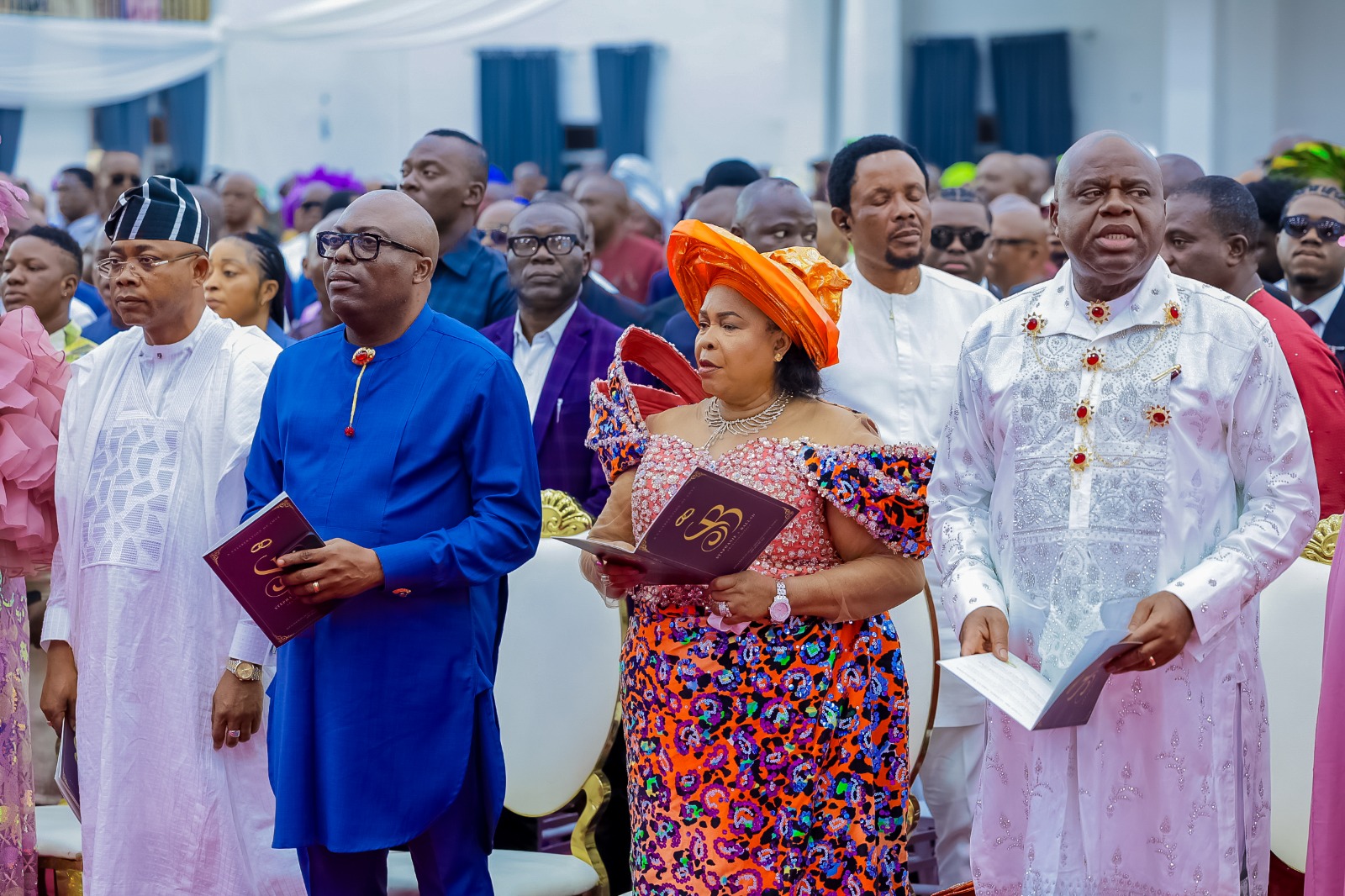
Rivers State, Sir Siminalayi Fubara, has assured members of the National Youth Service Corps (NYSC) of his administration’s commitment to supporting and strengthening the scheme in the State.
Fubara gave the assurance last Friday at the NYSC permanent orientation camp, Nonwa-Gbam, Tai Local Government Area in the State, during the swearing-in ceremony of 2026 Batch B Stream II orientation course.
Represented by the Permanent Secretary, Cabinet Bureau, Office of the Secretary to the State Government, Dr. Promise Oguzie, the governor said the State Government would remain intentional in providing the necessary support to improve the NYSC scheme and enhance the experiences of corps members deployed to the state.
He charged the corps members to be role models and quality nation-builders in their service to the good people of Rivers State in particular, and Nigeria at large.
“I charge you to be exemplary, dedicated and committed in all you do. Take full advantage of all the camp programmes and activities to enrich yourselves”, he said.
In his welcome address, the State Coordinator of NYSC in Rivers State, Mr. Moses Oleghe, urged corps members to see their deployment to Rivers State as a “veritable opportunity to make meaningful contribution to the growth of the State in particular and Nigeria at large.”
He further charged them to serve with all sense of “integrity, discipline, and the fear of God, especially when they will be engaged as INEC ad-hoc staff that will conduct the 2027 general elections.”
A total of 3,584 corps members composed of 1,421 males and 2,163 females were sworn in by the Chief Judge of Rivers State, who was represented by Justice Godspower Aguma.

Governor of Rivers State, Sir Siminalayi Fubara, says Nigeria needs God-fearing leaders for the nation to move in the right direction and make meaningful progress.
The Governor stated this yesterday when he received in audience, the World President of the Seventh Day Adventist Church, Pastor Erton Kohler; his wife, Andriene Marques Kohler; daughter Mariana Marques Kohler and a retinue of ministers of the church at Government House, Port Harcourt.
Fubara who hailed the Seventh Day Adventist Church for its contributions to education and the grooming of future leaders in Nigeria, expressed delight that the Church had over the years, been investing in education at various levels and currently runs two universities in the country.
He commended the church for not only using its institutions to spread the gospel of Christianity but to groom future leaders for the country.
According to him, religion should not be just about defending one’s faith, but also making meaningful impact on the lives of the people.
He said that by floating these educational institutions, the church has demonstrated capacity to support Nigeria in the task of producing not only educated people but a breed of God-fearing leaders.
“Our country is where it is today because we lack the fear of God. If you have the fear of God, there should be a limit to what you can do because you understand the supremacy of God. But when God is not in your equation, you’ll go beyond the line and that is what has brought us to where we are today.
“So, I feel very happy that you are contributing to the development of our future leaders in this country. We need the right people being in the right place; prepared properly with good minds; that is what we need, not just in Nigeria but round the whole world.,” he said.
Governor Fubara further observed that the absence of God-fearing people in high places to take the right decisions that could impact positively on the society, has also given rise to other problems such as social inequality, poverty, corruption and criminality. According to him, Nigeria needs a system where the average parent could afford quality education for their children and a guarantee that upon graduation, the average child will have the capacity to compete favourably with anybody, anywhere in the world.
“If we have a situation where the little money that you’re being paid as wage can also afford you quality healthcare and after working at least for 15-20 years, you have a roof over your head, tell me why you should be involved in any kind of crime? At that point, you’ll feel secured and this attitude of insecurity about the future that leads to all the social vices we have today won’t be there,” he said.
Governor Fubara expressed appreciation to the delegation for the visit and for their prayers for Rivers State, assuring them of his continued support for their programmes in the state.
Leader of the delegation and World President of the Seventh Day Adventist Church, Pastor Erton Kohler said he was in Nigeria for a special conference of the church during which thousands of the church’s ministers will be undergoing an empowerment programme to further equip them for the task of herding their flocks and serving the society.
He expressed gratitude to the Governor for the warm reception accorded his entourage, saying the memory of the visit will linger in his mind for a lifetime.
Kohler disclosed that the Church has over twenty -four million (24,000,000) members and more than 182,000 places of worship, spread across 212 countries of the world.

The Rivers State House of Assembly has approved the 2026–2028 Medium Term Expenditure Framework (MTEF) submitted by Governor Siminalayi Fubara.
This reaffirms the lawmakers’ commitment to enacting laws and taking legislative actions geared towards the overall development of the State.
The Assembly gave the approval during its Second Legislative Sitting of the Fourth Session held last Friday.
Speaking on the MTEF document during plenary, the House Speaker, Rt. Hon. Martin Amaewhule, noted that by the provision of Section 10(1)(b) of the Rivers State Fiscal Responsibility Law No. 8 of 2010, the MTEF ought to have been laid before the House in September 2025.
Amaewhule explained that traditionally, the document is expected to be presented four months before the commencement of the next financial year and immediately after the expiration of every three-year fiscal cycle.
He, however, stated that in the interest of the State and its people, the House considered it necessary to deliberate on the document, describing it as a precursor to the 2026 Budget Estimates.
The Speaker expressed concern that the year had already progressed significantly before the presentation of the framework.
During deliberations on the document, members examined the assumptions and projections contained in the MTEF and observed that strict adherence to the outlined fiscal parameters would ultimately serve the interest of Rivers people.
The lawmakers maintained that effective implementation of the framework would promote prudent financial management and enhance developmental planning across the State.
Following the debate and positive consideration by members, the Speaker put the question to the House and members voted overwhelmingly in support of the approval of the MTEF.
Meanwhile, during the same sitting last Friday, the House also received a petition from the Chairman of Obio/Akpor Local Government Council, Dr. Gift Worlu.
The petition was presented by the member representing Obio/Akpor Constituency II, Hon. Emilia Amadi.
According to the petition, concerns were raised over an imminent security breach, threats to lives, destruction of property and alleged forceful takeover of property by some lawless persons within parts of the Local Government Area.
Presenting the petition before the House, Hon. Amadi appealed to the lawmakers to revisit the matter and take necessary steps aimed at safeguarding lives and property in the affected communities.
The House is expected to further deliberate on the petition and consider measures to address the concerns raised in order to sustain peace and security in the area.
King Onunwor
-

 News2 days ago
RSG Targets Nine Million Residents in Mosquito Net Distribution Campaign
-

 Oil & Energy2 days ago
Aiyedatiwa Signs New Electricity Bill
-

 Maritime2 days ago
Marine Minister Commends President Tinubu On NPERA Bill Assent
-

 Oil & Energy2 days ago
NLNG Commissions Research And Innovation Centre In RSU
-

 News2 days ago
KenPoly Holds Eight Convocations, August 29
-

 News2 days ago
RSG Begins Another Phase of Projects Commissioning Today
-

 News2 days ago
RMAFC Completes Revenue Sharing Review, Proposes New Pay
-

 Maritime2 days ago
NAGAFF Petitions IGP Over Alleged Maritime Police Harassment