
Featured
Court Upholds Senate’s Power To Reject Magu …As Upper Chamber Orders Immediate Sack Of EFCC Boss …Summons IGP Over Continued Killings In Benue

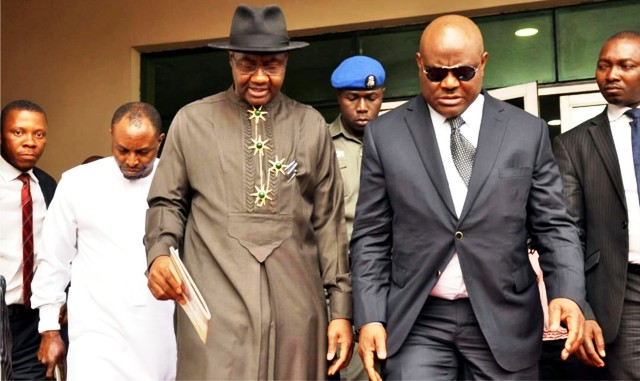
The Federal High Court in Abuja has held that the Nigerian Senate acted within the law when it rejected President Muhammadu Buhari’s nomination of Mr. Ibrahim Magu as the substantive Chairman of the Economic and Financial Crimes Commission, EFCC.
The court, in a judgement that was delivered on January 15, but made available to newsmen yesterday held that Section 2 (3) of the EFCC (Establishment) Act, 2004, conferred the Senate with the authority to ensure the choice of only suitable and credible persons for appointment into the EFCC’s chairmanship position.
Justice John Tsoho who delivered the verdict based on a suit that was lodged before the court by a legal practitioner, Mr. Oluwatosin Ajaomo said the import of the EFCC Act was that the Senate does not only exist to rubberstamp the President’s appointment of any person to head the anti-graft agency.
He held that the Senate was empowered to confirm or reject any appointee to the office of the Chairman of the EFCC by the President, based on facts available to it.
According to the court, Section 2(3) of the EFCC Act provided that appointment of Chairman and members of the commission other than ex-officio members shall be subject to confirmation of the Senate, stressing that the wordings of the Act were very instructive to the effect that they introduced a condition that must be fulfilled.
Justice Tsoho held: “On the strength of these authorities therefore, the expression ‘subject to’ should be understood to simply mean ‘depending on’. Accordingly, the import of Section 2(3) of the EFCC Act is that the appointment of a Chairman made by the President is dependent on confirmation by the Senate.
The 1st defendant can therefore reject a statutory appointment of a Chairman of the EFCC made by the President, if there is good basis for doing so. Issue 1 stands resolved. “On issue 2 for determination, there is no doubt that the 1st defendant is bound by the provisions of the EFCC Act with respect to appointment of Chairman of the EFCC by the President.
It should be realised that the provisions of Section 2(3) of the EFCC Act empower the Senate, headed by the 1st defendant to confirm an appointee to the Office of the Chairman of the EFCC by the President. “The Senate is thus conferred with authority to ensure the choice of only suitable and credible persons for appointment to that office.
The submission of the plaintiff however gives the impression that the Senate only exists to rubberstamp the President’s appointment of a Chairman. Such viewpoint runs counter to the proper intendment of Section 2(3) of the EFCC Act and is misconceived. Issue 2 is also resolved.
“The point must be made that it is trite law generally, that where a plaintiff’s claim is unchallenged and uncontroverted, the court will accept the available evidence and act on it. There is however exception to this, where the court finds that the plaintiff’s action is not maintainable, despite being unchallenged.
This, I humbly hold to be the position in the instant suit, as I regard as doubtful, the plaintiff’s capacity or competence to maintain the action”, Justice Tsoho held.
The plaintiff had in a suit he filed on January 24, 2017, marked FHC/ABJ/CS/59/2017, which had the Senate President and the Attorney General of the Federation as defendants, prayed the court to determine “Whether or not the 1st defendant can reject a valid statutory appointment made by the President of the Federal Republic of Nigeria to the office of the EFCC in accordance with the provisions of the EFCC (Establishment) Act 2004.
As well as, “Whether or not the Senate was bound by the provisions of the EFCC Act, 2004 with respect to the confirmation of any appointment made by the President of the Federal Republic of Nigeria”.
He further sought an interpretation of the provisions of section 2 (1) (a) (i) (ii) (iii) and 2(3) of the EFCC (Establishment) Act 2004 with respect to the appointment of the Chairman of the EFCC by the President of the Federal Republic of Nigeria and the subsequent confirmation of the appointment by the Senate of the National Assembly of the Federal Republic of Nigeria according to the dictates of the law.
He argued that the reason Senate gave for its refusal of Magu’s nomination was a security report, which he said was mere advisory. However, the court held that the locus-standi of the plaintiff to institute the action was doubtful, saying he failed to disclose sufficient stake or peculiar interest of the plaintiff above others that entitled him to institute the action.
Meanwhile, the Senate has asked President Muhammadu Buhari to as a matter of urgency sack the Acting Chairman of the Economic and Financial Crimes Commission, EFCC, Ibrahim Magu.
According to the Senate, failure to do that, it would henceforth not attend to nominations from the Presidency, just as it vowed that it will not in any way, jettison its earlier position on the EFCC boss.
According to the Senate, the impasse would persist until its power of confirmation of nominees to the boards of commissions established by enabling laws, but not listed in the 1999 Constitution as amended was clarified.
Senate spokesman, Sabi Abdullahi made this known yesterday while clearing the air on the controversies surrounding its suspension of the confirmation of nominees from President Muhmmadu Buhari.
Similarly, the Senate yesterday resolved to summon the Inspector General of Police, Ibrahim Idris, over the failure to meet the two-week ultimatum to arrest those who perpetrated the New Year Day attacks in Guma and Logo Local Government Areas of Benue State.
The Senate’s decision was sequel to a point of order raised by Senator Joshua Lidani, who demanded for the appearance of the IGP before the Senate.
Lidani said the two weeks given to Idris to arrest the killer herdsmen has expired and nobody has been arrested in connection to the killings in the state.
According to him, “two weeks was given to the IGP to arrest and arraign the killers, up till now, no arrest has been made, no information has been brought before us.
“Therefore, I want us to summon the IGP to appear before the Senate to give us update.”
Thereafter, the Senate unanimously adopted the request of Lidani for Idris to appear before the Joint Senate Committee on Police and National Security with his report.
In his remarks, the Senate President, Dr. Abubakar Bukola Saraki said the resolution of the Senate must be taken seriously and therefore the IGP must appear before the relevant Senate Committee to give the update.
Saraki added that the Senate is not going to be doing what is necessary until people are accountable.
“Something needs to be done,” he said.


The Rivers State Government has distributed science equipment and materials to all senior secondary schools across the state to support students during the ongoing West African Examinations Council exams and to strengthen practical learning.
Flagging off the distribution at the Rivers State Senior Secondary Schools Board premises in Port Harcourt, on Monday, the State Commissioner for Education, Dr. Peters Nwagor, said the move demonstrates Governor Siminalayi Fubara’s commitment to improving education standards in the State.
Nwagor said the materials were approved and provided by the state government specifically to boost the teaching and learning of science subjects, describing science education as the foundation for technological advancement, innovation, and national development.
“No society can compete globally without deliberate investment in science and technology,” the Commissioner stated.
He commended the governor for consistently prioritising the education sector by providing tools needed for effective teaching and hands-on learning.
The Commissioner directed principals to ensure that the equipment are used strictly for practical lessons in their schools, warning that any principal or administrator found diverting, hoarding, or selling the materials wil face disciplinary action under public service regulations.
Nwagor also warned against examination malpractice, saying any principal found aiding or encouraging malpractices will be decisively sanctioned.
“We must collectively restore the dignity and credibility of our educational system,” he said.
Also speaking, Chairman, Rivers State Senior Secondary Schools Board, Tony Egwurugwu, urged school heads to make judicious use of the materials for students’ benefit.
He thanked the State Government for providing the resources, and assured that monitoring mechanisms would be put in place to ensure the materials serve their intended purpose.
In his own remarks, a Board Member for Technical Education, Nwisabari Bani Samuel, expressed appreciation to the governor for prioritising education and acknowledged the Commissioner’s role in advancing education development in the State.
He said the distribution covers all senior secondary schools in the State and is intended to improve students’ performance in both internal and external science examinations.
Akujobi Amadi

Rivers State Governor, Sir Siminalayi Fubara, has commended workers in the State for their resilience, dedication, and invaluable contributions to development in the State.
Fubara gave the commendation during the 2026 Workers’ Day celebration at Isaac Boro Park in Port Harcourt, last Friday.
Represented by his deputy, Prof. Ngozi Nma Odu, the governor noted that Workers’ Day, which originated from the struggle for an eight-hour workday in the United States, has evolved into a global event recognising the contributions of workers to national growth and development.
He described workers as the backbone of sustainable development, saying no society can thrive without their efforts.
Fubara commended Rivers workers for their loyalty and commitment to service, noting that workers play vital roles across key sectors, including education, healthcare, infrastructure and industry.
He noted that their contributions have enhanced access to quality education and healthcare, supported job creation, and stimulated economic activities across the State.
While acknowledging the economic challenges faced by many workers, including the rising cost of living, Fubara assured that the the State Government remains committed to implementing policies that will enhance workers’ welfare and overall well-being.
The governor also hailed the bold and daring economic reforms of President Bola Tinubu which, he said, have stabilized the economy, enhanced foreign exchange liquidity, lowered inflation, and achieved significant growth in the nation’s gross domestic product.
He noted that, in addition to raising the minimum wage, the President recently approved new welfare incentives for federal civil servants.
“Our economy is on an unstoppable positive path under our President, and it can only improve further for the nation and everyone. Let us continue supporting the policies and programmes of Mr President,” he said.
Fubara highlighted the importance of workers in revenue generation and governance, noting that taxes paid by workers enable government to provide security and essential social services.
He reaffirmed the State Government’s recognition of labour as a critical partner in achieving its development blueprint, appreciating workers’ daily contributions to building a peaceful, secure, and prosperous Rivers State.
The governor urged the organised labour to use the occasion to reaffirm its commitment to the progress of the State, while continuing to advocate for democracy, social justice, and improved welfare for workers.
He also expressed gratitude to workers for their service to the State and the nation, encouraging them to remain steadfast in their contributions to development.
In his address, the State Chairman of the Nigeria Labour Congress, Comrade Alex Agwanwor, commended Fubara for his steadfastness, genuine commitment, and passion for workers in the State.
He highlighted key achievements of the administration, including the implementation of the National Minimum Wage Act, the renovation of the State Secretariat, the reopening of the Rivers State Transport Company (RTC), and the consistent payment of end-of-year bonuses to public workers.
Comrade Agwanwor noted that workers, as drivers of productivity, understand the challenges involved in building a prosperous Rivers State, stressing that they are well-equipped to contribute meaningfully to the growth and development of the State.
“We have resolved not to continue complaining and lamenting while challenges persist. Instead, we must take the initiative, step out of relative obscurity, and rediscover the mission and destiny of our dear state,” he said.
Featured
Fubara Pledges Support For Corporate Organisations In Rivers …Says PPP Business Model Responsible For NLNG’s Success


Rivers State Governor, Sir Siminalayi Fubara, has pledged the continued support of his administration for the Nigeria Liquified Natural Gas (NLNG) Limited.
Fubara gave the assurance while receiving the new Managing Director and Chief Executive Officer of the NLNG, Mr Adeleye Falade, who paid him a courtesy visit at Government House, Port Harcourt.
He assured that his administration would continue to contribute its own quota in support of the NLNG.
According to him, the success of the organisation is equally the success of the government of Rivers State and the success of the Federal Government.
“Our duty is to make sure that we support whoever is operating in our state. We are the ones here. If we don’t support you and you don’t succeed, we also will not succeed and Mr President will also not succeed.
“So, the success of your establishment is the success of our state, and overall success of Nigeria. So you can count on our support. Wherever you think we need to come in to support you, please do not hesitate to call upon us.
“You just mentioned here that your predecessor left a handover note showcasing the level of support that he got from the state. It is not going to be different in your own case. I can assure you that. I will also ensure that other units of the government will liaise with you when necessary. So even if you can’t get to me, you can always get to them and if there is anything we can do to help your establishment succeed, we will do it for you,” he said.
The governor attributed the success of the NLNG to the Public Private Partnership ( PPP) business model adopted by the Federal Government and the multinational oil companies.
The NLNG is jointly owned by Nigerian National Petroleum Corporation (NNPC) with 49%, Shell Gas B.V. with 25.6%, Total LNG Nigeria Ltd with 15%, and Eni International with 10.4%.
The partnership model allows for shared risks, costs, and expertise in the LNG sector.
The governor noted that the NLNG has not only survived the difficult business environment but has made sustained progress in the nearly three decades of its existence.
According to him, the decision of the Federal Government to allow the multinational oil companies who have the needed expertise to run the establishment while government plays a supervisory role over it has largely been responsible for its success.
“I’m very proud to say that if there is one establishment that has shown resilience, that has survived in the face of all the political issues prevalent in this country, it is the NLNG. And what is the reason? The reason is very simple. Government has no business in business. That is the truth. Leave the business for those people who can operate it. Let the government play its supervisory role to ensure that there is compliance with the laws; ensure that standards are maintained and also ensure that the right people with the needed expertise are at the helm of affairs. That’s all. I think that is the reason why we still record a lot of successes in NLNG,” he said.
In his opening remark, the new NLNG boss, Mr Adeleye Falade, who led other top officials of the company on the visit, expressed appreciation to the governor for granting them audience, and appealed to the State Government to continue to support the organisation.
“We appreciate the opportunity to meet with you and deepen this important relationship.We deeply value the support the Rivers State Government continues to extend in fostering an enabling operating environment for businesses. NLNG remains deliberate in its contribution to Nigeria’s development, and Rivers State, our primary host, continues to be central to that commitment,” he said.
Falade said the company has continued to work with its host communities to strengthen their capacity to identify, prioritise, and deliver sustainable development initiatives that create lasting impact.
According to him, communities including Amadi-ama, Abua, Ekpeye, Okrika, Kalabari, and Emohua have continued to benefit from this model.
He said that beyond community infrastructure, the NLNG has sustained investments in economic empowerment through initiatives such as Vocational Innovation and Business Empowerment Scheme (VIBES) and Micro Small and Medium Enterprise (MSME) schemes.
These, he said, were designed to support small businesses, build capacity, and stimulate local enterprise across the state.
Among officials of the company who accompanied the Managing Director were General Manager, External Relations and Sustainable Development, Dr Sophia Horsfall; Manager, Government Relations, Mr Abdul Umar; Manager, Community Relations, Dr. Yemi Adeyemi; Head of Government Relations, Mr Mike Igoni; Head of Community Liaison and Engagement, Chief Ifeanyi Umeh.
Others are Technical Assistant to Executive Leadership, Mr Hassan Saleh; Senior Media and Publicity Advisor, Mr Emma Nwatu; Government Relations Advisor, Miss Homa Nmegbu; Senior Government Relations Advisor, Mrs Kate Allison, and Audio -Visual Advisor, Mr Dawood Ahmed.
-

 Editorial4 days ago
Enough Of Xenophobic Attacks On Nigerians
-

 Education4 days ago
UNIPort Senate Grants Two-Year Amnesty to U2010–U2018 Students
-

 Nation4 days ago
RSU, Otonti Nduka Foundation Holds Centenary Conference, Unveil Book on Values in Nigeria
-

 Sports4 days ago
Oparaodu Urges Rivers United To Win Katsina United
-

 Oil & Energy4 days ago
Rivers PETROAN Elects 12-Member Executive
-
Politics4 days ago
APC Group Protests Ex–Presidential Aspirant’s Disqualification From Rivers Senatorial Race
-

 Sports4 days ago
” Nigeria’s best domestic players are not in NPFL”
-
Politics4 days ago
Reps Speaker Secures APC Return Ticket For Fifth Term