
Featured
‘Atiku’s Exit Signals End Of APC’ – As Seven Govs, Ministers, Lawmakers Conclude Plan To Decamp – Move Divides North, Presidency

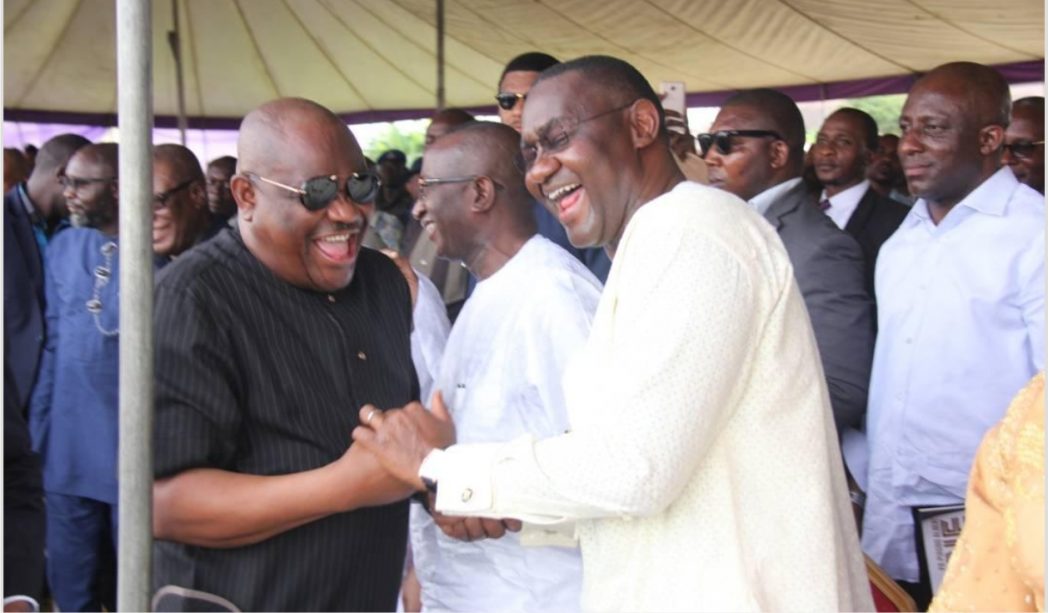
Peoples Democratic Party (PDP) in Rivers State has expressed delight at the exit of former Vice President, Alhaji Atiku Abubakar from the ruling All Progressives Congress (APC), saying that it was the beginning of the ruling party’s end in 2019.
Publicity Secretary of PDP in the State, Samuel Nwanosike, who spoke in Port Harcourt yesterday on the development said it was a clear indication that APC was a “dead” political party particularly in the state.
Nwanosike, who said the PDP was ready to welcome him and his likes to the party, blasted the APC-led Federal Government for leading Nigerians to the hardship they never imagined.
He said: “To PDP, the decision of Alhaji Atiku Abubakar is a welcome development. In fact, it is the beginning of the end of the All Progressives Congress in the country. His decision has shown clearly that leaders in the APC have seen that their political party has failed Nigerians. You can see the reasons he gave for leaving the party.
“It has shown clearly that APC, as a political party, does not have the capacity to manage the economy of the country. And the party is leading Nigerians into doom. The former vice president believes that, as pragmatic democrat, he cannot stay and watch somebody truncate the hard-earned democracy.
“They made lots of promises during the campaign and today, they cannot fulfill those promises or even work hard to achieve most of those promises. Virtually all the promises they made including restructuring of the economy, have not been achieved.
“They are making excuses, playing blame games from one position to the other. Worst of it all is that, we are not even seeing who is in charge of the government. The DSS and EFCC are drawing guns against each other. A situation where people are sacking and employing Maina shows that President Buhari is not in charge of the government”, PDP spokesman stated.
The resignation of former Vice-President Atiku Abubakar from the ruling All Progressives Congress (APC) has caused a fresh division among the political forces in Northern Nigeria, with major political blocs in the APC and the Peoples Democratic Party (PDP) in the region returning to the drawing board to plan fresh alliances.
Though Atiku, who in a letter made public last Friday, said he was resigning from the ruling APC, which he joined in 2013, is yet to declare for any other party, political forces in the North have begun a scamper to redraw strategies to either contain the ace politician or attract his interest.
It was gathered that already, no fewer than seven state governors, serving ministers, several lawmakers in both chambers of the National Assembly, as well as others holding key positions in the government and the APC have concluded plans to dump the party to follow the former vice-president, who is believed to be heading to his former party, the Peoples Democratic Party (PDP).
A close source to the former Vice-President told our correspondent in Abuja, last Saturday, that barring last-minute change, Atiku has concluded plans to storm the National Secretariat of the PDP in the first week of December 2017 along with his supporters after he must have declared for the party in Yola, Adamawa State.
This was just as a barrage of reactions, last Saturday trailed the resignation of the former vice-president from the APC, with prominent Northerners, including former Presidential Aide, Alhaji Tanko Yakassai; former member of the House of Representatives and critic, Alhaji Junaid Mohammed, among other individuals, groups and associations, giving divided opinions on the exit of the Adamawa-born politician from the APC and his reported 2019 presidential ambition.
The Tide gathered that some power brokers in the various camps held a series of consultations at the weekend, with the sole aim of forging fresh alliances, while more consultations were said to have been planned for different locations in the Federal Capital Territory, Abuja on Tuesday and Thursday this week by the arrowheads of a medley of politicians and professionals from varying backgrounds.
A source told one of our correspondents that Atiku had been chosen to speak at a public forum being put together by another coalition to set the tone for his presence at the national convention of the PDP on December 9, 2017 in Abuja.
Reports from Kaduna, the political headquarters of Northern Nigeria, indicated frenzied moves by some power brokers to review some plans on the ground before now following the likelihood of realignment of forces in the political circle, especially in the light of the PDP convention.
Findings also confirmed that Atiku indeed reached out to some key politicians of Northern extraction to apprise them of his decision to quit APC and seek another political platform to pursue his presidential bid.
A reliable source at the secretariat of PDP, Kaduna State, who spoke with our correspondent on a condition of anonymity, said the former VP had met with some top stalwarts in the state over his presidential ambition.
Though the source could not say who and who the former number two man met with, he was said to have consulted some chieftains of the party secretly before he made his resignation known.
This claim was also confirmed by the state’s chairman of the Atiku Care Foundation (ACF), Alhaji Ibrahim Dahiru Danfulani, who told newsmen that consultations with various interest groups and individuals “are currently ongoing.”
“I want to assure you that these groups and individuals have given us their words. We are waiting to see the party that our mentor (Atiku) will join and we will follow him there,” he said.
However, renowned political critic, Dr. Junaid Muhammed, has said that the resignation of the former vice-president from the APC was not a big deal, saying as far as he [Junaid Mohammed] was concerned, “the former vice -president is an expired politician, who is in politics to make money and not to contribute positive quota to nation-building.”
According to Mohammed, “this is not the first time the former vice-president, Alhaji Atiku Abubakar, will leave a party on the claims of being sidelined or for whatever reasons. If he could leave the PDP and go to contest on the platform of the Action Congress when he was the immediately past vice-president of the PDP; that shows you the kind of character we are dealing with.”
Former Special Adviser on National Assembly Matters to former President Shehu Shagari, Yakassai, said he was not surprised that Atiku resigned his membership of the APC, saying it would be an eye-opener to the APC, “as many people who made it possible for the APC to become the ruling party in 2015 are not happy about not being carried along.”
He said the others would sooner or later leave the party.
Speaking with our correspondent in Kano, the elder statesman noted that the body language of APC, its leaders and the former vice-president had been showing that there had been unfavourable conditions among them.
His words: “There had been disagreement among the APC, its leaders and Atiku for a long time and anybody that is familiar with partisan politics, would realise that there was total disconnect between the APC and the former vice-president. So, I am not surprised that he left the party.”
Yakassai noted that the character of Nigerian politics today “is that people move to political parties that would be convenient for them or accommodate their aspirations,” berating all political parties in the country for being the same and without ideologies.
Meanwhile, former Minister of Aviation, Femi Fani-Kayode has tackled the Governor of Kaduna State, Malam Nasir el-Rufai, who said that “God has decreed that this is President Muhammadu Buhari’s time. As long as he remains in politics, he sees no Nigerian who can match him”.
Fani-Kayode while reacting to the governor’s statement said that ‘that is what they said about Goliath until David came along! For every Goliath, there is a David. Hubris leads to nemesis.’
Fani-Kayode, in a series of tweets on his Twitter handle, also said “As a party, the Peoples Democratic Party (PDP) is now at a crossroad: the moment of truth has finally arrived.”
According to him, if the PDP makes the right choices, the party shall excel and overcome her common enemies.
“If we make the wrong choices, we shall suffer defeat and never recover again. The choice is ours. May God guide us”, he stated.
Fani-Kayode also used the opportunity to beg the former vice president, Alhaji Atiku Abubakar, who just left the All Progressives Congress (APC) to return to the Peoples Democratic Party (PDP).
Similarly, an author and ex-aide to former President, Dr Goodluck Jonathan, Reno Omokri, has said that President Muhammadu Buhari may have been jittery over the news of the dumping of All Progressives Congress (APC), by a presidential contender and former Vice President, Atiku Abubakar.
Atiku had, last Friday, announced his resignation from the APC, saying the party has failed Nigerians and has equally instituted a draconian regime that has continued to clamp down on democracy in the country.
He also accused the APC of having no regard for the youth, especially as he said the party has no single youth in its cabinet, wondering how the leaders of tomorrow are not a priority for the party.
Omokri also stated that Buhari must be very jittery that he quickly set up a committee to increase minimum wage, a ploy he said was being used by the president, perhaps, to bribe Nigerians.
According to him, “On the same day that Atiku resigned from the APC, President Buhari decided to set up a committee to increase the minimum wage. Coincidence or signs that the President is jittery over his impending 2019 defeat and wants to bribe Nigerians with a salary increase”.
Former Nigerian vice president Atiku Abubakar who last Friday announced his decision to leave APC, has arrived in Yola where he is now engaged in series of meetings with Peoples Democratic Party (PDP) officials at all levels who keep trooping to his house to woo him back into the party.
Our correspondent reports that the former Vice President had so far met with Adamawa PDP executives at all level as well as state chairmen from the six states that constituted North East, including the National Vice chairman North East of the party.
Commenting on the meeting between Atiku and the state executives of PDP, the State Secretary of PDP, Alhaji Abdulllahi Prambe, said the meeting was fruitful.
“Our meeting with him has been fruitful and from his body language he will soon return to PDP,” Prambe said.
Prambe said that it would be a big boost to the party at the state and national levels when Atiku finally returned.
“With Atiku, the party will carry more weight and more people will also troop in,” Prambe said.
When contacted about developments, Atiku’s spokesman, Mr Paul Ibe, declined to comment.



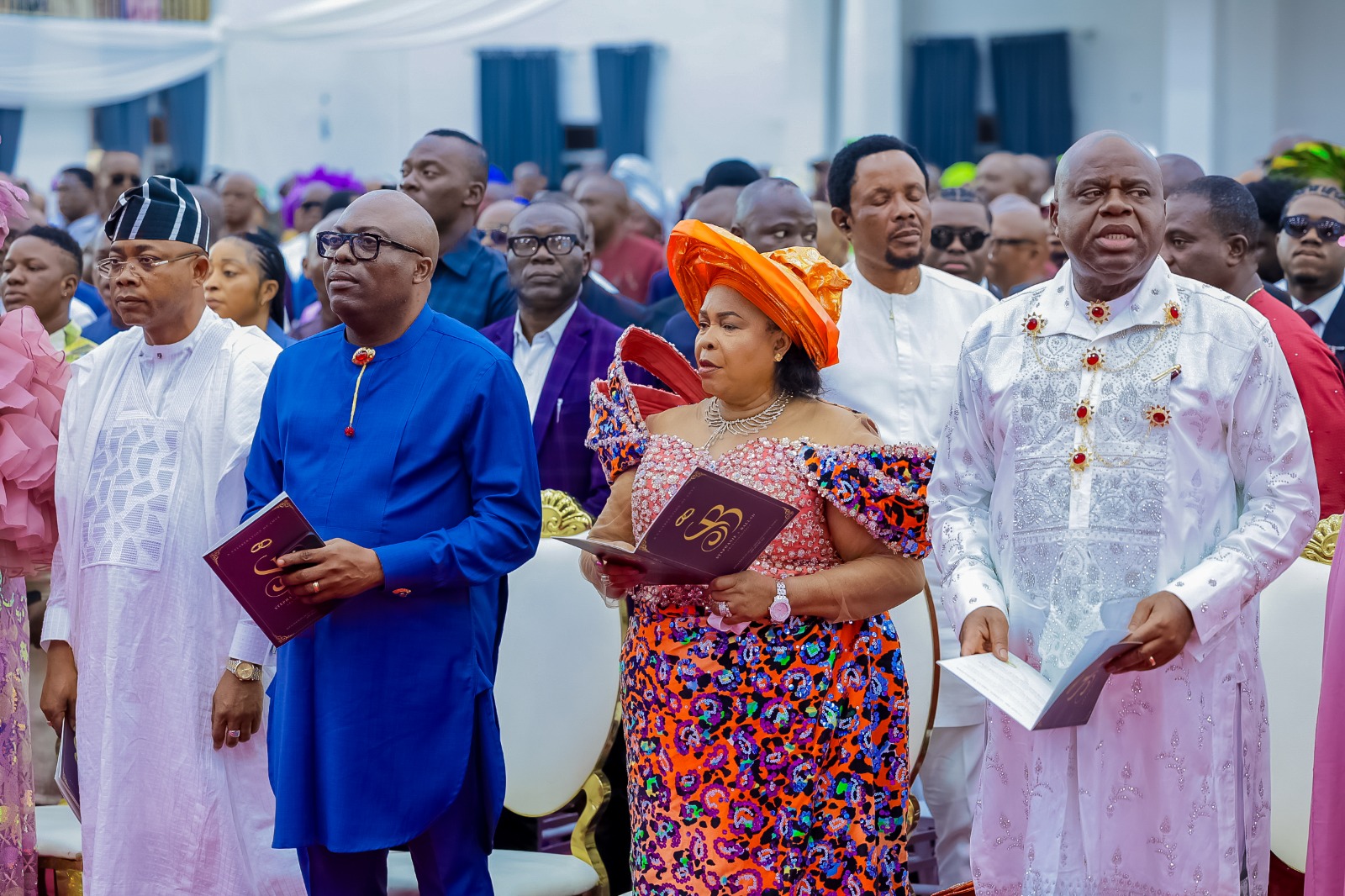
Rivers State, Sir Siminalayi Fubara, has assured members of the National Youth Service Corps (NYSC) of his administration’s commitment to supporting and strengthening the scheme in the State.
Fubara gave the assurance last Friday at the NYSC permanent orientation camp, Nonwa-Gbam, Tai Local Government Area in the State, during the swearing-in ceremony of 2026 Batch B Stream II orientation course.
Represented by the Permanent Secretary, Cabinet Bureau, Office of the Secretary to the State Government, Dr. Promise Oguzie, the governor said the State Government would remain intentional in providing the necessary support to improve the NYSC scheme and enhance the experiences of corps members deployed to the state.
He charged the corps members to be role models and quality nation-builders in their service to the good people of Rivers State in particular, and Nigeria at large.
“I charge you to be exemplary, dedicated and committed in all you do. Take full advantage of all the camp programmes and activities to enrich yourselves”, he said.
In his welcome address, the State Coordinator of NYSC in Rivers State, Mr. Moses Oleghe, urged corps members to see their deployment to Rivers State as a “veritable opportunity to make meaningful contribution to the growth of the State in particular and Nigeria at large.”
He further charged them to serve with all sense of “integrity, discipline, and the fear of God, especially when they will be engaged as INEC ad-hoc staff that will conduct the 2027 general elections.”
A total of 3,584 corps members composed of 1,421 males and 2,163 females were sworn in by the Chief Judge of Rivers State, who was represented by Justice Godspower Aguma.

Governor of Rivers State, Sir Siminalayi Fubara, says Nigeria needs God-fearing leaders for the nation to move in the right direction and make meaningful progress.
The Governor stated this yesterday when he received in audience, the World President of the Seventh Day Adventist Church, Pastor Erton Kohler; his wife, Andriene Marques Kohler; daughter Mariana Marques Kohler and a retinue of ministers of the church at Government House, Port Harcourt.
Fubara who hailed the Seventh Day Adventist Church for its contributions to education and the grooming of future leaders in Nigeria, expressed delight that the Church had over the years, been investing in education at various levels and currently runs two universities in the country.
He commended the church for not only using its institutions to spread the gospel of Christianity but to groom future leaders for the country.
According to him, religion should not be just about defending one’s faith, but also making meaningful impact on the lives of the people.
He said that by floating these educational institutions, the church has demonstrated capacity to support Nigeria in the task of producing not only educated people but a breed of God-fearing leaders.
“Our country is where it is today because we lack the fear of God. If you have the fear of God, there should be a limit to what you can do because you understand the supremacy of God. But when God is not in your equation, you’ll go beyond the line and that is what has brought us to where we are today.
“So, I feel very happy that you are contributing to the development of our future leaders in this country. We need the right people being in the right place; prepared properly with good minds; that is what we need, not just in Nigeria but round the whole world.,” he said.
Governor Fubara further observed that the absence of God-fearing people in high places to take the right decisions that could impact positively on the society, has also given rise to other problems such as social inequality, poverty, corruption and criminality. According to him, Nigeria needs a system where the average parent could afford quality education for their children and a guarantee that upon graduation, the average child will have the capacity to compete favourably with anybody, anywhere in the world.
“If we have a situation where the little money that you’re being paid as wage can also afford you quality healthcare and after working at least for 15-20 years, you have a roof over your head, tell me why you should be involved in any kind of crime? At that point, you’ll feel secured and this attitude of insecurity about the future that leads to all the social vices we have today won’t be there,” he said.
Governor Fubara expressed appreciation to the delegation for the visit and for their prayers for Rivers State, assuring them of his continued support for their programmes in the state.
Leader of the delegation and World President of the Seventh Day Adventist Church, Pastor Erton Kohler said he was in Nigeria for a special conference of the church during which thousands of the church’s ministers will be undergoing an empowerment programme to further equip them for the task of herding their flocks and serving the society.
He expressed gratitude to the Governor for the warm reception accorded his entourage, saying the memory of the visit will linger in his mind for a lifetime.
Kohler disclosed that the Church has over twenty -four million (24,000,000) members and more than 182,000 places of worship, spread across 212 countries of the world.

The Rivers State House of Assembly has approved the 2026–2028 Medium Term Expenditure Framework (MTEF) submitted by Governor Siminalayi Fubara.
This reaffirms the lawmakers’ commitment to enacting laws and taking legislative actions geared towards the overall development of the State.
The Assembly gave the approval during its Second Legislative Sitting of the Fourth Session held last Friday.
Speaking on the MTEF document during plenary, the House Speaker, Rt. Hon. Martin Amaewhule, noted that by the provision of Section 10(1)(b) of the Rivers State Fiscal Responsibility Law No. 8 of 2010, the MTEF ought to have been laid before the House in September 2025.
Amaewhule explained that traditionally, the document is expected to be presented four months before the commencement of the next financial year and immediately after the expiration of every three-year fiscal cycle.
He, however, stated that in the interest of the State and its people, the House considered it necessary to deliberate on the document, describing it as a precursor to the 2026 Budget Estimates.
The Speaker expressed concern that the year had already progressed significantly before the presentation of the framework.
During deliberations on the document, members examined the assumptions and projections contained in the MTEF and observed that strict adherence to the outlined fiscal parameters would ultimately serve the interest of Rivers people.
The lawmakers maintained that effective implementation of the framework would promote prudent financial management and enhance developmental planning across the State.
Following the debate and positive consideration by members, the Speaker put the question to the House and members voted overwhelmingly in support of the approval of the MTEF.
Meanwhile, during the same sitting last Friday, the House also received a petition from the Chairman of Obio/Akpor Local Government Council, Dr. Gift Worlu.
The petition was presented by the member representing Obio/Akpor Constituency II, Hon. Emilia Amadi.
According to the petition, concerns were raised over an imminent security breach, threats to lives, destruction of property and alleged forceful takeover of property by some lawless persons within parts of the Local Government Area.
Presenting the petition before the House, Hon. Amadi appealed to the lawmakers to revisit the matter and take necessary steps aimed at safeguarding lives and property in the affected communities.
The House is expected to further deliberate on the petition and consider measures to address the concerns raised in order to sustain peace and security in the area.
King Onunwor
-

 News2 days ago
RSG Targets Nine Million Residents in Mosquito Net Distribution Campaign
-

 Oil & Energy2 days ago
Aiyedatiwa Signs New Electricity Bill
-

 Oil & Energy2 days ago
NLNG Commissions Research And Innovation Centre In RSU
-

 Maritime2 days ago
Marine Minister Commends President Tinubu On NPERA Bill Assent
-

 News2 days ago
KenPoly Holds Eight Convocations, August 29
-

 News2 days ago
RSG Begins Another Phase of Projects Commissioning Today
-

 News2 days ago
RMAFC Completes Revenue Sharing Review, Proposes New Pay
-

 Maritime2 days ago
NAGAFF Petitions IGP Over Alleged Maritime Police Harassment