
Featured
ASUU Strike: FG, Union Meeting Ends In Deadlock …Minister Predicts Call-Off In Seven Days

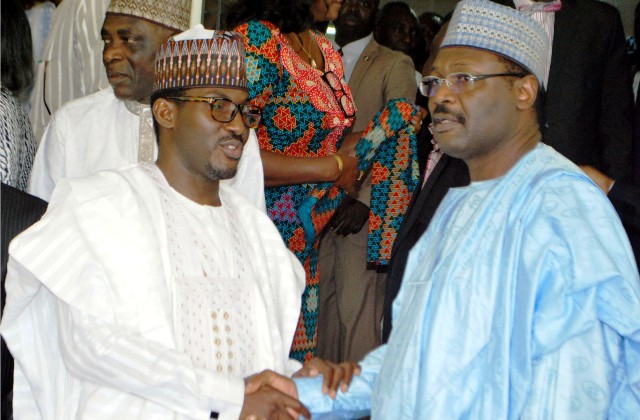
The end to the ongoing strike embarked upon by the Academic Staff Union of Universities (ASUU) seems not to be in sight as the meeting between the Nigerian government and the union has hit the rocks.
During the meeting, which held yesterday, the Federal Government promised to fulfill some of the conditions being demanded by ASUU in an attempt to end the strike by the union.
Minister of Labour and Productivity, Chris Ngige, who convened the meeting with the union leaders, said the government would meet certain conditions.
It was gathered that the ASUU leaders who attended the parley did not agree to call off the strike.
The ASUU President, Prof. Biodun Ogunyemi who led the executive members of the union to the meeting said he needed to brief other members of the union.
Meanwhile, the Minister of Education, Malam Adamu Adamu, yesterday said the ongoing strike by the Academic Staff Union of Universities may be called off within one week.
The minister stated this at a meeting with the Senate Committee on Tertiary Institutions and TETFund in Abuja.
Adamu said that the ministry and other major stakeholders were already holding meetings with the union to resolve some of the issues that led to the strike.
He assured that with the level of progress made in the negotiation, there was hope that students and lecturers would return to classes within one week.
Adamu said, “the issue of renegotiation is already going on. I have already written a letter formalising the meeting I had with the union, because I went alone to face them and I wrote a letter which I gave them yesterday.
“From the way they received it, I think it is possible that the strike will be called off within a week, maximum.”
Adamu said while explaining reasons for the strike, ASUU accused the Federal Government of failing to keep its side of the agreement.
He assured that the Ministry of Finance had agreed to do the needful with regard to releasing funds as soon as possible.
He said: “The union had asked for N23 billion to be paid.
“We said the condition for that N23 billion to be released was for them to account for the N30 billion they had taken which is a total of N53 billion and they were not able to account for it.
“The Minister of Finance then undertook to do the audit from the ministry and we agreed that the result will be known within six months.
“The Federal Government undertook to be paying them N1.5 billion each month during the time they are waiting for the outcome of the audit.
“Their grouse now is that the forensic audit promised by the minister of finance has not been done and the money promised has not been paid.
“So, at our meeting two days ago, we agreed that we will pay them and do forensic audit on the entire N53 billion.
“I wrote to the minister and she has already approved it and this money will be paid; probably on Monday, they will be able to receive the cheque.”
Adamu, however, stated that his ministry did not agree on some issues during the meeting with the union.
He said: “There are other issues which we did not agree on and that is their request to be taken out of Treasury Single Account.
“I told them that it is not possible because this is a new policy and government is not going to change it for anyone.
“Concerning their salary shortfall, we said a lot of the reasons spring from what they are doing wrong.
“They do a lot of employment without proper authority.
“For instance, a university can decide to recruit 50 people and IPPIS is not aware. So, we insisted that institutions must stop doing that and they accepted.
“There is also the issue of the registration of their pension commission. I think they have one or two issues to iron out with PENCOM and I believe they will also be able to solve the problem within a week.’’
The Chairman of the senate committee, Senator Barau Jibrin, said the committee was impressed with the briefing by the minister on the matter.
He explained that the seriousness of the issue made the committee members to cut short their recess, and said that from the assurance given by the minister, students and lecturers would return to school shortly.



Rivers State Governor, Sir Siminalayi Fubara, yesterday extended interim relief measures to the people of Bille Kingdom as the government intensifies efforts to address the ongoing environmental degradation affecting the area.
This was contained in a statement by the Head of Information and Public Relations Unit, Office of the Secretary to the State Government, Juliana Masi, yesterday.
The governor, during a working visit to Bille Kingdom in Degema Local Government Area, reassured residents of his deep concern for their health and well-being.
He reiterated his administration’s commitment to finding a lasting solution to the persistent gas emissions observed in the community’s land and water sources since November 2025.
Represented by the Secretary to the State Government, Dagogo Wokoma, the governor announced immediate interventions to address urgent needs.
Some of the relief measures include the provision of potable water and essential medical services through the release of ?100 million as palliative support for the affected community.
According to the SSG, “Governor Fubara remains deeply committed to the welfare of the people of Bille Kingdom. Although unable to attend in person due to pressing state engagements, he is fully aware of the situation and determined to tackle the root cause of the environmental challenge”.
The governor assured residents that the state government would not relent in its efforts to provide a permanent solution to the gas emissions, emphasizing that the current intervention is only a temporary measure to ease the suffering of the people.
He further urged members of the community to remain law-abiding and continue supporting his administration, noting that he has consistently demonstrated a track record of fulfilling his promises.
Earlier, the Chairman, Council of Chief for Bille Kingdom, Chief Bennet Dokubo, expressed joy over the State visit, describing Fubara as a leader who listens to the plight of the people.
He urged the governor to critically look into the gas emission which he described as dangerous to human health.
“If we take you into the river, we notice that the entire environment is bubbling and smelling.
“We most humbly urge you to critically look into this situation. This is something strange we have never experienced before. It is not good for human health,” the monarch stressed.

The Federal Government has declared tomorrow (Friday) and Monday, April 6, 2026, as public holidays to mark this year’s Easter celebration.
Minister of Interior, Olubunmi Tunji-Ojo, made the declaration on behalf of the Federal Government through a statement signed by the Permanent Secretary in the ministry, Dr Magdalene Ajani.
The ministe congratulated all Christians in Nigeria and in the diaspora on the joyous occasion of Easter, and urged Nigerians to imbibe the virtues of selflessness, forgiveness, forbearance and love as exemplified by the life and teachings of Jesus Christ.
He reiterated that the goal of the government remains to make decisions that would bring about national rebirth, economic growth, and shared prosperity.
The Tide reports that good Friday will be marked tomorrow, while the Easter Sunday will be celebrated on Sunday across the world.

Rivers State Governor, Sir Siminalayi Fubara, has charged the newly appointed Secretary to the State Government (SSG) and Chief of Staff (CoS) to carry out their duties with discipline, loyalty and a firm commitment to the success of the administration and the wellbeing of the people of Rivers State.
The governor warned that any involvement in unauthorised nocturnal meetings or any conduct capable of embarrassing the government will attract immediate dismissal.
Fubara gave the warning yesterday shortly after the newly appointed Secretary to the State Government (SSG), Dr Dagogo S.A. Wokoma and the new Chief of Staff (CoS), Barrister Sunny Ewule, were sworn in at the Executive Council Chambers of Government House, Port Harcourt.
As part of the ceremony, the Chief Registrar of the State High Court, David Ihua-Maduenyi administered the Oath of Allegiance and Oath of Office on the duo before the governor gave his charge.
Addressing the appointees, Fubara reminded them that their elevation to the new positions was a call to service and not a platform for political grandstanding or the pursuit of personal ambition.
He stressed that their foremost responsibility should be to themselves and to the people of Rivers State, stressing that their conduct must always reflect integrity, restraint and dedication to public good.
Speaking directly to Dr. Wokoma, whom he described as an accomplished academic and mathematician, the governor expressed confidence in his intellectual depth and capacity to deliver on the new assignment.
The office of the Secretary to the State Government, Fubara stressed, demands thoroughness, discipline and a deep sense of responsibility. He charged the SSG to represent the State with honour at all times.
“Your duty includes representing the state government. You need to represent us in a way and manner that will bring honour to us.
“What is important to this administration is to see that the good works that we started and the ones that we met, are concluded in a way that will bring progress and development to our dear state,” he stated.
Turning to the new Chief of Staff, the governor explained that he is expected to ensure smooth administrative coordination, managing official engagements effectively and safeguarding the image of the Government House.
He underscored the sensitive and personal nature of the role and emphasised that the position operates strictly under the authority of the governor.
Fubara stressed that the role does not permit independent political engagements or private strategy meetings without his knowledge and consent.
“Let me sound it here very clearly. Your duty is to make sure that you handle the administrative duties and image making roles perfectly well, liaising with whoever is coming for any official assignment here.
“If you involve yourself in nocturnal meetings and all those things, I will sack you. I’m very serious. What is important to me today is peace, progress and prosperity of this state. I’m not going to compromise anything for it,” he said.
The governor cautioned that involvement of the new appointees in any action capable of bringing the government or his office to disrepute would attract appropriate sanctions.
While congratulating the new appointees, Fubara expressed optimism that they would justify the confidence reposed in them.
He called on all public officials to work together in unity, observing that collective success is stronger and more enduring than individual achievement.
The governor who also addressed the Permanent Secretaries present at the ceremony, directed those of them who have reached retirement age to start preparing their handover notes without delay.
The notice, he said, was not intended to scare anybody but to prepare their minds towards the inevitability of exiting the service one day and to pave way for an orderly transition.
He warned against any attempt to engage in financial misconduct or last-minute irregularities, stressing that he was closely monitoring the system to ensure strict enforcement of accountability rules.