
Sports
Disu Warns Rohr On Tactics Against Cameroun

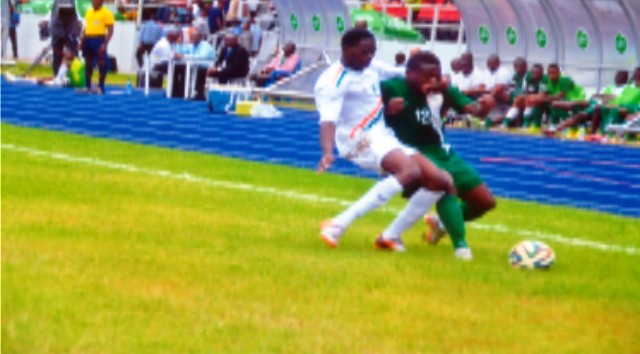
Former Technical Director, Nigeria Football Federation (NFF), Tunde Disu, warned Super Eagles coach, Genort Rohr against wrong tactics against Cameroun in the Russia 2018 qualifiers on September 1.
Disu told newmen in Lagos that, the team’s tactical formation against South Africa in the AFCON qualifiers was wrong and should not be used again.
He said that the Eagles loss to Bafana Bafana in the AFCON qualifiers was due to wrong tactical formation, adding that the Indomitable Lions of Cameroun would be more tactical.
“The formation used by Rohr during the AFCON qualifier against South Africa is wrong tactics. He cannot use a supporting striker as an arrow head when using 4-3-3.
“Rohr should know that Kelechi Iheanacho cannot spearhead attack, that is not his role and that is why he is roaming about during the match against South Africa without a shot at goal.
“I want them to sit down and analyse the match themselves, that system is faulty because most teams can now predict the formation. If we use that selection and tactics, we will be embarrassed.
“Rohr should align with the modern tactics of play rather than stick with the old play which will not benefit us. We are too predictable now.
Disu said that, the players at the disposal of Rohr were good enough to accommodate another formation which was less probable to opposing teams.
“We cannot continue to use the 4-3-3 formation, it’s outdated and counterproductive. We should rather play 4-2-3-1 which is far better for the defenders.
“The players determine the system and not the system that determines the players. It is better to have two defensive midfielders in front of the defenders, maybe if there is an overlapping one.
“Playing 4-3-2-1 formation also means that we need intimidating strikers like the late Rashidi Yekini to torment the opposing teams. We have Gbolahan Salami before but I don’t know if he is not called.
“The lone striker may be very tall and strong to hold the ball up as his midfielders while full-backs join him in attack. The striker could also be very fast.
“African soccer is more physical and there is need for us to have a strong striker in the manner of Salami that can torment the defence of our opponent,’’ he said.
Disu warned Rohr to be wary of Cameroun threat could pose to the Eagles’ qualification, adding that a loss to Indomitable Lions would close the qualification ticket.
“I want the coach to be careful with the Cameronians so that they will not scuttle our chances; any defeat to them closes the qualification ticket.
“It does not matter where we are now because we won’t be begging Cameroun to lose any of their games after defeating us.
“The Indomitable Lions are in form now and they are using the modern formation. Rohr needs to change that formation or else we will be out of contention.
“To beat those indomitable Lions, a very good top 9 will be a good option and not necessarily to score goals but to torment the defence line and maybe to create chances for others,’’ he said. Disu said that, other countries and clubs have been winning through the golden formation, noting that, countries that had yet to play the style were lagging behind.



The Nigerian, who arrived in China fresh from winning gold at the African Senior Athletics Championships in Ghana earlier on Wednesday, clocked a season’s best of 12.41s behind Olympic champion Masai Russell and Bahamian star Devynne Charlton.
Russell produced a dominant display to win the race in a meeting record and world-leading time of 12.25s, improving on her previous world lead of 12.40s.
Charlton, the reigning world indoor champion, finished second in 12.38s in one of her strongest outdoor performances to date.
Amusan, whose world record of 12.12s remains the fastest time ever run in the event, improved significantly from her previous season’s best of 12.84s set during her victorious outing at the African Championships in Accra.
The 29-year-old was competing in a stacked field that included reigning world champion Ditaji Kambundji of Switzerland, Jamaican pair Megan Simmonds and Ackera Nugent, China’s Wu Yanni and Americans Tonea Marshall and Danielle Williams.
Kambundji, who won the world title in Tokyo last year with a Swiss record 12.24s, finished fifth in 12.82s, while Jamaica’s Nugent placed sixth in 12.98s.
Marshall and Williams failed to finish the race.
Following Amusan’s victory in Accra, the three-time Diamond League final winner expressed gratitude to her supporters while insisting she remained determined to achieve more success this season.
“Beyond grateful to God, my team, supporters, and everyone who continues to believe in me through every season. Historic feeling. Still hungry for more. The mission continues,”

The 10-time African champions are scheduled to take on the Teranga Lionesses on June 5 and 8 at the Remo Stars Stadium in Ikenne, Ogun State, in what will form a key part of their build-up to July’s continental tournament.
The fixtures were confirmed on social media platform X by Super Falcons Show, which announced the details of the encounter and venue.
“Nigeria’s senior women’s national team, the Super Falcons, will take on Senegal Women’s National Team in a double-header international friendly scheduled for June 5 and 8,” the post read.
“Both matches will be played in Ikenne, Nigeria.”
The friendlies come after Nigeria’s proposed training tour of the United Kingdom, which included a planned match against Jamaica, was cancelled due to scheduling complications linked to FIFA’s official women’s international window. The timing meant clubs would not have been obliged to release players.
With that tour shelved, the Senegal fixtures now offer a timely opportunity for coach Justine Madugu and his technical team to assess squad options, test tactical systems and strengthen team cohesion ahead of the WAFCON campaign and longer-term qualification targets for the 2027 FIFA Women’s World Cup in Brazil.
Senegal are expected to provide a competitive regional test, with their physical style and disciplined organisation likely to offer Nigeria a different tactical challenge across both matches.
The Super Falcons, who have dominated African women’s football for decades, will be aiming to use the double-header to fine-tune preparations as they pursue another continental title in Morocco next year.

Dr Bojuwoye, a seasoned medical professional with extensive experience in road running events across Nigeria, is expected to bring added value to the race through his expertise.
As medical director, his responsibilities will include overseeing emergency medical response, coordinating first aid stations along the course, ensuring athlete safety, and supervising medical volunteers and paramedics.
His role is critical in safeguarding the health of both elite and recreational runners, as well as spectators.
In addition to unveiling its new medical director, the organisers also announced five corporate partners for the 2026 edition.
The Development Bank of Nigeria (DBN), Petralon Energy, Razzl Drink, Dan Oil, and Carloha Motors have joined as sponsors, reflecting the race’s growing appeal across diverse sectors of the Nigerian economy.
The Okpekpe race, organised by Pamodzi Sports Marketing Company, has steadily risen in prominence since becoming the first road race in Nigeria to earn World Athletics label status in 2015.
It has since advanced to Gold Label Race status, attracting elite athletes from around the world and cementing its reputation as one of Africa’s benchmark road-running competitions.
Edo State, under the leadership of Governor Monday Okpebolo, has reaffirmed its commitment to supporting the race, citing its role in promoting tourism, community pride, and international recognition for the region.
Race Director Zack Amodu noted that the new partnerships underscore the event’s stature and its impact beyond sport.
We are delighted to welcome DBN, Petralon, Razzl, and Carloha Motors as partners for the 11th edition. Their support, alongside the backing of Edo State, not only strengthens the race but also reinforces its role as a platform for promoting excellence, youth empowerment, and community development,’ Amodu said.
Beyond its sporting significance, the Okpekpe International 10km Road Race has become a catalyst for social, health, and economic benefits.
It encourages fitness and healthy lifestyles, fosters social cohesion by bringing communities together, and generates economic activity through tourism, hospitality, and local commerce.
The event also showcases Edo State’s cultural vibrancy while contributing to Nigeria’s growing reputation in global athletics.
The 11th edition is expected to draw elite athletes, local participants, and international attention, further consolidating Nigeria’s place on the global athletics calendar.
-

 Editorial3 days ago
Enough Of Xenophobic Attacks On Nigerians
-

 Nation3 days ago
RSU, Otonti Nduka Foundation Holds Centenary Conference, Unveil Book on Values in Nigeria
-

 Oil & Energy3 days ago
Rivers PETROAN Elects 12-Member Executive
-

 Sports3 days ago
Oparaodu Urges Rivers United To Win Katsina United
-
Politics3 days ago
APC Group Protests Ex–Presidential Aspirant’s Disqualification From Rivers Senatorial Race
-

 Sports3 days ago
” Nigeria’s best domestic players are not in NPFL”
-
Politics3 days ago
Reps Speaker Secures APC Return Ticket For Fifth Term
-
Politics3 days ago
Primaries: Diri Lauds APC’s Unity, Cohesion In Bayelsa