
Politics
Still On Diaspora Voting And Rivers Rerun Polls

The Independent National Electoral Commission (INEC) had a somewhat bitter, sweet engagement with the National Assembly recently.
The issues bordered on the much-debated diaspora voting and pending elections into vacant legislative seats. Clearly both issues touch on constitution.
While the law as constituted does not allow for electronic voting as such voting must be by personal representation, the constitution provides that every constituency must have a representative through an elective process organized by the electoral commission. However it would seem that the commission is almost handicapped on both issues.
The 2015 general election was perhaps the most competitive election in the Nigeria’s recent political history.
Invariably, that electoral process opened up the system to the exploration of more technology with the introduction of the Smart Card Reader and Permanent Voter Card (PVC).
As such, in the build up to that election, the clamour by Nigerians living abroad to get involved in the process back home became much more noticeable.
For them, besides technology conquering the geographical hindrance to voting for any citizen (as evident in even small countries in Africa), the appreciable economic contributions they make through transfers back home warrants they have a direct participation in electoral process in the country.
According to a report by World Bank’s Migration and Remittances Factbook 2016, remittances from Nigerians living abroad hit $20.77 billion in 2015, making Nigeria the sixth largest recipient of remittances in the world.
It further revealed that remittances to Nigeria rose every year over the last decade from $16.93 billion in 2006 to $20.83 billion in 2014. In 2015, however, remittances fell slightly to $20.77 billion.
According to the report, the top two sources for Nigerian diaspora remittances in 2015 were the United States ($5.7 billion) and the United Kingdom ($3.7 billion).
More so, the report showed that Nigeria tops the top ten remittance recipients in Africa by $20.77bn, followed by Ghana ($2.0bn), Senegal ($1.6bn), Kenya ($1.6bn), South Africa ($1.0bn), Uganda ($0.9bn), Mali ($0.9bn), Ethiopia ($0.6bn), Liberia ($0.5bn), and Sudan ($0.5bn).
But, attempts at addressing diaspora voting has never gone beyond the discussion stage. The issue was deliberated at the 2014 National Conference. Former External Affairs Minister, Prof. Ibrahim Gambari, had at the confab, captured the frustrations of millions of Nigerians abroad about their inability to vote.
Expectedly, he blamed the situation on the provision of the relevant sections of the Electoral Act and the Constitution of the Federal Republic, which discriminated against Nigerians living outside the country.
Despite the major leaps recorded by the immediate past leadership of INEC, diaspora voting wasn’t feasible for the 2015 election. With federal lawmakers fixated on returning to office, amending the constitution to accommodate Nigerians abroad was not a priority.
But, this INEC, under Prof. Mahmood Yakubu, seems poised to address the issue, provided the National Assembly plays its part.
This much the chief electoral officer stated when he hosted members of the Senate Committee on Diaspora and Non-Governmental Organizations, led by its Chairperson, Dr. Rose Oko, when they visited the Commission’s headquarters in Abuja.
He urged the National Assembly to expedite action by amending sections of the Constitution and the Electoral Act (2010 as amended) to make way for Nigerians living outside the country to participate in the electoral process and vote.
He said: “INEC believes that Nigerians living outside the country should have the right to vote for a variety of reasons: they are citizens of Nigeria interested in the affairs of their own country; they make considerable contribution to the economy through huge financial inflow to the country; there is a sizable amount of Nigerian citizens living outside the country; and Diaspora voting is consistent with global best practices”.
Professor Yakubu noted that: “Allowing Nigerians living abroad to vote will allow Nigerians in Diaspora to register and vote in their countries of residence”.
He however pointed out that: “for this to happen, several sections of the Constitution and the Electoral Act have to be amended to provide for the legal framework to allow for registration and voting by citizens living in the Diaspora”.
He disclosed that the Commission had identified areas of the Constitution and the Electoral Act which needed amendment and was willing to discuss it with the Committee. He assured that: “INEC is committed to providing Nigerians living outside the country the opportunity to have a say in who become our leaders at various levels”.
“I hope that arising from our interactions today, the legal and constitutional obstacles to voting by Nigerians in Diaspora will soon be removed so that Nigerians, irrespective of where they live around the world would have the opportunity to vote in future elections, but the first step towards actualizing that possibility rests entirely on the national assembly because you are the only people who have the powers to amend our constitution and laws,” he said.
Earlier, the Chairperson, Senate Committee on Diaspora and Non-Governmental Organizations, Senator Rose Oko, had told the leadership of INEC that members of the Committee were in the Commission in respect of the quest for Nigerians in Diaspora to be part of the electoral process and to exercise their franchise.
Senator Oko, advised the Commission to look into the possibility of including Nigerians in Disapora to vote, and assured that the Committee would do everything possible to facilitate the amendment of the relevant sections of the Electoral Act to accommodate people living outside the country in the electoral process.
“We in the Senate Committee do believe that we would lend our voice very strongly to the call that Nigerians in Diaspora should be given an opportunity to exercise their franchise to vote in the countries where they are domiciled for a number of reasons,” she said.
By and large, according to analysts, the bulk of the responsibility lies with legislature. Nevertheless, while the National Assembly and the commission enthuse over the prospects of Nigerians in diaspora voting, the need to tidy up what has become perennial logistics challenges back home, would be key.
Also, the challenge of inconclusive elections, resulting majorly from insecurity, might be too much of a distraction for the commission. Still, other analysts believe that these challenges are easily surmountable, if key stakeholders play their statutory role.
Although President Muhammadu Buhari seems indifferent to the 2014 confab report which gave life to the prospects of diaspora voting, he has often expressed willingness to make Nigerians living abroad have a direct say in how their leaders emerge.
In March, while speaking to the Nigerian community in Malabo, Equatorial Guinea, he had said: “The Independent National Electoral Commission will be encouraged to explore the possibility of Nigerians abroad voting in the 2019 general elections. We will do all within our means to fulfill that desire.
“I want all Nigerians to know that I respect them and their right to choose their leaders. Some African countries have started allowing their citizens resident abroad to vote in national elections, so I fully empathise with the desire of Nigerians in the diaspora to vote in national elections,” the President stated.
His optimism in Malabo was slight variance from his rather cautious desire in August 2015, where he stated that it was not feasible to implement the idea presently as there were still many factors militating against its realisation.
Speaking at the 2015 Diaspora Day held at the Presidential Villa, Abuja, with the theme “Diaspora and Nigeria Change Agenda”, he identified some of those factors, which he argued were logistical, to include legislation, huge finance, and confidence in the electoral system.
The Senate President, Sen Bukola Saraki, had also expressed the upper chamber’s commitment as well.
Speaking at the one-day stakeholders meeting on electoral reforms organized by Senate Committee and Policy and Legal Advocacy Center (PLAC), Saraki had said the wish of Nigerians living abroad to participate in the process should be accommodated.
However, while the next round of legislative elections are months away, and with the Sen Ken Nnamani Electoral Reform Committee set to commence work, it is expected that diaspora voting would get serious attention this time.
However, while the electoral commission tasked the National Assembly on ensuring that Nigerians living abroad can vote in future polls, the federal legislature was not so charitable over its criticism of INEC for delays in conducting pending elections into legislative seats.
Both chambers had come down hard on the commission over pending polls, especially in Rivers and Lagos.
While the House of Representatives urged INEC to conduct the elections, Senate threatened to suspend plenary sessions if the electoral umpire fails to conduct all pending re-run elections into legislative positions in Rivers State.
This followed the unanimous adoption of a motion under matters of urgent public importance sponsored by Deputy President of the Senate, Senator Ike Ekweremadu, (PDP) and Senate Leader, Senator Mohammed Ali Ndume, (APC).
In the House, the Minority Leader, Hon. Leo Ogor, (PDP) had sponsored the motion and the Majority Leader, Femi Gbajabiamila (APC) had supported the motion.
Besides the bi-partisan party support that greeted the motion, the National Assembly found inexplicable that those pending elections has not be held, months after court rulings.
They cited breach to the constitution on the part of INEC, which touched on disobeying court ruling on time frame for rerun election, causing under representation of a people, which they say poses danger to democracy.
But INEC has often stated that its inability to conduct the polls bother on insecurity in those areas. Before then, the commission had early this year, said it would not go back to states where it had pending legislative reruns until stakeholders in those areas commit to the safety of electoral personnel and materials.
The commission had lost an ad-hoc staff and serving National Youth Corps member due to violence in Rivers State. However after much agitation, the commission had held a had meeting with stakeholders from Kogi, Anambra, Rivers and Imo State where legislative elections were pending.
For Rivers State, series of peace meetings were held. Governor Nyesom Wike and his immediate predecessor and Minister of transportation, Rotimi Amaechi had met with the heads of security agencies including the DSS and police as a way of deescalating the tension in the state. The two estranged political allies are the leaders of the two major parties in the state, PDP and APC.
However while the elections in Kogi and Imo held, that of Rivers did not hold due to resurgence of violence.
But during the debate on his motion on the floor of the Senate, Sen. Ekweremadu argued “that lNEC had successfully conducted elections in the North-East of Nigeria, especially in the areas around Sambisa Forest, in spite of the area having been acknowledged worldwide to be ravaged by terrorist activities.
“Also aware that INEC recently conducted successful elections in Edo State even after security advice from Police and DSS forced a rescheduling of the election date.
Ukaibe is a public affairs analyst.

Politics
Alleged Coup: Protests Rock N’Assembly As Detained Officers’ Children, Wives Demand Justice

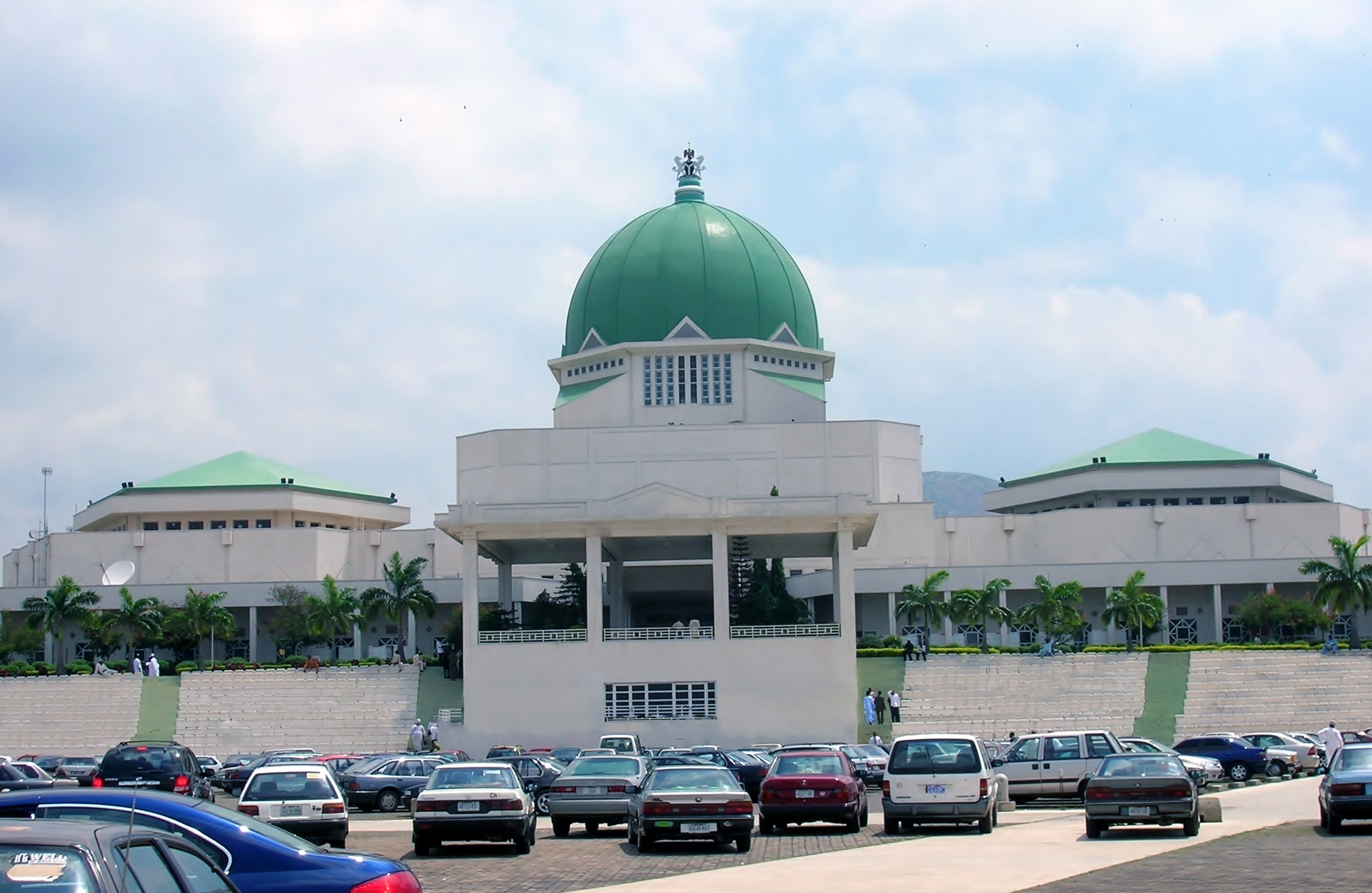
Scores of children and wives of military officers detained over an alleged coup plot yesterday staged a peaceful protest at the National Assembly, demanding a speedy trial and the release of the accused officials.
The protesters who gathered at the entrance of the National Assembly complex, moved in a slow procession while clutching placards with inscriptions such as “Don’t Kill Our Daddies,” “Detention Without Trial is Injustice,” and “Six Months of Torture: Enough Is Enough.”
Amid tears and trembling voices, the children appealed for justice and access to their detained fathers, many of whom they said they had not seen for months.
The appeal was made during a press briefing in Abuja attended by no fewer than 20 wives and several children of the detained officers, including a two-month-old baby.
The families were accompanied by human rights lawyer, Deji Adeyanju and activist Omoyele Sowore.
At the briefing, the families lamented that the officers had been held for over 160 days without trial or contact with their relatives, describing the situation as a violation of their fundamental rights.
Speaking on behalf of the families, Memuna Bashiru said the prolonged detention had thrown their households into uncertainty and emotional distress, noting that while allegations had been widely publicised, families remained in the dark about the fate of their loved ones.
The arrest of the indicted officers was first announced on October 4, 2025, by the then Director of Defense Information, Brigadier General Tukur Gusau, who disclosed that 16 officers were taken into custody for alleged breaches of military regulations and acts of indiscipline.
However, an interim investigation later suggested the existence of a clandestine network of officers, allegedly coordinated by a senior Army officer, which had begun preliminary planning for a coup.
According to the report, the alleged plot involved surveillance of key national assets, including the Presidential Villa, Armed Forces Complex, Niger Barracks in Abuja, and major international airports, with October 25, 2025, cited as the planned date for the operation.
Those reportedly in custody include Brig Gen M. A. Sadiq, Col M. A. Maaji, Lt Col S. Bappah, Lt Col A. A. Hayatu, Lt Col P. Dangnap, Lt Col M. Almakura, Maj A. J. Ibrahim, Maj M. M. Jiddah, Maj M. A. Usman, Maj D. Yusuf, Capt I. Bello, Capt A. A. Yusuf, Lt S. S. Felix, Lt Cdr D. B. Abdullahi, Sqn Ldr S. B. Adamu and Maj I. Dauda.
The alleged plot, according to findings, targeted senior government officials, including President Tinubu and Vice President Kashim Shettima.

In a statement issued yesterday, the party’s National Publicity Secretary, Mr Felix Morka, said the exercise would take place in all wards and designated centres nationwide.
He called on existing members to update their records, while encouraging new entrants to join the party through the digital platform.
“As the electronic membership registration exercise resumes in all wards and designated locations nationwide, we urge existing members to validate their membership while new members are encouraged to register and join the progressive family,” Mr Morka said.
According to him, eligibility for registration is limited to individuals aged 18 and above who possess a valid National Identification Number (NIN).
The party said the initiative is part of efforts to modernise its operations by transitioning to a digital database that would enhance record accuracy and accessibility.
Mr Morka noted that the e-registration would “digitise the party’s membership register, ensure the integrity of records, and enhance efficient access to membership data for planning and management decisions.”
He added that the move is also aimed at promoting internal democracy within the party and strengthening its commitment to democratic innovation.
The APC had previously introduced electronic registration as part of broader reforms to streamline its membership system and improve organisational efficiency.
-
 Editorial23 hours ago
Domesticate FG’s Exit Benefit Scheme
-
 News23 hours ago
DHQ Confirms Deaths Of Terrorists, Soldiers In Borno Attack
-

 News19 hours ago
RSU Unveils Five-Year Strategic Dev Plan …Calls For Collective Commitment To Institutional Excellence
-

 News20 hours ago
Tinubu Commissions Bayelsa Gas Turbine, Other Projects Today
-
Rivers22 hours ago
Dep Gov Seeks Collaboration, Transparency Between RIVCHPP, PHCMB
-
Nation19 hours ago
Rumuji Youth Leader Condemns Protest, Disowns Alleged Government Empowerment Claim
-
 Featured21 hours ago
FG Reaffirms Nigeria’s Stability As US Embassy Suspends Visa Appointments In Abuja Office
-
Sports23 hours ago
Full Draw For 2026 U-17 AFCON