
Editorial
ECOWAS Court, FG And Dasuki

The long-drawn legal battle between the
Federal Government and the former
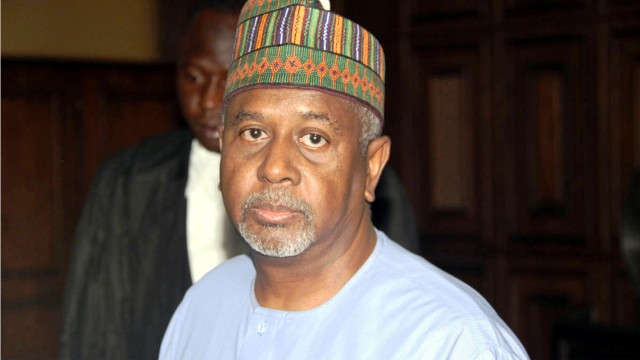
National Security Adviser (NSA) to former President Goodluck Jonathan, Col. Sambo Dasuki (rtd), over enforcement of the latter’s fundamental human rights finally went to the Economic Community of West African States (ECOWAS) Court which recently ordered his immediate release on bail.
Dasuki has been detained since November 3, 2015 after his arrest by operatives of the Economic and Financial Crimes Commission (EFCC) over an alleged $2.1 billion arms procurement deal.
Before the matter went to the ECOWAS Court in Abuja, the former NSA had practically exhausted all legal options in search of bail which when granted by each of the three high courts the anti-graft agency took him, was quickly annulled. For, no sooner had he been granted bail and released from the Kuje Prisons in Abuja on December 29, was he re-arrested by operatives of the Department of State Services (DSS), thus, making a mockery of the courts.
All parties to the matter, including the Federal Government, Attorney General of the Federation and the Inspector General of Police (IGP), made legal representations before the sub-regional court not only ordered for Dasuki’s immediate release but also awarded him a N15 million cost against the Federal Government to cover for the deprivation of his right under Articles 5 and 6 of the African Charter on Citizens Rights to Freedom of Liberty.
The three-man panel of judges whose unanimous verdict was read by Justice Chijioke Nwoke also considered as ridiculous the claim by the Federal Government that Dasuki planned to stage a coup d’etat and possibly wage war against millions of his compatriots. Responding, the Federal Government, through the Attorney General, said it was still studying the ECOWAS Court’s ruling with a view to complying with its order and necessary provisions as applicable.
Given that it is now more than three weeks since the October 4 ruling granting Dasuki bail, The Tide frowns at the continued delay by the President Muhammadu Buhari-led Federal Government to obey this simple court order.
We think that Nigeria, under the current leadership, should not be seen by the international community as being above the law. Rather, the Federal Government must respect the Rule of Law and the independence of the judiciary which serves as a check on likely excesses of the executive arm.
Moreso, considering the critical role Nigeria played as a key founding and financial member of the ECOWAS, the country must not be seen as destroying a house she painstakingly helped to build over the decades.
Therefore, in the same manner, Nigeria complied with the ruling of the International Court of Justice at The Hague over the disputed oil-rich Bakassi Peninsular, no matter how unpalatable, she should continue to strive and ensure the existence and sustenance of ECOWAS and its organs.
The delay or outright disobedience of both municipal and international court orders by the Federal Government will not only dent Nigeria’s image but also scare foreign investments as investors may lose confidence in doing business in a lawless country.
Also worthy of mention is the case of Nnamdi Kanu, detained leader of the Indigenous People of Biafra (IPOB), who was equally granted bail by a court of competent jurisdiction and was reported to have met his bail conditions but still remains in detention. He, too, seems to be considering recourse to the ECOWAS Court.
Again, it beats our imagination that the Federal Government and its agencies would be quick to arraign any crime suspects and obey only favourable judgements but opt to foot-drag against unfavourable ones.
It is the contention of The Tide that Nigeria shall lose nothing in allowing Dasuki go on bail as directed by the ECOWAS Court pending determination of the substantive suit. Anything short of this, amounts to outright disobedience to court order and by extension, the rule of law which automatically interprets the case against the suspect as a product of witch-hunting which may be injurious to the nation’s nascent democracy.




Nigeria stands at a critical juncture as the world marked World Press Freedom Day (WPFD) on May 3. This annual observance is a reminder that a free press is central to democratic life, good governance, and public accountability. For Nigeria, it is also a moment for sober reflection on how far the country has come and how far it still has to go in safeguarding the independence of its media.
World Press Freedom Day exists to highlight the fundamental importance of freedom of expression and to honour journalists who risk their lives in pursuit of truth. It underscores the idea that without a free press, societies cannot function transparently, nor can citizens make informed decisions. In countries like Nigeria, where democracy continues to evolve, the observance carries particular urgency.
This year’s theme, “Shaping a Future at Peace: Promoting Press Freedom for Human Rights, Development and Security”, places journalism at the heart of global stability. It emphasises that a peaceful society cannot be built on silence, fear, or manipulated information. Rather, it depends on the free flow of accurate, timely, and independent reporting.
At its core, the theme highlights the role of journalism in fostering accountability, dialogue, and trust. These are not abstract ideals. In Nigeria, where public confidence in institutions is often fragile, the media remains one of the few platforms through which citizens can question authority and demand transparency. When press freedom declines, so too does public trust.
Journalism serves as a foundation for peace, security, and economic recovery. Countries with robust media systems tend to attract greater investment, maintain stronger institutions, and resolve conflicts more effectively. Nigeria’s economic challenges, ranging from inflation to unemployment, require open scrutiny and informed debate, both of which depend on a free press.
However, the issue of information integrity has become increasingly complex in the digital age. Artificial Intelligence (AI) and online platforms have amplified the spread of misinformation and disinformation. In Nigeria, where internet penetration has grown rapidly, false narratives can travel faster than verified facts. This makes the role of credible journalism more vital than ever.
The challenge is not only technological but also ethical. AI-driven manipulation of information threatens to distort public discourse, influence elections, and deepen social divisions. In such an environment, professional journalism must act as a stabilising force, ensuring that truth prevails over sensationalism and propaganda.
Equally troubling is the safety of journalists. Across Nigeria, reporters face growing levels of online harassment, judicial intimidation, and physical threats. Self-censorship is becoming more common, as media practitioners weigh the risks of reporting sensitive issues. This trend undermines the very essence of journalism.
A particularly alarming incident involved a serving minister in the present administration, who openly threatened to shoot a journalist during a televised exchange. Such conduct, broadcast to the public, sends a dangerous signal that hostility towards the press is acceptable. It erodes the norms of democratic engagement and places journalists in harm’s way.
This year’s theme aligns closely with the United Nations Sustainable Development Goal (SDG)16, which promotes peace, justice, and strong institutions. Freedom of expression is a cornerstone of this goal. Without it, institutions weaken, corruption thrives, and justice becomes elusive. Nigeria’s commitment to SDG 16 must therefore include genuine protection for the media.
Historically, the Nigerian press has been a formidable force. From resisting colonial rule to challenging military dictatorships, our journalists have played a central role in shaping the nation’s political landscape. Today, however, that legacy appears to be under strain, as the media operates under what can best be described as a veneer of freedom.
Beneath this facade lies a troubling reality. Journalists are routinely harassed, detained, and prosecuted for performing their constitutional duties. Reports from media watchdogs indicate that dozens of Nigerian journalists face legal threats or arrest each year, often for exposing corruption or criticising those in power.
The Cybercrimes (Prohibition, Prevention, etc.) Act of 2015 has become a focal point of concern. Originally intended to combat cyber threats, it has increasingly been used to silence dissent. Sections 24 and 27(1)(b), in particular, have been invoked to target journalists, bloggers, and social commentators.
Although amendments introduced in February 2024 were meant to safeguard journalists, concerns persist. The law continues to be wielded in ways that stifle investigative reporting and restrict freedom of expression. Legal reforms must go beyond cosmetic changes to address the root causes of misuse.
To safeguard the future of journalism in Nigeria, decisive action is required. The Cybercrimes Act must be revisited to ensure it cannot be weaponised against the press. Law enforcement agencies must operate free from political influence, upholding the rule of law and protecting journalists’ rights. Civil society and international partners must also strengthen independent media through funding, training, and platforms for wider reach.
In this rapidly evolving world shaped by artificial intelligence and digital innovation, Nigeria faces a clear choice. It can either allow press freedom to erode under pressure, or it can champion a truly independent media landscape. The path it chooses will determine not only the future of journalism, but also the strength of its democracy and the peace it seeks to build.
-
 Editorial20 hours ago
Enough Of Xenophobic Attacks On Nigerians
-

 Nation19 hours ago
RSU, Otonti Nduka Foundation Hold Centenary Conference, Unveil Book on Values in Nigeria
-

 Oil & Energy19 hours ago
Rivers PETROAN Elects 12-Member Executive
-

 Environment21 hours ago
MOSOP – Tinubu Not Sincere With Ogoni People For Oil Resumption
-

 News1 day ago
Fubara, Wife Hail Tinubu’s Renewed Hope Initiative …As Over 6,800 Families Benefit From Largesse In Rivers
-
Politics21 hours ago
APC Group Protests Ex–Presidential Aspirant’s Disqualification From Rivers Senatorial Race
-

 Maritime22 hours ago
Products, Others, To Arrive Lagos Ports Today — MPA
-
Politics21 hours ago
Reps Speaker Secures APC Return Ticket For Fifth Term