
Politics
Gender Equality In Nigerian Politics

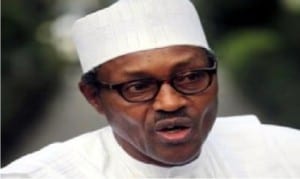
President Muhammadu Buhari
Nigeria is a patriarchal
society, a feature mirrored in many aspects of its national life.
In politics, the issue of gender imbalance has continued to draw the attention of many, especially with today’s changing world favouring greater women representation.
As a continent, Africa is striving to give women a better deal than ever before with their number in parliaments of some countries appreciable.
Some activists say Nigeria, being the “Giant of Africa’’, needs to move in that direction.
Statistical evidence by the Department For International Development (DFID) of in 2011, gave a picture of women’s presence in the legislature of some countries.
The statistics indicate that South Africa has 33.2 and 42 per cent respectively in the upper and lower legislative chambers, while Kenya has 27 and 20 per cent respectively in the two chambers.
In Rwanda, women make up 61 out of 106 parliamentarians (58 per cent) and in Senegal, women occupy 65 of the 150 parliamentary seats (43 per cent).
On the Nigerian scene, only one female was among the14 candidates that tried to get the nation’s number one seat in the 2015 presidential election.
After the National Assembly elections, eight women made it to the Senate, which has 109 senators (7.3 per cent), while 14 won seats in the 360-member House of Representatives (the lower house), accounting for four per cent.
The governorship elections also produced four women deputy governors in the nation’s 36 states.
President Muhammadu Buhari swore-in 36 ministers as members of his cabinet on November 11 and only five are women.
All these realities exist in spite of the National Gender Policy which seeks to support women to occupy 35 per cent of elective positions in the country.
To some people, women, for a long time in the nation’s history, have been kept behind the scene and prevented from taking centre stage. Such people believe that women are still treated as second class citizens in the country.
Some believe that women are relegated in the area of political appointments due to cultural stereotypes, traditional practices and the patriarchal structure of the society. Others attribute this to lack of funds, violent nature of politics in Nigeria, absence of agreed quotas for women, failure of political parties to nominate women for elective offices and lack of support from other women.
Sen. Oluremi Tinubu believes that the challenge in ensuring women’s participation goes beyond electing a larger number of women in the parliament or executive. According to her, it is about changing the endemic perception that the public domain is an exclusive preserve of men. Tinubu says there is the need for attitudinal change and increased awareness of the role that women can play in nation building and development.
“Women constitute about half of Nigeria’s population; they constitute a great majority in voting population, yet, they are the minority when you look at the number of candidates running for elective positions or the few who actually get elected.
“Nigerian women must rise up to enlighten and re-orientate themselves on the positive role they can play in governance by coming on board to contest for elective positions.
“They must believe that if they want to make the 21st century the woman‘s century, they should not wait to be called leaders, but embrace the role naturally.
“We need increased women participation in politics to enable us feel more relevant as productive members of the society,’’ Tinubu said.
She believes that the empowerment of women and equality between men and women are prerequisites for achieving political, social, economic, cultural and environmental security among all peoples.
On her part, Prof. Remi Sonaiya, Presidential Candidate of KOWA Party in the 2015 election, believes women need to redefine their role in the polity.
According to her, there is the need for women to redefine their cultural role in the polity, away from the “Aso Ebi’’ syndrome, singing and dancing during electioneering.
Sonaiya believes that women are being used for electoral campaigns; they sing praises of the men and when the men get elected, they forget that these women have a role to play in policy formation.
She says women should begin to realise that their participation in government decision-making is fundamental to inclusive governance, without which good governance is not possible.
“Women need to redefine their role in the polity because our democracy cannot thrive without their full participation.
“No country can progress or prosper if half of its citizens are left behind or treated as mere subjects.
“Progress for women and progress for democracy go hand in hand toward sustainable development if government is to meet the needs of both men and women through a balanced representation at all levels and in all fields of decision making,’’ Sonaiya said.
The Lagos State Deputy Governor, Dr Idiat Adebule, thinks that the lack of synergy among women in the public and private sectors is a contributory factor to the poor representation of women.
Adebule says women need to support one another and work together to achieve collective empowerment in the face of a male-dominated society.
“In spite of decades of struggle for gender equality and women empowerment, women’s political involvement has always been low.
“It appears that women in the private sector have been excluded in the struggle for women representation in government, thereby missing out in the opportunity to build a better synergy between women across the board. For instance, between women in public governance and women in business/private sector.
“Women have consistently demonstrated that they are great leaders with skills and approaches to leadership and management that are both innovative and outstanding and we can harness these potential with strong collaboration and support for one another to increase female representation in politics,’’ she said.
Adebule believes that partnerships for development between civil society, public and private sectors will have to be re-enforced among women to build a very strong team that can penetrate in a supposedly man’s game and be recognised for it.
On finance, Mrs Oluwatoyin Sanni, Chief Executive Officer, United Capital Plc, an African Investment Bank, says that women often do not have access to the same corporate and business networks that their male counterparts use to raise money for their political ambition.
Sanni says that money is a prerequisite for competing in most political systems today, but patterns of gender discrimination force women candidates to make do with more limited resources than men. According to her, financial resources often determine whose voice is loudest and most heard.
“One of the greatest hurdles women face is financing the process of getting a nomination. “Women tend to have less financial freedom, they earn disproportionately less and they tend to be kept outside of existing part establishments, resulting in limited access to their professional fundraisers and political networks.
“ Nomination costs require women to come up with funds to build name recognition, travel, attend party meetings, organise campaign teams and cultivate a constituency.
“With all these financial limitations, we will continue to have poor representation of women except women development groups that can assist to set up Political Action Committees to assist and support female candidates get sponsorships and build their own financial partnership networks,’’ she said.
Mr Bisi Adeleye-Fayemi, wife of the former governor of Ekiti State, believes there is the need for a constitutional amendment that would have affirmative action and quotas for women in the polity.
“We must work toward having a legislative framework that will accommodate and stipulate the position of women in the polity, the needs and concerns of women, as well as reserve a certain number of leadership positions for women,’’ she said.
Adeleye-Fayemi also says that the few women who hold key positions by the virtue of their trail blazing appointments, selection or election, have not been able to develop agenda for change for the majority of Nigerian women.
“If you occupy a leadership position as a woman and you are unable to serve and support other women, or even leave an identifiable legacy behind when your time is done, I’m afraid you have wasted that space; be you a member of the legislature, first lady or local government chairman.
“Worse still, you have made it more difficult for another woman to be considered. With your position, you should be passionate about the issues affecting the majority of Nigerian women,’’ Adeleye-Fayemi said.
On the role of political parties, Mrs Sarah Sosan, a former Deputy Governor of Lagos State, says that party leaders should be held responsible for the poor number of women in government.
“I do not believe that the problem of poor representation is about finance, constitutional stipulation or support from other women.
“Our women need to hold our party leaders accountable to ensure that they support and give higher tickets or quotas to women as they do to men,’’ she said.
But Mr Abiodun Salami, Assistant Publicity Secretary of the All Progressives Congress (APC), Lagos State chapter, said that his party at its level gives 100 per cent concession to women who indicate interest to contest for any elective position.
“The women do not pay for nomination form; the forms are given out free to the women, while men pay through their nose to get their forms.
“That is APC way of encouraging more women to come out. It now depends on the women to take advantage of such concession,’’ he said.
Retired Capt. Tunji Shelle, Chairman, Lagos State chapter of the Peoples Democratic Party (PDP), also said his party recognises the important place of women and has accordingly granted them suffrage like their male counterparts.
He said that many of the women are as intelligent, vibrant and bright as the men and have proved so in various endeavours without any hindrance.
“As far as the party is concerned, everybody is a potential candidate for nomination and when the party decides who gets the ticket, we give every support and deploy every resource to ensure that the candidate, man or woman, wins the election,’’ he said.
Shelle believes that in politics, power is grabbed, not given like some who get it due to their family background and influence; and women politicians, like their male counterparts, should brace up for the challenges.
Osuizigbo is of the News Agency of Nigeria (NAN)
Lucy Osuizigbo


Rt Hon. Abbas secured the party’s ticket through an affirmation exercise conducted across the 13 electoral wards in the constituency.
The wards involved include Kwarbai A, Kwarbai B, Limancin-Kona, Unguwar Fatika, Unguwar Juma, Dutsen Abba, Gyallesu, Kufena, Dambo, Wuchichiri, Tudun Wada, Tukur-Tukur, and Kaura.
The exercise, which began simultaneously in all wards at about 10 a.m., recorded large turnout of APC members who gathered at various party offices across the constituency.
At Kwarbai B Ward, the Speaker’s ward, the process was conducted peacefully under the supervision of the ward APC Returning Officer, Malam Iliyasu Muhammad Balarabe, in the presence of Rt Hon. Abbas.
According to the ward APC secretary, Nafiu Sabo, the ward has over 10,000 registered members, but 220 members were accredited for the exercise.
Before the affirmation, Mallam Balarabe informed members that Rt Hon Abbas was the only aspirant who purchased nomination forms, underwent screening, and was cleared by the APC national leadership to contest the Zaria Federal Constituency seat.
Following a voice vote by accredited members, the Speaker was affirmed as the party’s candidate in the ward, a process replicated across the remaining 12 wards.
At the constituency collation centre, the APC Returning Officer for the House of Representatives primary in Zaria Federal Constituency, Dr. Hamisu Ibrahim Kubau, announced that 1,376 APC members across the 13 wards endorsed Rt Hon. Abbas as the party’s flag bearer.
He explained that although thousands of party members participated in the exercise, only accredited delegates were allowed to vote.
Dr. Kubau declared: “There are 13 wards in Zaria Federal Constituency, and only one aspirant purchased a form, was screened, and cleared. He is Rt. Hon. Abbas Tajudeen. After due process, we conducted affirmations across all wards.”
He added that the process was peaceful and monitored by officials of the Independent National Electoral Commission (INEC) and party representatives.
Chairman of the APC House of Representatives Primary Elections in Kaduna State, Senator Yakubu Oseni, described the outcome as a reflection of the Speaker’s popularity and acceptance among constituents.
He expressed confidence that Rt Hon Abbas would secure victory in the 2027 general elections.
Speaking after his declaration, Rt Hon. Abbas expressed appreciation to APC members for reaffirming their confidence in him.
The incumbent Reps including Emily Inyang and Godwin Offionio, in separate interviews
protested the handling of the primaries conducted by the leadership of the party in the state, saying it was skewed against them.
The aspirants further described the primaries as a charade and an embarrassment to the state.
According to them, the House of Representatives primaries fell short of the provisions of both the Electoral Act as amended in 2026 and the party’s constitution.
They accused the leadership of the party in the state, backed by Governor Bassey Otu, of violating the party’s constitution in the conduct of the House of Representatives primaries across the state on Saturday.
Hon. Godwin Offiono, representing Ogoja/Yala Federal Constituency, particularly expressed disappointment with the primary that allegedly disenfranchised registered members of the party in his constituency.
Hon. Offiono asserted that having failed to arrive at a consensus, the party leadership opted for a direct primary to decide the candidate for the 2027 election.
“But what I witnessed today was not only alarming, but quite disheartening that our electoral system have not shown any improvement, especially now that we have a man of God in the person of the governor as the leader of the party.
“How do you declare a result by 9:00am even when the electoral materials were yet to arrive at Yala.
“As an aspirant, I couldn’t even vote or see the materials for my own primary at my Okuku ward in Yala Local Government Area, where I come from. But no matter what happens I am still in the race and have not stepped down for anybody.
“The governor had all the time in the world to drive the process of consensus but he never did. As a representative, I cannot even see my governor. I called, no response. I sent text no reply. I am treated as an out cast,” he lamented.
In an emotion laden tone during a telephone interview, Hon. Offiono further said: “I could not believe that first term NASS members like me can be treated in this shoddy manner even when I don’t know my offence.
“I have been a loyal party man. I appeal to the governor to do the right thing, follow the Electoral Act and party constitution in electing representatives.”
Similarly, Hon. Emil Inyang of Akamkpa/Biase Federal Constituency said he still remained in the race and had not stepped down for anybody.
According to him, “If this shenanigan called primary is allowed to stand, it would affect the party’s fortune in the general elections.
“My appeal to the governor is to allow the people to decide. And if they so voted against me, I will rest and not fight over anything.
“There was no stakeholders meeting held to decide on anything before now, and someone can not be unilaterally imposed on us all in the name of compromised primary,” he stated.
A coalition of support groups within the All Progressives Congress (APC) has protested the disqualification of former presidential aspirant, Mr Tein Jack-Rich, from the Rivers West Senatorial race ahead of the party’s primaries for the 2027 general elections.
The groups, in a statement issued on Saturday morning in Abuja, described the action of the party’s screening committee as unjust and capable of worsening internal divisions within the APC in Rivers State.
The statement, signed by the coalition’s National Coordinator, Dr. Bilal Galadima, and General Secretary, Hon. James Ogenyi, accused the party leadership in Rivers State of favouring politicians loyal to the Minister of the Federal Capital Territory, Chief Nyesom Wike, while sidelining long-standing members of the APC.
The coalition alleged that only aspirants aligned with Chief Wike were cleared to contest for elective positions in the state.
“How can our party allow only one man who is not a member of our party to make decisions or dictate the direction of our party?”, the group queried.
The coalition specifically faulted the exclusion of Mr Jack-Rich, describing him as a loyal party member who had supported the APC for more than 13 years and previously contested the party’s presidential ticket.
It also questioned the alleged clearance of Chief Felix Obua, whom it described as a recent entrant into the party and an ally of Chief Wike.
“How can our party disqualify Jack-Rich, a former presidential aspirant who has been loyal and supported our party for the last 13 years, only for our party to choose Felix Obua, a Wike loyalist who only joined the party three months ago?”, the statement read.
The group warned that failure by the APC leadership and National Working Committee (NWC) to address the matter as it could weaken the party’s structure in Rivers State ahead of the 2027 elections.
It called on party leaders to uphold internal democracy, reward loyalty and ensure a level playing field for all aspirants.
INEC TO BEGIN MEMBERSHIP VERIFICATION AS POLITICAL PARTIES SUBMIT REGISTER
All 22 registered political parties have successfully submitted their membership registers to the Independent National Electoral Commission (INEC) in compliance with the Electoral Act 2026, the Commission has said.
In a statement issued on Friday, Chairman, Information and Voter Education Committee, Mr Mohammed Haruna, said the submission followed the extension granted by the Commission after political parties raised concerns during a meeting on Tuesday, March 24, 2026, regarding the timeline provided in the Revised Timetable and Schedule of Activities for the 2027 general elections.
He said, “The Commission is pleased to note that all registered parties submitted their registers as of 8th May 2026, two days before the extended deadline.”
He recalled that following a meeting with political parties, the Commission, in a statement issued on the 27th of March, 2026, adjusted the deadline for the submission of party registers from 21st April 2026 to 10th May 2026 to align with the provisions of Section 77(4) of the Electoral Act 2026 and the actual dates fixed by political parties for their primaries.
Mr Haruna noted that political parties were accordingly allowed to conduct their primaries within the approved period from 23rd April 2026 to 30th May 2026, while the register of party members was required to be submitted to the Commission not later than 21 days before the conduct of their respective primaries.
He added, “INEC wishes to state that all registered political parties complied with the requirement within the extended timeframe and will subject the submitted registers to the necessary verification processes in line with the law.”
The Commission restated its commitment to the conduct of free, fair, credible and inclusive elections.
-

 Editorial15 hours ago
Enough Of Xenophobic Attacks On Nigerians
-

 Nation14 hours ago
RSU, Otonti Nduka Foundation Hold Centenary Conference, Unveil Book on Values in Nigeria
-

 News20 hours ago
Fubara, Wife Hail Tinubu’s Renewed Hope Initiative …As Over 6,800 Families Benefit From Largesse In Rivers
-

 Environment16 hours ago
MOSOP – Tinubu Not Sincere With Ogoni People For Oil Resumption
-

 Oil & Energy15 hours ago
Rivers PETROAN Elects 12-Member Executive
-

 Maritime18 hours ago
Products, Others, To Arrive Lagos Ports Today — MPA
-
Politics16 hours ago
APC Group Protests Ex–Presidential Aspirant’s Disqualification From Rivers Senatorial Race
-

 Education15 hours ago
UNIPort Senate Grants Two-Year Amnesty to U2010–U2018 Students