
Business
Towards Reforming Nigeria’s Aviation Industry

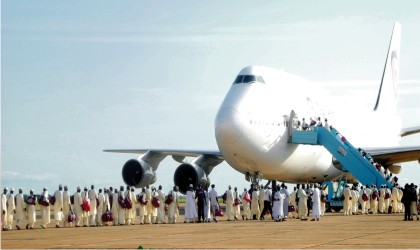
The Lawanti Airport in Gombe State
As the wind of reform
blows across some sectors of the Nigerian economy, the aviation industry is not left out. A reform of the sector has become imperative viewing from the backdrop of Nigerian airlines dying within five years of commencing operations, which has continued unabated. The growth and development of domestic airlines operators in the country has remained stunted, which calls for a total review of extant laws that guide the operations of domestic and international airlines in the country.
It is on record that many domestic airlines including Sosoliso, Concord, Slok, Okada, Chanchagi, Triax, Oriental and the Nigeria Airways have gone under-ground years ago. Other liquidated domestic airlines include ADC, Afrijet, Bellview, Capital, Harco, Harka, Al Barka, Spaceworld, Dasab, Chrome, Flash, EAS, among many other charter operators.
Worried by this scenario and the unstable position of the aviation industry, the Senate on August 13, 2015 raised a committee to take a critical look and holistic examination of the sector.
Senator Bala Ibn Na’Allah in a motion had expressed worry over the situation and prayed the chamber to do something about it.
Deputy Senator President Ike Ekweremadu in his contribution said despite the recent infrastructural update by the last administration on some major airports, Nnamdi Azikiwe Airport remains one of the most ill-equipped in Sub-Saharan Africa.
Senator Shehu Sani urged the Senate to investigate all former interventions in the aviation sector.
In a chat with newsmen in Lagos on the state of the industry, the President, Aero Consult, Ade Obadofin, President, Aviation Round Table (ART), Captain Dele Ore, and former Commandant, Murtala Muhammed Airport, Group Captain John Ojikutu (rtd), urged the former Aviation Minister, Osita Chidoka to halt the under-development of the aviation industry and mortality of domestic operators.
The aviation experts observed that Nigerian airlines have a history of dying within five years of starting operations, which has remained unabated and advised Chidoka to consider the review of all the Bilateral Air Services Agreement (BASA) conditions and policies on aircraft operations into the country.
They said the obnoxious policies and conditions “have continued to sink our own carriers and have not provided the needed room for development and consolidation.”
They said that without urgent review of BASA, air transportation in Nigeria would die as foreign airlines would finally take over any international travel emanating from the country, citing the example of India, which has lost all its domestic airlines as it opened its doors for foreign airlines, especially Middle East airlines. Many airlines have many industry observers share the view that many BASA agreements are skewed against the interest of Nigeria for the blossoming of foreign airlines, many of which have multi-designation to two or more airports in the country.
Another problem area in the aviation industry is manpower, which inadequacy Ojikutu noted as being so critical that it was predicted that if there was no urgent programme to train Nigerians in the technical areas of the industry in the next five years, expatriates would become the only personnel in the engineering and flight operations of every airline in Nigeria.
“We are almost in a crisis situation as training will remain a challenge until we build the organizations that will do it. How many people can be trained in Zaria and how many can be trained in the school in Ilorin? The school in Ilorin is struggling already. Where else can they be taken to in Nigeria? theNigeria Air force used to train people and put them out, but they are now struggling”, Ojikutu stressed.
On his part, Captain Ore said that there was the need for the Federal Government to look into the high cost of aviation fuel and ensure its affordability to avoid much struggling on the part of the operators. The skyrocketing price of aviation fuel (Jet A1) has been identified as the major challenge confronting the operations of domestic airlines in the Nigerian aviation industry.
In a bid to change the situation, operators in the industry have continuously called on the Federal Government to intervene in the issue, but so far, government is yet to make a categorical statement on the matter. Investigation has shown that currently, a litre of the commodity is sold at $1.30, which is huge for a country that produces crude oil. For a 60 minutes flight, Lagos to Abuja, for example, a typical Boeing 737-300 burns 2,250 litres of aviation fuel.
Apart from the high price of aviation fuel, airlines in the sector also pay various charges ranging from five percent ticket sales charge, navigation charges, and passenger service charge, among others.
A one-time Director-General, Nigeria Civil Aviation Authority (NCAA), Dr Harold Demuren at a customer service workshop for Arik Air personnel called on the Federal Government to put in place enabling policies that will sustain domestic airlines operations. He said until operating cost for airlines are reduced, it will be difficult for a carrier to make profit, pointing out that what the revenue carriers earn would be deployed into the costs of aircraft maintenance.
According to him, the huge cost of doing aviation business in Nigeria is one of the reasons many domestic carriers cannot get their aircraft filled despite the acquisition of modern aircraft and excellent crew, and stressed the need for government to play a critical role by providing intervention funds from where the airlines could access funds to boost their operations.
Demuren said the oscillating exchange rate has not helped matters as airlines have to pay more naira for the dollar denominated charges, a development he noted continues to put a huge hole in the pockets of the airlines, while explaining that if nothing was done to bring down the operating costs for domestic airlines, after paying for fuel and the cost of aircraft maintenance, the carriers might have no funds to attend to other segments of their operations.
Said Demuren:”All domestic airlines must work hard to improve their services delivery, else it will be difficult to attract passengers to fly them as carriers of choice.”
In fact, the issue of the high cost of aircraft maintenance is key. For this reason, the former NCAA boss called on the government to assist domestic airlines with the provision of land to enable them build hangars, aircraft maintenance could be done locally to reduce capital flight out of the country. With strategic thinking, the deployment of cutting edge technology as well as access to the very best of available technology training so that domestic airlines can be sustained.
Another worrisome issue in the aviation sector is bird strikes a menace aided by the presence of bushes and waste within and around the airports. It is a phenomenon not peculiar to Nigerian airports but also Africa and the Western world. Bird strike poses serious danger to flight safety which can result to accident with loss of lives and property. This area must be addressed seriously. Safety is very important as far as flight is concerned and this must be guaranteed.
There is no sense debating the fact that the Nigerian College of Aviation Technology (NCAT), is the foremost aviation training college in West Africa. The college is the hub of training for key aviation professionals, which was why the management made concerted efforts to raise the bar in the training of pilots and other professionals with the aim of addressing the gap in human capacity requirement for the industry. Apart from the complaints of abandonment and obsolete infrastructure, the management of the college has left no stone unturned in fixing obvious gaps, which have become noticeable in recent years.
It is on the strength of this that it becomes pertinent to challenge the management to synergise with the private sector, to without delay, rehabilitate all identified gaps such that it will once again regain its status as the foremost aviation training colleges in West Africa for the training of Nigeria’s personnel.
They should endeavour to acquire more trainer aircraft as well as update other facilities at the college, while government should increase its annual budget to enable it do more.
Since we cannot continue to depend on government at all times, especially in this time of public-private partnership for development, it is important for various progressive partners to emerge from their cocoon and tap into the new synergy of development in the aviation industry.
In August 2010, former Minister of Aviation Fidelia Njeze spoke of government’s plans to reposition the industry. Now that the assessment of the sector has reached bottom level, with obvious loopholes in service delivery, huge debts, decaying infrastructure at some airports, obsolete operational equipment and other trends that have arrested or hindered the development and growth of the industry, managers of the airports must live up to their billings.
The aviation industry needs to undergo significant transformations including a turn-round that will see all domestic airlines acquiring new aircraft to boost their fleet sizes as well as opening up new routes on domestic and international networks. Our aviation sector and domestic airlines should be reponsitioned to stimulate economic growth and development of the country. The sector will create significant job opportunities if well managed.
Repositioning the industry will enable it move forward and showcase modern facilities as well as meet the needs of the world’s most competitive and target aviation market.
Shedie Okpara



Business
Jonathan, Diri, Others Laud Firm’s Milestone in Bayelsa …Says Project Will Drive Industrialisation, Create Jobs



-

 News2 days ago
RSG Targets Nine Million Residents in Mosquito Net Distribution Campaign
-

 Oil & Energy2 days ago
Aiyedatiwa Signs New Electricity Bill
-

 Oil & Energy2 days ago
NLNG Commissions Research And Innovation Centre In RSU
-

 Maritime2 days ago
Marine Minister Commends President Tinubu On NPERA Bill Assent
-

 News2 days ago
KenPoly Holds Eight Convocations, August 29
-

 News2 days ago
RSG Begins Another Phase of Projects Commissioning Today
-

 News2 days ago
RMAFC Completes Revenue Sharing Review, Proposes New Pay
-

 Maritime2 days ago
NAGAFF Petitions IGP Over Alleged Maritime Police Harassment