
Politics
Obasanjo: Riding In The Tide Of History

Former President
Olusegun Obasanjo, February 17, 2015 made world news as usual, when he finally dumped the ruling Peoples Democratic Party (PDP) with an unprecedented party membership card-tearing act before the full glare of journalists at his Abeokuta home. Baba’s bidding farewell to PDP was long over-due, but the way and manner of his exit, many believe, was rather absurd and dishonourable.
At the visit of party leaders from his Ward II of Abeokuta North local government area of Ogun State, Obasanjo directed his ward chairman, Alhaji Sunmonu Oladunjoye to tear his party membership card, apparently to demonstrate his final decision to quit PDP and prefer to remain a statesman.
Some had celebrated Obasanjo’s severance from the PDP, especially the opposition – All Progressives Congress (APC), yet many others took the ex-president’s act to the cleaners for “displaying act that are contradictory to his status as a statesman of international repute and ex-leader of this country.”
Rightly, the ex-president deserves a place in the history of PDP and he cannot run away from its shadow – the good and the bad of the party. After his incarceration on the allegation of plot to overthrow General Sani Abacha regime, Obasanjo was offered the PDP presidential ticket on a platter of gold as a “settled issue between the military and political establishments to pacify the South West that was angered by the annulment of June 12, 1993 presidential election widely acknowledged to have been won by Chief Moshood Abiola,” whose death in custody remains a mystery.
Throughout the eight-year rule of Nigeria, the words of Obasanjo were laws and he demonstrated this, among others, with the seizure of federal allocation to Lagos local government councils even when the Supreme Court described such seizure as illegal. Those who had differences with him were not spared. PDP governors including Ayodele Fayose (Ekiti), Rashidi Ladoja (Oyo) and Joshua Dariye (Plateau) were impeached, using federal and state agents.
His influence at the National Assembly was over-bearing such that the leadership of the two legislative chambers became the barber’s chair. It was not surprising that the senate alone produced five presidents in Obasanjo’s eight years tenure. The Economic and Financial Crime Commission (EFCC) was alleged to be a tool in the hands of Obasanjo and perceived enemies were nailed or chased about, while others were forced out of the PDP.
The sun, however, set for the ex-president when he failed to stage-manage his third term bid in office. Even his mastermind in the amendment of the PDP constitution that only former president would be eligible to chair the party’s Board of Trustees (BoT) did not last long in the power chess game and when he realised that there were plans to amend the party’s constitution, he quickly resigned as BoT chairman in 2012 which made his political ally, Chief Tony Anenih to regain his position in 2013.
More than these, Obasanjo’s stay in the PDP had been eventual. He militarized the party to the extent that internal democracy became an aberration, one of which is the K-leg saga in Rivers State. The former president however became the worst critic of President Goodluck Ebele Jonathan, whose ascension to the highest office in the land was almost single-handedly orchestrated by Obasanjo.
If Obasanjo was not accusing Jonathan of corruption, the former president attacked the latter of training snipers, fanning the ember of ethnicity and plotting to cling to power at all means. President Jonathan’s response to the accusation of his former boss exposed Obasanjo as a man playing the gods in the wake of national woes of which he is part of.
There was no love lost between Obasanjo and his political godson, Jonathan and every attempt at reconciling the differences always, ended in widening the gap even as the ex-president’s loyalists in the PDP national working committee (NWC) were gradually phased out.
Going by political details, it was obvious that Obasanjo, who gradually withdrew from the party activities, had lost bearing in PDP power house, coupled with the fact that Jonathan was no longer ready to take orders any more from him.
Pre-emptive of a planned expulsion, Obasanjo decided to walk out of PDP before being disgraced. Political analysts say Obasanjo’s exit from the PDP “is the climax to the irreconcilable differences between him and Jonathan.” According to the New Telegraph of February 17, 2015, Now that the bull is finally out of the China’s shop, “the PDP may be ready to get the peace it craves for taming the power of its leader in the party affairs.”
While it may not be possible to get rid of one’s history, Abimbola Adelakun (The Punch February 19, 2015), said Obasanjo’s reason for quitting his erstwhile party only reflects his nature: self-righteous, self vindicating and zero reflection. But more than that, the self-righteousness of Baba also betrays his inglorious indispensable nature that the world revolves around him.
Though, the Ogun State PDP said the party would not miss the exit of the former president whom it described as “lacking electoral value,” the national leadership of the party wondered “what manner of provocation would have led a former president to lose his composure and go to the extent of tearing the membership card of the party that he once led.” However, the PDP leadership has not forgotten that “it was the PDP’s political machinery that rescued Obasanjo after his incarceration and made a prince out of him.”
Statesmanship is earned by a person after years of noble acts to the nation, and “Obasanjo’s hyper-critical attitude to President Jonathan in recent times contradicts the clout and influence that a person of his standing should wield. It speaks volumes of personal animosity and hatred to the person of Nigeria’s current leader” (New Telegraph, February 17, 2015).
Furthermore, the newspaper wrote that the tearing act desecrates the statesmanship Obaanjo has garnered as a man of history. Lest we forget, it was Obasanjo that received the instrument of surrender by the former secessionist Biafra. He is the first Nigeria military leader to handover to a democratically-elected president and the only Nigerian to become a president after serving a prison term.
The way and manner the ex-president went about his severance from the PDP prompted Governor Sule Lamido of Jigawa State to describe “Obasanjo’s behavior as a manifestation of old age.” The Ijaw leader and elder statesman, Chief Edwin Clark equally berated the former president for acting irresponsibly by tearing PDP membership card – a document that brought him into power and sustained him in office.
Expectedly, the APC lauded Obasanjo’s action, saying that his dramatic exit from PDP signaled the end of the party’s influence in the Nigerian political landscape. In a statement in Akure, the Ondo APC Publicity Secretary, Omo’ba Adesanya, said Obasanjo’s action was symbolic of freedom from the PDP that Nigerians had been craving for.
But the PDP would not see anything the party stands to lose with the exit of Obasanjo from the ruling party essentially because “Obasanjo’s exit is a good riddance to bad rubbish,” as Governor Fayose said. According to him, Obasanjo shouldn’t just tear his PDP membership card; he should also relinquish the ownership of Bell University, Obasanjo Farms, Obasanjo Presidential Library and other financial benefits he got during his presidency.
It may not be for nothing that the Balogun of Owu has always dramatized his criticisms of Jonathan administration, but the Oba of Lagos, Oba Rilwan Akiolu said Obasanjo’s accusation against President Jonathan administration smacks of hypocrisy. The Lagos monarch said “all the accusations the ex-president is making now, he (Obsanjo) initiated them, nurtured them and masterminded them and now he is complaining,” adding that Nigerians cannot be fooled again by Obasanjo’s holier-than-thou attitude.
No doubt, Obasanjo worked so hard in the military to earn him an honour, but when he decided to drag the military into the country’s political waters, he got what he did not bargain for. The authorities of Defence Headquarters (DHQ) described Obasanjo as an embarrassment to the military institution. The ex-president was credited with a statement that the general elections were shifted on security excuse in order to perfect plan by the Presidency to secure tenure extension.
“Obasanjo’s utterances lately indicate an attitude of playing to the gallery or indulging in politicization of serious national security or military affairs,” the DHQ said in reaction to Obasanjo’s comments. It added that the military personnel have moved beyond the parochial and self-adulating reasoning and mindset of Obasanjo’s era in the military to today’s appreciation of the essence of democracy and its indispensability for the stable and prosperous society Nigerians cherish. (The Punch, February 17, 2015).
Whether or not ex-president Obasanjo is new to dramatising events, he is riding in the tide of history. But what is not certain, however, is whether the honour Baba is trying to protect to relish will appreciate in course of time, especially in the light of his recent actions and inactions only time will tell.
Samuel Eleonu
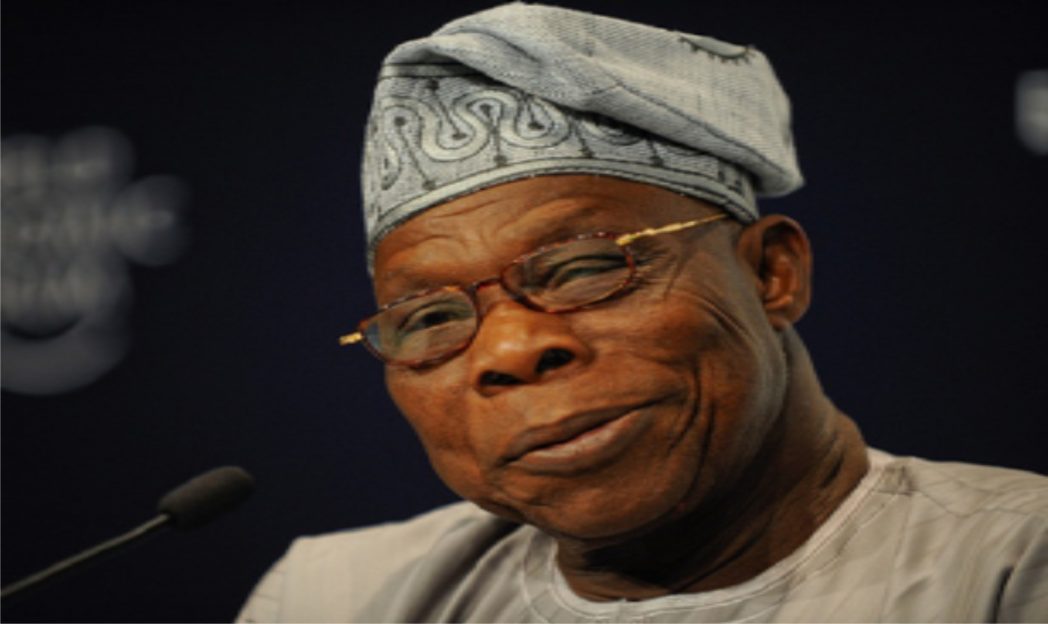
Ex-President Olusegun Obasanjo

Politics
Alleged Coup: Protests Rock N’Assembly As Detained Officers’ Children, Wives Demand Justice

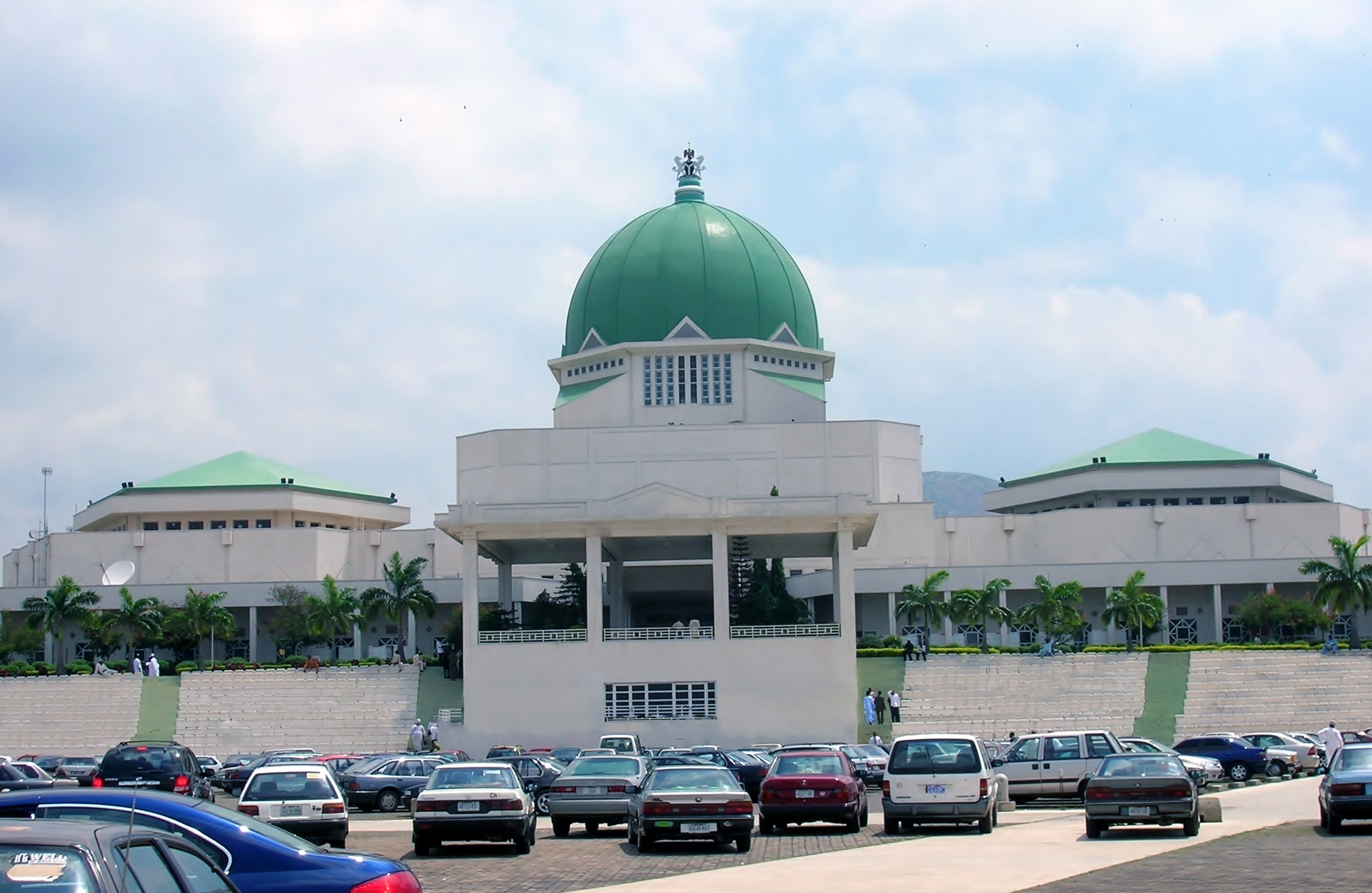
Scores of children and wives of military officers detained over an alleged coup plot yesterday staged a peaceful protest at the National Assembly, demanding a speedy trial and the release of the accused officials.
The protesters who gathered at the entrance of the National Assembly complex, moved in a slow procession while clutching placards with inscriptions such as “Don’t Kill Our Daddies,” “Detention Without Trial is Injustice,” and “Six Months of Torture: Enough Is Enough.”
Amid tears and trembling voices, the children appealed for justice and access to their detained fathers, many of whom they said they had not seen for months.
The appeal was made during a press briefing in Abuja attended by no fewer than 20 wives and several children of the detained officers, including a two-month-old baby.
The families were accompanied by human rights lawyer, Deji Adeyanju and activist Omoyele Sowore.
At the briefing, the families lamented that the officers had been held for over 160 days without trial or contact with their relatives, describing the situation as a violation of their fundamental rights.
Speaking on behalf of the families, Memuna Bashiru said the prolonged detention had thrown their households into uncertainty and emotional distress, noting that while allegations had been widely publicised, families remained in the dark about the fate of their loved ones.
The arrest of the indicted officers was first announced on October 4, 2025, by the then Director of Defense Information, Brigadier General Tukur Gusau, who disclosed that 16 officers were taken into custody for alleged breaches of military regulations and acts of indiscipline.
However, an interim investigation later suggested the existence of a clandestine network of officers, allegedly coordinated by a senior Army officer, which had begun preliminary planning for a coup.
According to the report, the alleged plot involved surveillance of key national assets, including the Presidential Villa, Armed Forces Complex, Niger Barracks in Abuja, and major international airports, with October 25, 2025, cited as the planned date for the operation.
Those reportedly in custody include Brig Gen M. A. Sadiq, Col M. A. Maaji, Lt Col S. Bappah, Lt Col A. A. Hayatu, Lt Col P. Dangnap, Lt Col M. Almakura, Maj A. J. Ibrahim, Maj M. M. Jiddah, Maj M. A. Usman, Maj D. Yusuf, Capt I. Bello, Capt A. A. Yusuf, Lt S. S. Felix, Lt Cdr D. B. Abdullahi, Sqn Ldr S. B. Adamu and Maj I. Dauda.
The alleged plot, according to findings, targeted senior government officials, including President Tinubu and Vice President Kashim Shettima.

In a statement issued yesterday, the party’s National Publicity Secretary, Mr Felix Morka, said the exercise would take place in all wards and designated centres nationwide.
He called on existing members to update their records, while encouraging new entrants to join the party through the digital platform.
“As the electronic membership registration exercise resumes in all wards and designated locations nationwide, we urge existing members to validate their membership while new members are encouraged to register and join the progressive family,” Mr Morka said.
According to him, eligibility for registration is limited to individuals aged 18 and above who possess a valid National Identification Number (NIN).
The party said the initiative is part of efforts to modernise its operations by transitioning to a digital database that would enhance record accuracy and accessibility.
Mr Morka noted that the e-registration would “digitise the party’s membership register, ensure the integrity of records, and enhance efficient access to membership data for planning and management decisions.”
He added that the move is also aimed at promoting internal democracy within the party and strengthening its commitment to democratic innovation.
The APC had previously introduced electronic registration as part of broader reforms to streamline its membership system and improve organisational efficiency.
-
 Editorial19 hours ago
Domesticate FG’s Exit Benefit Scheme
-
 News19 hours ago
DHQ Confirms Deaths Of Terrorists, Soldiers In Borno Attack
-

 News15 hours ago
RSU Unveils Five-Year Strategic Dev Plan …Calls For Collective Commitment To Institutional Excellence
-

 News17 hours ago
Tinubu Commissions Bayelsa Gas Turbine, Other Projects Today
-
Rivers18 hours ago
Dep Gov Seeks Collaboration, Transparency Between RIVCHPP, PHCMB
-
Nation15 hours ago
Rumuji Youth Leader Condemns Protest, Disowns Alleged Government Empowerment Claim
-
 Featured18 hours ago
FG Reaffirms Nigeria’s Stability As US Embassy Suspends Visa Appointments In Abuja Office
-

 Nation16 hours ago
Haniel Jack Foundation Awards Five Rivers Indigenes Scholarship