
Connect with us

Oil & Energy

2015: Nigerians Expectations From Power Firms

Published

on

As a new year (2015)
sets in, most Nigerians wish to know what the power firms particularly the Generating Companies (GENCOS) and Distribution Companies (DISCOS) have for them. With the low efficiency that sparked off and sustained crises in 2014 rule the day, or will the private dominated sector show some improvements in 2015?
As our correspondent samples the feelings of consumers, government officials and authorities of some power firms, divergent views were expressed in hope of a promising future ahead.
Authorities of Port Harcourt Electricity Distribution Company (PHEDC) last week rekindled the hope of its customers in Port Harcourt when it promised them better power supply to power the socio-economic activities of the residents and companies which constitute the firms major customer.
However, Chief Nicholas Njoku, a Port Harcourt-based businessman said, “such promises have always been made but they have not been able to change the situation.
Njoku, who condemned the poor supply of PHEDC last year expressed strong need for the firm to live up to the expectations of the people.
“What can Nigeria in its totality be without good power supply? It is high time we got the point clear that our dream of industrialisation would remain a mirage until adequate power supply is given to the people,” said Njoku.
“Yes, PHEDC has made a good promise, but the company should not forget that such a promise has raised people’s expectations and I advise that PHEDC should match its promise with action,” he stated.
A senior staff in the office of Diobu Business Manager of PHEDC who pleaded anonymity said the company is ready to improve on power supply particularly of the volume of gas supplied to the company improves.
“You should understand that the new power firms that took over the Power Holding Company of Nigeria (PHCN) were relatively new,” he said appealing that the companies which were more or less studying the industry needed some patience, understanding and high level of co-operation from the public.”
“As the days roll by, there is the natural likelihood that improvement would come and when our customers are happy, the power firms would also feel fulfilled,” he stressed.
But the issue of non-availability of metres was raised by Chidinma Okoroafor, a trader at Mile 1 Market in Port Harcourt.
“My concern is that when I sell my goods to customers, they pay me according to the value of the goods in monetary terms. PHEDC does not apply that principle in their business operations,” she said.
Okoroafor is worried that, “PHEDC chooses the amount of power they supply and also forces you to pay any amount it wishes. What kind of business is that,” she queried and noted that until an acceptable mode of payment which must correspondent with services rendered, is applied the promise of better supply is not enough.
She insisted that electricity meter, which is the universal measurement for power supply must determine supply, condemning the outright fixing of pay by the company.
“What annoys me most is that the government appears unconcerned about the cries of the masses and I begin to wonder who protects the people.”
An official of the Rivers State Ministry of Power who identified himself simply as George expressed strong hope that 2015 would come with better supply.
George said, “if you check round in Rivers State, you will observe that more communities especially in the rural areas now have light. I can tell you that more would have power supply because a good number have their rural electrification projects at various completion stages.”
Also expressing hope of better days ahead, a former staff of PHCN, Ihekoronye Obodo, noted that as PHCN operations transited to the new investors, consumers are yet to change their attitude. “They still think that power supply is in the hands of government but that is wrong because private investors are out to make profit to remain in business.”
Obodo solicited for patience and co-operation and expressed hope that with time, the private firms that are daily upgrading their facilities are prepared to improve supply to their customers.
“They must stop the attitude of power stealing because it is criminal, and let government establish special court to handle the issue of power theft, vandalism of power facilities and irregular payment for services used,” he stressed.
“As far as I am concerned, I have told PHEDC to disconnect me because I am no more interested in its power supply or whatever you call of PHEDC is an embarrassment to me because PHCN which was equally poor in service supply is even better than PHEDC,” said another consumer, Cletus Alaye.
Alaye, who said he returned from Canada two years ago would not see any need for PHEDC’s promises, stressing, what have I to do with promises. May be, the firm will ask people to pay for the promise it made. Let them prove to the people that they know how to do their job and until I see light regularly, I will continue to use my private generator.”
He, however, advised the Federal Government not to rely on the DISCOs and GENCOs but to diversify.
“Nigeria as a growing economy should look at the alternative means of supply to the masses. Solar energy, coal and other areas should be given proper attention,” he said and suggested that since so many rivers are in the country, experts should concert these potentials to provide energy.”
The Minister of Power, Prof Chinedu Nebo, last week disclosed Federal Government’s intention of providing over one million prepaid meters to reduce metering gap nationwide.
The minister, who stated this during a town-hall meeting with stakeholders in Abuja said the intervention was to help electricity distribution companies in which government has 40 per cent equity to reduce the metering gap.
He said the only way to reduce over billing was to provide meters to all consumers in the country.”
“Government still owns 40 per cent of the DISCOs. This is why it is still giving out its own counterpart funding,” Nebo stressed.
On pipeline vandalism, he said plans were underway by the government to digitise the pipelines to forestall vandalism and emphasised the need for a legislation to provide stiffer penalties to punish pipeline vandals.
Several efforts have also been made by the government to upgrade and build new power stations. It is believed that if the incidence of theft for which Nigeria is noted as the highest amongst countries of the world, is checked, meters provided to check the over-billing of power distribution firms to their customers and more dedication to responsible service provision as well as increased improvement on facilities are maintained, 2015 may reduce the so much darkness and provide light for socio-economic advancement of the nation.


Chris Oluoh
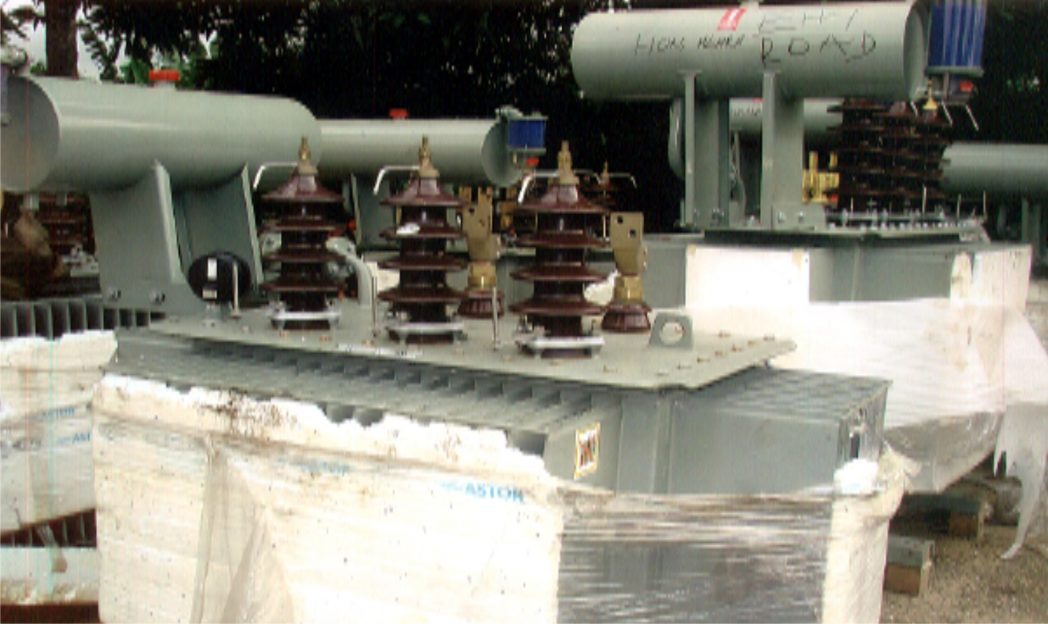
Some Transformers Donated by the lawmaker representing Oyigbo in the RSHA Hon. Okechukwu .A. Nwaogu

Some Transformers Donated by the lawmaker representing Oyigbo in the RSHA Hon. Okechukwu .A. Nwaogu

Continue Reading

Oil & Energy

The Tofu Brine Battery That Could End the Lithium Era

Published

on

Researchers in Hong Kong and China have developed a new form of battery that is more eco-friendly and longer lasting than lithium ion batteries –  and it runs on tofu brine. The new water battery is still in research phases, but if the technology proves to be scalable enough to hit commercial markets, it could be a game-changer for the energy and tech sectors.

“Compared with current aqueous battery systems … our system delivers exceptional long-term cycling stability and environmental friendliness under neutral conditions,” the research team, composed of scientists from the City University of Hong Kong and Southern University of Science and Technology in Shenzhen, Guangdong, said in a paper published this month in Nature Communications.

The researchers found that their battery model can be recharged over 120,000 times. “At over a hundred thousand cycles, this could mean a single water-based battery could last at least a decade or so,” states a recent report on the breakthrough from Interesting Engineering. “For applications like grid storage (solar farms, wind balancing), that’s extremely valuable,” the article went on to say.

This kind of lifespan would represent a drastic improvement over the battery technologies that dominate today’s market. Lithium-ion batteries degrade after between 1,000 and 3,000 charge cycles. This could prove revolutionary, as finding an alternative to lithium-ion batteries to power rechargeable devices is a major priority for Big Tech and the global energy sector.

Moreover, these tofu-brine batteries could prove safer and more environmentally friendly than lithium-ion batteries. According to the study authors, the full cells are environmentally benign and nontoxic and can be directly discarded to environments according to various standards.” Water based (also called aqueous) batteries can also potentially be cheap to produce as they rely on ingredients that are less rare in addition to being less hazardous.

Lithium is environmentally harmful to extract, prone to fires, and its supply chains are geopolitically fraught. Currently, China alone controls half of the global lithium market, and is rapidly increasing its stake. In 2024, more than eight in ten battery cells on the planet were made in China. This means that finding a battery model that can compete with lithium-ion batteries in applications like grid-scale energy storage and electric vehicles would have revolutionary implications for global markets.

Researchers around the world have been racing to develop battery models that could diversify the market and make it more competitive and resilient. These models range widely in size, components, and application, with models currently under development for next-gen sodium-ion batteries, quantum batteries, nuclear batteries, and even sand and dirt batteries.

Of course, the irony is that the leading alternatives to lithium-ion batteries are also being developed in Chinese labs. If this new tofu-brine battery proves scalable and applicable outside of a laboratory environment, it could just be another step toward Beijing’s goal of near-total domination of clean energy technology value chains and status as the world’s first and premiere ‘electro-state.’

China’s extreme advantage in global battery making gives it a major point of leverage in global economies as the world continues to electrify at a rapid pace. It is estimated that European demand for lithium in batteries will reach kilo tonnes (thousands of tonnes) of Lithium Carbonate Equivalent by next year, and North American demand will reach 250 kit LCE. it’s all but certain that the vast majority of that demand will be supplied by China.

Other nations are aware of the risk of this dependency, and are taking pains to protect and promote domestic battery manufacturing, but these efforts may be too little, too late. “For globally competitive battery manufacturing industries to emerge outside of Asia over the next ten years, companies will need to do far more than ensure regulatory compliance,” summarizes a McKinsey & Company report released in January. “Challenges will need to be overcome on multiple fronts spanning supply chains, talent management, operations and technology.”

By: Haley Zaremba

Continue Reading

Oil & Energy

REA TO Spend N100bn On Hybrid Mini-grids For Govt Agencies In 2026

Published

on

The Rural Electrification Agency (REA) says it will spend N100 billion in 2026 to deploy hybrid mini-grids for government agencies within and outside Abuja.

The Managing Directors, REA, Abba Aliyu, disclosed this while addressing newsmen on the sidelines of the 2026 budget defence session organised by the House Committee on Rural Electrification in Abuja, Friday.

The approved funds form part of the National Public Sector Solarisation programme, a component of the agency’s broader N170 billion budget proposal for 2026.

The initiative is designed to improve electricity reliability for public institutions while reducing operational costs and easing pressure on the national grid.

Aliyu explained that the agency’s total proposed budget for 2026 stands at N170 billion, with N100 billion of the amount dedicated specifically to the solarisation initiative targeting government agencies.

He said the hybrid mini-grid systems combine solar power with complementary energy sources to ensure an uninterrupted electricity supply.

“The total budget size for 2026 operations is N170 billion, out of which N100 billion had been approved for National Public Sector Solarisation.

“The managing director said that the N100 billion targets provision of hybrid mini-grid for government agencies within and outside Abuja”,
He stated that the intervention covers agencies in the Federal Capital Territory as well as other parts of the country with the aim of reducing energy costs for government operations while improving electricity reliability.

Aliyu cited the National Hospital in Abuja as an example where similar infrastructure had been deployed to ensure stable power and cut operational expenses.He added that beyond the Solarisation

programme, the 2026 budget includes over 500 electrification projects nationwide, covering grid extensions for nearby communities, deployment of transformers, mini-grids for agrarian and cottage-industry clusters, and solar home systems for sparsely populated areas.

Recall that earlier in February 2026, REA signed a Memorandum of Understanding with the Economic Community of West African States (ECOWAS) to deploy solar power systems to 15 public institutions across Nigeria.

The project will be implemented under the Regional Off-Grid Electricity Access Project (ROGEAP), a World Bank-supported initiative aimed at expanding off-grid electricity access across West Africa and the Sahel.

ECOWAS will provide a $700,000 grant to fund the installation of solar photovoltaic systems in selected rural health centres  and schools in the Federal Capital Territory, Niger, and Nasarawa States.

The initiative marked the formal commencement of Nigeria’s pilot implementation phase under ROGEAP, with REA serving as the technical and financial implementing agency.
 through interconnected mini-grids.
Continue Reading

Oil & Energy

PIA: TotalEnergies Transfers OLO Oilfield HCDT Obligation To Aradel ……Says HCDT Enabled Completion of 100 Projects In 2 years

Published

on

Pursuant of the Petroleum Industry Act (PIA), TotalEnergies has handed over the OLO Oilfield Host Community Development Trust (HCDT) to Aradel Holdings Plc.
This transition follows Aradel’s earlier acquisition of the Olo and Olo West marginal fields (formerly part of OML 58) from the TotalEnergies/NNPCL Joint Venture, and formally completes the transfer of settlor responsibilities under the trust, ensuring that community development work already underway continues without interruption.
Speaking at the Hand-Over ceremony in Abuja, weekend, the Chief Executive, Nigerian Upstream Petroleum Regulatory Commission (NUPRC), Oritsemeyiwa Eyesan, said the development trust remains intact, its governance structure preserved and its statutory funding obligations transitioning seamlessly to the new settlor as envisioned by the PIA.
Represented by the Executive Commissioner, for Health, Safety, Environment, and Community (HSEC), John Tonlagha, Eyesan explained that the Commission would continue to provide firm and consistent oversight to ensure full compliance with the PIA for the benefit of both the communities and the industry.
Also speaking, the General Manager, Community Affairs, Projects and Development, TotalEnergies, Dornu Kogam, urged Aradel Holdings to maintain the same transparent, community-centered approach throughout project completion.
TotalEnergies further confirmed that all obligations up to the date of transfer have been fully met, and no outstanding liabilities remain adding that Aradel formally assumes full responsibility going forward, with the Commission’s regulatory consent granted.

In his remarks, the Community Affairs Manager, Aradel Holdings Plc, Blessyn Okpowo, affirmed the company’s commitment to honouring all PIA obligations and continuing Total Energies’ community engagement approach.“We want to say that in line with the PIA, we will honour commitments and duties required of the settlor and we want to work very smoothly with the way TotalEnergies has worked with them,” he stated.

The Chairman, Board of Trustees, OLO host community, Wales Godwin, commended the HCDT’s delivery of 118 projects out of 160 planned.

He recognised the Commission’s role in approving the Community Development Plan (CDP) before project start, underscoring regulatory excellence.The parties noted that between 2023 and 2025, the trust has enabled the completion of more than 100 community projects, spanning water supply, electricity, road infrastructure, education, and healthcare with a further 40 projects currently ongoing.

Continue Reading

Trending