Connect with us

Oil & Energy

2015: Nigerians Expectations From Power Firms

Published

on

As a new year (2015)
sets in, most Nigerians wish to know what the power firms particularly the Generating Companies (GENCOS) and Distribution Companies (DISCOS) have for them. With the low efficiency that sparked off and sustained crises in 2014 rule the day, or will the private dominated sector show some improvements in 2015?
As our correspondent samples the feelings of consumers, government officials and authorities of some power firms, divergent views were expressed in hope of a promising future ahead.
Authorities of Port Harcourt Electricity Distribution Company (PHEDC) last week rekindled the hope of its customers in Port Harcourt when it promised them better power supply to power the socio-economic activities of the residents and companies which constitute the firms major customer.
However, Chief Nicholas Njoku, a Port Harcourt-based businessman said, “such promises have always been made but they have not been able to change the situation.
Njoku, who condemned the poor supply of PHEDC last year expressed strong need for the firm to live up to the expectations of the people.
“What can Nigeria in its totality be without good power supply? It is high time we got the point clear that our dream of industrialisation would remain a mirage until adequate power supply is given to the people,” said Njoku.
“Yes, PHEDC has made a good promise, but the company should not forget that such a promise has raised people’s expectations and I advise that PHEDC should match its promise with action,” he stated.
A senior staff in the office of Diobu Business Manager of PHEDC who pleaded anonymity said the company is ready to improve on power supply particularly of the volume of gas supplied to the company improves.
“You should understand that the new power firms that took over the Power Holding Company of Nigeria (PHCN) were relatively new,” he said appealing that the companies which were more or less studying the industry needed some patience, understanding and high level of co-operation from the public.”
“As the days roll by, there is the natural likelihood that improvement would come and when our customers are happy, the power firms would also feel fulfilled,” he stressed.
But the issue of non-availability of metres was raised by Chidinma Okoroafor, a trader at Mile 1 Market in Port Harcourt.
“My concern is that when I sell my goods to customers, they pay me according to the value of the goods in monetary terms. PHEDC does not apply that principle in their business operations,” she said.
Okoroafor is worried that, “PHEDC chooses the amount of power they supply and also forces you to pay any amount it wishes. What kind of business is that,” she queried and noted that until an acceptable mode of payment which must correspondent with services rendered, is applied the promise of better supply is not enough.
She insisted that electricity meter, which is the universal measurement for power supply must determine supply, condemning the outright fixing of pay by the company.
“What annoys me most is that the government appears unconcerned about the cries of the masses and I begin to wonder who protects the people.”
An official of the Rivers State Ministry of Power who identified himself simply as George expressed strong hope that 2015 would come with better supply.
George said, “if you check round in Rivers State, you will observe that more communities especially in the rural areas now have light. I can tell you that more would have power supply because a good number have their rural electrification projects at various completion stages.”
Also expressing hope of better days ahead, a former staff of PHCN, Ihekoronye Obodo, noted that as PHCN operations transited to the new investors, consumers are yet to change their attitude. “They still think that power supply is in the hands of government but that is wrong because private investors are out to make profit to remain in business.”
Obodo solicited for patience and co-operation and expressed hope that with time, the private firms that are daily upgrading their facilities are prepared to improve supply to their customers.
“They must stop the attitude of power stealing because it is criminal, and let government establish special court to handle the issue of power theft, vandalism of power facilities and irregular payment for services used,” he stressed.
“As far as I am concerned, I have told PHEDC to disconnect me because I am no more interested in its power supply or whatever you call of PHEDC is an embarrassment to me because PHCN which was equally poor in service supply is even better than PHEDC,” said another consumer, Cletus Alaye.
Alaye, who said he returned from Canada two years ago would not see any need for PHEDC’s promises, stressing, what have I to do with promises. May be, the firm will ask people to pay for the promise it made. Let them prove to the people that they know how to do their job and until I see light regularly, I will continue to use my private generator.”
He, however, advised the Federal Government not to rely on the DISCOs and GENCOs but to diversify.
“Nigeria as a growing economy should look at the alternative means of supply to the masses. Solar energy, coal and other areas should be given proper attention,” he said and suggested that since so many rivers are in the country, experts should concert these potentials to provide energy.”
The Minister of Power, Prof Chinedu Nebo, last week disclosed Federal Government’s intention of providing over one million prepaid meters to reduce metering gap nationwide.
The minister, who stated this during a town-hall meeting with stakeholders in Abuja said the intervention was to help electricity distribution companies in which government has 40 per cent equity to reduce the metering gap.
He said the only way to reduce over billing was to provide meters to all consumers in the country.”
“Government still owns 40 per cent of the DISCOs. This is why it is still giving out its own counterpart funding,” Nebo stressed.
On pipeline vandalism, he said plans were underway by the government to digitise the pipelines to forestall vandalism and emphasised the need for a legislation to provide stiffer penalties to punish pipeline vandals.
Several efforts have also been made by the government to upgrade and build new power stations. It is believed that if the incidence of theft for which Nigeria is noted as the highest amongst countries of the world, is checked, meters provided to check the over-billing of power distribution firms to their customers and more dedication to responsible service provision as well as increased improvement on facilities are maintained, 2015 may reduce the so much darkness and provide light for socio-economic advancement of the nation.


Chris Oluoh
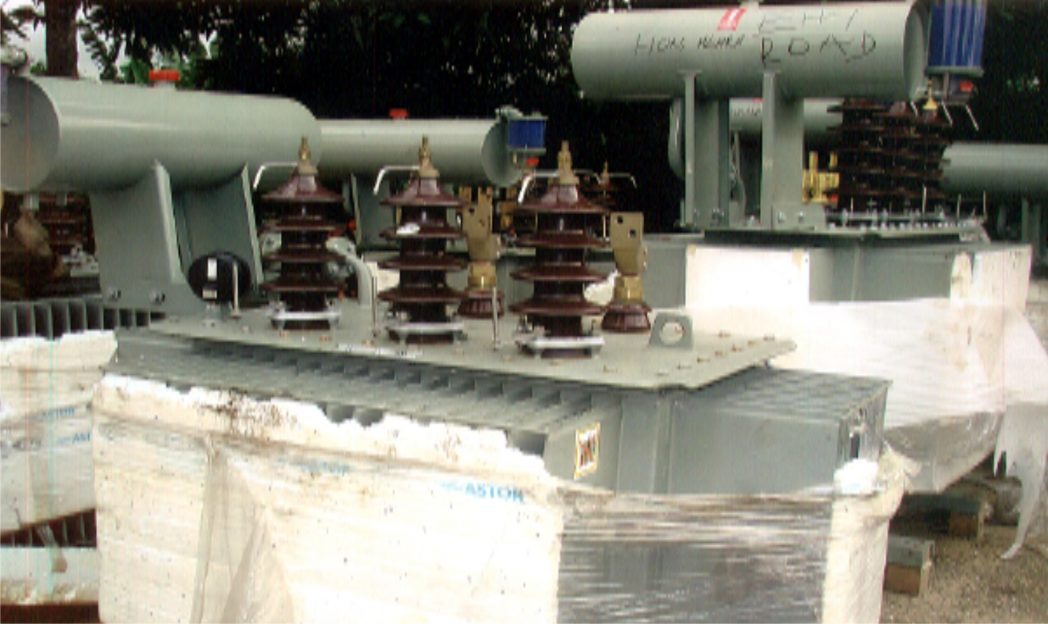
Some Transformers Donated by the lawmaker representing Oyigbo in the RSHA Hon. Okechukwu .A. Nwaogu

Some Transformers Donated by the lawmaker representing Oyigbo in the RSHA Hon. Okechukwu .A. Nwaogu

Continue Reading

Oil & Energy

NCDMB Unveils $100m Equity Investment Scheme, Says Nigerian Content Hits 61% In 2025 ………As Board Plans Technology Challenge, Research and Development Fair In 2026

Published

on

The Nigerian Content Development and Monitoring Board (NCDMB), has unveiled a $100 million Equity Investment Scheme among a raft of fresh initiatives to bolster indigenous capacity and participation in the oil and gas industry.
Executive Secretary of the Board, Engr. Felix Omatsola Ogbe, disclosed this while delivering his keynote address at the opening of the 14th Practical Nigerian Content Forum, held in Yenagoa, Bayelsa State.
Ogbe said the $100 million Equity Investment Scheme would provide equity financing to high-growth indigenous energy service companies, while diversifying the income base of the Nigerian Content Development Fund (NCDF).
In furtherance of the scheme, a memorandum of understanding (MOU) was signed at the event between Engr. Ogbe and the Managing Director of the Bank of Industry, Dr. Olasupo Olusi toward the management of the scheme, which is a new product of the Nigerian Content Intervention Fund (NCI Fund).
The NCDMB Scribe also announced that 61 per cent Nigerian Content level has already been attained in the oil and gas sector by the third quarter of 2025 from projects being monitored by the Board.
Ogbe further expressed the board’s readiness to onboard a new set of Project 100 Companies after the successful implementation of approved interventions relating to the first set of Project 100 Companies, launched in 2019, for which an exit plan is slated for April 2026.
The ‘Project 100 Companies’, TheTide learnt, is an initiative of the Ministry of Petroleum Resources and the NCDMB under which 100 indigenous companies in the oil and gas industry were nurtured and empowered to higher levels of competitiveness through capacity building and access to market opportunities.
The NCDMB helmsman also said the Board has concluded plans to launch its NCDMB Technology Challenge in the first quarter of 2026 and to hold a Research and Development Fair in the second quarter of 2026.
In addition to its ongoing initiatives, the board further stated that a review of its seven current guidelines would be undertaken between the first and second quarter of 2026.
“The Board has completed the framework for issuance of NCDF Compliance Certificate, an instrument to confirm that a company in the oil and gas industry has complied with the one per cent remittance obligations.
“The Certificate will become effective on Ist January 2026 and would be required to obtain key permits and approvals from the Board”, Ogbe said.
In his address, the Minister of State for Petroleum Resources (Gas), Rt. Hon. Ekperikpe Ekpo, said the theme of the PNC Forum, “Securing Investments, Strengthening Local Content, and Scaling Energy Production,” captures Nigeria’s national priorities that guide interventions by the Board and his Ministry.
He insisted that investment remains the lifeblood of the energy sector, and that the Board and the Ministry were committed to providing stable policies, transparent processes, and market-driven incentives, to attract long-term capital,  assuring that the ministry would continue to strengthen local capacity across fabrication, engineering, technology services, manufacturing of components, and research and development.
On his part, the Minster of State for Petroleum Resources (Oil), Senator Heineken Lokpobiri, noted with satisfaction that a decade-long stagnation in the oil and gas industry was overcame with the enactment of the long-delayed Petroleum Industry Act (PIA), 2021, and Presidential Directives issued by the Administration of President Bola Ahmed Tinubu in March 2024.
He said Nigeria has regained investor-confidence as signalled by the recent surge in FIDs and the increase of oil rigs from 14 to over 60, with 40 currently in active service.
“Our investment climate now is globally competitive, our fiscal terms are globally competitive. Our policies must be seen to be consistent at all times. The Federal Government is prepared to support Nigerian Content and the oil and gas industry, but then, things have to be done responsibly., he said.
In a goodwill message, the Managing Director, BOI, Dr. Olasupo Olusi, said that the collaboration between the NCDMB and BOI marked a significant expansion of a longstanding relationship, while assuring that through the $100 million NCIF Equity Investment Fund, the Bank of Industry would deploy equity and quasi-equity capital to support high-potential Nigerian companies to complement traditional debt financing and strengthening access to the long-term risk capital required for scale, competitiveness, and value creation.
“With a single obligor limit of $5 million, the Fund is designed to catalyze multiple high-impact investments while maintaining strong governance and prudent risk management”, the BOI Managing Director said.
On her part, the Special Adviser to the President on Energy, Mrs. Olu A. Verheijen, commended the NCDMB for sustaining the PNC Forum, which she said, accelerates change, drives competitiveness, and pushes the industry toward global standards.
She urged stakeholders to remain intentional and not incidental about in-country value addition, as they chart the path toward building a resilient, competitive industrial base in Nigeria.
By;  Ariwera Ibibo-Howells, Yenagoa
Continue Reading

Oil & Energy

Power Supply Boost: FG Begins Payment Of N185bn Gas Debt

Published

on

In the bid to revitalise the gas industry and stabilise power generation, President Bola Ahmed Tinubu has authorised the settlement of N185 billion in long-standing debts owed to natural gas producers.

The N185 billion legacy government obligations to gas producers for past supplies had strained cash flow and hindered operations, discouraged further exploration and production, and reduced gas supply for power generation, thereby worsening Nigeria’s power shortages and unreliable electricity supply.

The payment, to be executed through a royalty-offset arrangement, is expected to restore confidence among domestic and international gas suppliers who have long expressed concern about persistent indebtedness in the sector.

Minister of State for Petroleum Resources (Gas), Ekperikpe Ekpo, said the move, endorsed by the National Economic Council (NEC) headed by Vice President, Kashim Shettima, marked one of the most significant interventions in Nigeria’s energy sector in recent years.
In a statement issued by the his Spokesman, Louis Ibrahim, Ekpo described the approval as a “decisive step towards revitalising Nigeria’s gas sector and strengthening its power-generation capacity in a sustainable manner,”
While noting that the intervention aligned with the ‘Decade of Gas’ initiative, which aims to unlock more than 12 billion cubic feet per day (bcf/d) of gas supply by 2030, Ekpo said clearing the arrears would deliver wide-ranging benefits, beginning with restoring investor confidence in the sector.

According to him, settling the debts is crucial to rebuilding trust between the government and gas producers, many of whom have withheld or slowed new investments due to uncertainty over payments.

Ekpo explained that improved financial stability would help revive upstream activity by accelerating exploration and production, ultimately boosting Nigeria’s gas output adding that Increased gas supply would also boost power generation and ease the long-standing electricity shortages that continue to hinder businesses across the country.

The minister noted that these gains were expected to stimulate broader economic growth, as reliable energy underpins industrialisation, job creation and competitiveness.

In his intervention, Coordinating Director of the Decade of Gas Secretariat, Ed Ubong, said the approved plan to clear gas-to-power debts sends a powerful signal of commitment from the President to address structural weaknesses across the value chain.

“This decision underlines the federal government’s determination to clear legacy liabilities and give gas producers the confidence that supplies to power generation will be honoured. It could unlock stalled projects, revive investor interest and rebuild momentum behind Nigeria’s transition to a gas-driven economy,” Ubong said.

Continue Reading

Oil & Energy

The AI Revolution Reshaping the Global Mining Industry

Published

on

The global mining industry is undergoing a rapid digital transformation, driven by the dual pressures of the energy transition and increasingly complex extraction environments. A new market report projects the global Artificial Intelligence (AI) in mining market will nearly quadruple in value over the next seven years, reaching $9.93 billion by 2032.
This surge in adoption comes as miners face a “perfect storm” of challenges: declining ore grades, labor shortages, and an insatiable global appetite for the critical minerals required to power electric vehicles (EVs) and renewable energy grids.
According to data released this week, the market for AI in mining is valued at approximately $2.6 billion in 2025 and is expected to expand at a Compound Annual Growth Rate (CAGR) of 21.1 percent through 2032.
While the mining sector has historically been viewed as slow to modernize, the need for efficiency is forcing a change. The integration of autonomous haulage systems, predictive maintenance analytics, and “digital twins”—virtual replicas of physical mine sites—is shifting from pilot projects to standard operational necessity.
The “Operations & Process Optimization” segment is currently the dominant application, expected to account for more than 35 percent of the market in 2025. This technology allows companies to squeeze higher yields out of lower-quality rock, a capability that is becoming essential as easily accessible high-grade deposits are depleted worldwide.
The driving force behind this investment is the global scramble for critical minerals. The report highlights that the metal mining segment held the largest market share in 2024, directly correlated to the demand for lithium, copper, cobalt, and nickel—the backbone of the green energy economy.
“Metal mining operations involve highly complex processes—from ore body modeling and exploration to drilling, blasting, grinding, and material movement,” the report notes.
“AI supports these functions through predictive analytics… enabling cost reduction and higher yield recovery.”
For Western nations, this technological pivot also holds geopolitical weight. With China currently dominating the processing of rare earth elements, Western mining majors are under pressure to ramp up domestic production and efficiency to secure supply chains for battery manufacturing and clean energy infrastructure.
Beyond productivity, the industry is leveraging AI to address its most persistent operational risk: safety. The “Safety, Security & Environmental” segment is projected to record the highest growth rate during the forecast period.
Mining remains one of the world’s most hazardous heavy industries. Companies are increasingly deploying AI-powered video analytics and real-time worker tracking to prevent accidents involving heavy machinery and to monitor for gas leaks or ventilation failures in underground operations.
Furthermore, stricter Environmental, Social, and Governance (ESG) criteria from investors are pushing miners to adopt AI for environmental compliance. New tools allow operators to monitor tailings dams for stability, track emissions in real-time, and optimize water usage, ensuring that the intensifying race for minerals does not come at the cost of environmental stewardship.
Geographically, the Asia Pacific region commanded the largest share of the AI in mining market in 2024 and is expected to maintain the highest growth rate.
This dominance is underpinned by massive production volumes in China and Australia. Major industry players in the region, including BHP and Rio Tinto, have been early adopters of autonomous technologies. In Western Australia, for example, autonomous haulage trucks and drill rigs are already commonplace, moving millions of tons of iron ore with minimal human intervention.
China’s adoption is further accelerated by government support for “smart mining” initiatives aimed at modernizing its vast coal and mineral sectors to reduce fatalities and improve environmental performance.
As the world moves toward 2032, the “mine of the future” will likely bear little resemblance to the labor-intensive operations of the past. With generative AI now entering the sector to assist in complex mine planning and exploration, the industry is pivoting toward a model where data is as valuable as the ore itself. For energy markets, this efficiency is not just a bonus; it is a prerequisite for meeting the material demands of a decarbonized world.
By: Charles Kennedy
Continue Reading

Trending