
Nation
THE STATES

Adamawa
Officials of Adamawa State Hunters Association
assisting the military in the fight against insurgents in the state have called for public support and prayers for victory over the insurgents.
Officials of the association made the call in an interview with newsmen in Yola, saying their members were committed to contributing their quota toward curbing insurgency in the country.
Philips James, the Secretary of the hunters association, said “we need the peoples’ support and prayers. We also need government’s assistance in this assignment.”
James urged the public to be vigilant and be security conscious, as well as prayerful for victory over the insurgents.
Borno
The Bama Development Foundation, an NGO, said
yesterday that it had registered 180,000 Internally Displaced Persons (IDPs) from Bama taking refuge in Maiduguri.
Malam Mohammed Hassan, the Chairman of the foundation, stated this at a news conference in Maiduguri.
Hassan said that the IDPs were in four camps in Maiduguri.
According to him, the IDPs are those displaced during attack on the town by insurgents in September.
“We have recorded about 180,000 IDPs from Bama taking shelters in four different camps in Maiduguri as at October 31.
“The camps are located at the Yerwa Girls Secondary School, Women Teachers College, NYSC Orientation Camp and Government Girls College, Maiduguri’’, he said.
FCT
The Minister of Industry, Trade and Investment, Dr
Olusegun Aganga, said the Federal Government had identified 100 companies to be rewarded for contributing to the nation’s economic growth.
Aganga told newsmen in Abuja that the private sector was behind the country’s ranking as number one economy in Africa and one of the top 10 economies in the world.
According to him, over the last three years Nigeria has attracted more foreign direct investments and more local investments than any other economy in Africa.
“Earlier this year, the prestigious Wall Street Journal Frontier Market Settlement index which surveyed blue chip companies in developed economies ranked Nigeria number one country of global interest to investors.
”We are proud of these achievements because it is investors that create jobs for our people, wealth, facilitate economic growth and generate income for the government.
Kano
The Kano State Government said it spent N754.8
million on the construction of 74 public toilets in 74 rural markets in the state.
The State Commissioner for Rural and Community Development, Alhaji Garba Durbunde, disclosed this in an interview with newsmen in Kano recently.
Durbunde said that the provision of the toilets which was also supported with solar-powered boreholes was to stop open defecation in the communities.
He said that the projects were executed in the last two years, adding that they were jointly financed by the state government and benefitting local government areas.
He said that N407 million was spent on the construction of the boreholes while the toilets gulped N338.8 million.
Katsina
Malam Ado Sama’ila, the Education Secretary,
Dandume Local Government Education Authority in Katsina State, has urged parents to encourage their daughters to study in tertiary institutions in order to maximise their potentials.
Sama’ila made the call in an interview with newsmen in Dandume.
He said it was important for parents especially in rural areas to stop the habit of preventing their daughters from obtaining higher qualifications after secondary school.
The education secretary said that the practice limits the abilities of girls to contribute more meaningfully to societal development.
Lagos
A Consultant Public Health Physician, Dr Abdul-
Hakeem Abiola, said last Wednesday that lack of toilets was putting public health at risk.
Abiola, who works at the College of Medicine, University of Lagos, made this known in an interview with newsmen in Lagos on the World Toilet Day.
“Human faeces or human excreta is a source of infection and it is an important cause of environmental pollution.
“The health hazards of improper excreta management and disposal are one: it can cause soil pollution; it can cause water pollution; it can cause the contamination of foods and it can lead to propagation of flies, which can act as vectors for many diseases.”
Nasarawa
The Governing Council of Nasarawa State University
(NSUK), Keffi, has approved the appointment of Prof. Yakubu Ngwai and Dr Sa’adatu Liman as new Deputy Vice Chancellors, Administration and Academic respectively.
Notice of the appointment is contained in a statement signed by Prof. Muhammed Mainoma, the Vice Chancellor of the university, made available to newsmen on Thursday in Keffi.
The statement quoted Mainoma as saying “the decision to confirm the appointment of the two officers was taken at the meeting of the council, in line with the law that established the university.
“The confirmation of the appointment, which is for five years, starts with immediate effect.’’
Our correspondent reports that until their appointments, Ngwai was the Dean, Faculty of Natural and Applied Sciences, while Liman was the Head of Department of Islamic Studies and Deputy Dean Students Affairs.
Oyo
A Chief Magistrates’ Court sitting at Iyaganku, Ibadan,
has remanded a 45-year old John Jimoh in prison custody for allegedly issuing a dud cheque.
The Chief Magistrate, Alhaja Fatima Badrudeen, remanded Jimoh in Agodi prison pending his arraignment at the Federal High Court in Ibadan.
Jimoh, residing on Banji Street in Akuru Elebu area of Ibadan, was arraigned on a two-count charge of issuing a dud cheque to and obtaining money from a bank without paying back.
Jimoh was alleged to have obtained the sum of N500, 000 loans from Apex Trust Micro Finance Bank in Ibadan on September 4 with a promise to repay.
The Prosecutor, Insp. Adewale Amos, said Jimoh promised to repay the money within 30 days as agreed with the bank.
Sokoto
Journalists from Sokoto, Kebbi and Zamfara State have
called for adequate budgetary allocation for the Polio Eradication Initiative (PEI) in the country.
The journalists made the call at the end of a two-day media sensitisation/ review meeting on strategies to interrupt the transmission of the wild polio virus.
No fewer than 49 journalists attended the meeting held between November 17 and November 19, which focused on polio in the context of immunisation and child survival.
“There should also be the timely release of funds and physical involvement of PEI and other child-survival issues.
“Media practitioners and their organisations should continue to utilise their special positions in the society to strengthen and sustain the polio eradication and other child-survival programmes,’’ they said.
Taraba
Journalists who die in the line of duty should be given
post humous awards, Alhaji Bello Yero, Permanent Secretary, Bureau for Local Government and Chieftaincy Affairs in Taraba State, has suggested.
Yero made the suggestion while interacting with newsmen in Jalingo recently.
Extolling the virtues of journalists across the world that died in the line of duty, he said the slain journalists were heroes who deserved honour even in death.
“It is my considered view that such journalists should be given post humus awards.
“Journalists in Nigeria had the track record of covering violent conflicts even though it had often put their lives in danger.
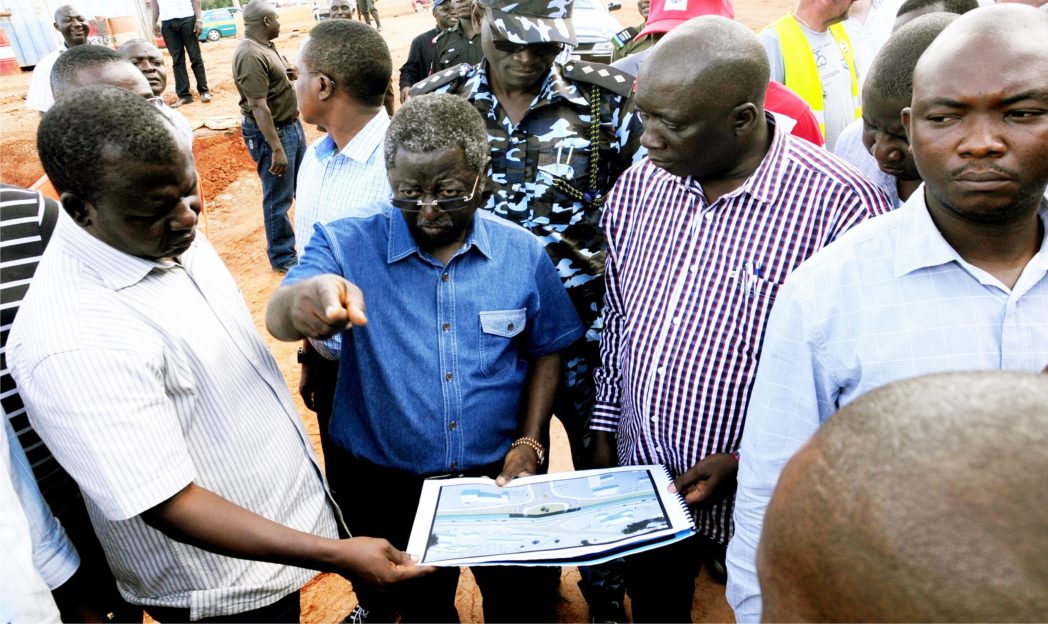
Gov. Jonah Jang of Plateau (2nd left), going through a plan of a Bridge at the Secretariat junction, Yakubu Gowon way, during inspection of road projects in Jos recently.



Rivers State University and the Otonti Nduka Foundation for Values Education jointly hosted a two-day National Conference on 8 and 9 May 2026 to examine the state of values in Nigeria.
The two days conference held at Rivers State University convocation arena brought together academics, policymakers, legal experts and education leaders under the theme _“Trends and Challenges in Upholding Values in Nigeria.”_
The gathering focused on policy gaps, curriculum reform, and the role of ethics in public service and education.
The event opened on Friday with remarks from Vice Chancellor Prof. Chief Isaac Zeb-Obipi, who stressed the need to address declining moral and civic values across Nigeria’s education and public sectors. A book of abstracts for the plenary sessions was also presented to participants.
Key speakers included former Attorney General Chief Dr Kanu Agabi, SAN; NERDC Executive Secretary Prof. Shehu Salisu; Prof. Hauwa Imam, FNAE, of the University of Abuja; former Rivers SUBEB Chairman Ven Dr Fyneface Akah, ; former NIMASA DG Dr Hon. Dakuku Adol-Peterside; and RSU Director of ICT Prof. Sunny Orike.
Discussions centered on integrating values education into schools, tertiary institutions and public institutions, alongside the impact of technology on moral development among young Nigerians. Panel and plenary sessions produced practical recommendations for curriculum and policy reform.
On Saturday, the foundation marked its centenary with the unveiling of the book _Otonti Nduka in History_, launched by Chief Engr. Grant Offor, FNSE. The Nigerian Academy of Education held a ceremonial procession led by its President Prof. Olu Jegede and the Ikwerre Professors Forum.
In a communiqué, participants called for stronger collaboration between government, civil society and academia to mainstream values education nationwide. They recommended reviewing teacher training curricula and expanding digital platforms to promote ethical civic engagement, with the foundation pledging to share the outcomes with education authorities for implementation.
Dignitaries present included Ogbakor Ikwerre Worldwide as Chief Host, Prof. Emeritus Chief T. Uzodimma Nwala, the Ikenga 1 of Mbaise and first philosophy student of Prof. Otonti Nduka, alongside scholars and community leaders.
Amadi Akujobi

The Shell Nigeria Gas Limited, in partnership with the Manufacturers Association of Nigeria, has reaffirmed support for efforts to expand gas distribution infrastructure in Rivers State as part of initiatives aimed at improving access to affordable, cleaner and more reliable energy for industries across the South-South region.
The commitment was highlighted during the SNG–MAN Business Forum held in Port Harcourt, where stakeholders from the industrial and public sectors examined the role of natural gas in driving industrialisation, boosting local production and strengthening energy security.
Speaking at the forum on behalf of the Managing Director of Shell Nigeria Gas Limited, the company’s Head of Gas Distribution, Mr. Chukwuka Amos Ejesi, described natural gas as a critical component of Nigeria’s energy mix and a key driver of sustainable industrial growth.
According to him, Nigeria’s gas development agenda has reached a stage where policy direction must be matched with practical implementation capable of addressing the energy challenges confronting manufacturers.
He noted that pipeline gas offers industries a cleaner, more dependable and cost-effective energy alternative capable of supporting uninterrupted operations, reducing emissions and improving production efficiency.
“Gas is the backbone of manufacturing, and we are encouraged by the growing recognition among stakeholders of the need for cleaner and more reliable energy solutions,” he said.
Ejesi stressed the need for sustained collaboration among energy providers, government institutions and industrial stakeholders to maximise the country’s gas resources for economic development.
He added that improved gas infrastructure would strengthen manufacturing value chains, enhance productivity and promote more competitive industrial operations across Rivers State and the wider South-South region.
Participants at the forum also emphasised the importance of expanding energy infrastructure as a pathway to unlocking industrial capacity, reducing operating costs and promoting sustainable industrial development.
Representing Governor Siminalayi Fubara, the Director-General of the Rivers State Investment Promotion Agency, Dr. Chamberlain Peterside, reaffirmed the state government’s commitment to partnering with private sector investors to revitalise industrial activities in the state.
He identified key projects targeted under the initiative to include the revival of the Ahoada Industrial Park, the New Port City project and the proposed Bonny Industrial Park, all aimed at stimulating economic growth and expanding industrial opportunities along the Bonny corridor.
According to the governor, the long-term vision is to position Rivers State as a leading manufacturing hub in Southern Nigeria through strategic public-private partnerships.
Governor Fubara also commended Shell Nigeria Gas and MAN for sustaining engagements geared towards improving industrial energy access, noting that gas infrastructure development remains central to the state’s economic recovery plans.
He further observed that the gas sector presents enormous opportunities for economic growth, especially as global energy systems continue to shift towards cleaner energy sources.
The governor called on stakeholders to work collectively towards developing a practical and sustainable gas framework capable of supporting the state’s industrial and energy development objectives.
Chairman of MAN, Rivers and Bayelsa Branch, Elder Vincent Okuku, described gas as indispensable to industrial operations, noting that many manufacturers continue to struggle with the high cost of alternative energy sources.
Similarly, President of the Port Harcourt Chamber of Commerce, Industry, Mines and Agriculture, Dr. Chinyere Ngozi Nwoga, said the transition to natural gas had become increasingly necessary for businesses seeking stable and cost-efficient operations.
“Pipeline natural gas provides a more cost-effective and reliable source of energy for industries,” she stated.
Also speaking, former Chairman of MAN in Rivers and Bayelsa States, Mrs. Emilia Akpan, stressed the need to align energy infrastructure development with investment in human capacity.
She maintained that rebuilding the state’s economy would require not only reliable energy supply but also the development of technical skills needed to support long-term industrial growth.
By Kevin Nengia

The City Boy Movement in Etche Local Government Area of Rivers state has commended Senator Allwell Onyesoh on his victory in the APC primary election for Rivers East Senatorial District.
Chairman of the group in Etche, Dr. Fortune Uchenna Obi, spoke to journalists in Okehi Ward after participating in Monday’s direct primary. He described Onyesoh’s emergence as the party’s candidate for the 2027 senatorial election as a reflection of the people’s will.
Dr. Obi said the senator has performed well during his first term and deserves re-election. He also thanked FCT Minister Nyesom Wike, leader of the Renewed Hope Agenda and Rainbow Coalition in Rivers State, for supporting Onyesoh’s candidacy. According to him, Wike’s backing was instrumental to the senator’s nomination, clearance, and victory at the primary.
He further praised voters in Etche and across Rivers East for turning out in large numbers at ward centers and urged them to sustain the support to ensure Onyesoh’s success in the January 2027 general election.
-

 Editorial2 days ago
Enough Of Xenophobic Attacks On Nigerians
-

 Nation2 days ago
RSU, Otonti Nduka Foundation Holds Centenary Conference, Unveil Book on Values in Nigeria
-

 Oil & Energy2 days ago
Rivers PETROAN Elects 12-Member Executive
-
Politics2 days ago
APC Group Protests Ex–Presidential Aspirant’s Disqualification From Rivers Senatorial Race
-

 Sports2 days ago
Oparaodu Urges Rivers United To Win Katsina United
-
Politics2 days ago
Reps Speaker Secures APC Return Ticket For Fifth Term
-

 Sports2 days ago
” Nigeria’s best domestic players are not in NPFL”
-
Politics2 days ago
Primaries: Diri Lauds APC’s Unity, Cohesion In Bayelsa