
Politics
Amaechi: Okupe’s Mis-step

The Special Adviser to the
President on Media, Dr. Reuben Abati and his colleague, the Special Assistant to the President on Public Affairs, Dr. Doyin Okupe have been edgy in recent times following a barrage of criticisms against the administration of President Goodluck Ebele Jonathan on a daily basis. Indeed, some of the criticisms were apt and constructive while a few others were aimed at denigrating the office and personality of the President for cheap political points.
Of course, one cannot rule out criticisms in any human environment.This is more pronounced in a democracy, where several persons and different political parties are jostling for limited number of political offices. The situation in Nigeria is even worse, because of high rate of unemployment and the juicy nature of political offices. Therefore, politics has become a do-or-die affair for members of the political class and their teeming supporters in the labour market.
Abati and Okupe appear to be overwhelmed by the demands of the exalted offices they are occupying given the way and manner they have carried on in the discharge of their duties.
Recently, the Interim National Chairman of All Progressives Congress (APC), Chief Bisi Akande had this to say about the Presidency: “I have my reasons not to admire President Goodluck Jonathan. I have not found him to be serious minded leader. Jonathan is Nigeria’s problem today. He is not a thinking leader. I have had two meetings with him since 2011. I have had a long telephone conversation with him. I have written him twice discussing the serious challenges facing the country, but he has not found the courtesy to reply. He has reduced governance to kindergarten level. He is not serious-minded”.
Dr. Abati responded this way: “we urge Chief Akande and his fellow travelers to remember that there are laws against libel and defamation of character in this country even if there are no legal impediments to indecorious, hypocritical and unpatriotic vituperations. It is certainly rude, ill-mannered, uncharitable and hypocritical for Chief Akande to falsely and cavalierly allege that a President who toils tirelessly every day of the week, evolving and implementing workable solutions to Nigeria’s problems, is handling national issues with levity. Also, nothing else but gross ignorance and lack of consideration could have led Chief Akande to refer to a President who, having served as deputy governor, governor, Vice – President and President, has for more experience of governance at the highest level than him and his preferred candidates as a Kindergaten leader”.
While I am not impressed with Chief Akande for his choice of words on this matter, Dr. Abati as a man of letters should have been civil in addressing the issues raised by the elder statesman. By so doing, he would have won the admiration and respect of so many Nigerians for having a proper understanding of public office. But the contrast is the case which is obviously a disservice to his principal.
In truth, only a disgrunted few had a kind word for Dr. Abati for the brazen and reckless manner he showered invectives on a man who is old enough to be his father.
For his colleague, Dr. Okupe, political observers are of the view that he takes delight in hurling abuse on perceived enemies of whoever engages his services as a spokesman. Maybe, that is his own interpretation of what is expected of him. And if so, he has a poor knowledge of what the office entails. Obviously, his contankerous and over-bearing attitude is counter-productive.
Recently, he took a swipe at the Governor of Rivers State and Chairman of Nigeria Governors Forum, Rt. Hon. Chibuike Rotimi Amaechi and Governors Sule Lamido (Jigawa State), Babaginda Aliyu (Niger State), Aliyu Wamakko (Sokoto State), Murtala Nyako (Adamawa State) and Rabiu Kwankwaso (Kano State).
Speaking on the Kaduna-based Liberty Radio, Okupe dismissed as a joke the peace initiative of the five Northern governors.
“You heard about the five governors who said they were motivated to go round the whole country because of Rivers crisis. Is that not a national joke? It is like watching Africa Magic.
“What is the crisis in Rivers? Who is Amaechi and what is the issue that the whole country is being disturbed of something that happened at Nigeria Governors Forum?
“What is Nigeria Governors Forum to the destiny of this country? What has it got to do with us? The Rivers crisis is something that people just latch onto to fan the members of anti-Jonathan emotion to continue to promote hatred against Goodluck Jonathan.
“And of course, Amaechi is a willing tool, very rich and is very useful to the opposition. What you are seeing is over-dramatisation of the preparations for 2015. Period!
“These governors that are so motivated, so passionately concerned about the ultimate destiny of Nigeria, were not motivated when Boko Haram crisis were raging in the North to go round the North and plead on how to solve the problem.
“Amaechi used the Police and power to harass, intimidate and punish people unjustly. Mbu has refused to be a tool in the hands of Amaechi and has refused to bend to his unjustified high handedness. However, because he is supported by the opposition, he now presents Mbu as villain. It is not true. He is a professional; a man of dignity who has remained steadfast.
This is Okupe at his best. It is very laughable that Okupe does not know Governor Amaechi and what he represents. To assuage his curiosity, Rt. Hon. Chibuike Rotimi Amaechi, Commander of the Order of the Niger (CON), was a two-term Speaker of the Rivers State House of Assembly as well as Chairman of Conference of Speakers in Nigeria.
He is a two-term governor of Rivers State and also a two-term Chairman of Nigeria Governors Forum. Above all, Governor Amaechi is known for his unwavering commitment to democratic ideals and good governance.
Governor Amaechi has transformed Rivers State through massive infrastructural development to the admiration of his people as well as local and foreign investors.
It is highly regrettably that Dr. Okupe and the Inspector-General of Police (IGP), Mohammed Abubakar did see anything wrong in the foresty relationship between the Chief Security Officer of Rivers State, Governor Chibuike Amaechi and Rivers State Commissioner of Police, Mbu Joseph Mbu. But the National Assembly in its wisdom passed a resolution for the redeployment of Rivers Police boss following a fact-finding mission to the State by the Senate Committee on States and Local Government Areas.
How would anyone justify the insubordination exhibited by the Rivers Police boss who addressed the State governor in a press conference as a dictator? Certainly, the IGP will not last a minute longer in his cosy office if he displays such level of disrespect towards the President and the Commander-In-Chief of the Armed Forces of Federal Republic of Nigeria. Okupe and his co-travellers should separate politics from official misconduct to save the younger generation from moral bankruptcy.
It is a pity that Dr. Okupe is ignorant of the ugly trend in the nation’s democracy where 16 is higher than 19 and 5 is highr than 27. Nigerian politicians must not for any reason sacrifice our fleddling democracy on the altar of greed and selfishness.
Governor Amaechi cannot relinguish the mandate that was given to him by his colleagues as the NGF Chairman for the mere fact that the likes of Okupe are not comfortable with his high moral principles. Of course, Governor Amaechi is aware that if he succumbs to pressure from Okupe and his co-travellers posterity will hold him in absolute contempt for his cowardice and betrayal.
Finally, Dr. Okupe should not aggravate Mr. President’s problems with his unbridled vituperations. Mr. President needs more friends and support now.
Reward Akwu

Politics
Alleged Coup: Protests Rock N’Assembly As Detained Officers’ Children, Wives Demand Justice

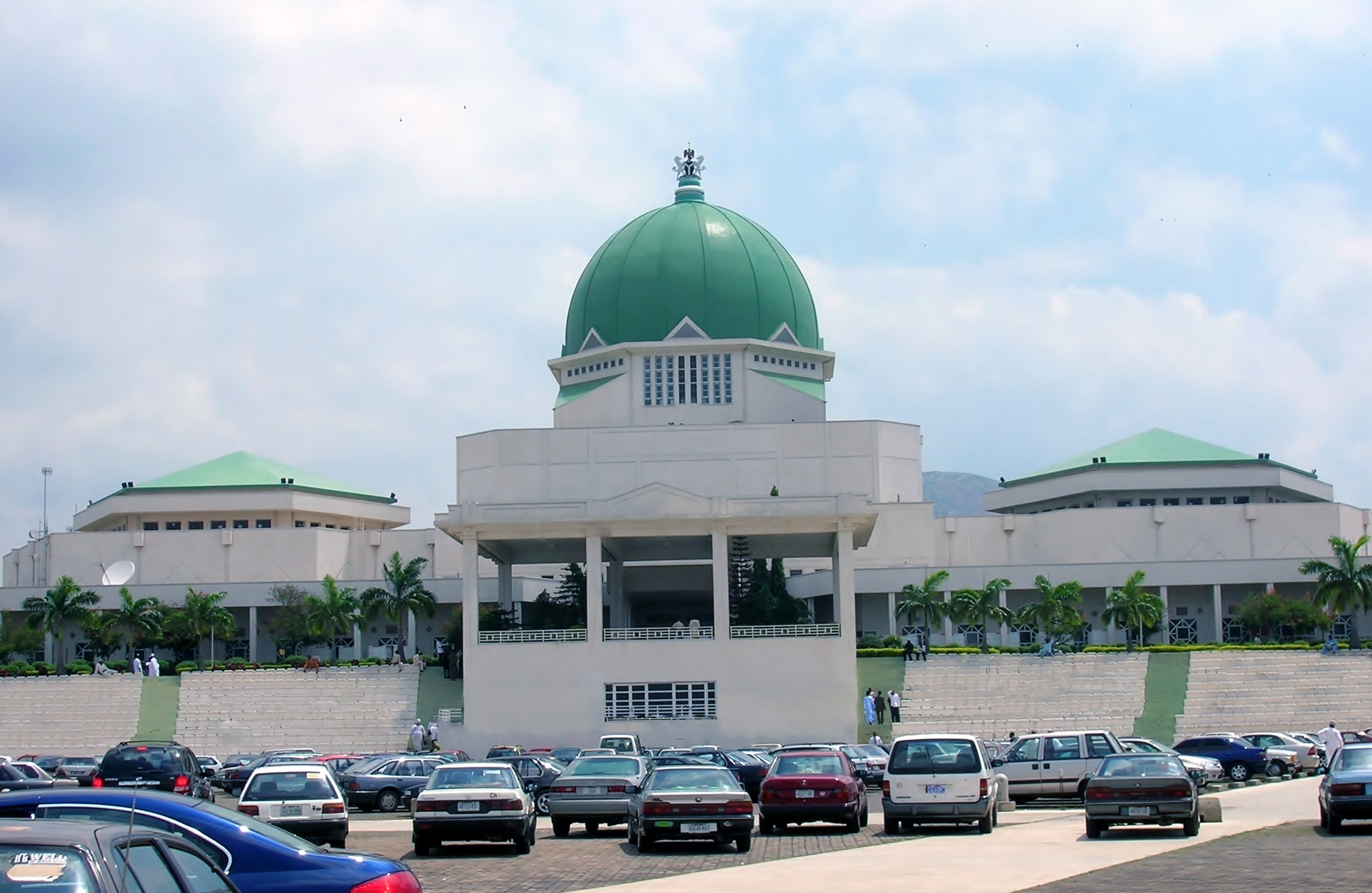
Scores of children and wives of military officers detained over an alleged coup plot yesterday staged a peaceful protest at the National Assembly, demanding a speedy trial and the release of the accused officials.
The protesters who gathered at the entrance of the National Assembly complex, moved in a slow procession while clutching placards with inscriptions such as “Don’t Kill Our Daddies,” “Detention Without Trial is Injustice,” and “Six Months of Torture: Enough Is Enough.”
Amid tears and trembling voices, the children appealed for justice and access to their detained fathers, many of whom they said they had not seen for months.
The appeal was made during a press briefing in Abuja attended by no fewer than 20 wives and several children of the detained officers, including a two-month-old baby.
The families were accompanied by human rights lawyer, Deji Adeyanju and activist Omoyele Sowore.
At the briefing, the families lamented that the officers had been held for over 160 days without trial or contact with their relatives, describing the situation as a violation of their fundamental rights.
Speaking on behalf of the families, Memuna Bashiru said the prolonged detention had thrown their households into uncertainty and emotional distress, noting that while allegations had been widely publicised, families remained in the dark about the fate of their loved ones.
The arrest of the indicted officers was first announced on October 4, 2025, by the then Director of Defense Information, Brigadier General Tukur Gusau, who disclosed that 16 officers were taken into custody for alleged breaches of military regulations and acts of indiscipline.
However, an interim investigation later suggested the existence of a clandestine network of officers, allegedly coordinated by a senior Army officer, which had begun preliminary planning for a coup.
According to the report, the alleged plot involved surveillance of key national assets, including the Presidential Villa, Armed Forces Complex, Niger Barracks in Abuja, and major international airports, with October 25, 2025, cited as the planned date for the operation.
Those reportedly in custody include Brig Gen M. A. Sadiq, Col M. A. Maaji, Lt Col S. Bappah, Lt Col A. A. Hayatu, Lt Col P. Dangnap, Lt Col M. Almakura, Maj A. J. Ibrahim, Maj M. M. Jiddah, Maj M. A. Usman, Maj D. Yusuf, Capt I. Bello, Capt A. A. Yusuf, Lt S. S. Felix, Lt Cdr D. B. Abdullahi, Sqn Ldr S. B. Adamu and Maj I. Dauda.
The alleged plot, according to findings, targeted senior government officials, including President Tinubu and Vice President Kashim Shettima.

In a statement issued yesterday, the party’s National Publicity Secretary, Mr Felix Morka, said the exercise would take place in all wards and designated centres nationwide.
He called on existing members to update their records, while encouraging new entrants to join the party through the digital platform.
“As the electronic membership registration exercise resumes in all wards and designated locations nationwide, we urge existing members to validate their membership while new members are encouraged to register and join the progressive family,” Mr Morka said.
According to him, eligibility for registration is limited to individuals aged 18 and above who possess a valid National Identification Number (NIN).
The party said the initiative is part of efforts to modernise its operations by transitioning to a digital database that would enhance record accuracy and accessibility.
Mr Morka noted that the e-registration would “digitise the party’s membership register, ensure the integrity of records, and enhance efficient access to membership data for planning and management decisions.”
He added that the move is also aimed at promoting internal democracy within the party and strengthening its commitment to democratic innovation.
The APC had previously introduced electronic registration as part of broader reforms to streamline its membership system and improve organisational efficiency.
-
News4 days ago
Decentralizing Pipeline Surveillance Poses Greater Dangers To Niger Delta …. Group Warns
-
 Politics4 days ago
APC Resumes Electronic Membership Registration Nationwide
-
 Rivers4 days ago
Court Rules Out Interim Administration In Jumbo House, Bonny
-
 Business4 days ago
33 Banks Raise N4.65tn As Recapitalisation Ends
-
 Politics4 days ago
Alleged Coup: Protests Rock N’Assembly As Detained Officers’ Children, Wives Demand Justice
-

 Nation4 days ago
Nile University Hosts ICA Nigeria First National Confab On Global Communication
-
Sports4 days ago
Lewandowski Leads Top Stars Missing From W/Cup Roll Call
-

 Sports4 days ago
Para Games: Team Rivers Wins 53 Medals On Day 5 … Director Praise Athletes