
Politics
Sanusi Was Misquoted?

At a time when, unemployment in Nigeria hit its all-time-high, with young skilled graduates roaming the streets for unavailable jobs, criminality and insecurity at disturbing peaks and with no clear signs of early bail-out for both the manufacturing and industrial sectors, Central Bank of Nigeria (CBN) Governor Sanusi Lamido Sanusi’s call for a 50 per cent reduction of the Civil Service deserves careful analysis.
At a retreat on capital market held in Warri, Delta State last Monday, Sanusi among other controversial vituperations suggested the reduction of public service workforce by half, alluding that workers’ wages were a key hindrance to the growth of the nation’s economy, as weighs heavily on capital needs.
As Central Bank Governor, Sanusi may be concerned about the growing decline in capital projections, which he fears would negatively impact on the infrastructural development efforts of the country. Without basic infrastructure no meaningful job creation effort would succeed hence his worry over how to cut wastages in recurrent spending to fill the lull, in desired capital projections.
To support that argument, Sanusi virtually suggested that Public Servants constitute about 30 per cent of the population but enjoy more than 70 per cent of national earnings, a development which he said amounted to denying over 105 million Nigerians funds needed for basic infrastructure. Sanusi did not imagine that the said figure includes wives and dependants of civil servants.
By his calculation, of a population of about 150 million, since public servants constitute barely 30%, about 45 million and they should not alone earn 70 per cent of the country’s annual budget proposals in form of recurrent expenditure. Therefore, a reduction by at least 50 per cent would be required so as to beef-up capital expenditure to 65 per cent of the annual budget, while, recurrent expenditure is reduced to 35 per cent.
To achieve that Sanusi questioned the need for the bi-cameral legislature Nigeria operates and also queried the economic rationale behind the engagement of 109 Senators and 360 members of the House of Representatives.
Similarly, Sanusi called for the scraping of the Local Government system in preference for states as federating units. By that action, what the CBN Governor considers to be a wasteful tier of government would have been eliminated.
From the point of view of an economist in a country where, there is a vibrant private sector participation in industrial pursuits, where, public infrastructure is at its healthiest and manufacturing concerns are in dire need of productive labour, these views would have made sense. But in a country where, more than 50 per cent of its productive youths are without gainful employment and criminality gradually becoming a paying pass-time, Sanusi’s suggestion is a call to hell, insensitive at best, Satanic at worse.
For the basis of argument, it will be proper to take a second look at Sanusi’s mathematics on the public service and see if the civil servant is not contributing enough to society or even more than the Central Bank governor.
Nigeria, has for upwards of 50 years, operated a virtual monolithic economy depended mostly on foreign exchange earnings from oil and gas. These earnings are monthly allocated to states, local government areas and the federal government which are the highest employers of labour.
With a population of over 150 million people and, by Sanusi’s estimates, 45 million forming the workforce, it follows that 30 per cent of the population might well be fending for at least 40 per cent of the population or more. For instance, among the 150 million Nigerians Sanusi uses in his argument are children of civil servants, wives and other extended family members.
If an average civil servant has four children and a wife and provides for their medical, education, housing, clothing and even communication needs, hasn’t such a civil servant done what a responsible government should do for its citizenry? With the meager salary paid the worker, he fends for an average of a wife and two children, if multiplied by 45 million such workers, it means that 135 million of the population has been covered. If the few oil company workers are deducted, the rest may be insignificant.
This makes the Civil Servants family as one of the most productive, prudent and patriotic sectors of the Nigerian economy, as it caters for more than the neglected population than any single economic unit of the economy, a reason why the civil servant remains relatively poor.
Unlike the peanuts given civil servants, the Central Bank alone, with barely 6,015 staff nationwide appropriated and spent as much as N300 billion in 2011, 100 per cent more than the N150 billion the entire National Assembly received in the same year, for which Sanusi wants the bi-cameral legislature abrogated.
Curiously, the same advocate of 50 per cent reduction in public service workforce, not too long ago, increased his own staff strength to 6,015, up from 5,023, a case of ‘doing what I say not what I do.’
For the avoidance of doubt, any attempt at sacking workers would spell greater doom than the problem Sanusi hopes to solve. Not only would it incite increase in crime rate, since many, ordinarily dependent on the meager civil servants’ earnings would be forced to look elsewhere for survival and of course non-existent jobs cannot be option.
Presently, cases of kidnapping, bank robberies, sea piracy and terrorism are a major challenge to the nation’s security pursuits. So, if as much as 50 per cent are thrown into the labour market, what Nigeria daily experiences would be a child’s play. In such a case, the wealthy, top government officials and the affluent few like Sanusi, whose annual salary is enough to pay 100 young graduates in the civil service, will be targets.
Rather than suggest workers’ sack, Sanusi should work out plans to concession infrastructural development, encourage investments in manufacturing concerns and other job creation pursuits. With such alternative sources of job generation and comparatively better pay, the public workforce will naturally thin down in preference for many other competing job offers.
To do nothing of that sort but sentence workers into the unemployment market is to court crisis, increased criminality and indeed unbridled insecurity, neither of which can enhance the meaningful infrastructural development and economic growth that Sanusi desperately yearns for.
Happily, the Federal Government knows and appreciates these imperatives and have since disowned the CBN governor. We understand also that even Sanusi has said he didn’t mean what the people heard and that he was quoted out of contest. We pray so.
Curiously, when he made the remarks, Delta State Governor, Emmanuel Uduaghan, the chief host, quickly challenged Sanusi and warned against the negative consequences of such workers’ sack. But if indeed he was misquoted, the governor’s swift reaction would have offered Sanusi the chance to correct the impression, he said nothing afterwards, until now. Lets welcome Sanusi to the real world, not that of economic theories without contextual support.
My Agony is that many of Sanusi’s kind are of the impression that the average public/civil servant does nothing to deserve his wages, without wondering why lawmakers deserve their jumbo pay any more. Its an unfair generalisation.
Now, perhaps is the time to call for pay parity since all in the economy patronise same market and cater for the nearly 105 million others dependent on workers.

Politics
Alleged Coup: Protests Rock N’Assembly As Detained Officers’ Children, Wives Demand Justice

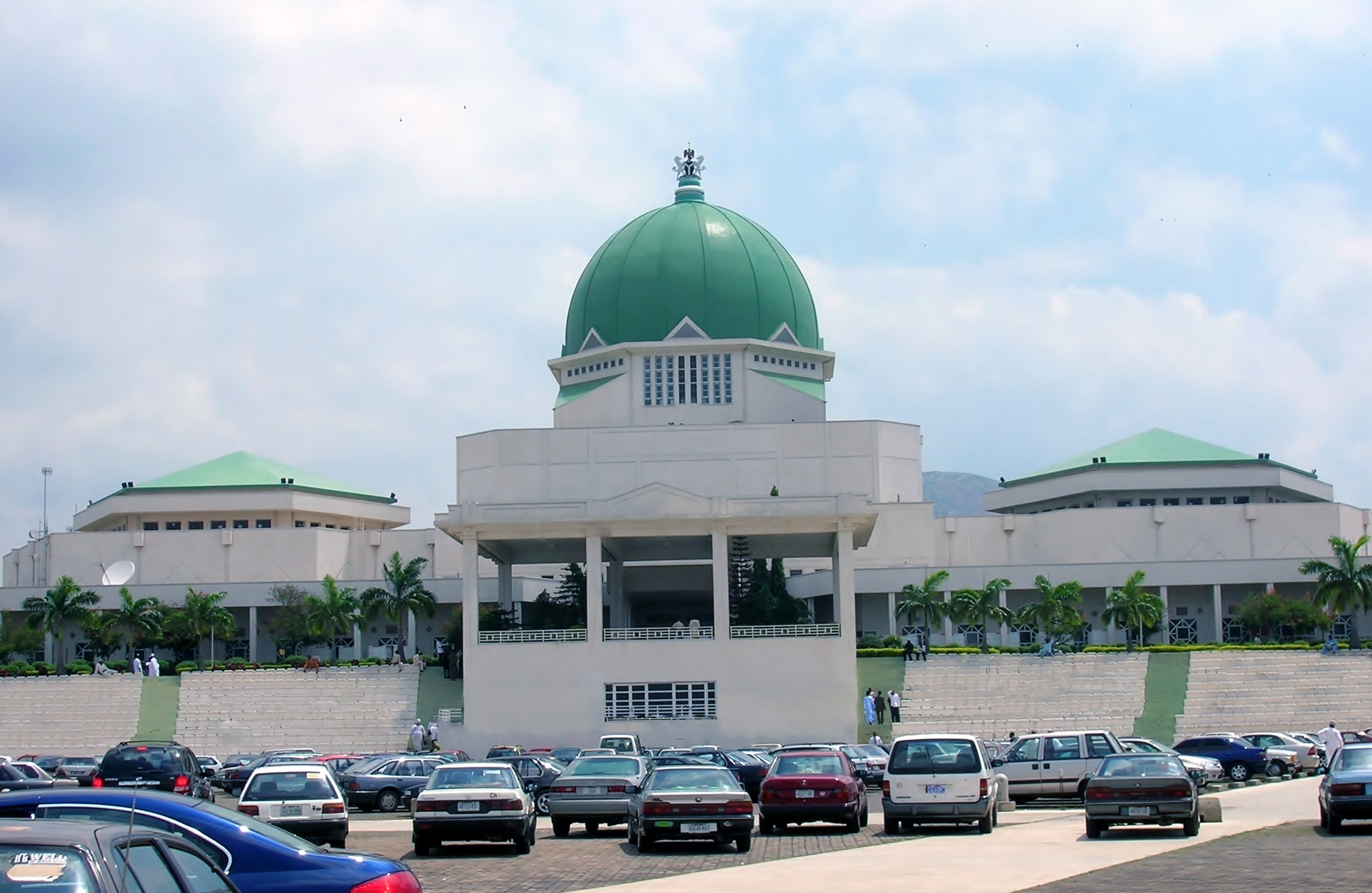
Scores of children and wives of military officers detained over an alleged coup plot yesterday staged a peaceful protest at the National Assembly, demanding a speedy trial and the release of the accused officials.
The protesters who gathered at the entrance of the National Assembly complex, moved in a slow procession while clutching placards with inscriptions such as “Don’t Kill Our Daddies,” “Detention Without Trial is Injustice,” and “Six Months of Torture: Enough Is Enough.”
Amid tears and trembling voices, the children appealed for justice and access to their detained fathers, many of whom they said they had not seen for months.
The appeal was made during a press briefing in Abuja attended by no fewer than 20 wives and several children of the detained officers, including a two-month-old baby.
The families were accompanied by human rights lawyer, Deji Adeyanju and activist Omoyele Sowore.
At the briefing, the families lamented that the officers had been held for over 160 days without trial or contact with their relatives, describing the situation as a violation of their fundamental rights.
Speaking on behalf of the families, Memuna Bashiru said the prolonged detention had thrown their households into uncertainty and emotional distress, noting that while allegations had been widely publicised, families remained in the dark about the fate of their loved ones.
The arrest of the indicted officers was first announced on October 4, 2025, by the then Director of Defense Information, Brigadier General Tukur Gusau, who disclosed that 16 officers were taken into custody for alleged breaches of military regulations and acts of indiscipline.
However, an interim investigation later suggested the existence of a clandestine network of officers, allegedly coordinated by a senior Army officer, which had begun preliminary planning for a coup.
According to the report, the alleged plot involved surveillance of key national assets, including the Presidential Villa, Armed Forces Complex, Niger Barracks in Abuja, and major international airports, with October 25, 2025, cited as the planned date for the operation.
Those reportedly in custody include Brig Gen M. A. Sadiq, Col M. A. Maaji, Lt Col S. Bappah, Lt Col A. A. Hayatu, Lt Col P. Dangnap, Lt Col M. Almakura, Maj A. J. Ibrahim, Maj M. M. Jiddah, Maj M. A. Usman, Maj D. Yusuf, Capt I. Bello, Capt A. A. Yusuf, Lt S. S. Felix, Lt Cdr D. B. Abdullahi, Sqn Ldr S. B. Adamu and Maj I. Dauda.
The alleged plot, according to findings, targeted senior government officials, including President Tinubu and Vice President Kashim Shettima.

In a statement issued yesterday, the party’s National Publicity Secretary, Mr Felix Morka, said the exercise would take place in all wards and designated centres nationwide.
He called on existing members to update their records, while encouraging new entrants to join the party through the digital platform.
“As the electronic membership registration exercise resumes in all wards and designated locations nationwide, we urge existing members to validate their membership while new members are encouraged to register and join the progressive family,” Mr Morka said.
According to him, eligibility for registration is limited to individuals aged 18 and above who possess a valid National Identification Number (NIN).
The party said the initiative is part of efforts to modernise its operations by transitioning to a digital database that would enhance record accuracy and accessibility.
Mr Morka noted that the e-registration would “digitise the party’s membership register, ensure the integrity of records, and enhance efficient access to membership data for planning and management decisions.”
He added that the move is also aimed at promoting internal democracy within the party and strengthening its commitment to democratic innovation.
The APC had previously introduced electronic registration as part of broader reforms to streamline its membership system and improve organisational efficiency.
-
 Editorial3 days ago
Domesticate FG’s Exit Benefit Scheme
-

 News3 days ago
RSU Unveils Five-Year Strategic Dev Plan …Calls For Collective Commitment To Institutional Excellence
-

 News3 days ago
DHQ Confirms Deaths Of Terrorists, Soldiers In Borno Attack
-

 News3 days ago
Tinubu Commissions Bayelsa Gas Turbine, Other Projects Today
-
Business3 days ago
Niger Delta Investment Summit Targets $5bn Inflows, 500,000 Jobs
-
Rivers3 days ago
Dep Gov Seeks Collaboration, Transparency Between RIVCHPP, PHCMB
-
Nation3 days ago
Rumuji Youth Leader Condemns Protest, Disowns Alleged Government Empowerment Claim
-
Sports3 days ago
Full Draw For 2026 U-17 AFCON