
Politics
Governorship: Agbaso Waits On The Doorsteps Of Justice

Slowly and steadily, Martin Agbaso, the Imo State governorship candidate of the All Progressives Grand Alliance (APGA) is inching his way to the state house after nearly three years of legal contention arising from the way and manner the 2007 governorship election in the state was mishandled to produce a pre-determined result. It is true that there was virtually nothing to write home about the entire farce that was passed as the 2007 election but the manner it was manipulated in Imo State to produce the present occupant of the state governorship stool stands out. The contradictions in the decision to void the election of Martin Agbaso on the contentious ground that it was marred with violence while upholding a state assembly election cast in the one and same ballot had gone to show another version of the general atrophy that was visited on the Imo governorship election in 2007. This singular faux pas will certainly point the way to the fact that there was more selfish and ulterior consideration in the decision to nullify an election that had been concluded than the flimsy one proffered by the Maurice Iwu-led INEC. The last nail was driven into the attempt by INEC and the Ohakim government to ward off the Agbaso challenge by the Supreme Court, which ruled unanimously on September 29th that it was wrong for the two parties to attempt to prevent Agbaso from demanding justice in a glaring case that will go a long way to define the sanctity of the electoral system in Nigeria. The court was unequivocal that the arguments Ohakim and INEC have been proffering on why Agbaso should not press for the validation of his mandate are trite and meaningless and it saw the clear effort on the sides of the two parties to waste time and ensure that even when Agbaso gets justice, such will amount to a pyrrhic victory because Ohakim would have succeeded in illegally exercising his mandate. I believe it was such concern on the side of the legal team of Agbaso that made the Supreme Court to counsel Agbaso to exercise patience since his mandate will start counting from the day he is sworn-in if he wins his case. This was made on the 23rd June 2009, when his counsels, apparently feeling uncomfortable with the more than five months adjournment of the case Ohakim instituted at the Supreme Court to question the jurisdiction of the Appeal Court to hear Agbaso’ s case, sought an accelerated hearing of the case. With the dismissal of the Ohakim case by the Supreme Court and the ordering for an accelerated hearing at the Appeal Court, it is obvious to INEC and Ohakim that the game is at the finishing ends. There is no better way to show this than at the Appeal Court, at the resumed hearing when the counsels for both teams were reciting trite and mute issues that have become boring fairy tales, even to their own ears. The point is clear and concise. Could INEC graciously locate where it secured the power to cancel an election that had been concluded? It is that simple and clear! Pressed further, one would go to question how violence (some say, Iwu-induced tsunami) made a clean choice of one of the two ballot papers cast in the same ballot box. If we care to go further, could INEC locate these hair-raising cases of violence, where they occurred and who and who caused them? At least, these are parts of the processes of electoral conduct. Truth is that INEC is peddling a cock-and-bull story to justify an obvious illegality. There was indeed an election in Imo State on April 14,2007. There was no significant case of violence in any part of Imo State. Martin Agbaso was the undisputed winner in the results collated in over 95 per cent of the state and was waiting to be declared winner. Somehow, Iwu felt that his fellow Mbano man should be the governor and made this plea to Obasanjo and he was granted his request. Pronto, an election that was almost concluded, was aborted in the same manner as the June 12 annulment-a case the late Chief MKO Abiola aptly captured as aborting a baby that was already born. Iwu now reached to his kinsman, Ikedi Ohakim and a sham process that never took place in over 80 per cent of the state was organised. The results must have been concluded before the mockery of a process even started and with no poster, no campaign office and no supporters, Ikedi Ohakim became governor. He rewarded Iwu by making his brother the Secretary to Government, his daughter, an Adviser and his in-law, a Special Assistant to Ohakim! Faced with the collapse of the weak and untenable argument of violence and the sparse reasoning that Agbaso forfeited his right to ask for his mandate by allegedly contesting in the purported election of April 28 (apologies to the Court of Appeal), INEC and Ohakim are grasping on straws for survival. But it is clear that their survival in this case would be impugning the electoral process by granting INEC with powers the constitution never allows it. While the argument about violence has seemingly collapsed, the one of participating in what is obviously an illegal concoction on April 28 is hollower. The case that has progressed so far to the Appeal Court was instituted at an Abuja High Court on April 18, which not only predates the April 28 purported election but also Ohakim’ s wild fantasy that he would ever be governor and not the has-run, which clearly was his intent in joining the Imo governorship race. There is this whistle acknowledgment among Ohakim’s men and INEC itself that Ohakim will not survive the present legal onslaught and is therefore, working for alternative options. Apart from allegedly ferrying some choreographed so-called Imo elders to Abuja to President Yar’ Adua to intervene in the case and save him and practically adopting the Sultan of Sokoto as his father, in the hope the he would intervene in his favour, he is putting his eggs in several baskets. There is this speculation that INEC and Ohakim are hoping that the Appeal Court, in its expected judgment will force the issue to a stalemate. This, they hope will obtain in the court ordering INEC to officially release the results of the April 14 election. There is this muted idea that if that is the case, INEC will manufacture a fresh result that will favour Ohakim who practically did not contest the April 18 election! A real wild card indeed! Questioning the validity of the results tendered by Agbaso on the grounds that they had not been officially declared by INEC does not remove anything from the validity of the results. The questioning is akin to the contention of the pro-June 12 annulment school that Abiola was not the winner of the June 12 election because the electoral body at that time didn’t get to officially announce them. Mere academic exercise that does not affect the validity of the results as collated up to the states and in the case of Agbaso, up to the local governments. While one may not put anything behind the kind of thinking that brought the Ohakim mandate and has so far sustained it, one should point out that such an attempt will not only fall flat but will further expose the dubiety in INEC. Election results for the governorship are collated at the polling booths, wards, local governments and at the state levels. The results are merely formally declared at the state level and any candidate can simply get his results from all his agents in all the wards. The declaration sought from INEC is merely formal and contrary to their thinking, INEC is not the only institution that can have the results so it will not only be foolhardy to resort to such tactics if eventually the Appeal or Supreme Court orders INEC to release the results of the April 14 election. But we believe that the Appeal or Supreme Court can easily avoid this mischief by giving an explicit ruling based on the results which have been made available at the court since the court started and which before now, have not been contradicted by either INEC or Ohakim. This is after it had established that INEC acted beyond its known powers by annulling an election that has been virtually concluded and merely awaiting its official endorsement. As it is now, the thick pall of media hustlers in Ohakim’s payroll, hiding under various pseudonyms, are running amok in the media, trying to be judges in a case where their argument has virtually collapsed. They are repeating the old, tiring tunes that have been discarded at the courts and they want the Appeal Court to invest INEC with strange powers to call their whims into play in elections and announce results as they deem fit. All these are tailored towards ensuring that Ohakim survives a clearly impending rustication. One believes that the judges that sit at the Appeal Court are not fools that could be confused by paid media hirelings to approve an illegality that will certainly worsen the corruption-ridden electoral system we have in Nigeria today. Everything points to the fact that Agbaso stands at the very doorsteps of victory and every eye is turned to the Appeal Court as Nigerians await its judgment on the lmo governorship election. Nwahiri wrote in from Mushin, Lagos. Stephen Nwahiri

Politics
Alleged Coup: Protests Rock N’Assembly As Detained Officers’ Children, Wives Demand Justice

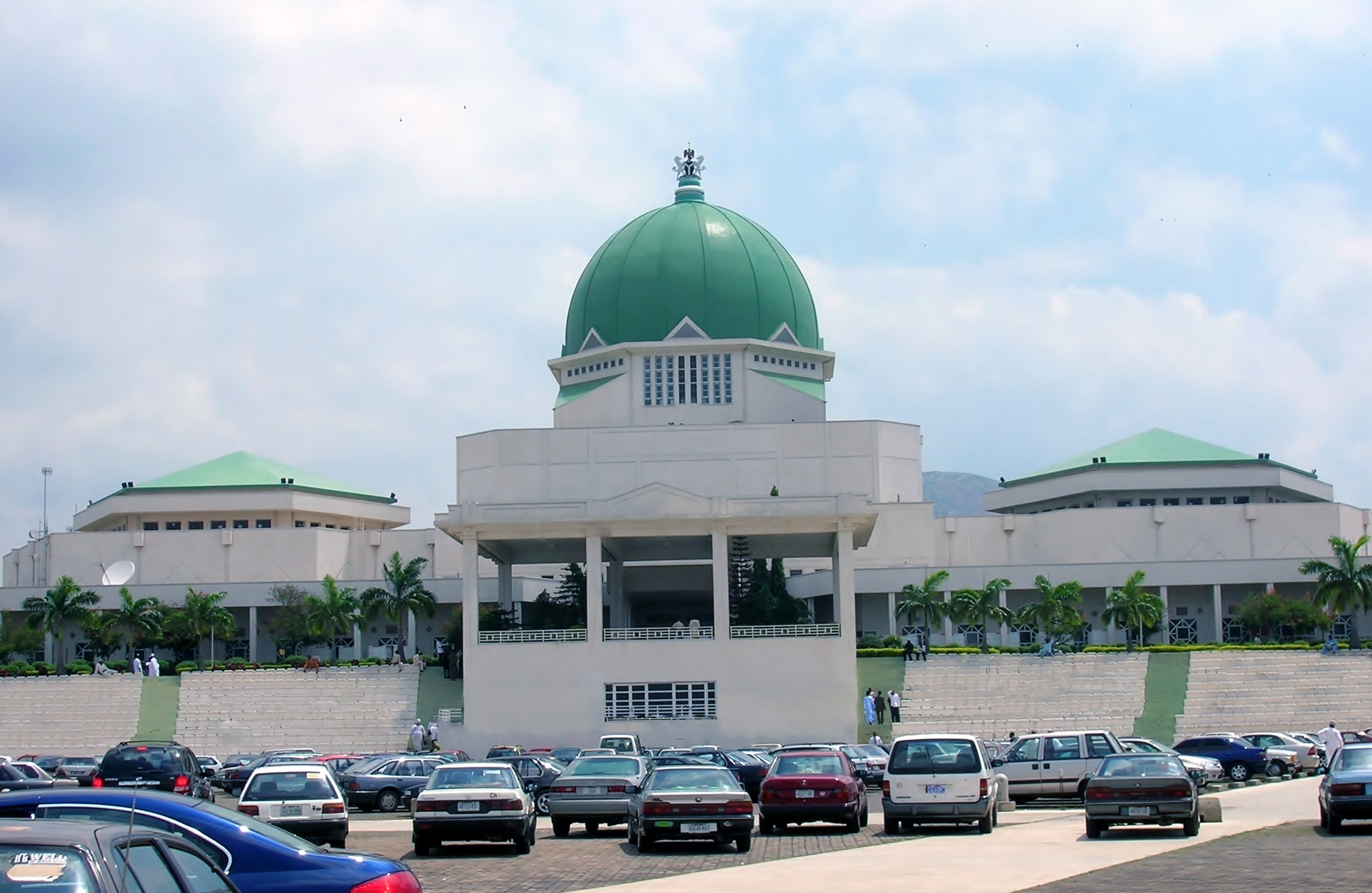
Scores of children and wives of military officers detained over an alleged coup plot yesterday staged a peaceful protest at the National Assembly, demanding a speedy trial and the release of the accused officials.
The protesters who gathered at the entrance of the National Assembly complex, moved in a slow procession while clutching placards with inscriptions such as “Don’t Kill Our Daddies,” “Detention Without Trial is Injustice,” and “Six Months of Torture: Enough Is Enough.”
Amid tears and trembling voices, the children appealed for justice and access to their detained fathers, many of whom they said they had not seen for months.
The appeal was made during a press briefing in Abuja attended by no fewer than 20 wives and several children of the detained officers, including a two-month-old baby.
The families were accompanied by human rights lawyer, Deji Adeyanju and activist Omoyele Sowore.
At the briefing, the families lamented that the officers had been held for over 160 days without trial or contact with their relatives, describing the situation as a violation of their fundamental rights.
Speaking on behalf of the families, Memuna Bashiru said the prolonged detention had thrown their households into uncertainty and emotional distress, noting that while allegations had been widely publicised, families remained in the dark about the fate of their loved ones.
The arrest of the indicted officers was first announced on October 4, 2025, by the then Director of Defense Information, Brigadier General Tukur Gusau, who disclosed that 16 officers were taken into custody for alleged breaches of military regulations and acts of indiscipline.
However, an interim investigation later suggested the existence of a clandestine network of officers, allegedly coordinated by a senior Army officer, which had begun preliminary planning for a coup.
According to the report, the alleged plot involved surveillance of key national assets, including the Presidential Villa, Armed Forces Complex, Niger Barracks in Abuja, and major international airports, with October 25, 2025, cited as the planned date for the operation.
Those reportedly in custody include Brig Gen M. A. Sadiq, Col M. A. Maaji, Lt Col S. Bappah, Lt Col A. A. Hayatu, Lt Col P. Dangnap, Lt Col M. Almakura, Maj A. J. Ibrahim, Maj M. M. Jiddah, Maj M. A. Usman, Maj D. Yusuf, Capt I. Bello, Capt A. A. Yusuf, Lt S. S. Felix, Lt Cdr D. B. Abdullahi, Sqn Ldr S. B. Adamu and Maj I. Dauda.
The alleged plot, according to findings, targeted senior government officials, including President Tinubu and Vice President Kashim Shettima.

In a statement issued yesterday, the party’s National Publicity Secretary, Mr Felix Morka, said the exercise would take place in all wards and designated centres nationwide.
He called on existing members to update their records, while encouraging new entrants to join the party through the digital platform.
“As the electronic membership registration exercise resumes in all wards and designated locations nationwide, we urge existing members to validate their membership while new members are encouraged to register and join the progressive family,” Mr Morka said.
According to him, eligibility for registration is limited to individuals aged 18 and above who possess a valid National Identification Number (NIN).
The party said the initiative is part of efforts to modernise its operations by transitioning to a digital database that would enhance record accuracy and accessibility.
Mr Morka noted that the e-registration would “digitise the party’s membership register, ensure the integrity of records, and enhance efficient access to membership data for planning and management decisions.”
He added that the move is also aimed at promoting internal democracy within the party and strengthening its commitment to democratic innovation.
The APC had previously introduced electronic registration as part of broader reforms to streamline its membership system and improve organisational efficiency.
-
 Editorial2 days ago
Domesticate FG’s Exit Benefit Scheme
-

 News1 day ago
RSU Unveils Five-Year Strategic Dev Plan …Calls For Collective Commitment To Institutional Excellence
-
 News2 days ago
DHQ Confirms Deaths Of Terrorists, Soldiers In Borno Attack
-

 News2 days ago
Tinubu Commissions Bayelsa Gas Turbine, Other Projects Today
-
Rivers2 days ago
Dep Gov Seeks Collaboration, Transparency Between RIVCHPP, PHCMB
-
Nation1 day ago
Rumuji Youth Leader Condemns Protest, Disowns Alleged Government Empowerment Claim
-
Business2 days ago
Niger Delta Investment Summit Targets $5bn Inflows, 500,000 Jobs
-
 Featured2 days ago
FG Reaffirms Nigeria’s Stability As US Embassy Suspends Visa Appointments In Abuja Office