
Politics
Bode George And Lagos PDP

Last week’s jailing of erstwhile Deputy National Chairman (South) of the Peoples Democratic Party (PDP) and one time chairman. board of the Nigeria Ports Authority (NPA), Chief Olabode George is perhaps the worst news for the Lagos State chapter of the party this year. For the party, two years without George, is like playing Hamlet without the prince
George, who with five other directors of the NPA was sentenced to two years imprisonment by an lkeja High Court, presided by Justice Joseph Oyewole has been the leader of the party in the state for the past six years. Aside being a major financier of the party in the state. George’s closeness to former President, Olusegun Obasanjo and other top leaders of the PDP, also placed him head and shoulder above other chieftains of the party in the state and the South West zone.
The national leadership of the party had so much trust in George’s ability that it entrusted him with the responsibility of strategising and actualising the party’s futile attempt at taking over the Alausa Government House. Ikeja, Lagos in 2003 and 2007. He later served as the Director General of the President Umaru Yar’ Adua Campaign outfit during the 2007 electioneering.
But it appears none of George’s political credentials made sense to Justice Oyewole, while pronouncing him and five other directors of the Nigerian Ports Authority (NPA) guilty and had them sentenced to two years imprisonment, last week Monday.
While many have hailed the judgment as a step forward in the quest to rid the country of corruption, the PDP believed the court ruling was not fair to George, who was a former military governor of the old Ondo State. The party’s National Vice Chairman (South West). Alhaji Tajudeen Oladipo. said the party would appeal the ruling, even as he insisted that the judgment was very much against the ruling party. George has since applied for bail while his appeal is to be heard.
For the state chapter of the party, the judgment might have put a spanner in the on going works to reposition the PDP ahead of the 2011 election. The national leadership of the party in its calculation for the 2011 governorship election in Lagos, has since realised the importance of a total reconciliation of all contending groups within the party as a sine qua non to the party’s repositioning ahead of the election. But every reconciliatory moves initiated at the national and zonal levels of the party had been bedevilled by the inability of the various groups to fully embrace one another.
The major contending groups within the party are the Establishment Group. headed by George: the Solidarity Group, headed by the High Commissioner to Ghana. Ambassador Musiliu Obanikoro and the Mandate Group, under the leadership of former Minister of Works and Housing, Senator Adeseye Ogunlewe.
Other minor groups include, the Alagbon 14 Forum of Local Government Candidates and the Elders’ Forum.
The various groups are product of division of the party along factional lines. following the poor handling of the fallout of the 2007 governorship election. and the simmering politics that trailed the post election ministerial nomination from the state.
While many of the various reconciliatory committees set up by PDP leadership of the party, have made concerted efforts to unite the various interests within the party, the recognition of George as the de facto leader of the party in Lagos was never in contention. What was in contention was the extent to which other interest groups were prepared to accept him as leader of the party.
The George group is also said to have an upper hand in the power game. as he was responsible for the installation of the incumbent executive of the PDP in the state. And the leaders have continued to demonstrate their support for the embattled politician.
Observers believe that with George’s possible confinement to the four walls of the Kirikiri Maximum Security Prison for the period of his sentence, other groups might try to position themselves for possible take over of leadership of the party in the state. This, as many believe, may likely worsen an already bad situation. It is believed that the state executive, which has demonstrated unalloyed loyalty to George may resist such a move.
Yet, as is custom in the PDP, any state where the party does not have a sitting governor, the leadership of the party in such state is usually ceeded to one of the national figures in most cases, a serving minister or a national leader with much clout.
Thus, the party cannot shy away for too long on the issue of a leader in the absence of George. This, again, may open another ‘power show’ between the other group leaders, notably, Obanikoro, Ogunlewe and the Minister of State for Interior, Mr. Demola Seriki.
Musiliu Obanikoro
A former Commissioner for Home Affairs in the Alliance for Democracy (AD) government between 1999 and 2003. Obanikoro later contested and won the Lagos Central Senatorial seat on the party’s platform in 2003. but later defected to the PDP while serving as senator. He emerged as the PDP’s governorship candidate for the 2007 election, without George’s support. George’s choice was the widow of the late Funsho Williams. Hilda. But. George in his capacity as the leader of the party, was also given the task of coordinating the strategies for the electioneering.
The actual battle started after the loss of the election when the state chapter was expected to forward its list of ministerial nominees to President Umaru Yar’ Adua. George had an edge in the show of strength that ensued, being the most senior leader in the state and a close ally of Chief Olusegun Obasanjo, George showed preference for Bode Augusto above Obanikoro. but Augusto could not scale the Senate hurdle.
The new list became a tug of war and at a point Obasanjo had to wade in. Eventually, and in order to calm frayed nerves, the party settled for a middle of the road approach, by picking Seriki, who was not in the reckoning of the state leadership for the appointment.
Obanikoro was eventually appointed an Ambassador. But his attempt to use the office to reposition himself has proved difficult. A good number of the party members in the state felt that Obanikoro has sidelined them ever since losing the Lagos governorship bid and assuming his ambassadorial posting.
The animosity against him was brought to the fore recently when some members of the party protested against his presence at the high table during a forum called to resolve the factional differences in the-party. The development degenerated to a free for all, and Obanikoro was saved only by the intervention of the police and some chieftains of the party.
Owing to the grudge the party members have against him. many believe it may be difficult for the ambassador to assume leadership of the state chapter.
Adeseye Ogunlewe
Like Obanikoro, Ogunlewe was also elected into the Senate on the platform of the AD in 1999 before he defected to the PDP. He later became the Minister of Works and had shown considerable interest in the 2007 governorship before Williams’ assassination truncated the ambition of a good number of the contestants.
It is believed that Ogunlewe’s sometimes bold and scathing criticisms of some of the party’s decisions has made many PDP members to doubt his loyalty to the party. It is said that some are not fully convinced that the former minister is 100 per cent PDP, as they fear he might still be fraternising with the Action Congress (AC) especially, with some of his followers back in the AC. In spite of this insinuation. Ogunlewe still commands respect among a large section of the members of the party. but he is not likely to get the support of the state executive.
Demola Seriki
The Minister of State for Interior had failed in the bid to get elected into the House of Representatives in 1999. His senatorial ambition on the PDP platform in 2007 also did not yield the desired result.
But Seriki turned out to be the main beneficiary of the feud between George and Obanikoro over the state’s ministerial nominee. He was eventually handed the Lagos slot. Whereas George was said to have played some roles in the appointment. there are also insinuations from some quarters that the main influence was from outside the party.
For now, Seriki is in the good books of members of the party who believe that he has identified with them since becoming a minister, Seriki is seen as a politician who though serving in Abuja, is always in touch with the state chapter of PDP. He is said to have used his poverty alleviation programmes to boost the fortune of some members and supported the party during the bye election for the Ibeju Lekki Federal Constituency seat earlier in the year.
But observers believe that the junior minister is yet to develop the clout and the political structure needed to take full control of the state chapter of the party.
Many people believe that George’s absence will be felt in many ways, especially, at a time the national leadership of the party has made public its intention to win Lagos State in the 2011 election. Analysts believe that such a huge ambition requires a formidable leadership.
The PDP is also mobilising its legal machinery to ensure that George gets the two years sentence quashed at the appeal court.
When viewed from the prism of the possible legal fire works that may drag the trial for a long period of time, analysts believe that the reprieve being sought for George, the exnaval officer turned politician, may not come early enough and this, may impact negatively on the party in the state.
Already, there are indications that the power show and the contest for relevance among the various groups has begun with each holding strategy meetings aimed at appraising the situation.
Whichever way it goes, it might just be a case of survival of the of the fittest an endless one indeed.
Culled from The Nation

Politics
Alleged Coup: Protests Rock N’Assembly As Detained Officers’ Children, Wives Demand Justice

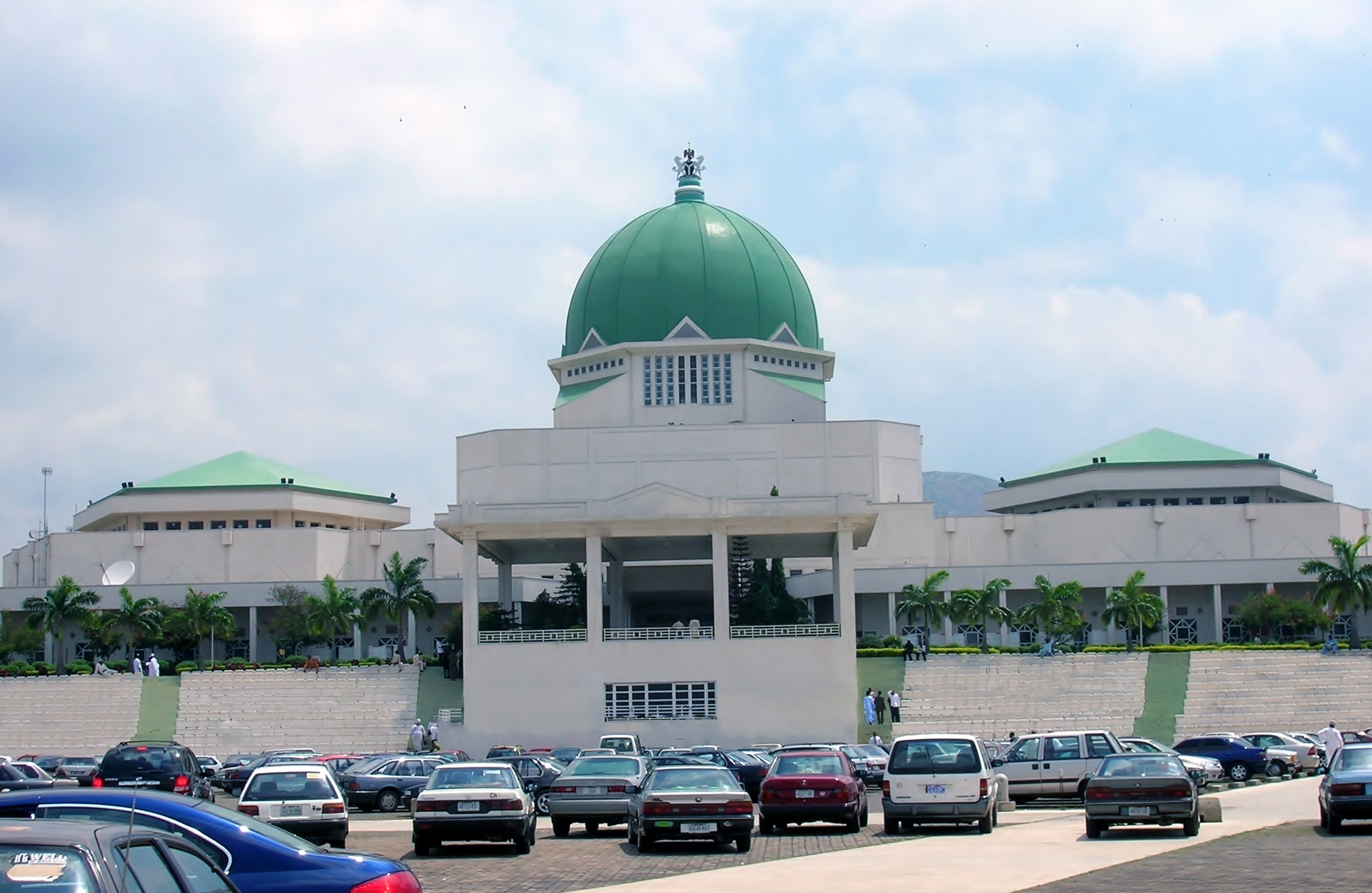
Scores of children and wives of military officers detained over an alleged coup plot yesterday staged a peaceful protest at the National Assembly, demanding a speedy trial and the release of the accused officials.
The protesters who gathered at the entrance of the National Assembly complex, moved in a slow procession while clutching placards with inscriptions such as “Don’t Kill Our Daddies,” “Detention Without Trial is Injustice,” and “Six Months of Torture: Enough Is Enough.”
Amid tears and trembling voices, the children appealed for justice and access to their detained fathers, many of whom they said they had not seen for months.
The appeal was made during a press briefing in Abuja attended by no fewer than 20 wives and several children of the detained officers, including a two-month-old baby.
The families were accompanied by human rights lawyer, Deji Adeyanju and activist Omoyele Sowore.
At the briefing, the families lamented that the officers had been held for over 160 days without trial or contact with their relatives, describing the situation as a violation of their fundamental rights.
Speaking on behalf of the families, Memuna Bashiru said the prolonged detention had thrown their households into uncertainty and emotional distress, noting that while allegations had been widely publicised, families remained in the dark about the fate of their loved ones.
The arrest of the indicted officers was first announced on October 4, 2025, by the then Director of Defense Information, Brigadier General Tukur Gusau, who disclosed that 16 officers were taken into custody for alleged breaches of military regulations and acts of indiscipline.
However, an interim investigation later suggested the existence of a clandestine network of officers, allegedly coordinated by a senior Army officer, which had begun preliminary planning for a coup.
According to the report, the alleged plot involved surveillance of key national assets, including the Presidential Villa, Armed Forces Complex, Niger Barracks in Abuja, and major international airports, with October 25, 2025, cited as the planned date for the operation.
Those reportedly in custody include Brig Gen M. A. Sadiq, Col M. A. Maaji, Lt Col S. Bappah, Lt Col A. A. Hayatu, Lt Col P. Dangnap, Lt Col M. Almakura, Maj A. J. Ibrahim, Maj M. M. Jiddah, Maj M. A. Usman, Maj D. Yusuf, Capt I. Bello, Capt A. A. Yusuf, Lt S. S. Felix, Lt Cdr D. B. Abdullahi, Sqn Ldr S. B. Adamu and Maj I. Dauda.
The alleged plot, according to findings, targeted senior government officials, including President Tinubu and Vice President Kashim Shettima.

In a statement issued yesterday, the party’s National Publicity Secretary, Mr Felix Morka, said the exercise would take place in all wards and designated centres nationwide.
He called on existing members to update their records, while encouraging new entrants to join the party through the digital platform.
“As the electronic membership registration exercise resumes in all wards and designated locations nationwide, we urge existing members to validate their membership while new members are encouraged to register and join the progressive family,” Mr Morka said.
According to him, eligibility for registration is limited to individuals aged 18 and above who possess a valid National Identification Number (NIN).
The party said the initiative is part of efforts to modernise its operations by transitioning to a digital database that would enhance record accuracy and accessibility.
Mr Morka noted that the e-registration would “digitise the party’s membership register, ensure the integrity of records, and enhance efficient access to membership data for planning and management decisions.”
He added that the move is also aimed at promoting internal democracy within the party and strengthening its commitment to democratic innovation.
The APC had previously introduced electronic registration as part of broader reforms to streamline its membership system and improve organisational efficiency.
-
 Editorial2 days ago
Domesticate FG’s Exit Benefit Scheme
-

 News2 days ago
RSU Unveils Five-Year Strategic Dev Plan …Calls For Collective Commitment To Institutional Excellence
-
 News2 days ago
DHQ Confirms Deaths Of Terrorists, Soldiers In Borno Attack
-

 News2 days ago
Tinubu Commissions Bayelsa Gas Turbine, Other Projects Today
-
Rivers2 days ago
Dep Gov Seeks Collaboration, Transparency Between RIVCHPP, PHCMB
-
Business2 days ago
Niger Delta Investment Summit Targets $5bn Inflows, 500,000 Jobs
-
Nation2 days ago
Rumuji Youth Leader Condemns Protest, Disowns Alleged Government Empowerment Claim
-

 Nation2 days ago
Haniel Jack Foundation Awards Five Rivers Indigenes Scholarship