
Nation
Senate Probes Perm Sec Over N460m Payment For Uncompleted Projects

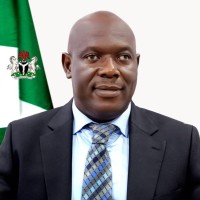
The Permanent Secretary, Federal Ministry of Information and Culture, Nebolisa Anako, is under probe of the Senate Committee on Public Accounts over alleged payment of N460million to contractors for uncompleted projects in Ekiti State.
The payment marks 100 percent payment of the contracts sum for the project which till date is still below 70% completion which was captured in the reports of the Auditor General of the Federation, AuGF’s submitted to the Senate.
Consequent upon this, the Chairman of the Senate Committee, Senator Mathew Urhoghide (PDP Edo South) queried the permanent secretary.
The query reads: “A constituency project contract amounting to N51 million for the construction of roads, parking lots, drainage at Ureje Dam in Ado Ekiti showed various part of the contract totaling N25.5 million were paid for but not executed.
“The ministry should ensure the contractor either completed the work or refund the money collected and forward the recovery particulars for audit verification.”
But, the permanent secretary in his written response said, “the contractor has completed 60 percent and promised to hand over the projects on or before 30th June 2017 to the minis vide the minutes of the meeting held with the contractors handling the contracts on the 20th April.”
However, the contractor is yet to complete the project as at the time the permanent secretary of the ministry appeared before the committee on Tuesday, December, 09 2020.
Chairman of the committee expressed dissatisfaction with the way the contract was handled by the ministry and ordered the permanent secretary to go and get the contractor to complete the project .
His words “he was paid, he did not do half of the job. Go and get him to complete that job until this man does this job, you will never have respite, whether it is constituency project or not is irrelevant.”
Also in another query which reads, “A visit to a contract amounting to N132 million for construction of Ureje Dam waterfront scheme in Ado-Ekiti of Ekiti State revealed that some parts of the contract amounting to N5 million were paid for but the project not completed.
“A visit to a contract amounting to N138 million for the construction of event centre/resturant at Ureje Dam waterfront scheme in Ado-Ekiti, Ekiti State which was fully paid showed that the contract was not completed.
“The ministry should cause the contractor to complete the contract valued at N19million were paid for but not executed.”
The permanent secretary however was unable to convince the committee that the contract was completed and the lawmakers sustained the query.
In another query, the Senate queried the ministry’s payment of N17million for another uncompleted project for the construction of fence at Exekuna cultural museum in Nchi-Onu, Amuzu Ezza Local Government in Ebonyi State.
The committee said, “The contract amounting to N6million was not constructed. As a result some parts of the fence were also broken in the site.
“Audit inspection visit to a contract amounting to N122million for construction of fence, gate House at Ureje Dam waterfront scheme in Ado Ekiti of Ekiti State, revealed that painting and external electrical works being part of the contract were not completed.
“The ministry should cause the contractor to complete the work or refund the appropriate amount involved.”
By: Nneka Amaechi-Nnadi



The Hydrocarbon Pollution Remediation Project (HYPREP) has commemorated the 15th anniversary of the release of the United Nations Environment Programme (UNEP) Environmental Assessment Report on Ogoniland, reaffirming its commitment to restoring the environment and improving the livelihoods of affected communities.
In a statement signed by the Project Coordinator, Prof Nenibarini Zabbey, to commemorate the anniversary, HYPREP described the anniversary as a significant milestone in Nigeria’s environmental restoration efforts, noting that the project has made remarkable progress in implementing the recommendations of the landmark UNEP report released on August 4, 2011.
The UNEP report had revealed extensive oil pollution across Ogoniland, severe environmental degradation, and serious public health risks resulting from decades of petroleum operations. It also recommended an initial $1 billion fund to commence the cleanup of the affected communities.
According to HYPREP, the Federal Government formally launched the Ogoni clean-up in 2016, while the Project Coordination Office was established in 2017 to drive the implementation of UNEP’s recommendations.
Zabbey said the current administration has continued to prioritise the project under the Renewed Hope Agenda.
Providing an update on the cleanup, the Project Coordinator disclosed that 30 of the 65 contaminated sites identified by UNEP have been fully remediated, while work is ongoing at several medium- and high-risk locations. It also stated that more than 1.5 million mangrove seedlings have been planted as part of what it described as the world’s largest restoration of oil-degraded mangroves, with over 1,000 hectares of shoreline already rehabilitated.
Zabbey further revealed that 49 Ogoni communities have been connected to potable water schemes through multiple water projects and booster stations aimed at providing safe drinking water across the region.
In the health sector, he said the 100-bed Ogoni Specialist Hospital in Kpite and the 43-bed Cottage Hospital in Buan are nearing completion, adding that several existing health facilities have been upgraded with modern medical equipment, while five ambulances have been donated to improve emergency healthcare services. The Project Coordinator also disclosed that a three-year human health biomonitoring study is being conducted in collaboration with the World Health Organization’s International Agency for Research on Cancer (IARC).
On economic empowerment, Zabbey stated that the Project has created more than 8,000 direct jobs and trained thousands of Ogoni youths and women in various vocational and technical skills, including software development, cybersecurity, aviation, commercial diving, seafaring, mechatronics, and creative arts. The project also reported awarding scholarships to more than 1,000 students, providing grants to small businesses, and supporting persons living with special needs through skills acquisition programmes.
The statement further highlighted ongoing legacy projects, including the Ogoni Power Project and the Centre of Excellence for Environmental Restoration, which it said is about 96 per cent complete. HYPREP also welcomed the recent designation of the Ogoni Wetland as a Ramsar Site of International Importance and pledged to continue promoting biodiversity conservation and sustainable management of the ecosystem.
Marking the anniversary, Zabbey said the progress achieved over the past 15 years demonstrates the collective commitment of government, development partners, stakeholders, and local communities to restoring Ogoniland. He called for renewed collaboration to sustain the cleanup effort, promote environmental sustainability, and support the long-term development of the region. 3
-

 News2 days ago
RSG Targets Nine Million Residents in Mosquito Net Distribution Campaign
-

 Oil & Energy2 days ago
Aiyedatiwa Signs New Electricity Bill
-

 Oil & Energy2 days ago
NLNG Commissions Research And Innovation Centre In RSU
-

 Maritime2 days ago
Marine Minister Commends President Tinubu On NPERA Bill Assent
-

 News2 days ago
KenPoly Holds Eight Convocations, August 29
-

 News2 days ago
RSG Begins Another Phase of Projects Commissioning Today
-

 News2 days ago
RMAFC Completes Revenue Sharing Review, Proposes New Pay
-

 Maritime2 days ago
NAGAFF Petitions IGP Over Alleged Maritime Police Harassment