
Editorial
Caverton: Needless Media Affront Against Wike

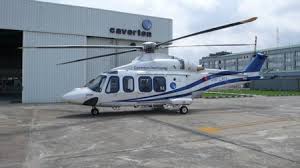
On April 7, a Port Harcourt Chief Magistrate Court presided over by D.D Ihua-Maduenyi
remanded in prison custody two Pilots, Samuel Ugorji and Samuel Buhari of Caverton Helicopters for violating the Executive Order issued by the Rivers State Government aimed at checking and combating the spread of Coronavirus in the state. Similarly, 10 passengers on board of the ill-fated flight were also remanded for the same offence.
Few days after, Aviation Minister, Hadi Sirika accused Governor Nyesom Wike of Rivers State of sabotaging efforts of the Federal Government in sourcing for funds especially in this COVID-19 era, when, according to him, budgets were crashing as a result of low crude oil price in the international market.
As if that was not enough , the central government through its agencies and proxies sponsored editorial commentaries in some national newspapers, namely, The Guardian, This Day, among others, casting aspersions on Governor Wike for taking actions against Caverton Helicopters’ two Pilots and passengers on board.
In the newspapers’ opinion, the governor acted beyond his powers as, the dailies concluded that issues relating to aviation and mineral resources such as petroleum are within the purview of the Federal Government as enshrined in the Exclusive List of the 1999 Constitution as amended.
While The Tide will not want to join issues with the Minister and by extension, his cronies as represented in the editorials of The Guardian and ThisDay Newspapers of April 10, 2020, on who exercises authority under the Exclusive List of the Constitution, we, however, make bold to categorically state that Governor Wike swore to an oath to always defend the interest and well being of Rivers people, no matter whose ox is gored and without fear or favour.
Governor Wike’s position, of course, is without prejudice to the provisions of the Constitution and was not by any measure intended to slight the Federal Government, rather, he only wanted due process to be followed in the campaign against the spread of COVID-19 pandemic in the state.
Unfortunately, nobody cares to know that Caverton Helicopters and Aero Contractors airline flew into Rivers State over 250 oil workers without health professionals in the State subjecting them to test either during departure or arrival, an action that the people and government of Rivers State perceive as inimical to the good health of the people.
We recall that on April 5, 2020, Governor Wike in a broadcast urged the Federal Government to prevail on Caverton and Aero Contractors to act responsibly by ensuring that their personnel undergo screening and profiling by Rivers State health professionals, an advice that was turned down by the central authorities and the oil firms.
In this COVID-19 era, when all tiers of government, international bodies and stakeholders are expected to synergise and collaborate to contain the spread of the pandemic, the sponsored editorials of these tabloids against the Governor is, to say the least, worrisome, most inappropriate, callous and unacceptable to well-meaning Nigerians.
While The Tide is not ignorant of the constitutional responsibilities of the Federal Government, States and local government councils as explicitly spelt out in the 1999 Constitution, we, however, think that in emergency times like this when all hands should be on deck to ensure safety of lives of the citizenry, the Federal Government’s permission to the airlines, should be in tandem with the position of states especially against the backdrop of the prevailing pandemic ravaging the globe, particularly Nigeria.
The issue of Legislative and Exclusive Lists as enshrined in the Constitution should as a matter of fact be secondary when, infact, lives are at stake.
In other words, monetary gains and benefits should be jettisoned when lives are involved as money is for the living, not for the dead.
The truth remains that at no time did Governor Wike or the state government challenge the permit granted to the airlines to fly in workers on essential services, rather, all the state government needed was to ascertain the COVID-19 status of such workers entering the state as they may in the course of their activities interact or mingle with vulnerable citizens of the state.
We, therefore, condemn the blackmail and cheap publicity against the governor by those who want to de-market the state and its people through sponsored editorials and commentaries.
It is on record that the state government on March 30, 2020 announced waivers for different categories of persons on essential services and we know that oil companies that followed due process were so exempted, except perhaps, when such workers broke protocol and refused to be screened by health officials at the entry points.
In a nutshell, Governor Wike acted in defence of Rivers State and in accordance with the Executive Order 01, 2020 pursuant to Sections 2, 4 and 8 of the Quarantine Act Cap Q2 Laws.
Thus, this needless affront against the person of Governor Wike must stop forthwith.




Nigeria stands at a critical juncture as the world marked World Press Freedom Day (WPFD) on May 3. This annual observance is a reminder that a free press is central to democratic life, good governance, and public accountability. For Nigeria, it is also a moment for sober reflection on how far the country has come and how far it still has to go in safeguarding the independence of its media.
World Press Freedom Day exists to highlight the fundamental importance of freedom of expression and to honour journalists who risk their lives in pursuit of truth. It underscores the idea that without a free press, societies cannot function transparently, nor can citizens make informed decisions. In countries like Nigeria, where democracy continues to evolve, the observance carries particular urgency.
This year’s theme, “Shaping a Future at Peace: Promoting Press Freedom for Human Rights, Development and Security”, places journalism at the heart of global stability. It emphasises that a peaceful society cannot be built on silence, fear, or manipulated information. Rather, it depends on the free flow of accurate, timely, and independent reporting.
At its core, the theme highlights the role of journalism in fostering accountability, dialogue, and trust. These are not abstract ideals. In Nigeria, where public confidence in institutions is often fragile, the media remains one of the few platforms through which citizens can question authority and demand transparency. When press freedom declines, so too does public trust.
Journalism serves as a foundation for peace, security, and economic recovery. Countries with robust media systems tend to attract greater investment, maintain stronger institutions, and resolve conflicts more effectively. Nigeria’s economic challenges, ranging from inflation to unemployment, require open scrutiny and informed debate, both of which depend on a free press.
However, the issue of information integrity has become increasingly complex in the digital age. Artificial Intelligence (AI) and online platforms have amplified the spread of misinformation and disinformation. In Nigeria, where internet penetration has grown rapidly, false narratives can travel faster than verified facts. This makes the role of credible journalism more vital than ever.
The challenge is not only technological but also ethical. AI-driven manipulation of information threatens to distort public discourse, influence elections, and deepen social divisions. In such an environment, professional journalism must act as a stabilising force, ensuring that truth prevails over sensationalism and propaganda.
Equally troubling is the safety of journalists. Across Nigeria, reporters face growing levels of online harassment, judicial intimidation, and physical threats. Self-censorship is becoming more common, as media practitioners weigh the risks of reporting sensitive issues. This trend undermines the very essence of journalism.
A particularly alarming incident involved a serving minister in the present administration, who openly threatened to shoot a journalist during a televised exchange. Such conduct, broadcast to the public, sends a dangerous signal that hostility towards the press is acceptable. It erodes the norms of democratic engagement and places journalists in harm’s way.
This year’s theme aligns closely with the United Nations Sustainable Development Goal (SDG)16, which promotes peace, justice, and strong institutions. Freedom of expression is a cornerstone of this goal. Without it, institutions weaken, corruption thrives, and justice becomes elusive. Nigeria’s commitment to SDG 16 must therefore include genuine protection for the media.
Historically, the Nigerian press has been a formidable force. From resisting colonial rule to challenging military dictatorships, our journalists have played a central role in shaping the nation’s political landscape. Today, however, that legacy appears to be under strain, as the media operates under what can best be described as a veneer of freedom.
Beneath this facade lies a troubling reality. Journalists are routinely harassed, detained, and prosecuted for performing their constitutional duties. Reports from media watchdogs indicate that dozens of Nigerian journalists face legal threats or arrest each year, often for exposing corruption or criticising those in power.
The Cybercrimes (Prohibition, Prevention, etc.) Act of 2015 has become a focal point of concern. Originally intended to combat cyber threats, it has increasingly been used to silence dissent. Sections 24 and 27(1)(b), in particular, have been invoked to target journalists, bloggers, and social commentators.
Although amendments introduced in February 2024 were meant to safeguard journalists, concerns persist. The law continues to be wielded in ways that stifle investigative reporting and restrict freedom of expression. Legal reforms must go beyond cosmetic changes to address the root causes of misuse.
To safeguard the future of journalism in Nigeria, decisive action is required. The Cybercrimes Act must be revisited to ensure it cannot be weaponised against the press. Law enforcement agencies must operate free from political influence, upholding the rule of law and protecting journalists’ rights. Civil society and international partners must also strengthen independent media through funding, training, and platforms for wider reach.
In this rapidly evolving world shaped by artificial intelligence and digital innovation, Nigeria faces a clear choice. It can either allow press freedom to erode under pressure, or it can champion a truly independent media landscape. The path it chooses will determine not only the future of journalism, but also the strength of its democracy and the peace it seeks to build.
-
 Editorial4 days ago
Enough Of Xenophobic Attacks On Nigerians
-

 Education4 days ago
UNIPort Senate Grants Two-Year Amnesty to U2010–U2018 Students
-

 Nation4 days ago
RSU, Otonti Nduka Foundation Holds Centenary Conference, Unveil Book on Values in Nigeria
-

 Sports4 days ago
Oparaodu Urges Rivers United To Win Katsina United
-

 Oil & Energy4 days ago
Rivers PETROAN Elects 12-Member Executive
-
Politics4 days ago
APC Group Protests Ex–Presidential Aspirant’s Disqualification From Rivers Senatorial Race
-

 Sports4 days ago
” Nigeria’s best domestic players are not in NPFL”
-
Politics4 days ago
Reps Speaker Secures APC Return Ticket For Fifth Term