
Featured
I’m Being Targeted For Arrest-Atiku …Flays Alleged Plans To Lead Protest Over INEC’s Server …Says Rumour Handiwork Of Mischief Makers …EU Report Confirms INEC Rigged 2019 …Poll To Favour Buhari -PDP

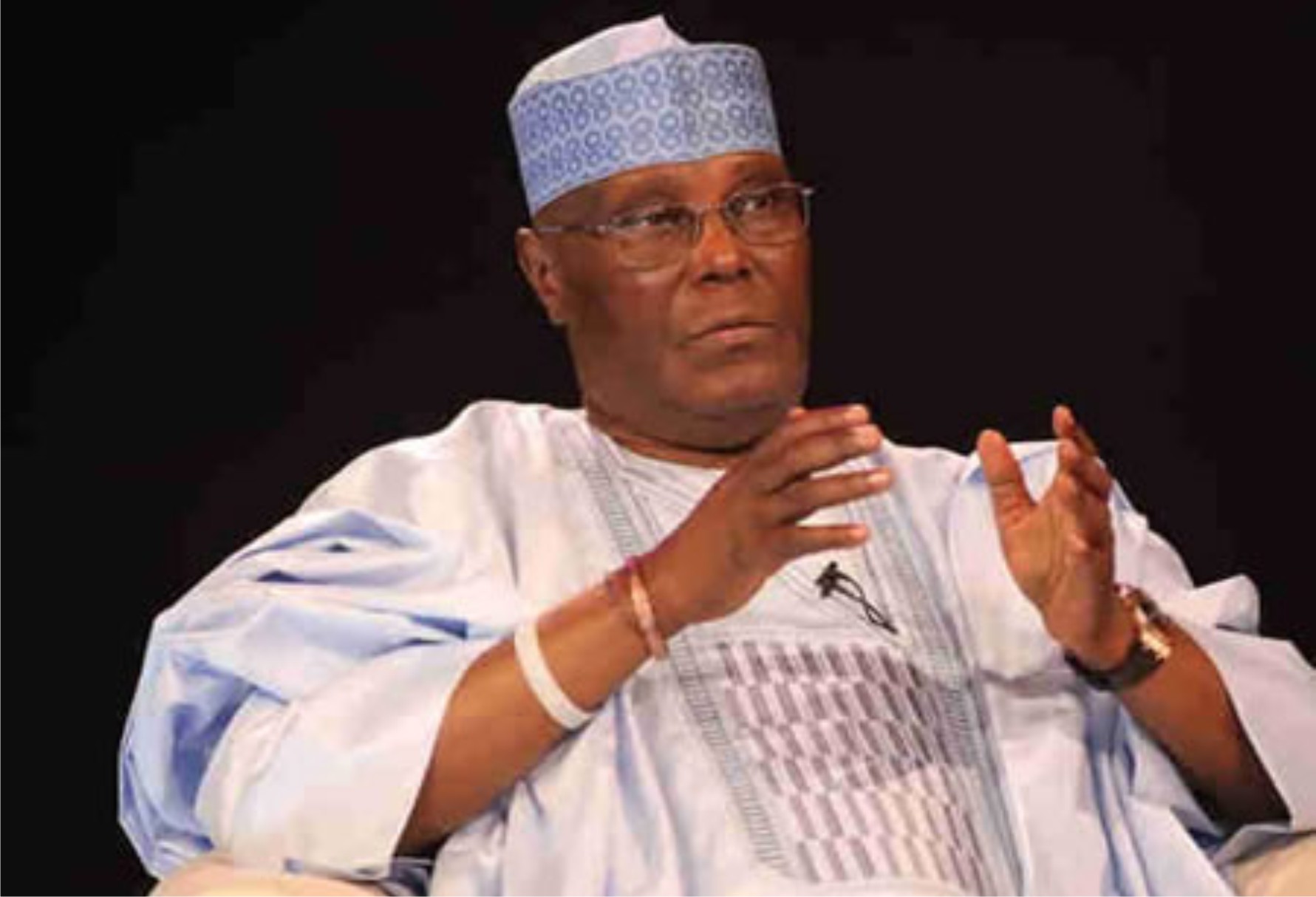
The former Vice President and Presidential candidate of the Peoples Democratic Party (PDP), in the 2019 election, Atiku Abubakar, has raised alarm of plot to arrest him.
This was contained in a statement by his spokesman, Paul Ibe, yesterday.
It said due to Atiku’s insistence of the existence of a server used by the Independent National Electoral Commission (INEC), his enemies attributed a false comment on “mass protest” to him to prepare ground for his incarceration.
Ibe said: “I wish to emphatically state that such a statement did not emanate from Atiku Abubakar or his privies.
“It is the work of mischief makers who want to mar his spotless pro-democratic record and lay the ground work for their threatened actions against him on false charges of being a threat to national security.
“For the avoidance of doubt, Atiku Abubakar believes in the rule of law and in the laws of the Federal Republic of Nigeria. In his almost four decades in politics, he has never taken action or spoken words against democracy and will not start now.
“Atiku Abubakar and his team have confidence in God and thus call on those bent on mischief to have the fear of God and retrace their steps.
“Democracy has come to stay in Nigeria. The culture of fear being created now cannot rein in our democracy. Nigeria and Nigerians have a consistent history of outlasting tyranny and will continue to do so by the grace of God.”
Meanwhile, the Presidential candidate of the Peoples Democratic Party (PDP) in the 2019 election, Alhaji Atiku Abubakar, yesterday, said he has no plan to lead a street protest in the event that the election petition tribunal ruled against him and his party on the issue of the Independent National Electoral Commission (INEC) server.
Atiku’s Media Adviser, Paul Ibe, said the statement attributed to Atiku was the handiwork of mischief makers to mar his pro-democratic record, and lay the groundwork on false charges against him.
In a statement issued, yesterday, Ibe said: “I wish to emphatically state that such a statement did not emanate from Atiku Abubakar or his privies. It is the work of mischief makers who want to mar his spotless pro-democratic record and lay the groundwork for their threatened actions against him on false charges of being a threat to national security.
“For the avoidance of doubt, Atiku Abubakar believes in the Rule of Law and in the laws of the Federal Republic of Nigeria. In his almost four decades in politics, he has never taken action or spoken words against democracy and will not start now.
“Atiku and his team have confidence in God and thus call on those bent on mischief to have the fear of God and retrace their steps. Democracy has come to stay in Nigeria. The culture of fear being created now cannot rein in our democracy. Nigeria and Nigerians have a consistent history of outlasting tyranny and will continue to do so by the grace of God.”
In a related development,the National Working Committee (NWC) of the Peoples Democratic Party (PDP) says that the fresh revelation in the European Union (EU) report has further vindicated the PDP and millions of Nigerians, in our position that the February 23 Presidential election was rigged to favour President Muhammadu Buhari and the All Progressives Congress (APC).
The party noted that the revelations of manipulations as detailed in the EU report further validated queries by majority of Nigerians that President Buhari was not validly returned for a second term in office.
A statement signed by the party’s National Publicity Secretary, Kola Ologbondiya, yesterday, said that “the world can now see that the PDP has not been crying wolf in insisting that the election was outrightly rigged with the cancellation of millions of PDP votes, alteration of results and allocation of fictitious votes to the APC.
“Nigerians are still in shock over the revelations by EU of how about 2.8 million votes were deliberately “cancelled without sufficient accountability” and how several returning officers gave no reason for the cancellations.
“More shocking is the iniquity committed at the national collation center, headed by the INEC Chairman, where the EU report exposed inconsistent numbers, distortions and “a large discrepancy of “1.66 million more registered voters, as announced by INEC on 14 January, compared to those announced by state returning officers during the collation of presidential results.
“Nigerians witnessed, on national TV, how professors and returning officers were unable to reconcile result figures due to heavy manipulations upon which INEC declared the APC winner.
“The EU report has further exposed the iniquity committed by the Prof. Mahmood Yakubu-led INEC by listing how ballot boxes were compromised, how essential materials were missing, how “voter register was not always ticked as required” and how “manual authentication procedures were not correctly followed.
“The report also bared how figures on result forms did not reconcile, how result forms were not publicly posted, how “result forms and smart card readers were not packed in tamper-evident envelops as required”, in addition to how the APC administration used security forces to intimidate voters, aid violence against our members and muscled votes for the APC
“The PDP, therefore, commends the EU for the courage in exposing the evils committed by the APC and INEC in the 2019 general elections.
“Moreover, the report has further reinforced the confidence of millions of Nigerians in our collective expectation of justice in the quest to retrieve our stolen Presidential mandate at the tribunal.
“The PDP insists that those in INEC, who perpetrated such crime against our nation, in sabotaging the sanctity of our electoral processes to frustrate the choice of Nigerians in a presidential election, must be brought to book and made to face the wrath of the law.
“Our party therefore urges Nigerians to remain calm as the truth about the election continues to unfold while justice takes its course on the matter”, the PDP added.
Similarly, the Human Rights Writers Association of Nigeria (HURIWA) has called for the sack of the Chairman of the Independent National Electoral Commission (INEC), Prof Yakubu Mahmood.
HURIWA in a statement, yesterday by its Coordinator, Comrade Emmanuel Onwubiko, and Media Affairs Director, Miss Zainab Yusuf, made the call in reaction to the European Union report on Nigeria’s 2019 elections.
The group stated that the election was so rigged to an extent that over 40 percent of the results returned by the compromised Yakubu Mahmood have been voided and rendered a legal nullity by competent courts of law and election petition and appeals’ tribunals all across the country
“What is Yakubu Mahmood still doing as Chairman when the shoddy and shabby electoral heist he supervised has been discredited locally and globally?,” it quipped
HURIWA said it was shocking that Mahmood who presided over the most brazenly manipulated and criminally rigged election in the political history of Africa has refused to voluntarily bow out and resign from office for his spectacular and historical failure to conduct a free, fair, transparent and peaceful election even when he had over 4 years to prepare for the just ended polls.
HURIWA also noted that the conduct of the Mahmood led INEC before the presidential elections petition Tribunal in which INEC denied deploying the technological transmission of results (electronic servers) which the electoral commission budgeted and got the facilities installed has shown that Mr Yakubu Mahmood has no business remaining as chairman of an agency that ought to be independent and operate as an unbiased umpire.
It added: “How come that an umpire who claims to be unbiased be the party in an electoral petition that actively undermines and is frustrating one of the parties in the matter from accessing basic evidence to help the Tribunal reach an objective and just determination? This shows that INEC was an affiliate of All Progressives Congress during and after the widely disputed polls. An independent commission ought to be focused on helping the election tribunal to reach an objective and truthfully honest determination rather than be the megaphone of one of the contending parties in the petition before a competent court of law.
“A self-respecting academic professor would on his own volition quit from office in any sane government and civilized nation the moment it becomes notorious that he has failed to discharge the public functions and duty for which the Nigerian State invested multibillion dollars of public fund to enable a constitutionally independent body like the Independent National Electoral Commission (INEC) to perform.
“But this discredited Chairman has continued to pontificate and parade about as the Chairman of an agency that was sold and bought. It’s a shame that the Chairman of INEC under whose watch over 150 potential voters and electoral officers were slaughtered by political thugs affiliated to the central government has refused to show dignity and conscientiousness by quitting his job to allow for a fresh head to steer the ship of affairs in INEC.
“This INEC that has shamelessly failed to pay the allowances and wages of youth corpers who worked as ad-hoc electoral officers is the same that is pretending to be interested in any transparent reforms of the decadent electoral system. This is comedy taken to an unimaginably farcical but offensive dimension.
“We agree totally with the conclusions of the election observations made by the EU election monitoring team that watched the 2019 polls to such an extent that the reports highlighted the state sponsored violence that marred the polls and the lack of openness and transparency by the Independent National Electoral Commission (INEC).
“We also accept the EU’s observations about the misbehavior of some rogue armed security operatives and their officers who were deployed by politicians to kill, maim and destroy many lives and electoral materials in the areas that the leading opposition Peoples Democratic party (PDP) was coasting home to victory in both the National Assembly, governorship and Presidential polls.
“The violence in Lagos, Rivers, Bayelsa and Akwa Ibom States were so well coordinated to such a level that only the Federal Government with such overwhelming federal might and control over the security forces can so abuse their powers to destroy the credibility, integrity and independence of the just ended general elections and most specifically in the Presidential election.
“HURIWA agrees with the conclusions of the final reports of the European Union Election Observation Mission (EOM) to Nigeria for the March 2019 general election where it said a combination of factors, including incumbency, suspension of the former Chief Justice of Nigeria (CJN), Justice Walter Onnoghen, a few weeks to the election, and violence shaped the poll’s outcome but the EU did not go far enough and did not call a spade by its name may be in a bid to appear to be politically correct as most diplomatic missions would.
“The EU report said Onnoghen’s suspension did not follow due process. And it alleged that over 150 people died in the violence that characterised the elections. We had consistently maintained that the last elections became increasingly marred by violence and intimidation, with the role of the security agencies becoming more contentious as the process progressed.
“These tendencies were so noticeable that at a point in some parts of Nigeria like in Lagos the armed thugs paid by All Progressives Congress (APC) stopped voters of South East origin from accessing polling booths even as the security forces were teleguided and directed from Abuja to do nothing to stop these hired armed party thugs from stopping Igbo voters from exercising their right to vote because of widespread apprehension within the Presidency then that the Igbo block votes in Lagos will undermine the plots of the ruling party to coast to victory seamlessly but the APC adopted raw violence and bloodshed.
“The national leader of APC was seen with two bullion vans reportedly conveying raw cash on the eve of the Presidential polls which were suspected to have been deployed to influence the conduct and outcome of the Presidential poll but EFCC working for APC looked the other way but refused to act even when the money laundering law specifies the sealing or limits of cash that an individual have physically at a time”.
Also, the Supreme Court will today commence hearing in the appeal filed before it by the Gubernatorial candidate of Peoples Democratic Party (PDP) in the September 22nd 2018 governorship election in the state, Senator Ademola Adeleke challenging the declaration of Governor Isiaka Gboyega Oyetola of the All Progressives Congress (APC) as governor.
The suit was filed following the declaration of Governor Oyetola as the winner of the state governorship election by the Court of Appeal on March 9, 2019.
The Court of Appeal judgment, it would be recalled upturned the verdict of the State Election Petition Tribunal which had declared Senator Adeleke as the winner of the said election.
The Court of Appeal held that the irregular composition of judges of the lower tribunal, where the judge who delivered the majority judgment, Justice Peter Obiorah, was absent in the proceedings of the lower court, affected the right of the appellant to fair hearing.
The five-member panel of justices, which was presided by Justice Jummai Sankey, also upheld 10 out of the 12 issues raised by Governor Adegboyega Oyetola of the APC that the lower tribunal lacked the jurisdiction to entertain some of the grounds of the petition brought by Adeleke over the September 22, 2018 governorship election.
It held that having ruled that the claims of over-voting and voiding of valid votes were unproven by the tribunal in the 17 polling units out of 3,010 polling units in the state, the non-compliance was not substantial to proceed to compute and deduct votes.
But Adeleke and the Peoples Democratic Party (PDP) rejected the verdict and proceeded to the Apex Court, urging it to set aside the decision of the Court of Appeal which was in favour of Oyetola of the APC.
Adeleke also contended that the Court of Appeal erred in law when it upheld the appeals by APC and INEC, challenging the decision of the tribunal.
The PDP also contended that the appellate court erred when it dismissed its cross-appeal, where it challenged the improper ballot counting which cost it 3, 402 and 379 votes in 23 polling units.
Adeleke and the PDP are therefore seeking a declaration that they won the election by a wider margin than what was found by the lower tribunal in view of what they called the substantial non-compliance with the Electoral Act 2010 as amended.
Meanwhile, both APC and PDP have gone spiritual over the case, seeking the face of God that the judgment will be in their favour.
Last week, the PDP called its members for prayer session over the case beseeching God to grant them favour in the matter while APC leadership in the state also summoned its leadership to party secretariat for a prayer session.
The APC prayer session was at the instance of the State Chairman of the party, Prince Gboyega Famodun for Monday, June 17th 2019.



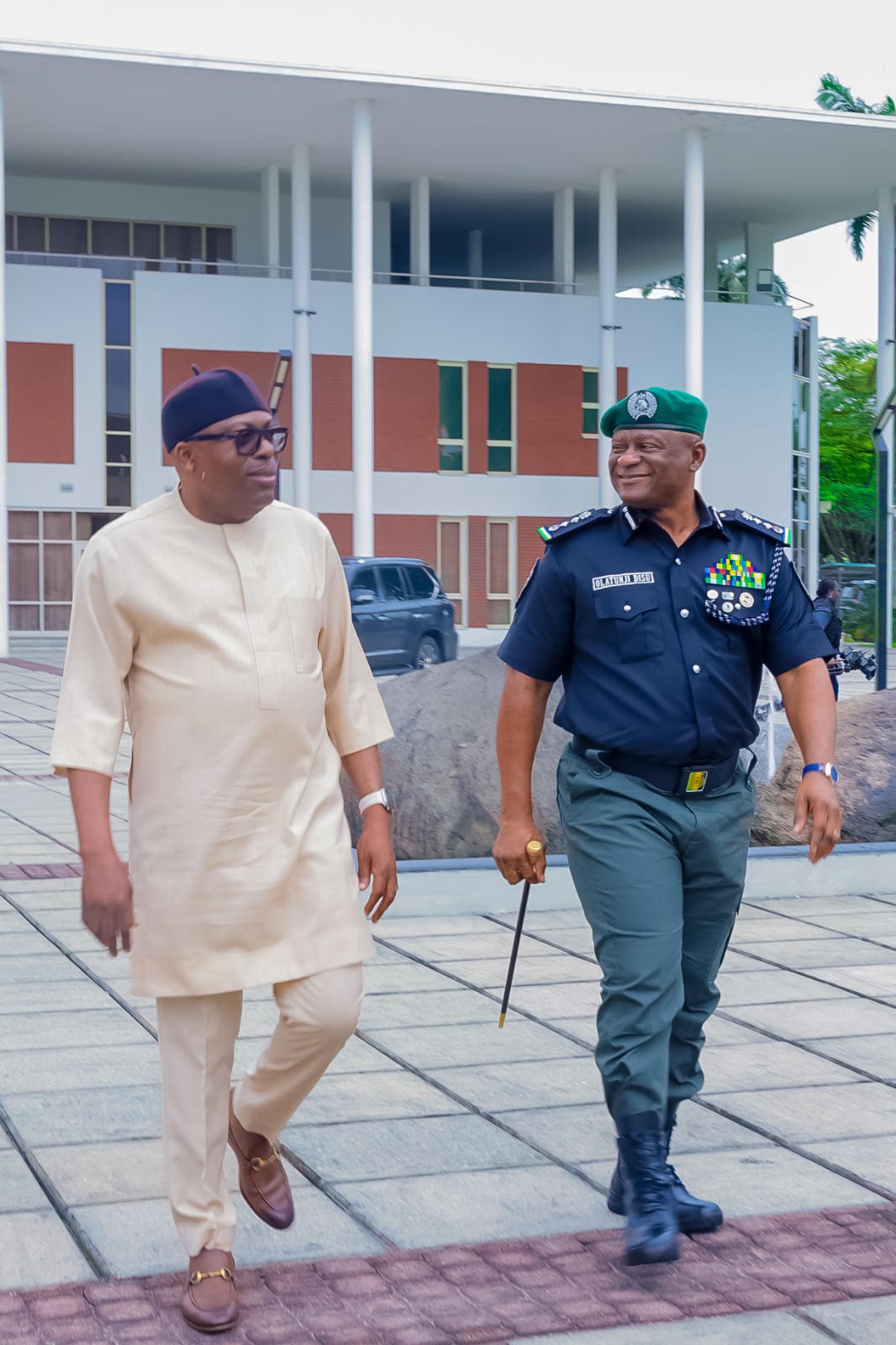
The Rivers State Government has called on stakeholders, community leaders, parents and relevant education authorities to intensify efforts to identify and enrol out-of-school children across Nigeria, stressing that every child deserves access to quality and inclusive education.
Governor Siminalayi Fubara made the call, yesterday, during the regional campaign on engaging community structures to promote the enrolment of out-of-school children and the regional flag-off of the 2026/2027 enrolment drive for southern states, held in Port Harcourt.
Represented by the Secretary to the State Government, Dr Dagogo Wokoma, Governor Fubara reaffirmed that education remains a fundamental pillar of sustainable development and emphasised the need to ensure that no child is left behind because of economic hardship, social background or other barriers to schooling.
He noted that expanding access to education was essential to promoting sustainable development, social inclusion and equal opportunities, enabling children to reach their full potential and contribute meaningfully to society.
The governor urged participating states and communities to translate their commitments into concrete and measurable actions by reaching vulnerable children, strengthening community engagement and encouraging parents and guardians to make their children’s education a priority.
He reiterated the state government’s commitment to initiatives aimed at expanding access to education, particularly for children excluded from formal schooling.
“Rivers State remains committed to supporting initiatives that expand access to inclusive and quality education, particularly for vulnerable children who may have missed the opportunity to attend formal schools,” Fubara stressed.
Also speaking, the Executive Secretary of the Universal Basic Education Commission (UBEC), Aisha Garba, described the growing number of out-of-school children as one of the major challenges confronting the education sector.
She called for a collective and collaborative approach among governments, communities, parents and other stakeholders to address the problem, stressing the need to ensure that no Nigerian child is denied the fundamental right to education.
The programme was organised by the Universal Basic Education Commission in collaboration with the Rivers State Government, as part of efforts to strengthen community participation and promote school enrolment across the southern states for the 2026/2027 academic session.

The Federation Account Allocation Committee (FAAC) has shared the sum of N2.428 trillion among the Federal Government, 36 states government and the 774 Local Government Councils (LGCs) as revenue for the month of September.
The Director, Press and Public Relations, Office of the Accountant-General of the Federation (OAGF), Mr Bawa Mokwa, said this in a statement in Abuja, yesterday.
Mokwa said the allocation was approved by FAAC at its October meeting held in Abuja.
He said the N2.428 trillion distributable revenue comprised of statutory revenue of N1.672 trillion, distributable Value Added Tax (VAT) revenue of N756.587 billion.
Mokwa quoted the FAAC communiqué as saying that total gross revenue of N3.913 trillion was available in the month of September 2026.
He said a total deduction for cost of collection was N131.758 billion while total transfers, refunds and savings of N1.352 trillion.
According to him, a gross statutory revenue of N3.096 trillion was received for the month of September 2026.
“This was higher than the sum of N2.850 trillion received in the preceeding month by N246.384 billion.
“Gross revenue of N816.872 billion was available from the Value Added Tax (VAT) in September 2026.
“This was lower than the N834.843 billion available in the month of August 2026 by N17.972 billion,” he said.
Mokwa explained that the Federal Government received N832.242 billion and the state governments received the sum of N799.872 billion.
He said the LGCs received N560.660 billion, while the sum of N236.049 billion (13% of mineral revenue) was shared to the benefiting state as derivation revenue.
Mokwa said in the N1.672 billion distributable statutory revenue, the Federal Government received N756.583 billion and the State Governments received N383.749 billion.
He said the LGCs received N295.855 billion and the sum of N236.049 billion (13% of mineral revenue) was shared to the benefiting States as derivation revenue.
The director said from the N756.587 billion distributable Value Added Tax (VAT) revenue, the Federal Government received N75.659 billion, the State Governments received N416.123 billion and the LGCs received N264.805 billion.
“In September 2026, Petroleum Profit Tax (PPT), Hydrocarbon Tax (HT), Petroleum Royalties, Import Duty, CET Levies and Excise Duty increased significantly.
“Also, Companies Income Tax (CIT), CGT & SDT, Value Added Tax (VTA), Mineral Royalties, and Gas Flared Penalty, Rental Gas Flared Fee and Misc. Oil Revenue decreased considerably,” he said.
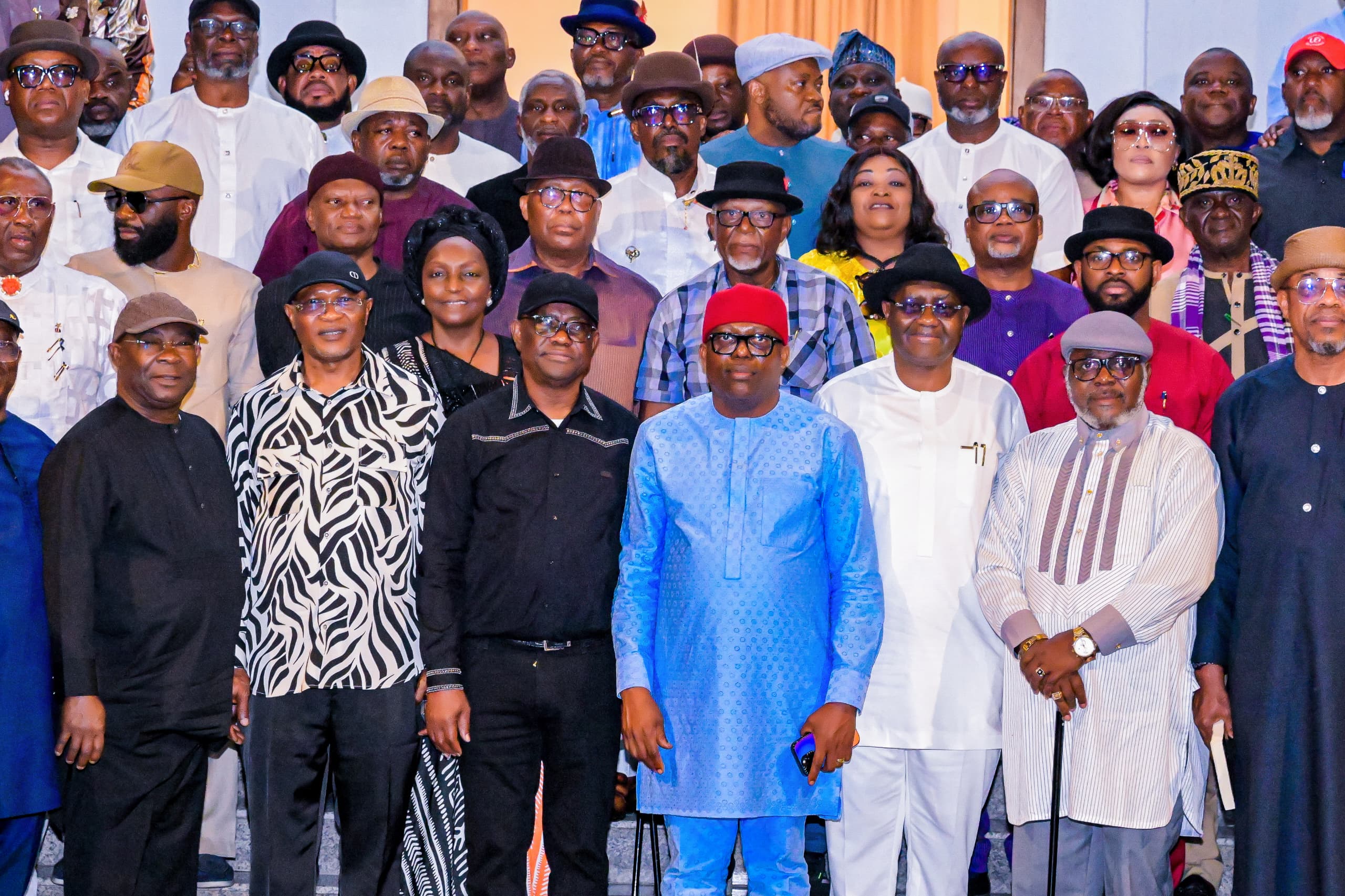
The Nigeria Labour Congress (NLC) has given the Federal Government a two-week ultimatum to reduce the price of petrol, commence renegotiation of the national minimum wage and implement outstanding agreements with workers.
The ultimatum followed a joint meeting of the National Executive Council and Central Working Committee of the NLC held at the Olaitan Oyerinde Hall, Labour House, Abuja.
In a communiqué signed by the NLC President, Joe Ajaero, and made available to newsmen, yesterday, the union said the two-week ultimatum would commence on Friday, October 9, 2026.
It warned that failure by the government to meet its demands would compel the Congress to take further action.
The NLC specifically demanded that the government reduce the price of Premium Motor Spirit to the level it was when the current national minimum wage was signed into law in 2024.
It also demanded the immediate commencement of negotiations for a new minimum wage, implementation of the February 5, 2026, Terms of Settlement reached with the Joint Health Sector Unions and Assembly of Healthcare Professionals, and action on the demands of the Joint Public Sector Negotiating Council.
The Congress further demanded tax relief and immediate wage awards for workers, arguing that the measures were necessary to cushion the impact of rising living costs.
The NLC said, “The current national minimum wage has been rendered worthless by the relentless depreciation of the naira and the astronomical rise in the cost of living.”
It added that workers could no longer meet basic needs, including food, shelter, healthcare, transportation and education, on their current earnings.
The labour body, therefore, demanded that the Federal Government commence renegotiation of the national minimum wage before the end of October.
“NEC-in-session demands that the Federal Government commence the renegotiation of the national minimum wage before the end of this month,” the communiqué stated.
The Congress also linked the erosion of workers’ purchasing power to the high cost of petrol, saying the price of the commodity had continued to drive up transportation costs and the prices of other essential goods.
“The exorbitant pump price of petrol has had a cascading effect on the cost of transportation, food, and other essential goods, further deepening the hardship of workers and the masses,” it said.
The NLC further demanded that the government grant tax relief to workers and immediately introduce wage awards, describing the measures as “the bare minimum required to alleviate the suffering of Nigerian workers and restore a measure of dignity to their lives.”
The latest ultimatum escalates the labour movement’s pressure on the Federal Government after public-sector workers under the Joint National Public Service Negotiating Council embarked on a three-day warning strike earlier in October over rising living costs, petrol prices, wage awards and minimum wage negotiations.
The workers had demanded, among other measures, a reduction in petrol prices and the commencement of negotiations for a new minimum wage.
The NLC had also raised concerns in September over the declining purchasing power of workers, with Ajaero arguing that the N70,000 minimum wage had been overtaken by increases in the cost of food, transportation, housing, education and other essential expenses.
The current minimum wage was approved by President Bola Tinubu in July 2024 after negotiations involving the government, organised labour and the private sector.
Tinubu increased the Federal Government’s offer from N62,000 to N70,000 and agreed that the wage should be reviewed after three years rather than five years.
The NLC’s latest demand comes as the Federal Government announced fresh measures aimed at containing petrol-price pressures.
Yesterday, the Minister of Finance and Coordinating Minister of the Economy, Taiwo Oyedele, said the government was negotiating a ceiling of N1,350 per litre on the ex-gantry or landing cost of petrol, with monthly reviews, as part of measures to reduce price volatility.
The proposed ceiling does not mean petrol would necessarily sell at N1,350 per litre at filling stations.
The government also announced a 30-day discount on petrol dispensed by the Nigerian National Petroleum Company Limited (NNPCL), with priority given to public transporters.
Oyedele said the arrangement was not a return to subsidy but an effort to sell the product at cost.
However, the NLC is seeking a more substantial reduction, insisting that petrol should return to the price level that prevailed when the N70,000 minimum wage was enacted in 2024.
The Congress also called for the implementation of the agreement reached with JOHESU in February, as well as the demands presented by the Joint Public Sector Negotiating Council.
It warned that failure to respond within the two-week period would have consequences.
“Failure of which the NLC will be compelled to take remedial steps as would be directed by the relevant organs,” the communiqué said.
The union consequently directed its affiliates and allies to remain prepared for further action.
“NEC-in-session reaffirms the historical responsibility of the NLC to resist all forms of exploitation and oppression,” it stated, urging its affiliates to remain “on high alert and fully prepared to engage in decisive efforts against all anti-people policies.”
The development also comes amid fresh labour tensions in Abuja, where the FCT Council of the NLC commenced an indefinite strike on Wednesday over disputes with the FCT Administration concerning teachers’ promotion policies.
The council directed workers across public and private establishments to withdraw their services after the expiration of a seven-day ultimatum.
The latest NLC ultimatum puts renewed pressure on the Federal Government to address wage and fuel-price concerns as both sides grapple with disagreements over the implementation of previous labour agreements and measures to cushion the impact of economic reforms.
The NLC said its demands were aimed at protecting workers and the wider population from further deterioration in their standard of living, insisting that Nigerian workers must remain “resolute, organised, and uncompromising” in the struggle for improved living conditions.
-

 Education1 day ago
FCE Yola Graduates 3,555 Teachers , Seeks Upgrade to University
-

 Niger Delta1 day ago
Diri Restates Stance On Lagos-Calabar Coastal Highway
-

 Sports24 hours ago
Nigerian Trio Target Titles At PFL Africa Finals
-

 Niger Delta1 day ago
C’River, NUJ Pay Tribute To Late Guardian Editor
-

 News1 day ago
NDLEA Recovers Tons Of Illicit Drug Consignments In Nine States
-

 Opinion1 day ago
Checking Voter Apathy In Nigeria’s Electoral Process
-

 Politics24 hours ago
2027: DICKSON’S EX-ALLY VOWS TO WORK AGAINST NDC INTEREST IN BAYELSA
-

 Politics24 hours ago
2027: GROUP PLEDGES 40,000 SUPPORTERS FOR COALITION CANDIDATES IN RIVERS