
Featured
Buhari’s 2019 Budget, Hopeless Document -Saraki …NASS Demands Probe Of Badeh’s Assassination

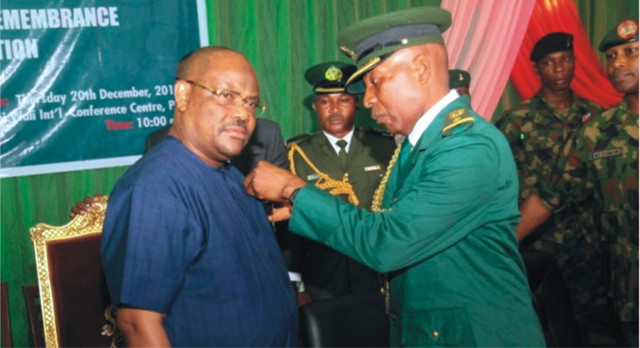
Senate President, Senator Bukola Saraki, yesterday tasked Nigerians not to expect much from the 2019 Appropriation Bill, describing the budget proposal as hopeless.
Saraki, who spoke in his capacity as the Director General of the Peoples Democratic Party (PDP) Presidential Campaign Council, PPCO, also declared that Nigerians were safer in 2015 than they are today.
He stated this at an interactive session between the PDP presidential candidate, former Vice President, Atiku Abubakar, and Civil Society Organisations (CSOs) in Abuja.
PDP Vice Presidential candidate, Peter Obi, at the event lamented that 60 percent of the 2019 budget is dedicated to debt servicing of the APC government which he noted has surpassed what was accrued in the 16 years of the PDP government.
Saraki in his opening remark, argued that the budget proposal presented by Buhari last Wednesday had no future because the statistics does not indicate the financial model by which it will be funded. He said, “Yesterday (Wednesday), we all heard the 2019 budget.
That is a budget that has no hope for anybody because if you look at the statistics and the figures there’s poverty, if you look at the figures based on revenues that are coming in, there is nothing left. So where’s the future?
“There must be an alternative and that is what we hope that by this evening speaking to our candidate and vice presidential candidate, not based on sentiments. We are not voting on sentiments, we are voting on what is the need for you.
“How is your life going to be better? Which party offers you a better future because we see you as those who are patriotic and committed . It’s not about what you’ll get today. It’s about the great country a lot of you expect to see.
The Senate President who noted that the President will fail to attend the January 19, 2019 Presidential debate stressed that any President that wants to lead the country and the African continent should be able to sell his blueprint to the people.
He said, “This is an interactive session. I’m not sure whether the other political parties will give you an opportunity like this to ask them any question. I’m told that one has debated and you already know the answer to that debate. On the second one, I’m very sure he’s not going to debate.
So how do you assess somebody who is not ready to tell you what he’s going to do. “Those days are gone, my good people.
A country that leads the continent that is not ready to show example is not what we want for this continent.
The whole world is going in a direction, if you’re seeking a position, you must come and tell people what you want to do. You must sit down and they will ask you questions and that is why we’re here. “Today is your day, we will sit down and take questions.
I hope at the end of the exercise you will stand up and say yes this is the team that will secure Nigeria, this is the team that will unite Nigeria , this is the team that will fight the poverty in town and bring a bright future.”
Atiku’s running mate, Obi, who also faulted the 2019 budget said “When you look at the revenue, we will spend 60 percent to service debt. So what is left? And they will borrow more. “What they borrowed in 2016 and 2017 is the same PDP borrowed in 16 years.
When you ask them, they say they use it for capital project.”
He lamented the level of poverty in the country and lambasted the President for urging Nigerians to tighten their belts, saying “Nigerian people have no belt again to tighten up”, stressing “we now wake up everyday with a sense of helplessness.”
While he noted that APC administration didn’t heed warnings over the alarming rate of job losses and unemployment in 2017, he said the recent rise in the unemployment rate from 18.8 percent to 23 percent is only going to get worse because “nobody is doing anything.”
He promised that immediately they get elected into office, their administration will show numbers of persons who are unemployed and correspondingly provide daily statistics on the number of persons that will get jobs.
Meanwhile, Senate yesterday urged the Federal Government to investigate the circumstances surrounding the assassination of former Chief of Defence Staff, Air Marshal Alex Badeh on Tuesday, December 18 along Abuja-Keffi Highway.
The upper legislative chamber also charged the security agencies to ensure the rescue of personal staff of the late Air Chief held hostage by the assailants.
The resolutions followed a motion moved to that effect by Senator Binta Masi Garba and co sponsored by the Deputy Senate Leader, Senator Bala Ibn Na’Allah.
Senator Garba in the motion “the late Chief of Defence Staff died from gunshot wounds sustained when his vehicle was attacked while returning from his farm alongside his driver while one of his personal staff is still held hostage by the assailants.
Senator Binta informe d. the Senate that the late Badeh retired in July 2015 in line with the military tradition at a pulling-out parade held at the Mogadishu Cantonment, Abuja where he gave his valedictory speech before proceeding to his home state of Adamawa.
Senator Garba stated that the deceased was born in Vimtim town in Mubi Local Government Area of Adamawa State into a family of peasant farmers where he attended Vimtim Primary School and Villanova Secondary School before proceeding to the Nigerian Defence Academy as a member of the 21 Regular Course on 3rd January, 1977 and was commissioned a Pilot Officer on 3rd July, 1979.
In his contribution, Senator Shehu Sani, who lamented that the killing was an addition to the cases of unresolved assassination, warned that the state must take the issue very seriously.
He said: “Badeh served his country from the beginning to the end, meritoriously. It is sad that he is a victim of assassination. He was killed few kilometers from the state capital. The state has failed Badeh. We should take the issue of security serious. He is a victim of an assassination
“This should bring to light a national discourse. If this can happen to Alex Badeh, it can happen to anybody. It is an addition to the cases of unresolved assassination. The state must take this issue very seriously. We owed him a duty to ensure that such a thing never happen again. The security agencies should deploy necessary security technologies to fish out the killers.”
The Deputy President of the Senate, Ike Ekweremadu, in his contributions, lamented that the killer, like the case of Bola Ige and others might never be found.
He said: “The killers might never be found because this is not the first time we would have such incidence. The time has come for us to ensure that assassins are found.
“Abuja, the FCT is becoming unsafe for the residents. We must ensure that all the CCTV are working in memory of Badeh and ensure that the killers are found.”
In his remarks , the President of the Senate, Bukola Saraki noted the need to do more in the area of security. “ . Necessary measures must be taken to ensure that lives and properties are protected.” he said
Also, the House of the Representatives yesterday urged the Inspector General of Police (IGP), Ibrahim Idris, and the Director-General of the Department of State Services (DSS), Yussuf Bitchi, to fish the those responsible for the killing of the late Air Chief Marshal Alex Badeh, a one time Chief of Defence Staff.
This followed the adoption of a motion moved under matter of public urgent importance titled “need to investigate the killing of Air Chief Marshal Alex Badeh” by Hon. Abdulrahman Shuaibu Abubakar at the plenary yesterday.
While moving the motion, Hon Abubakar noted that “Air Chief Marshal Alex Badeh, was killed by unknown gunmen on December 18, 2018, in his car while returning from his farm along Abuja-Keffi road.
He pointed out that the driver of the former Chief of Defence Staff sustained serious injuries of gunshot and now receiving medical treatment while his Farm Manager, Engr Joe was taken away by the fleeing gunmen.
In his contribution, Hon. Toby Okechukwu who blamed the nation’s Security agencies for the recent killing in the country declared that the way people were now being killed in the country showed that the country was no longer working and that the security agencies were not alive to their responsibilities.
According to him, “our security outfit is not working, they are not doing what they are supposed to do. If a general can be killed like that, you can now imagine what ordinary Nigerians are going through everyday.
“It is very sad. I understand that the first thing that will come is about corruption allegations against him, unfortunate he is not here to answer all of that, it is a pity that after risking his life to service Nigeria, he now died like a commoner and this shows that Nigeria democracy is gone”.
Also Hon. Chike Adamu who expressed fear over the rate of killings in the country stressed the need for urgent action to stop the madness , saying, “ this is an inccident that happened close to the seat of power where you have the president, his Vice, Senate President including you Mr Speaker.”
While adopting the motion, the House condemned the killing and directed the Police, DSS and other security forces to fish out the killers And made them to face the full weight of the law.
Nneka Amaechi-Nnadi, Abuja



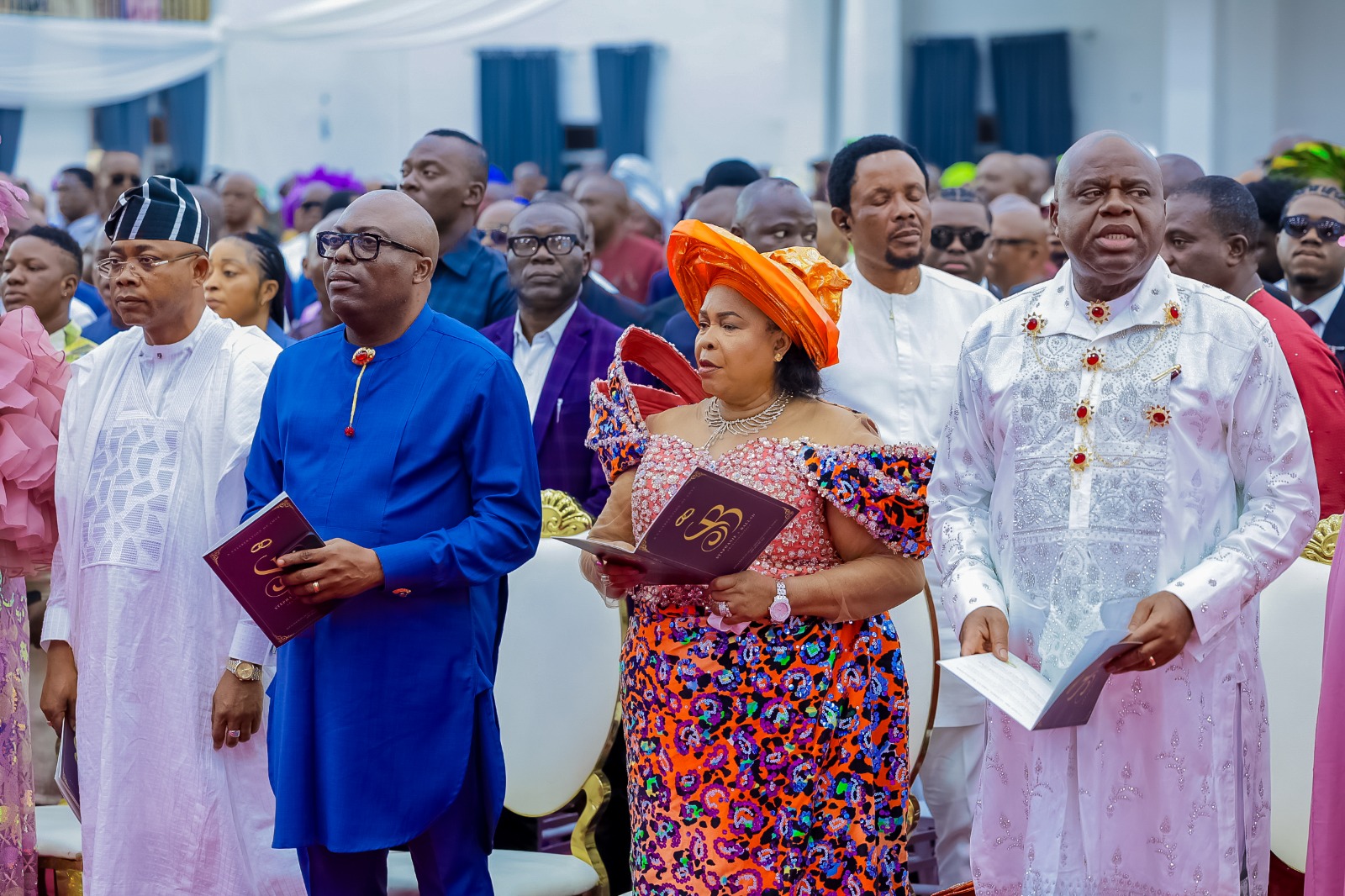
Rivers State, Sir Siminalayi Fubara, has assured members of the National Youth Service Corps (NYSC) of his administration’s commitment to supporting and strengthening the scheme in the State.
Fubara gave the assurance last Friday at the NYSC permanent orientation camp, Nonwa-Gbam, Tai Local Government Area in the State, during the swearing-in ceremony of 2026 Batch B Stream II orientation course.
Represented by the Permanent Secretary, Cabinet Bureau, Office of the Secretary to the State Government, Dr. Promise Oguzie, the governor said the State Government would remain intentional in providing the necessary support to improve the NYSC scheme and enhance the experiences of corps members deployed to the state.
He charged the corps members to be role models and quality nation-builders in their service to the good people of Rivers State in particular, and Nigeria at large.
“I charge you to be exemplary, dedicated and committed in all you do. Take full advantage of all the camp programmes and activities to enrich yourselves”, he said.
In his welcome address, the State Coordinator of NYSC in Rivers State, Mr. Moses Oleghe, urged corps members to see their deployment to Rivers State as a “veritable opportunity to make meaningful contribution to the growth of the State in particular and Nigeria at large.”
He further charged them to serve with all sense of “integrity, discipline, and the fear of God, especially when they will be engaged as INEC ad-hoc staff that will conduct the 2027 general elections.”
A total of 3,584 corps members composed of 1,421 males and 2,163 females were sworn in by the Chief Judge of Rivers State, who was represented by Justice Godspower Aguma.

Governor of Rivers State, Sir Siminalayi Fubara, says Nigeria needs God-fearing leaders for the nation to move in the right direction and make meaningful progress.
The Governor stated this yesterday when he received in audience, the World President of the Seventh Day Adventist Church, Pastor Erton Kohler; his wife, Andriene Marques Kohler; daughter Mariana Marques Kohler and a retinue of ministers of the church at Government House, Port Harcourt.
Fubara who hailed the Seventh Day Adventist Church for its contributions to education and the grooming of future leaders in Nigeria, expressed delight that the Church had over the years, been investing in education at various levels and currently runs two universities in the country.
He commended the church for not only using its institutions to spread the gospel of Christianity but to groom future leaders for the country.
According to him, religion should not be just about defending one’s faith, but also making meaningful impact on the lives of the people.
He said that by floating these educational institutions, the church has demonstrated capacity to support Nigeria in the task of producing not only educated people but a breed of God-fearing leaders.
“Our country is where it is today because we lack the fear of God. If you have the fear of God, there should be a limit to what you can do because you understand the supremacy of God. But when God is not in your equation, you’ll go beyond the line and that is what has brought us to where we are today.
“So, I feel very happy that you are contributing to the development of our future leaders in this country. We need the right people being in the right place; prepared properly with good minds; that is what we need, not just in Nigeria but round the whole world.,” he said.
Governor Fubara further observed that the absence of God-fearing people in high places to take the right decisions that could impact positively on the society, has also given rise to other problems such as social inequality, poverty, corruption and criminality. According to him, Nigeria needs a system where the average parent could afford quality education for their children and a guarantee that upon graduation, the average child will have the capacity to compete favourably with anybody, anywhere in the world.
“If we have a situation where the little money that you’re being paid as wage can also afford you quality healthcare and after working at least for 15-20 years, you have a roof over your head, tell me why you should be involved in any kind of crime? At that point, you’ll feel secured and this attitude of insecurity about the future that leads to all the social vices we have today won’t be there,” he said.
Governor Fubara expressed appreciation to the delegation for the visit and for their prayers for Rivers State, assuring them of his continued support for their programmes in the state.
Leader of the delegation and World President of the Seventh Day Adventist Church, Pastor Erton Kohler said he was in Nigeria for a special conference of the church during which thousands of the church’s ministers will be undergoing an empowerment programme to further equip them for the task of herding their flocks and serving the society.
He expressed gratitude to the Governor for the warm reception accorded his entourage, saying the memory of the visit will linger in his mind for a lifetime.
Kohler disclosed that the Church has over twenty -four million (24,000,000) members and more than 182,000 places of worship, spread across 212 countries of the world.

The Rivers State House of Assembly has approved the 2026–2028 Medium Term Expenditure Framework (MTEF) submitted by Governor Siminalayi Fubara.
This reaffirms the lawmakers’ commitment to enacting laws and taking legislative actions geared towards the overall development of the State.
The Assembly gave the approval during its Second Legislative Sitting of the Fourth Session held last Friday.
Speaking on the MTEF document during plenary, the House Speaker, Rt. Hon. Martin Amaewhule, noted that by the provision of Section 10(1)(b) of the Rivers State Fiscal Responsibility Law No. 8 of 2010, the MTEF ought to have been laid before the House in September 2025.
Amaewhule explained that traditionally, the document is expected to be presented four months before the commencement of the next financial year and immediately after the expiration of every three-year fiscal cycle.
He, however, stated that in the interest of the State and its people, the House considered it necessary to deliberate on the document, describing it as a precursor to the 2026 Budget Estimates.
The Speaker expressed concern that the year had already progressed significantly before the presentation of the framework.
During deliberations on the document, members examined the assumptions and projections contained in the MTEF and observed that strict adherence to the outlined fiscal parameters would ultimately serve the interest of Rivers people.
The lawmakers maintained that effective implementation of the framework would promote prudent financial management and enhance developmental planning across the State.
Following the debate and positive consideration by members, the Speaker put the question to the House and members voted overwhelmingly in support of the approval of the MTEF.
Meanwhile, during the same sitting last Friday, the House also received a petition from the Chairman of Obio/Akpor Local Government Council, Dr. Gift Worlu.
The petition was presented by the member representing Obio/Akpor Constituency II, Hon. Emilia Amadi.
According to the petition, concerns were raised over an imminent security breach, threats to lives, destruction of property and alleged forceful takeover of property by some lawless persons within parts of the Local Government Area.
Presenting the petition before the House, Hon. Amadi appealed to the lawmakers to revisit the matter and take necessary steps aimed at safeguarding lives and property in the affected communities.
The House is expected to further deliberate on the petition and consider measures to address the concerns raised in order to sustain peace and security in the area.
King Onunwor
-

 News2 days ago
RSG Targets Nine Million Residents in Mosquito Net Distribution Campaign
-

 Oil & Energy2 days ago
Aiyedatiwa Signs New Electricity Bill
-

 Oil & Energy2 days ago
NLNG Commissions Research And Innovation Centre In RSU
-

 Maritime2 days ago
Marine Minister Commends President Tinubu On NPERA Bill Assent
-

 News2 days ago
KenPoly Holds Eight Convocations, August 29
-

 News2 days ago
RSG Begins Another Phase of Projects Commissioning Today
-

 News2 days ago
RMAFC Completes Revenue Sharing Review, Proposes New Pay
-

 Maritime2 days ago
NAGAFF Petitions IGP Over Alleged Maritime Police Harassment