
Featured
Wike Berates Buhari’s Failure To Sign Electoral Act …Says It’s A Ploy To Rig 2019 Polls

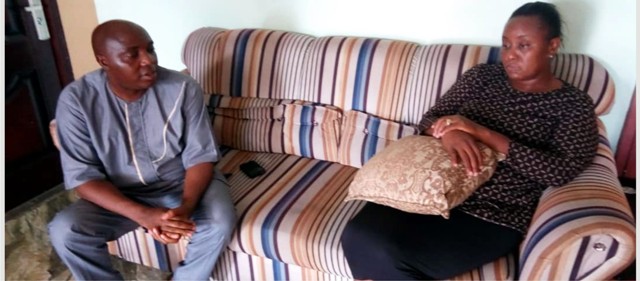
The Rivers State Governor, Chief Nyesom Wike has declared that the refusal of President Muhammadu Buhari to sign the amended Electoral Act was part of the plot to rig the 2019 elections.
In an interview at the Government House, Port Harcourt, Wike stated that the plot by the APC Federal Government was basically to write results against the wishes of Nigerians.
He said: “Why has the President not signed the Electoral Act? What is the fear? What do you mean by mistakes? Oh my God what is a mistake? Errors you didn’t see by one month’s time? Errors for the first time, the second time, the third time. Does it not tell Nigerians these people are not prepared for election?
“All they are prepared is to write the results and let heaven fall. Most of them who have left PDP to APC told me that, My Brother, look I can confidently tell you that these people are not prepared for the election. All they want to do is write the results, let heaven fall.”
Wike noted that the APC Federal Government and the security agencies would not succeed in rigging the elections in Rivers State.
He said: “In my State? It won’t happen. I know they will kill a lot of people. I can tell you, they will kill a lot of us. No problem, if that is the sacrifice we will make.”
Wike explained that intelligence at the disposal of the Rivers State Government indicates that indicted SARS Commander, ACP Akin Fakorede and DCP Stephen Hasso feature prominently in the rigging plot of the APC-led Federal Government in the state.
He said: “They are planning for Rivers State as I speak. Let me tell you. They are promoting my Commissioner of Police to Assistant Inspector-General of Police, they are promoting the Deputy Commissioner of Police, who was just made a Deputy Commissioner of Police (Operations) to be Acting Commissioner of Police and the SARS man who took Rivers State Government to court, who has perpetrated rigging of election even by INEC report, they are going to make him the man in charge of operations just for the purpose of 2019 elections.
“Akin Fakorede, to be made the Head of Operations of the State Police Command, then Stephen Hasso who is the Deputy Commissioner of Police will be made the Acting Commissioner of Police and the current Commissioner of Police will be appointed Assistant Inspector General of Police for the purpose of 2019 election and they think that we don’t know.”
The governor said that the international community was under obligation to take proactive action against officials of the APC-led Federal Government who destroyed the foundation of democracy and the rule of law, and called for the revocation of their visas.
“If it were where things are done rightly, they should revoke all the visas of those in government who are opposed to democratic rule principles, rule of law. Let me tell you whether you like it or not, this government is bent on eliminating the key opposition”.
He stated that the electoral criminality plotted by the APC-led Federal Government was exhibited during the cancelled Port Harcourt State Constituency three election where security agencies and APC thugs were unleashed on the constituents.
The governor said: “Look at the bye-election in Port Harcourt Constituency three comprising eight wards, 142 polling units within the same area. It is a ring road like this; it will not take you thirty minutes to cover them. The Commissioner of Police as I speak to you since after the election has not seen me to explain to me why all the atrocities were perpetrated, snatching electoral materials, and beating INEC officials.
“I am not happy with INEC for one reason, Yes I am happy with them for one way that they stood up but then, this is the same police, the same SARS that you indicted in the 2016/2017 re-run election and what has happened?”
Wike noted that the APC-led Federal Government plots to use security agencies to promote mass violence across Rivers State on the day of the governorship election in 2019, so that it would be postponed for them to have time to invade the state with hundreds of thousands of security personnel for rigging purposes.
“First of all, as far as 2019 election is concerned, there will be no election. The security agencies will help them to show that there is so many crises in the entire local governments, shooting everywhere and then they will postpone the election. When they postpone the election, then they will now bring down all their security agencies to the Rivers election”.
Wike further explained the modalities for the planned rigging by the APC-led Federal Government.
“We know, we have people inside the system who also working with them who are also letting us know these are the plans they are hatching and it has been happening. Port Harcourt showed it, I told my people don’t do anything.
“Allow them to show their hands and they did by coming with criminals and SARS wearing their uniforms. SARS protected them to cart away materials. INEC REC from Akwa Ibom, not Rivers State INEC, from Akwa Ibom, one of the three RECs that were sent here said, he saw, he witnessed, he couldn’t believe it. That at this our time, security agencies will lead people to cart away materials. So, for 2019, it is to make sure no election takes place in the first instance.
“As I speak to you, they will shoot everywhere and INEC would say, No, there will be no election. We cannot handle it that is the strategy for 2019. Tell the people, tell the public, tell Mr President. That they will make sure that there is so much violence in Rivers State so that elections will be postponed and then when elections are postponed, other elections in other states will take place, then, they will now move down all the security men to Rivers State.”
Wike berated the APC for selecting a murder suspect as one of their factional chairmen in Rivers State and ordering security agencies to protect him.
He said: “A man who is facing multiple murder trials, the court said, he must be arrested for murder, ordered the Commissioner of Police to arrest him. They say, they can’t find the man but the man is the one who will come out and say, he’s contesting for the Chairman of the APC? What a shame to this country, what a shame to the security agency. They should bury their heads in shame.
“If my father was a police man, I will tell my father, withdraw as a policeman, it is a shame. A man facing multiple trials, the court ordered that he should be arrested. The police said that they cannot find him, is the man who contested for APC election. He is the man who led what happened in PHALGA Constituency 3 on 18th of August, 2018.”

Featured
JUNE 12: Democracy Remains Nigeria’s Strongest Path To Unity, Progress, Says Fubara ….Extols Abiola, Wife


Governor of Rivers State, Sir Siminalayi Fubara, has reaffirmed that democracy remains the most effective system of government for Nigeria, given the country’s rich diversity of ethnic, religious, and cultural identities.
In a goodwill message to Nigerians on the occasion of the 2026 Democracy Day celebration, Governor Fubara said June 12 represents far more than a historic date; as it embodies the enduring struggle, sacrifice, and collective aspiration of Nigerians for freedom, justice, and representative governance.
The Governor extended warm felicitations to Nigerians at home and in the Diaspora, paying tribute to the heroes and heroines of the democratic struggle, particularly Chief MKO Abiola, his wife, Kudirat Abiola, and countless others whose courage and sacrifices helped secure the democratic freedoms Nigerians enjoy today.
According to him, “June 12 is a reminder of the price paid for the democracy we enjoy today. The sacrifices made by Chief MKO Abiola, Kudirat Abiola, and many other patriots who laid the foundation for the democratic journey we continue to enjoy today. Their commitment to the principle that power must ultimately reside with the people remains a source of inspiration for every generation of Nigerians.”
Governor Fubara noted that thirty-three years after the historic June 12, 1993 election, Nigeria’s democratic experiment has continued to evolve despite challenges and setbacks.
“Our democratic journey has not been without difficulties, but the resilience of our institutions and the determination of our people have kept the nation moving forward. The ability to express differing opinions, engage in constructive debate, and peacefully choose leaders through the ballot remains one of the greatest achievements of our nation,” he said.
Governor Fubara stressed that democracy provides the best framework for managing Nigeria’s diversity and transforming it into a source of national strength.
“Nigeria’s diversity should never be seen as a weakness. Properly harnessed, it is our greatest asset. Democracy offers us the opportunity to build consensus, promote inclusion, strengthen national unity, and create the conditions for sustainable development and shared prosperity,” he said.
Governor Fubara commended President Bola Ahmed Tinubu, for his commitment to the Renewed Hope Agenda and ongoing efforts aimed at economic revitalization, strengthening security, and deepening democratic institutions across the country.
He reiterated the readiness of Rivers State to continue partnering with the Federal Government in advancing policies and programmes that improve the lives of citizens through infrastructure development, job creation, enhanced security, quality education, healthcare delivery, and good governance.
The Governor further called on Nigerians, regardless of political affiliation, ethnic background, or religious belief, to use the occasion of Democracy Day to renew their commitment to the Nigerian project and the ideals that underpin democratic governance.
“Democracy must not be viewed merely as a periodic electoral exercise. It must be reflected in our daily commitment to accountability, transparency, tolerance, justice, respect for the rule of law, and responsible leadership. As citizens and leaders, we all share a collective responsibility to strengthen our democracy and build a nation that future generations will be proud to inherit,” he said.
Governor Fubara expressed optimism about Nigeria’s future, urging citizens to remain united, hopeful, and committed to the values of peace, dialogue, and national development.
“Together, we can build a stronger, more inclusive, and more prosperous Nigeria where every citizen has the opportunity to thrive and contribute meaningfully to national progress,” he said.

Governor of Rivers State, Sir Siminalayi Fubara, has reaffirmed the unwavering commitment of his administration to peace, unity, security, and inclusive development as Rivers State marked its 59th anniversary, last Wednesday.
In a goodwill message issued on Wednesday to commemorate the anniversary, Governor Fubara stated that despite the challenges faced over the years, the people of Rivers State have continued to demonstrate resilience, strength, and an enduring spirit of unity that has sustained the state since its creation.
The Governor noted that the strong bond of brotherhood among the various ethnic nationalities of the state, including the Ijaw, Ikwerre, Ogoni, Etche, Ekpeye, Andoni, Kalabari, and others, remains one of Rivers State’s greatest strengths and a critical foundation for peace, stability, and progress.
He further observed that Rivers State has remained a major driver of Nigeria’s economy for decades, not only because of its abundant oil and gas resources, but also because of the exceptional contributions of its people across diverse sectors including academia, jurisprudence, business, entertainment, public service, and sports.
Governor Fubara assured the people that his administration will continue to prioritize policies and programmes that promote peace, protect lives and property, and expand development across all parts of the state. He emphasized that governance must be people centered and impactful, with equal attention given to every Local Government Area of the state.
The Governor also paid tribute to the elders and founding leaders of the state for preserving the spirit of unity and coexistence over the years, while urging the youths to remain hopeful, responsible, and actively committed to building a greater Rivers State through innovation, hard work, and patriotism.
He equally acknowledged the invaluable role of women in strengthening families, communities, and society, describing them as indispensable partners in the continued growth and stability of the state.
Governor Fubara called on all Rivers people to use the occasion of the anniversary as a moment of reflection and renewed commitment to peaceful coexistence, mutual respect, dialogue, and collective progress, stressing that the unity and future of Rivers State must always rise above personal interests and political differences.
Rivers State was created on May 27, 1967, by General Yakubu Gowon.

-

 Niger Delta2 days ago
Warri Airport Manager Disputes Air Peace Bird Strike Claim
-

 News2 days ago
Nigeria Won’t Surrender Any Territory To Criminals -Tinubu
-

 News2 days ago
FG Begins Trial Of Over 600 Terrorism Suspects
-

 Rivers2 days ago
79th IAUE Inaugural Lecture: Prof Anero Advoctes Tuition-Free Education For Children
-

 Politics2 days ago
Parties’ Deregistration: How Justice Lifu Overruled Appeal Court Justices
-

 Politics2 days ago
ADC: Okonkwo Rejects Amaechi As Presidential Running Mate, Withdraws Support
-

 Politics2 days ago
2027: Tinubu’s Projects Give APC Edge In South East – Yilwatda
-

 News2 days ago
Rivers Judges Commence Annual Vacation, July 20