
Politics
How Not To Respond To Bill Gates

While addressing stakeholders at a special session of the National Economic Council (NEC) meeting at the Aso Rock Villa, Abuja on Thursday,, March 22, 2018, the co-chair of the Bill and Melinda Gates Foundation, Mr Bill Gates faulted the Economic Recovery and Growth Plan (ERGP) of the Federal Government.
He is reported to have said that the ERGP, which must reflect the people’s needs, should also give priority to human capital development over physical capital as it is designed currently.
The founder of Microsoft Corporation and one of the richest men in the world is said to have told the meeting presided over by Vice President Yemi Osinbajo that “To anchor the economy over the long term, investment in infrastructure and competiveness must go hand in hand with investments in the people.
“People without roads, ports and factories can’t flourish. And roads,, ports and factories without skilled workers to build and manage them can’t sustain an economy.”
To underscore his call for intervention in the healthcare services and education to the people of the country, Mr Gates lamented that Nigeria is one of the most dangerous places in the world to give birth, with the fourth worst maternal mortality rate ahead of only Sierra-Leone, Central African Republic and Chad.
In the face of this, right after the meeting at the Presidential Villa, Governor Nasir el-Rufai told newsmen that Mr Gates assessment was incorrect.
The Kaduna State governor and chieftain of the ruling All Progressives Congress (APC), said “it is not correct to say that the Economic Recovery and Growth Plan does not give primacy to human capital, it is not correct.”
Even though Governor El-Rufai admitted that “if a child loses quality education, he is done for life. If a child doesn’t get quality healthcare in the first two years, he is destroyed for life, he said “it is not the ERGP that needs adjustment, it is the budgeting that needs to be ramped up in these two key areas because these are where problems are.”
Of course, Nigerians across all strata and segments of the society have since been engaged in heated arguments and discussions over the issue.
However, the National Project Coordinator of the International Trauma and Critical Care, Managers of the Prof. Kelsey Harrison Hospital in Port Harcourt, Dr. Sidney Ibeanusi has advised the Federal Government not to see Bill Gates’ statement as an attempt to diminish the administration of President Muhammadu Buhari but as a constructive criticism aimed at goading the government to turn things around for the good of Nigerians.
In an exclusive interview with The Tide in his office in Port Harcourt, Dr. Ibeanusi said Mr. Gates observations, though scathing, should be taken seriously since the American was neither a Nigerian nor a politician and therefore could not have been influenced by political calculations in making utterances.
The expert in trauma medicine regretted that politics was getting too much in the way of government’s ability to deliver critical welfare services to the people of the country and called on the authorities to redirect and refocus their attention towards giving Nigerians a new lease of life.
“He is not a Nigerian and he is not a politician that you’d say he is playing politics with words”, he said adding that “Government should take it as constructive criticism and not to look at it as if somebody is out to demean the government”.
According to him, the facts upon which Mr. Gates based his criticism were in the public domain locally as well as the international community and therefore the Federal Government only needs to face the truth and make adjustments in order to reverse the ugly trend and avert grim consequences for the country in the near future.” The health sector has not fared well just like the education sector in terms of budgetary allocation. The government may be working on that but so far it’s been a struggle and this is showing in terms of statistics coming out of the country” he said, stressing that Mr. Gates should not be condemned for declaring Nigeria as one of the worst places in the world to give birth.
“You heard last week, Bill Gates who is partnering Nigeria in terms of polio actually said that Nigeria is one of the worst places to give birth in terms of survival. That is an indictment actually but I don’t think he should be crucified for that”, he said .
According to Dr. Ibeanusi, the Federal Government needs to nmuster the political will to set things right by investing more in healthcare and education as, in his opinion, all other sectors are bound to take their bearing from these.
“I think that part of what we need to do is to invest more in health, invest more in education (and) then you will get others right.
“If your children are dying before they get to age of five years or they’re getting stunted, it will affect the quality of human beings you turn out later”, he emphasised.
“I think the government needs to do something and do that urgently” in the area of not just adequate budgetary provision but the implementation of appropriated allocations, he said, adding that “As a country, we should actually first of all look at capacity building, look at investment and resource provision and then provide the enabling environment. You cannot have a system where you have a private sector that comes in today and then you come up with laws that will stifle them. It will discourage more persons from coming”.
Dr. Ibeanusi said that Ghana was fasting becoming very attractive to investors in the health sector and warned that except something was urgently done by the Federal Government, the West African neighbors would soon become a destination of choice not only for those seeking medical solution but for experts as well, including those from Nigeria.
He said the Vice President Yemi Osinbajo did not miss the point when he indicated that the government appreciated what Mr. Gates said and expressed the view that they were going to tackle the matter head on.
“I think that should be the approach, take it head on; look at the things we haven’t done and start doing things we should do right away rather than saying it is in the pipeline,” he said, pointing out that with as little as N10 billion annually, the Federal Government could provide free emergency medical care for all Nigerians.
“What it takes to provide emergency medical services to Nigerians free may not be more than N10 billion every year,” he noted, insisting that “that alone can provide emergency medical services to every person in this country. Within 24 to 48 hours, you have an emergency, you walk into a hospital and get treated and nobody asks you for a kobo.”
He, however, lamented that Nigerians were dying needlessly for lack of money to pay for medical expenses even though government could do so little to save them.
“A lot of Nigerians die because they don’t have money to access medical care. They go to the hospital, they are not able to pay deposits and by the time they leave there to another hospital, they die on the way,” he noted with regret, adding that sometimes the situation catches up with the politicians as well.
“You are aware that recently a Senator slumped and died before he could get to the hospital. If he had had medical personnel nearby, probably the person would have tried to keep him alive until appropriate help arrives.
“When these things are lacking, we are all exposed to becoming victims of our own inefficiency, of our own inability to do the things we ought to do. And I think every politician should think twice, if it is not you today, it could be your brother, it could be your sister, it could be your parent,” he cautioned.
While he admitted that politicians had a right to play politics, Dr Ibeanusi argued that healthcare services and education are fundamental rights of the people that must not be politicised irrespective of the government in power.
“You know politicians always talk about numbers, how many votes and all that. But things like health care, things like education don’t talk about numbers; those are social services and these are fundamental rights of the people.
“Whatever government in power should focus on them,” he reiterated.
Opaka Dokubo.

Politics
Alleged Coup: Protests Rock N’Assembly As Detained Officers’ Children, Wives Demand Justice

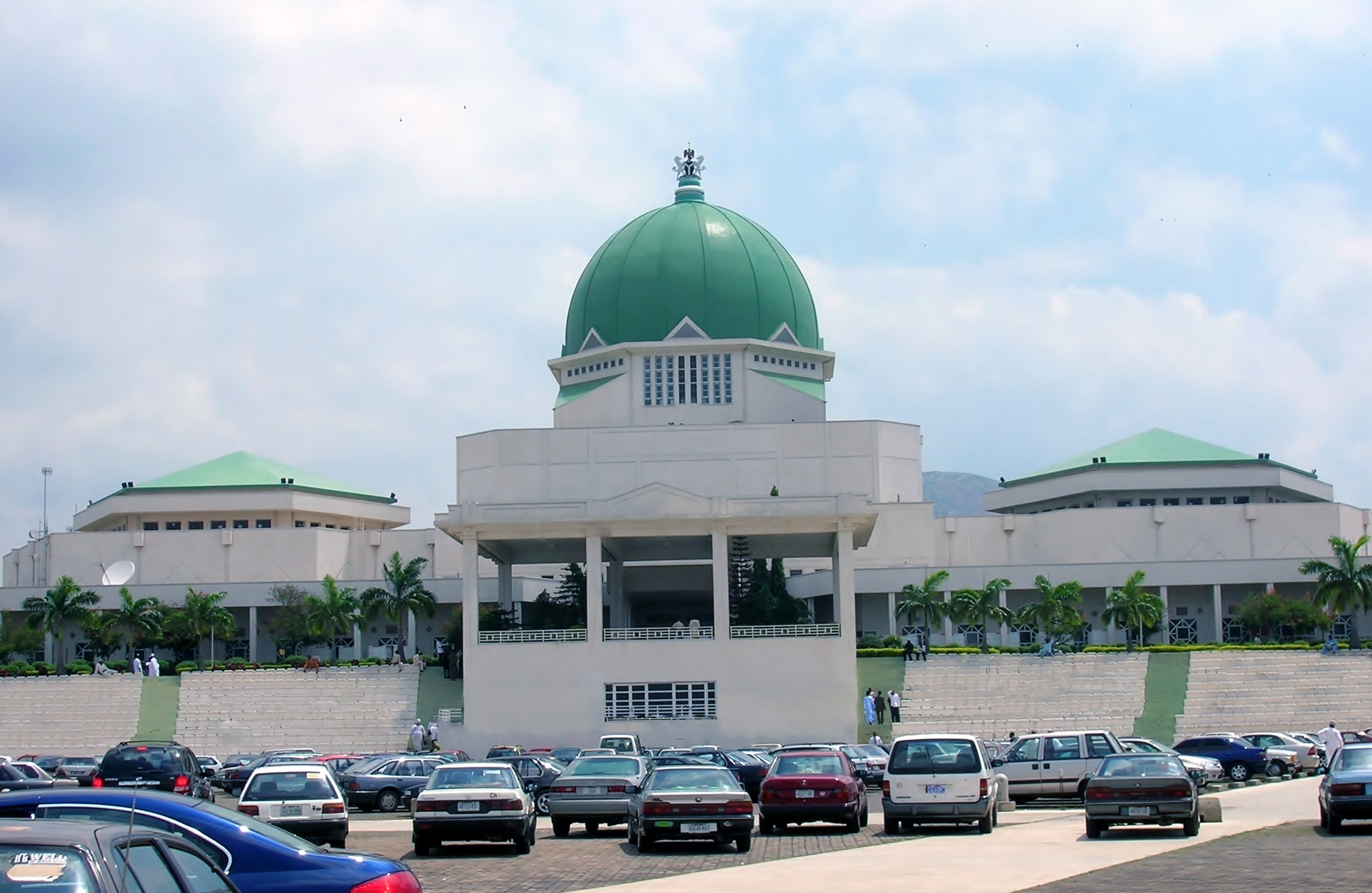
Scores of children and wives of military officers detained over an alleged coup plot yesterday staged a peaceful protest at the National Assembly, demanding a speedy trial and the release of the accused officials.
The protesters who gathered at the entrance of the National Assembly complex, moved in a slow procession while clutching placards with inscriptions such as “Don’t Kill Our Daddies,” “Detention Without Trial is Injustice,” and “Six Months of Torture: Enough Is Enough.”
Amid tears and trembling voices, the children appealed for justice and access to their detained fathers, many of whom they said they had not seen for months.
The appeal was made during a press briefing in Abuja attended by no fewer than 20 wives and several children of the detained officers, including a two-month-old baby.
The families were accompanied by human rights lawyer, Deji Adeyanju and activist Omoyele Sowore.
At the briefing, the families lamented that the officers had been held for over 160 days without trial or contact with their relatives, describing the situation as a violation of their fundamental rights.
Speaking on behalf of the families, Memuna Bashiru said the prolonged detention had thrown their households into uncertainty and emotional distress, noting that while allegations had been widely publicised, families remained in the dark about the fate of their loved ones.
The arrest of the indicted officers was first announced on October 4, 2025, by the then Director of Defense Information, Brigadier General Tukur Gusau, who disclosed that 16 officers were taken into custody for alleged breaches of military regulations and acts of indiscipline.
However, an interim investigation later suggested the existence of a clandestine network of officers, allegedly coordinated by a senior Army officer, which had begun preliminary planning for a coup.
According to the report, the alleged plot involved surveillance of key national assets, including the Presidential Villa, Armed Forces Complex, Niger Barracks in Abuja, and major international airports, with October 25, 2025, cited as the planned date for the operation.
Those reportedly in custody include Brig Gen M. A. Sadiq, Col M. A. Maaji, Lt Col S. Bappah, Lt Col A. A. Hayatu, Lt Col P. Dangnap, Lt Col M. Almakura, Maj A. J. Ibrahim, Maj M. M. Jiddah, Maj M. A. Usman, Maj D. Yusuf, Capt I. Bello, Capt A. A. Yusuf, Lt S. S. Felix, Lt Cdr D. B. Abdullahi, Sqn Ldr S. B. Adamu and Maj I. Dauda.
The alleged plot, according to findings, targeted senior government officials, including President Tinubu and Vice President Kashim Shettima.

In a statement issued yesterday, the party’s National Publicity Secretary, Mr Felix Morka, said the exercise would take place in all wards and designated centres nationwide.
He called on existing members to update their records, while encouraging new entrants to join the party through the digital platform.
“As the electronic membership registration exercise resumes in all wards and designated locations nationwide, we urge existing members to validate their membership while new members are encouraged to register and join the progressive family,” Mr Morka said.
According to him, eligibility for registration is limited to individuals aged 18 and above who possess a valid National Identification Number (NIN).
The party said the initiative is part of efforts to modernise its operations by transitioning to a digital database that would enhance record accuracy and accessibility.
Mr Morka noted that the e-registration would “digitise the party’s membership register, ensure the integrity of records, and enhance efficient access to membership data for planning and management decisions.”
He added that the move is also aimed at promoting internal democracy within the party and strengthening its commitment to democratic innovation.
The APC had previously introduced electronic registration as part of broader reforms to streamline its membership system and improve organisational efficiency.
-
 Editorial5 days ago
Domesticate FG’s Exit Benefit Scheme
-

 News5 days ago
RSU Unveils Five-Year Strategic Dev Plan …Calls For Collective Commitment To Institutional Excellence
-
 News5 days ago
DHQ Confirms Deaths Of Terrorists, Soldiers In Borno Attack
-

 News5 days ago
Tinubu Commissions Bayelsa Gas Turbine, Other Projects Today
-
Business5 days ago
Niger Delta Investment Summit Targets $5bn Inflows, 500,000 Jobs
-
Sports5 days ago
Full Draw For 2026 U-17 AFCON
-
Nation5 days ago
Rumuji Youth Leader Condemns Protest, Disowns Alleged Government Empowerment Claim
-

 Nation5 days ago
Haniel Jack Foundation Awards Five Rivers Indigenes Scholarship