
Business
SEC Stops Issuance Of Dividend Paper Warrants

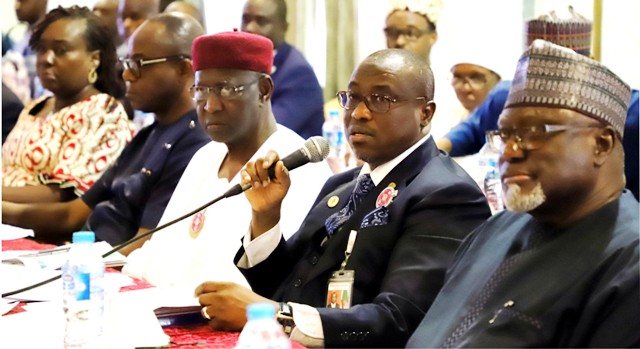
The Securities and Exchange Commission yesterday directed all registrars to stop the issuance of dividend paper warrants
A dividend warrant paper is a financial instrument in form of a cheque issued by a quoted company to its shareholders through which dividend is paid to them.
The Acting Director General, SEC, Dr. Abdul Zubair said this during a media briefing on the on-going capital market initiatives of the commission.
He said the stoppage of the issuance of dividend paper warrants would take effect from January 1 this year, adding that all paper warrants issued up till December 31, 2017 were still valid and should be honoured by banks.
He said, “In line with the approved rules of the Commission, all registrars have been directed to stop the issuance of dividend paper warrants with effect from January 1, 2018.
“For the avoidance of doubt, all paper dividend warrants issued up till December 31, 2017 are valid and should be honoured. Banks and registrars are accordingly implored to please note and adhere.”
He also said the commission, in a bid to encourage many investors to consolidate their multiple subscriptions into one account, has also extended the forbearance for multiple accounts till March 2018.
He added, “Investors that bought shares of the same company during public offers, using different names are allowed till 31st March, 2018 to continue to approach their stockbrokers or registrars to regularise their shareholdings, in line with SEC on customer identification.
“Thereafter, all shares not regularised shall be transferred, on trust, to the Capital Market Development Fund.”
On the issue of electronic dividend, Zubair said the free registration exercise for investors ended on December 31, 2017 in line with the stipulated deadline.
He said during the period of the free registration exercise, the Commission spent the sum of N315m to underwrite the mandate of 2.1 million shareholders.
He said henceforth, all investors that are yet to enroll under the e-dividend platform would now do so after the payment of a marginal cost of N150.
“Such investors should continue to approach their banks or registrars, as usual, to seamlessly mandate their bank accounts for the collection of their dividend electronically, including unclaimed dividend not exceeding 12 years of issue, as the N150 would not be demanded from them at the point of registration,” he added.






-

 Niger Delta17 hours ago
Diri Restates Stance On Lagos-Calabar Coastal Highway
-

 Niger Delta17 hours ago
C’River, NUJ Pay Tribute To Late Guardian Editor
-

 News18 hours ago
NDLEA Recovers Tons Of Illicit Drug Consignments In Nine States
-

 Opinion17 hours ago
Checking Voter Apathy In Nigeria’s Electoral Process
-

 Sports14 hours ago
Nigerian Trio Target Titles At PFL Africa Finals
-

 Education15 hours ago
FCE Yola Graduates 3,555 Teachers , Seeks Upgrade to University
-

 Politics14 hours ago
2027: DICKSON’S EX-ALLY VOWS TO WORK AGAINST NDC INTEREST IN BAYELSA
-

 Politics14 hours ago
2027: GROUP PLEDGES 40,000 SUPPORTERS FOR COALITION CANDIDATES IN RIVERS