
Featured
Restructure Nigeria Now -Oba Nnam Obi,Sen Shehu Sani

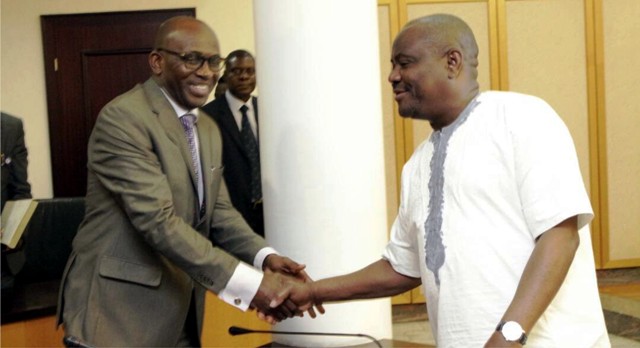
A former member of the defunct National Political Reform Conference and Pioneer President of the Traditional Rulers of Oil Mineral Producing Communities of Nigeria (TROMPCON), Sir Chukumela Nnam-Obi II, says it has become imperative for the Nigerian federation to be restructured for the sake of justice, equity and fairness to engender national growth and development.
In a statement in Port Harcourt yesterday, the two time Chairman of Rivers State Council of Traditional Rulers recalled how the reorganisations of 1967, 1976 and 1996 as well as the excision of the Midwest from the Western region in 1963 underscored the volatility of the internal territorial configuration of the Nigerian federation since the country’s independence in 1960.
He stated that of greater concern are the distributive pressures, sectional anxieties, partisan conflicts, constitutional controversies and institutional dilemma that are interwoven with the issue of’ state reorganisation in the country.
Dr Nnam-Obi II noted that though there are feelings of disenchantment among all tribes and ethnic nationalities in Nigeria, the “case of the mindless marginalization of the minority groups is worse”.
Listing the enormous contributions of the Ogba/Egbema/Ndoni Local Government Area (ONELGA) to the national economy, the monarch who is also the Oba (Eze Ogba) of Ogbaland regretted that the area has had only one ministerial appointment, two ambassadorial slots, no special adviser, no permanent secretary in the Federal Public Service, no Chairmanship of any Federal Government parastatal, no high ranking officer in the military, among others since the inception of the country.
Continued he: “We are not found even in the middle level employment of federal Ministries, Departments and Agencies (MDAS) just as we are denied jobs and facilities in financial institutions. Our people are slowly but steadily being suffocated out of meaningful existence”.
He said being the highest producer of crude oil and gas in Nigeria, ONELGA deserves a better treatment for sustaining the Nigerian nation and by extension every state and local government area in the country.
The Eze Ogba maintained that the panacea to the developmental challenges and the dilemma of injustice, sectional interest or regionalism, and other perversions on the part of the political class lies in making fundamental social, economic and institutional changes affecting the policies, practices, and the overall management of the federation.
These, according to him, include proper decentralisation and strengthening of democracy through the practice of true federalism, participatory democracy, community empowerment and participation in the exploration, exploitation and management of their natural resources and private sector involvement in national development.
He assured that the Niger Delta will continue to play key roles in the growth and development of the Nigerian nation in so far as there are concerted efforts to improve the environmental and living conditions of the region.
Meanwhile,the Senator representing Kaduna Central, Shehu Sani, has thrown his weight behind those calling for the restructuring of the country.
He said that the present situation called for every Nigerian to take the opportunity offered to restructure and redesign Nigeria.
“We should come out with a new master plan that will address the social, economic and political crises that gave birth to some of these agitations.
“We should also use the opportunity to reach out, to strengthen our unity and form a coalition against separatists, who come from the South-East and ultra-nationalist and anarchist who come from northern part of Nigeria.
“This is the time for each and every Nigerian to take position. Nigeria will not and should not be Soviet Union; Nigeria will not be and must not be Yugoslavia, Nigerian should and must not be Sudan.
“There are issues we need to address. this is an opportunity for us to restructure and redesign our country,” Sani said.
Sani, who spoke to newsmen in Kaduna, added, “the moral calling of all men of conscience is to champion the cause of unity and peace. And for people like me, this is my area of calling. Biafran agitators are persons who have forgotten the lessons of history, the country is bigger than individuals, we are one and we should remain one.
“The Igbo ethnic groups have since been able to build themselves economically, and present themselves as Nigerians. Igbos can clearly be found in all the nooks and crannies of this country, and I believe we should be able to separate the few, who want secession from millions, who live among us as Nigerians.
“Any southerner in the North is in the North because he believes in one Nigeria, if he does not believe in one Nigeria, he could have gone back to South-East. We should look at it this way, it is great that we are called giant of Africa because of our size, our population and because of the promise we hold for West Africa and the black race. Secession is not an option, those who want to divide this country should be condemned in totality, and I can understand the anger by some of our people in northern part of Nigeria, but we should not play to the gallery.
“The secessionists should not determine our collective decision or distract what our response should be. If they are for secession, we are for unity. We must protect Igbos that are living in the northern part of Nigeria because they are here to live with us; they are here because they believe in one Nigeria. But Nnamdi Kanu and his Biafran forces are doomed to fail because Nigeria will remain one.
“This is a time to challenge them, combat and nip them in the bud. It is the time in history of this country that we must speak out. I will also say a nation united by force is vulnerable, a nation united by justice is inseparable, that must be our goal.”
Speaking on the need for unity in Kaduna State, Sani explained, “I am opposed to the dropping of these 4,766 district heads, for the very fact that they are very strong instruments of peace and unity. I call on the governor to reverse his decision. There is enough money to pay them.
“In a situation whereby we have a government in Kaduna State that is issuing out contracts to advisers, members of the state House of Assembly and the people in the position of authority, which is contrary to ethics of civil service, in that sense, you know that it is very disgusting to accuse the Peoples Democratic Party, the Ramalan Yero, Makarfi, late Yakowa’s governments of corruption in Kaduna State.
“In Kaduna State, you have public office holders who submit companies to be awarded contracts. We should understand that it is not just about N3billion contract scam, but there are ethics issues concerned, a civil servant is not allowed to be a contractor.
“It is an act of nepotism to send your son, your wife, to do contract directly under your office, it is against the code of conduct, code of the Federal Republic of Nigeria for an elected public office holder to engage in contract, that is very wrong.
“The only persons who are immune to face investigation is the governor and deputy governor of all this persons involved. The governor of the state should follow it up and set up investigation panel to fish out the bad eggs within his government and deal with them.
“If Buhari can drop Babachir as Secretary to the Government of the Federation for giving his own company contracts, Governor Nasir el-Rufai should toe the line by sacking his aides that have exploited their positions in office, and have turned themselves into contractors,” he added.
Victor Tew



Rivers State, Sir Siminalayi Fubara, has assured members of the National Youth Service Corps (NYSC) of his administration’s commitment to supporting and strengthening the scheme in the State.
Fubara gave the assurance last Friday at the NYSC permanent orientation camp, Nonwa-Gbam, Tai Local Government Area in the State, during the swearing-in ceremony of 2026 Batch B Stream II orientation course.
Represented by the Permanent Secretary, Cabinet Bureau, Office of the Secretary to the State Government, Dr. Promise Oguzie, the governor said the State Government would remain intentional in providing the necessary support to improve the NYSC scheme and enhance the experiences of corps members deployed to the state.
He charged the corps members to be role models and quality nation-builders in their service to the good people of Rivers State in particular, and Nigeria at large.
“I charge you to be exemplary, dedicated and committed in all you do. Take full advantage of all the camp programmes and activities to enrich yourselves”, he said.
In his welcome address, the State Coordinator of NYSC in Rivers State, Mr. Moses Oleghe, urged corps members to see their deployment to Rivers State as a “veritable opportunity to make meaningful contribution to the growth of the State in particular and Nigeria at large.”
He further charged them to serve with all sense of “integrity, discipline, and the fear of God, especially when they will be engaged as INEC ad-hoc staff that will conduct the 2027 general elections.”
A total of 3,584 corps members composed of 1,421 males and 2,163 females were sworn in by the Chief Judge of Rivers State, who was represented by Justice Godspower Aguma.

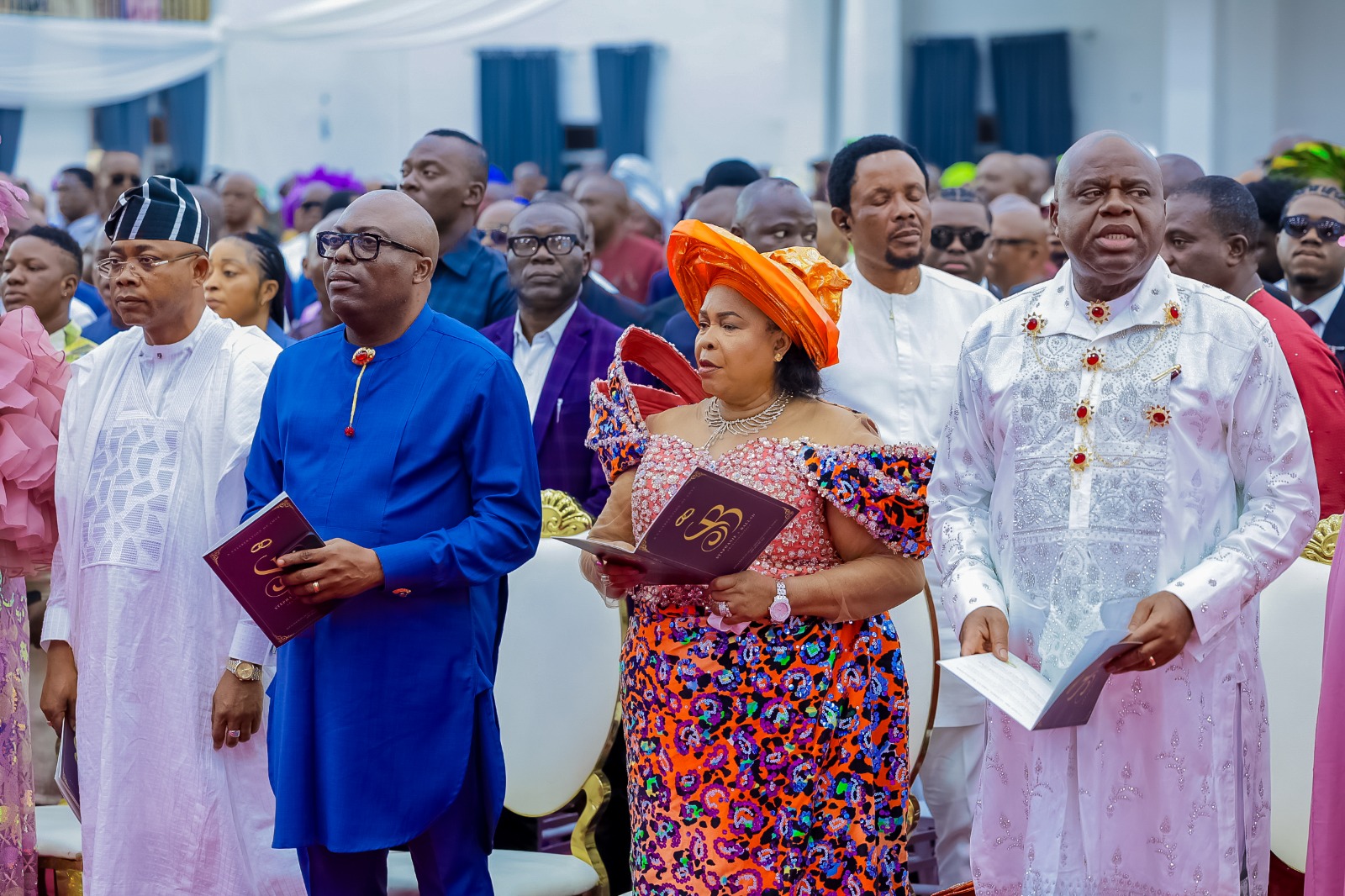
Governor of Rivers State, Sir Siminalayi Fubara, says Nigeria needs God-fearing leaders for the nation to move in the right direction and make meaningful progress.
The Governor stated this yesterday when he received in audience, the World President of the Seventh Day Adventist Church, Pastor Erton Kohler; his wife, Andriene Marques Kohler; daughter Mariana Marques Kohler and a retinue of ministers of the church at Government House, Port Harcourt.
Fubara who hailed the Seventh Day Adventist Church for its contributions to education and the grooming of future leaders in Nigeria, expressed delight that the Church had over the years, been investing in education at various levels and currently runs two universities in the country.
He commended the church for not only using its institutions to spread the gospel of Christianity but to groom future leaders for the country.
According to him, religion should not be just about defending one’s faith, but also making meaningful impact on the lives of the people.
He said that by floating these educational institutions, the church has demonstrated capacity to support Nigeria in the task of producing not only educated people but a breed of God-fearing leaders.
“Our country is where it is today because we lack the fear of God. If you have the fear of God, there should be a limit to what you can do because you understand the supremacy of God. But when God is not in your equation, you’ll go beyond the line and that is what has brought us to where we are today.
“So, I feel very happy that you are contributing to the development of our future leaders in this country. We need the right people being in the right place; prepared properly with good minds; that is what we need, not just in Nigeria but round the whole world.,” he said.
Governor Fubara further observed that the absence of God-fearing people in high places to take the right decisions that could impact positively on the society, has also given rise to other problems such as social inequality, poverty, corruption and criminality. According to him, Nigeria needs a system where the average parent could afford quality education for their children and a guarantee that upon graduation, the average child will have the capacity to compete favourably with anybody, anywhere in the world.
“If we have a situation where the little money that you’re being paid as wage can also afford you quality healthcare and after working at least for 15-20 years, you have a roof over your head, tell me why you should be involved in any kind of crime? At that point, you’ll feel secured and this attitude of insecurity about the future that leads to all the social vices we have today won’t be there,” he said.
Governor Fubara expressed appreciation to the delegation for the visit and for their prayers for Rivers State, assuring them of his continued support for their programmes in the state.
Leader of the delegation and World President of the Seventh Day Adventist Church, Pastor Erton Kohler said he was in Nigeria for a special conference of the church during which thousands of the church’s ministers will be undergoing an empowerment programme to further equip them for the task of herding their flocks and serving the society.
He expressed gratitude to the Governor for the warm reception accorded his entourage, saying the memory of the visit will linger in his mind for a lifetime.
Kohler disclosed that the Church has over twenty -four million (24,000,000) members and more than 182,000 places of worship, spread across 212 countries of the world.

The Rivers State House of Assembly has approved the 2026–2028 Medium Term Expenditure Framework (MTEF) submitted by Governor Siminalayi Fubara.
This reaffirms the lawmakers’ commitment to enacting laws and taking legislative actions geared towards the overall development of the State.
The Assembly gave the approval during its Second Legislative Sitting of the Fourth Session held last Friday.
Speaking on the MTEF document during plenary, the House Speaker, Rt. Hon. Martin Amaewhule, noted that by the provision of Section 10(1)(b) of the Rivers State Fiscal Responsibility Law No. 8 of 2010, the MTEF ought to have been laid before the House in September 2025.
Amaewhule explained that traditionally, the document is expected to be presented four months before the commencement of the next financial year and immediately after the expiration of every three-year fiscal cycle.
He, however, stated that in the interest of the State and its people, the House considered it necessary to deliberate on the document, describing it as a precursor to the 2026 Budget Estimates.
The Speaker expressed concern that the year had already progressed significantly before the presentation of the framework.
During deliberations on the document, members examined the assumptions and projections contained in the MTEF and observed that strict adherence to the outlined fiscal parameters would ultimately serve the interest of Rivers people.
The lawmakers maintained that effective implementation of the framework would promote prudent financial management and enhance developmental planning across the State.
Following the debate and positive consideration by members, the Speaker put the question to the House and members voted overwhelmingly in support of the approval of the MTEF.
Meanwhile, during the same sitting last Friday, the House also received a petition from the Chairman of Obio/Akpor Local Government Council, Dr. Gift Worlu.
The petition was presented by the member representing Obio/Akpor Constituency II, Hon. Emilia Amadi.
According to the petition, concerns were raised over an imminent security breach, threats to lives, destruction of property and alleged forceful takeover of property by some lawless persons within parts of the Local Government Area.
Presenting the petition before the House, Hon. Amadi appealed to the lawmakers to revisit the matter and take necessary steps aimed at safeguarding lives and property in the affected communities.
The House is expected to further deliberate on the petition and consider measures to address the concerns raised in order to sustain peace and security in the area.
King Onunwor
-

 News2 days ago
RSG Targets Nine Million Residents in Mosquito Net Distribution Campaign
-

 Oil & Energy2 days ago
Aiyedatiwa Signs New Electricity Bill
-

 Oil & Energy2 days ago
NLNG Commissions Research And Innovation Centre In RSU
-

 Maritime2 days ago
Marine Minister Commends President Tinubu On NPERA Bill Assent
-

 News2 days ago
KenPoly Holds Eight Convocations, August 29
-

 News2 days ago
RSG Begins Another Phase of Projects Commissioning Today
-

 News2 days ago
RMAFC Completes Revenue Sharing Review, Proposes New Pay
-

 Maritime2 days ago
NAGAFF Petitions IGP Over Alleged Maritime Police Harassment