
Politics
No Second Class Ethnic Groups In Rivers State – Walson Jack

One of the leading aspir
ants for the governorship of Rivers State under the platform of the PDP is Hon. Nimi Walson-Jack. Like his other colleagues, he and his supporters boycotted the Ward Congresses of November 1, 2014 across Rivers State for lack of transparency in the processes. In this interview, he shares his opinion on key political issues affecting the PDP in Rivers State.
PDP in Rivers seems to have lost its unity and oneness because of the choice of a flag bearer. What solution is in sight?
PDP has not lost its unity and oneness. Jostling for elective offices is part of the democratic culture. The insistence on rights by members of a political party is normal democratic practice. What is in issue here is the hijack of a political party by an interest group and the subversion of the internal democratic process provided for in the Constitution of the Party.
Events in Rivers State PDP remind us of the caution by George Washington who said political parties, “are likely in the course of time and things, to become potent engines, by which cunning, ambitious, and unprincipled men will be enabled to subvert the power of the people and to usurp for themselves the reins of government, destroying afterwards the very engines which have lifted them to unjust dominion.”
The first solution is the establishment of a caretaker committee that would ensure internal democracy and provide a level playing field for all aspirants. The second solution is the zoning of elective offices in the State as provided for in the Constitution of the Peoples Democratic Party.
Zoning is clearly leading to division in the PDP fold. Can there be no understanding outside zoning?
The PDP and indeed, all political parties have practised zoning and rotation in all States and for all elective offices since the return to democracy in 1999, in accordance with the 1999 Constitution of Nigeria and those of the various political parties. The issue is the denial and the subversion of the entrenched principle of zoning and rotation of political offices. So there can be no solution outside zoning and rotation and the enforcement of internal democracy in accordance with the constitution of the PDP.
About 16 of you, mostly from the riverine are against the party fielding an uplander, especially an Ikwerre man. The argument tends to run against the tenets of democracy. Is there any evidence to support that Rivers people or PDP agreed to discountenance democratic dictates for a rather gentlemanly agreement?
I have been a student, teacher and practitioner of democracy since 1996, trained by the government of the United States of America. Zoning, rotation and affirmative action are all part of the mechanism of social justice entrenched in the operations of a democratic society. The point being made here is that zoning is acceptable as the moral content of democracy, which emphasises the need for equity. This then means that one ethnic group or one interest group should not dominate the others.
So zoning and rotation are not a gentleman’s agreement. They are clearly provided for in both the Nigerian Constitution and the PDP Constitution. The leaders of likeminded political associations in Nigeria who founded the Peoples’ Democratic Party on 28th July 1998 resolved, among others, to conform to the principles of power shift and power sharing by rotating key political offices amongst the diverse peoples of the country. This resolve is captured in both the preamble and Section 7(2) (g) & (h) of the Constitution of the Peoples Democratic Party (PDP), wherein the Party commits to promoting national and the peaceful co-existence of the diverse communities of the country. The party also strives to promote an egalitarian society founded on freedom, equality and justice.
In order to attain these aims and objectives, the PDP gives itself a Constitutional obligation in S. 7 (3) (c) of its Constitution to adhere to the policy of the ROTATION AND ZONING OF PARTY AND PUBLIC ELECTIVE OFFICES in pursuance of the principle of equity, justice and fairness.
The PDP Constitutional obligation is in furtherance of the fundamental objectives and Directive Principles of State Policy enshrined in the 1999 Constitution of Nigeria (as amended), which states that the Federal Republic of Nigeria shall be a State based on the principles of democracy and social justice. The Nigerian Constitution declares in Section 14(4) that ‘the composition of a State …or any of the agencies of such government … shall be carried out in such manner as to recognize in the conduct of the affairs of the Government … the diversity of the people within its area of authority and the need to promote a sense of belonging and loyalty among all the peoples ….’
This fundamental position of the Peoples Democratic Party cannot be wished away, abrogated, suspended, or cancelled by any official or organ of the party except through an amendment to the Constitution of the Party. Only the National Convention has the powers to amend the Party’s Constitution. Incidentally, that power cannot be delegated. A State Executive Committee of the PDP has no power to take actions, or make statements contrary to the express provisions of the Party’s Constitution, especially one that requires a Constitutional amendment.
In the last 15 years, since the PDP won and formed the government in Rivers State, there has been absolute respect for the principles of rotation and zoning between ethnic groups, senatorial districts and the upland/riverine dichotomy. The election of Governors and their deputies have largely reflected an upland/riverine balance, and diversity in Senatorial districts and ethnic origin. Even the appointment to the offices of Speaker of the House of Assembly and other House Officers, Secretary to Government, and Head of Civil Service of the State have been a combination of merit, qualification, competence and an appreciation of the ethnic divide in the State.
Despite the attempts by some persons from one ethnic group to marginalise other ethnic groups, the political cohesion in the State continues to hold. Many years after the collapse of apartheid, the lesson of history is that no persons or ethnic groups were either born to be second class citizen, or hewers of wood and drawers of water. It has never been, and would never be in the Rivers State of our Commonwealth.
With the 16 of you against Nyesom Wike, PDP is not sure of success if they field Wike. Have you considered this consequence?
We cannot at this time predict how voters will react. Our interest here is to ensure that the flag-bearer of the Party emerges through the Constitutional process.
If you do not get your demand, what will you do next?
I have no escape plan. We know that our demand is right and we have confidence in the national leadership of the Party to do what is right. Our confidence comes from the fact that what we are asking for is a constitutional right, which and has been implemented in Ebonyi, Akwa Ibom and Adamawa States, amongst others.
Is there any atom of truth in the insinuation that some of you, the aspirants, are planted in PDP to destabilize it and cause it to lose to the APC?
First, I would speak for myself. I am a member of the PDP. I am not a member of the APC or any other Party. I was not planted in the PDP by APC or any other political party. As a matter of fact, I have associated with the PDP right from its inception.
I have never been a traitor in my life. Only moles know what moles look like.
Consultations for my Governorship bid commenced in January 2013, when there was no APC. So I could not have been a mole of a Party that was not in existence.
In any case, we should not lose sight of the fact that most of those who accuse others of being moles are themselves members of the ACN who left for the PDP just before the merger of the legacy Parties that formed it. So many of us believe that there is a grand plot to destroy the PDP by these men, who, themselves, are the very first to accuse others of being moles when issues of Party administration are brought to the fore.
Most of you have also been accused of doing nothing to help the party against its former leader but now want to be governors after Wike had single handedly bailed it from troubled waters. How true is this and why were you rather asleep when you should have worked?
The PDP was not in shackles so nobody can claim to have bailed it out of any troubled waters. To the extent that Wike, Obuah and Walter were in-charge when Governor Amaechi pulled out to join the APC, the PDP was not liberated from any person or group. The PDP was hijacked for a personal governorship ambition. Someone stirred-up the trouble and turned round to appear to be solving it and now demands the office of Governor as compensation for ‘liberating’ the PDP.
Despite the policy of exclusion of non GDI members from the State PDP, I have personally been involved in the retention and recruitment of new members for the PDP through these trying times. In the early days of the defections of PDP members to the APC, there is evidence that I made concerted appeals to defecting members to return to the PDP. That appeal contributed immensely to the avalanche of the return of defecting members to the PDP.
I have also contributed to building cohesion within the party. It is rather unfortunate that today support is defined only in terms of monetary contributions; that is the problem of materialism in society.
Your party hierarchy seems not to be paying heed to your prayers. What is happening here?
It is not true that the national leadership has ignored our complaints and concerns. The Party hierarchy is paying heed to our prayers. The establishment of the National Integration Committee for the South-South is an acknowledgment that our complaints are being addressed. Like the democrats we are, we have submitted our complaints through memoranda. We travelled all the way to Abuja to appear before the Committee. We are awaiting the outcome of the reconciliatory process.
It does not seem Wike is going to drop his ambition. Why can’t you all run against him or work in unison to ensure your own choice of candidate emerges?
Everyone has a right to have an ambition; whether to drop or pursue that ambition is a personal decision. But every ambition must be pursued within the confines of the provisions of the PDP Constitution.
It is not a case of our running againt any particular individual. It is about complying with the provisions of the Constitution of our Party and providing a level playing field for all. The aspirants are already united in fighting against injustice. However, when it comes to contesting the election, the aspirants will run based on their own vision and mission.
What’s your reaction to Saturday’s Ward congresses, which 16 of you reportedly boycotted?
The congresses were a sham. They did not hold in many Wards. The process was rigged. Cronies were appointed to officiate. First, we called for postponement and now we are calling for the cancellation of the Ward congresses in Rivers State. Our reasons being that the PDP in the State has been hijacked by an ethnic based organisation; the Administration of the PDP has been to the exclusion of certain members who are not members of the Grassroots Development Initiative (GDI); Non-registration of new Party members and revalidation of membership of old members who are opposed to the interests of a group in the State PDP; Illegal and unconstitutional removal of Ward, Local Government and State Party officers elected at the congress of 2012; the issue of zoning and rotation of elective offices; Refusal of the State Chapter of the Party to issue Delegates Nomination Forms to members other than those of the GDI; Refusal to receive / collect Nomination Forms obtained from the national Secretariat by some aspirants; and Chairman and Members of Congress Panel being loyalists, personal staff and associates of Nyesom Wike, while as Minister of State for Education.
Don’t you see the boycott as a likely end to your aspiration?
I have said that the Ward congresses were a sham. My aspiration cannot die because of an act of illegality. Nigerian political history is replete with illegal congresses that have been set aside or cancelled and proper ones conducted in which the true winners emerged.
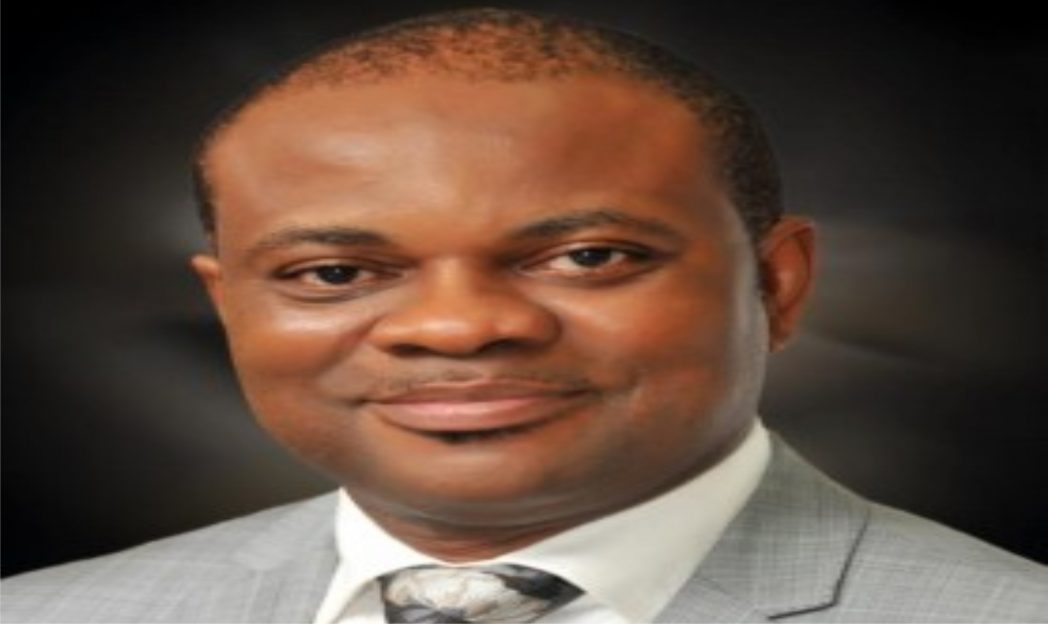
Nimi Walson-Jack



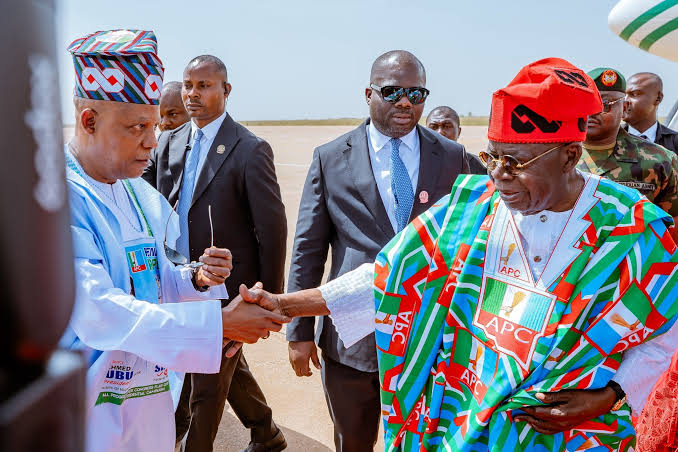
The campaign rally, held at the Kaduna Township Stadium, attracted Vice-President Kashim Shettima, APC governors, party leaders, federal and state lawmakers, political stakeholders and supporters from across the country.
The flag-off marks the beginning of the APC’s drive to secure a second presidential term for President Tinubu, with the party expected to promote its achievements, defend its economic reforms and outline its policy priorities under the proposed Renewed Hope 2.0 agenda.
Kaduna’s selection for the campaign launch underscores the strategic importance of the North-West, a region with a substantial voting population and considerable influence on presidential election outcomes.
The APC faces a significant challenge in Kaduna, where the Peoples Democratic Party’s presidential candidate, Alhaji Atiku Abubakar, defeated President Tinubu in the 2023 election. The rally therefore provides the ruling party an opportunity to strengthen its grassroots structures and regain electoral support in the state.
Addressing supporters, Vice-President Shettima appealed to Northern voters, highlighting President Tinubu’s political relationships with prominent Northern leaders, including Alhaji Abubakar, Mallam Nuhu Ribadu and the late President Muhammadu Buhari.
The Vice-President’s appeal reflects the APC’s determination to consolidate its support in the North as the party intensifies preparations for the presidential contest.
The Renewed Hope 2.0 agenda is expected to feature prominently in the campaign, providing a platform for President Tinubu to explain his administration’s economic policies and outline plans for another term.
However, the President’s record on economic reforms, rising living costs, petrol prices, employment, infrastructure and insecurity is expected to attract considerable scrutiny during the electioneering period.
-
 Education2 days ago
FCE Yola Graduates 3,555 Teachers , Seeks Upgrade to University
-

 Sports2 days ago
Nigerian Trio Target Titles At PFL Africa Finals
-
 Niger Delta2 days ago
Diri Restates Stance On Lagos-Calabar Coastal Highway
-
 Niger Delta2 days ago
C’River, NUJ Pay Tribute To Late Guardian Editor
-

 News2 days ago
NDLEA Recovers Tons Of Illicit Drug Consignments In Nine States
-
 Opinion2 days ago
Checking Voter Apathy In Nigeria’s Electoral Process
-
 Politics2 days ago
2027: DICKSON’S EX-ALLY VOWS TO WORK AGAINST NDC INTEREST IN BAYELSA
-
 Politics2 days ago
2027: GROUP PLEDGES 40,000 SUPPORTERS FOR COALITION CANDIDATES IN RIVERS