
Featured
Ibori Loot: Who Should Benefit?

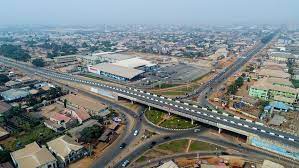
There have been mixed reactions as the British government resolved last week to return to Nigeria the sum of $4.2 million (N2.2 billion) funds allegedly recovered from the account of friends and families of former Delta State Governor, Chief James Ibori. The issue being debated around the towns and cities of the country is whether the recovered fund should be used by the Federal Government to facilitate projects or given to Delta State Government, since it was originally allocated to the oil-rich state.
A similar incident is that of late military ruler, General Sanni Abacha’s Swiss refund of $320 million.
There is this argument that since the recovered fund was from the governor of a particular state, then the alleged looted fund belonged to the state since he was the custodian of the state.But another group said that since the fund was released from the Federal Government, then the alleged crime was committed against the Federal Government, moreover the federal is instrumental to the recovery of the looted funds from the UK Government, the Federal Government should benefit.
It is surprising to hear how funds are being carted away from public purse perhaps not directly from those who are in charge of the funds but by their cronies through dubious means. Yet when an ordinary person goes for transactions which involve little funds in the banks, he will be mandated to present regulatory identity cards. Why do the financial institutions note query the source of huge sums deposited in their custody?
Even in the foreign banks where those money are deposited, they don’t scrutinise the account holders bearing in mind that such funds cannot belong to an individual. These are heavy financial crimes involving millions, billions and even trillions that should be used to improve citizens’ lives and then only a few will be in possession depriving others from partaking of it.
Whether the Federal Government or Delta State benefits from the refund, when utilised maximally, must be for the good of all Nigerians.These are not the only cases of looted funds to be recovered, but there are so many that are not announced publicly. Citizens should always speak out on issues like these that bother on people’s welfare.
It is unfortunate that funds that should be used in developing projects that have direct bearing on the masses as well as job creation will be diverted by individuals through any means. The most disturbing aspect of it is that it is the commonwealth of all Nigerians.
Senior Special Assistant (SSA) to the President on Public Affairs, Ajuri Ngelale, had in an interview with journalists, confirmed that the fund would be used to facilitate the 2nd Niger Bridge, Lagos-Ibadan Expressway and the Kano projects.
He said it was a federal crime that has to do with federal law since the money was taken outside the country and advised that people should not be sentimental about it.
A motivational speaker, Pastor Ikenna Ogbuehi, said it is a crime committed against the Federal Government and should be remitted to the federal purse.
Uchenna Chidiadi, a pharmacist, said it will be inappropriate to use the money which was appropriated to a state for the generality of Nigerians. While referring to former Military Head of State, late Abacha’s recovered loot, he said that was a federal fund.
He said that can be shared the normal way federal government allocation is done and advised that the Ibori fund should be returned to Delta State since it would have been raised from internally generated revenue (IGR) or the state’s allocation.
According to a legal practitioner, Efe Odide,the crime committed is a federal crime because the money was taken out of the country and that is why the money was remitted to the federal authority, although it was taken from a state.
A health safety officer, Uduak Udom, said persons who commit such crimes should be arrested and punished, regardless of political affiliation and sentiments, to deter those currently serving from looting public fund. He advised the current Delta State Government to seek some percentage of the fund from the Federal Government.
A social analyst, Mike Obi, said persons who commit such crimes should be set free because they are the products of the society.He referred to the Biblical quotation of training up of a child in the way he should go and claimed that if the child were to be comfortable from the beginning, he would not steal.
An evangelist, Peter Paul, said it is an oppression for federal government to use Delta State money to develop other parts of the country. He insisted that there may be more loot recoveries after this and advised the Federal Government to tackle this particular issue well so that reasonable impact can be made. According to him, citizens are more divided now than before to the extent that when national issues come up, people handle them from the political, ethnic and religious angles.
In the views of Ndiwem Onyedi, a businessman, people must realise that elected office or appointment should be seen as opportunity to serve and not to enrich themselves.He pointed out that nowadays, students abandon schooling for elective positions and added that even those who specialise in various professions have abandoned such for politics.
Onyedi said, as a younger person, he only saw retired public servants contesting even as councillors.
A teacher, Nathan Edu, said since the former Delta State Governor, James Ibori, had served prison term in the United Kingdom, he does not deserve any other punishment.
A businessman, James Okoro, emphasised that nobody was above the law and so should be punished if found wanting. He regretted that when a common man commits any crime the punishment comes swiftly.
Njideka Nathaniel asked: “How can a person who is above 60 years be stealing government money? You don’t sit down and ask yourself, how many years remaining for me to eat up this money? They loot the money and keep it for their children”.
A car dealer, Elijah Ejike, said that those who involve in that kind of fraud should be served capital punishment because, according to him, they are the reason why so many people are impoverished and dying of starvation.
In the words of a financial expert, Nonso Nnamani, looted funds should be returned to the rightful owners. As he put it, this is the fund that was originally allocated to Delta State by a bill passed by the National Assembly in the budget that is a law. The money should be returned to the state.
He made reference to a report that the money would be used to fund three federal projects – Niger Bridge, Lagos-Ibadan Expressway and Kano projects and advised that Delta State should not be denied the money.
According to him, “Why are you sending the money to other zones. A precedence has been set. When Bayelsa lost their money, it was returned to them. When Plateau lost theirs, it was returned to them. Why is this an exception?”
An enterpreneur, Patricia Bassey, said the money should be returned to the state from where it was stolen. Before now according to her, the Federal Government must have got other funds to facilitate those projects. She wondered what would have happened if the Ibori loot wasn’t recovered. Wouldn’t they have carried out projects?
Her words: “Anyone found looting public fund should be prosecuted. It will serve as a deterrent to others, they will get to know that if you steal from your country even after serving a jail term outside your country, when you get back home, you will be punished. Some persons are thinking that they can engage in crime and get away with it, it is unacceptable. Let the law take its course while the offender faces the jail term.”
Perhaps why this is creating so much argument is that it is crossing borders, it is an international issue which concerns the federal government.
For those who are defrauding business partners, siphoning public funds, pensioners’ funds, among others, it is the commonwealth of the nation that is being stolen.
People should be law-abiding in their dealings as regards business and as public officers. A situation where funds meant for public use will be diverted to private purposes should be discouraged.
Interestingly, the money is going to benefit people who live in the region, especially Niger Bridge and its environs. Sometimes looters would always apologise and return part or the entire loot while in office. As a matter of fact, perpetrators of such acts should be punished because when these funds are removed, the citizens are deprived of the benefits. These funds are so huge that they can be used to provide social amenities.

Featured
JUNE 12: Democracy Remains Nigeria’s Strongest Path To Unity, Progress, Says Fubara ….Extols Abiola, Wife


Governor of Rivers State, Sir Siminalayi Fubara, has reaffirmed that democracy remains the most effective system of government for Nigeria, given the country’s rich diversity of ethnic, religious, and cultural identities.
In a goodwill message to Nigerians on the occasion of the 2026 Democracy Day celebration, Governor Fubara said June 12 represents far more than a historic date; as it embodies the enduring struggle, sacrifice, and collective aspiration of Nigerians for freedom, justice, and representative governance.
The Governor extended warm felicitations to Nigerians at home and in the Diaspora, paying tribute to the heroes and heroines of the democratic struggle, particularly Chief MKO Abiola, his wife, Kudirat Abiola, and countless others whose courage and sacrifices helped secure the democratic freedoms Nigerians enjoy today.
According to him, “June 12 is a reminder of the price paid for the democracy we enjoy today. The sacrifices made by Chief MKO Abiola, Kudirat Abiola, and many other patriots who laid the foundation for the democratic journey we continue to enjoy today. Their commitment to the principle that power must ultimately reside with the people remains a source of inspiration for every generation of Nigerians.”
Governor Fubara noted that thirty-three years after the historic June 12, 1993 election, Nigeria’s democratic experiment has continued to evolve despite challenges and setbacks.
“Our democratic journey has not been without difficulties, but the resilience of our institutions and the determination of our people have kept the nation moving forward. The ability to express differing opinions, engage in constructive debate, and peacefully choose leaders through the ballot remains one of the greatest achievements of our nation,” he said.
Governor Fubara stressed that democracy provides the best framework for managing Nigeria’s diversity and transforming it into a source of national strength.
“Nigeria’s diversity should never be seen as a weakness. Properly harnessed, it is our greatest asset. Democracy offers us the opportunity to build consensus, promote inclusion, strengthen national unity, and create the conditions for sustainable development and shared prosperity,” he said.
Governor Fubara commended President Bola Ahmed Tinubu, for his commitment to the Renewed Hope Agenda and ongoing efforts aimed at economic revitalization, strengthening security, and deepening democratic institutions across the country.
He reiterated the readiness of Rivers State to continue partnering with the Federal Government in advancing policies and programmes that improve the lives of citizens through infrastructure development, job creation, enhanced security, quality education, healthcare delivery, and good governance.
The Governor further called on Nigerians, regardless of political affiliation, ethnic background, or religious belief, to use the occasion of Democracy Day to renew their commitment to the Nigerian project and the ideals that underpin democratic governance.
“Democracy must not be viewed merely as a periodic electoral exercise. It must be reflected in our daily commitment to accountability, transparency, tolerance, justice, respect for the rule of law, and responsible leadership. As citizens and leaders, we all share a collective responsibility to strengthen our democracy and build a nation that future generations will be proud to inherit,” he said.
Governor Fubara expressed optimism about Nigeria’s future, urging citizens to remain united, hopeful, and committed to the values of peace, dialogue, and national development.
“Together, we can build a stronger, more inclusive, and more prosperous Nigeria where every citizen has the opportunity to thrive and contribute meaningfully to national progress,” he said.

Governor of Rivers State, Sir Siminalayi Fubara, has reaffirmed the unwavering commitment of his administration to peace, unity, security, and inclusive development as Rivers State marked its 59th anniversary, last Wednesday.
In a goodwill message issued on Wednesday to commemorate the anniversary, Governor Fubara stated that despite the challenges faced over the years, the people of Rivers State have continued to demonstrate resilience, strength, and an enduring spirit of unity that has sustained the state since its creation.
The Governor noted that the strong bond of brotherhood among the various ethnic nationalities of the state, including the Ijaw, Ikwerre, Ogoni, Etche, Ekpeye, Andoni, Kalabari, and others, remains one of Rivers State’s greatest strengths and a critical foundation for peace, stability, and progress.
He further observed that Rivers State has remained a major driver of Nigeria’s economy for decades, not only because of its abundant oil and gas resources, but also because of the exceptional contributions of its people across diverse sectors including academia, jurisprudence, business, entertainment, public service, and sports.
Governor Fubara assured the people that his administration will continue to prioritize policies and programmes that promote peace, protect lives and property, and expand development across all parts of the state. He emphasized that governance must be people centered and impactful, with equal attention given to every Local Government Area of the state.
The Governor also paid tribute to the elders and founding leaders of the state for preserving the spirit of unity and coexistence over the years, while urging the youths to remain hopeful, responsible, and actively committed to building a greater Rivers State through innovation, hard work, and patriotism.
He equally acknowledged the invaluable role of women in strengthening families, communities, and society, describing them as indispensable partners in the continued growth and stability of the state.
Governor Fubara called on all Rivers people to use the occasion of the anniversary as a moment of reflection and renewed commitment to peaceful coexistence, mutual respect, dialogue, and collective progress, stressing that the unity and future of Rivers State must always rise above personal interests and political differences.
Rivers State was created on May 27, 1967, by General Yakubu Gowon.

-
Nation5 days ago
Asarama Kingdom Condemns Gruesome Murder of A Commercial Vehicle Driver
-
Rivers5 days ago
Monarch Raises Alarm Over Defamatory Politics … Urges For Unity In Ogoni
-
News4 days ago
Nigeria, Ethiopia Seal Agreement To Transfer 100 Nigerian Prisoners
-
News4 days ago
Nigeria No Longer Safe For Drug Cartels – Marwa
-
News4 days ago
Xenophobia: 268 Nigerian Returnees Arrive In Lagos From S’Africa
-

 News4 days ago
FG Declares Today Public Holiday To Mark Democracy Day
-
Women4 days ago
Nigerian Women And Dividends Of Democracy
-
Business4 days ago
FG Approves $1 Bn AFCFTA Credit Facility For Nigerian Exporters