
Featured
Guber Election Petition: We Expected Victory At Supreme Court -Wike …Says Petition, Exercise In Futility …As Awara Concedes Defeat

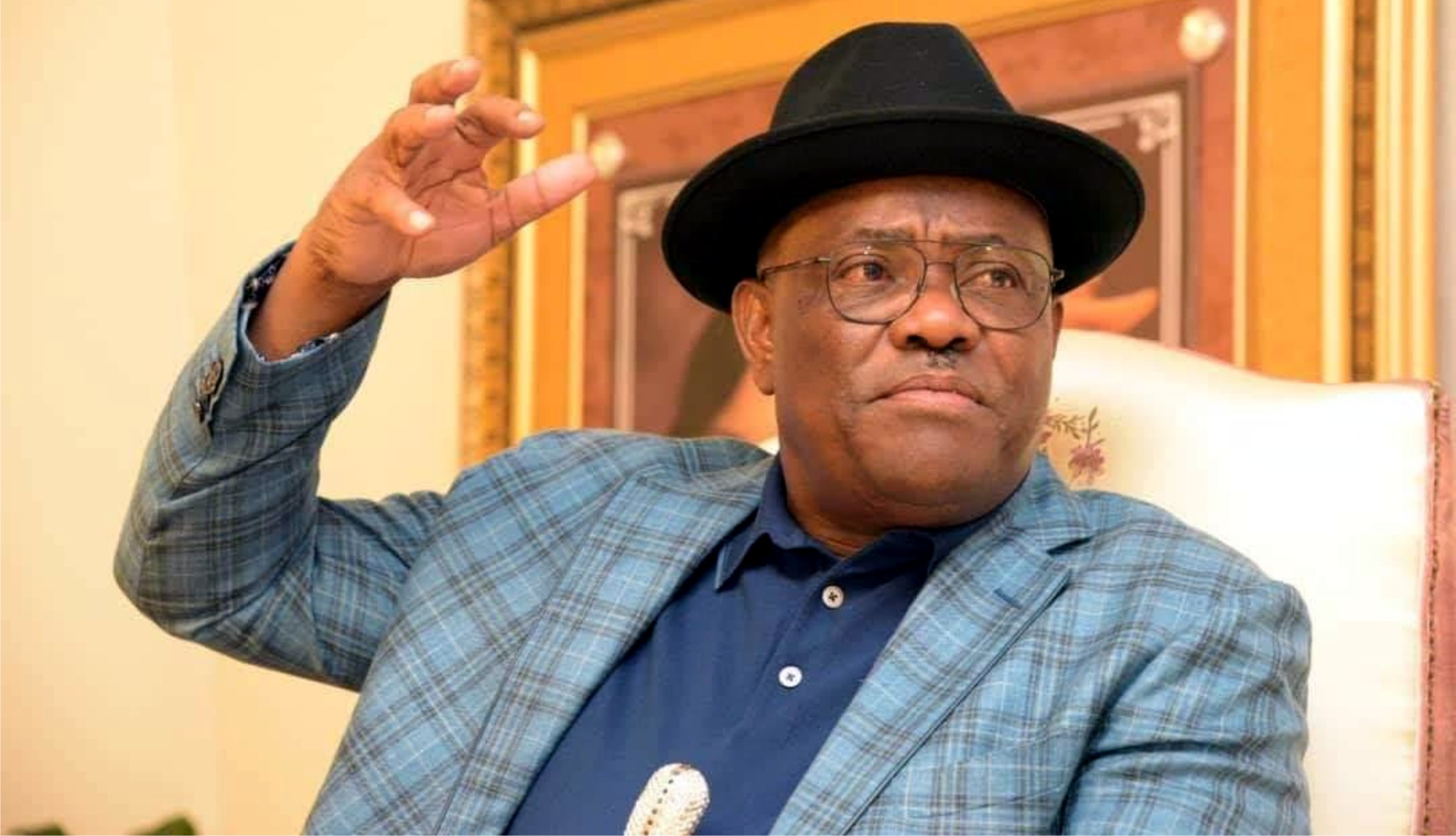
The Rivers State Governor, Chief Nyesom Wike has emphasised that he expected the confirmation of his re-election by the Supreme Court because the governorship candidate of the African Action Congress (AAC), Engineer Biokpomabo Awara couldn’t have won an election he did not contest.
In an interview at the weekend, the governor said that from the very beginning, there was no issue because the AAC candidate posed no problem, since he was unknown to Rivers people.
Wike said he only got to know of Biokpomabo Awara about two days to the election, because such a person never existed in the political lexicon of Rivers State.
The governor said: “I expected the confirmation because the law is clear. The man who is challenging us never contested any election. So, he couldn’t have won. It is so painful, but what do you do?
“It is part of life, if he really ran election with us; one can say there could be a problem. A man that I never knew till a few days to the election, how would it have been that the man won the election? So, I expected that the court would do the right thing, which they did”, he stressed.
Wike expressed confidence in the capacity of the Judiciary to always act in the best interest of the nation’s democracy.
He said even though nobody expects perfection, the Judiciary has continued to perform her constitutional responsibilities.
The governor said: “We give God all the glory. Some of us have confidence in the Judiciary, even though you can’t expect perfection. That does not mean that they have not done well. So, I am happy what happened on Friday at the Supreme Court.
“We give God all the glory that all through, He has been on our side for us to continue to do what we are supposed to do for the people of Rivers State. God has given us the opportunity to deliver more dividends of democracy according to the will of Rivers people”, he stated.
Wike said his training as a lawyer has helped him to promote the rule of law at all times, adding that the rule of law was the cornerstone of good governance.
He said: “You don’t talk of governance but you talk of rule of law. When people talk about governance, we talk about accountability. You can’t talk about all these things without adhering to the tenets of the rule of law. So, my training as a lawyer gives me the background that I must follow due process. What the law says, you must adhere, whether it is against you or not.
“The rule of law is very much the backbone of getting to the root of democracy. So, as a lawyer, I feel happy that it has helped me, moulded me, and as my backbone to say, look you have to do what is right.”
Wike said the relative security being enjoyed in the state was a product of investment of the state government and the contributions of all stakeholders.
“It has to do with collective efforts of every stakeholder: the security agencies and the people. If the people are not with you, it will be difficult for you to try to curb insecurity. If the security agencies are not willing to fight insecurity, it will be difficult because one, I am not a security personnel. Mine is to give the necessary logistics to see that they curb these miscreants to the point that they will know that here is not comfortable for them, and this is what the security agencies are doing.
“After the 2019 general election, the security agencies in the state have been working with us, the synergy is so tight, that is why we are achieving what we achieving. It is not a one-man show”, he said.
It would be recalled that the Supreme Court had upheld the victory of Rivers State Governor, Chief Nyesom Wike, in the 2019 gubernatorial election.
The apex court, in a judgment delivered by a panel of three Justices, last Friday, upheld Wike’s appeal against the decision of the Court of Appeal which reinstated the petition of the candidate of the African Action Congress (AAC), Engineer Biokpomabo Awara.
The Rivers State Governorship Election Petitions Tribunal had earlier in October dismissed the petition of AAC candidate, Awara, declaring Wike winner of the poll, which was later challenged by the AAC candidate at the Court of Appeal.
On Friday, the Supreme Court, in a landmark judgment by three Justices led by Justice Inyang Okoro, ruled that hearing of an abandoned petition amounted to no other purpose than academic, adding that the hearing was an exercise in futility.
Earlier, the apex court also upheld Wike’s appeal against Awara with appeal number SC1111/2019 over a judgment by the lower court dismissing the appeal by the governor over the appointment of counsel to Awara, to file court processes.
Speaking after the judgment, Counsel to Wike, Barrister Ferdinand Orbih, SAN, noted that the two judgments were landmark pronouncements by the Supreme Court.
“Across all the tribunals in the country, the issue has always been what is the relationship between the power of the tribunal to dismiss the petition that has been abandoned vis-a-vis the constitutional provision that says that interlocutory matters bothering on jurisdiction must wait until the final judgment.
“That is the issue that was resolved by the Supreme Court today that when an issue is abandoned, you don’t have to wait until the final judgment before the tribunal can pronounce on it that you are dismissing this petition because it has been abandoned,” he said.
Orbih noted that by the two judgments, the matter filed by the AAC in Rivers State has received its final nail on its coffin, its dead and buried forever.
Reacting to the judgment, Counsel to the AAC, Barrister Henry Bello, disclosed that the two judgments delivered by the Supreme Court cover six appeals namely, SC1111/2019 covers SC1113/2019 and SC1121/2019, adding that the appeal for SC1112/2019 covers SC1114/2019 and SC1122/2019, respectively.
Bello said “the first judgment has to do with abuse of process. At the tribunal in Port Harcourt, there was appeal against a decision of the tribunal at the same time, the same thing in the appeal was also sought to be rectified by the tribunal in another application.
“Our contention at the tribunal was that it was an abuse of court process, and that it should be dismissed. The tribunal agreed with us and dismissed that. They went on appeal to the Court of Appeal in appeal number CA/PH/EPT/375/2019, and the Court of Appeal disagreed with the tribunal that it was not an abuse of court process.
“Today, the Supreme Court has upheld our position that it was an abuse of court process. And moving forward, there was a decision of the Supreme Court on 15th of October in appeal number 1120 where the Supreme Court upheld the appointment of my humble self as counsel to AAC.”
He noted that based on the judgment, counsel to Awara, Festus could not file processes on his behalf anymore, but, however, noted that the counsel defiantly continued to file processes even after he had taken over the conduct of proceedings pursuant to the business of Order 9 Rule 35 of the Federal High Court Rules which is applicable by virtue of paragraph 52 of the First Schedule to the Electoral Act.
“And so, we contended that it was wrong. So, the Supreme Court has by this judgement now set aside all those processes filed on my behalf, and held that those processes were filed in abuse of court process.
“The final judgment in 1112 applies to two other related appeals. In that one, because of the judgment in 1111 that processes filed on my behalf were null and void, one of such processes was application for issuance of the hearing notice filed again on my behalf without my instruction, consent or authority.
“The Supreme Court has today agreed that those processes were null and void, and there was no application for issuance of pre-hearing notice. Now, that has to do with the purpose of paragraph 18 of the First Schedule of the Electoral Act, which says within seven days of completing of pleadings, you must apply for pre-hearing notice to be issued.
“Then, paragraph 18 (4) says if you don’t apply, then your petition is abandoned, and it will be dismissed. Now, Section 285 of the Constitution says you cannot raise an objection to the competence of an election petition.
“So, the contention of Awara is because of Section 285, paragraph 18 is inconsistent with the provision of Section 285 of the Constitution. Supreme Court has told us today that both of them are consistent; they are procedural; one does not offend the other.
“If paragraph 18 had offended Section 285, then, the right given to the tribunal to dismiss a petition that is not properly prosecuted would not have been there. But the Supreme Court has today held that you must be diligent in the prosecution of your election petition. If you are not diligent, the tribunal has the right to dismiss it.
“This is the first judgment in respect of that, and is a serious precedence that will assist us in all election petitions in the country moving forward,” Henry noted.
However, the Governorship candidate of the African Action Congress (AAC), in the March 9 governorship election in Rivers State, Engr. Biokpomabo Awara, has accepted the Supreme Court judgment which upheld the victory of Governor Nyesom Wike, and finally confirmed him as the duly elected governor of Rivers State.
Awara reacted to the apex court’s verdict in a statement he issued and signed personally, last Saturday, in which he conceded defeat, congratulated the governor, and prayed for the peace and progress of the state.
He claimed that, “Some party men with unholy and unpatriotic desires clothed with tainted hands overtly worked for Governor Nyesom Wike at the tribunal and all through the appeal process”.
Awara then expressed his indebtedness to Transportation Minister, Chibuike Amaechi and his APC family in Rivers State that adopted him as their governorship candidate in the 2019 general election.
“From the depth of my heart, I say thank you a million times to Rt. Hon. Chibuike Rotimi Amaechi and his APC family in Rivers State as silver and gold, I don’t have to repay them for what they have done to me. It is my humble prayers that God should guide and guard their footsteps unto eternity,” Awara prayed.
The statement titled, “Thank You For Your Support And Prayers”, reads: “It is with joy and happiness that I write to say, ‘thank you’ Rivers people for your doggedness and patient as we together fought through this battle to save Rivers State.
“Just yesterday, the Supreme Court upheld the victory of Governor Nyesom Wike and upturned our collective efforts to liberate Rivers State… But God knows the best.
“The Supreme Court, in their wisdom, set aside the judgement of the Court of Appeal and technically upheld Governor Wike’s victory. Indeed, it’s on good record that my party (AAC) was infiltrated with greed and corruption, and thus, some party men with unholy and unpatriotic desires clothed with tainted hands overtly worked for Governor Wike at the tribunal and all through the appeal process. In the light of the foregoing, the petition I filed was withdrawn.
“Though we lost, but my happiness is that our fight was a good fight of faith….
“Let me also use this opportunity to thank all my party members who stood by me during these trying times and were able to overcome all temptations despite the hunger in the land. But God willing, we fought till the end.
“I wish to encourage you all to continue to be law abiding and pray to God to give us a better and another opportunity to make Rivers people proud again.
“Once more I say thank you all.”




Featured
JUNE 12: Democracy Remains Nigeria’s Strongest Path To Unity, Progress, Says Fubara ….Extols Abiola, Wife


Governor of Rivers State, Sir Siminalayi Fubara, has reaffirmed that democracy remains the most effective system of government for Nigeria, given the country’s rich diversity of ethnic, religious, and cultural identities.
In a goodwill message to Nigerians on the occasion of the 2026 Democracy Day celebration, Governor Fubara said June 12 represents far more than a historic date; as it embodies the enduring struggle, sacrifice, and collective aspiration of Nigerians for freedom, justice, and representative governance.
The Governor extended warm felicitations to Nigerians at home and in the Diaspora, paying tribute to the heroes and heroines of the democratic struggle, particularly Chief MKO Abiola, his wife, Kudirat Abiola, and countless others whose courage and sacrifices helped secure the democratic freedoms Nigerians enjoy today.
According to him, “June 12 is a reminder of the price paid for the democracy we enjoy today. The sacrifices made by Chief MKO Abiola, Kudirat Abiola, and many other patriots who laid the foundation for the democratic journey we continue to enjoy today. Their commitment to the principle that power must ultimately reside with the people remains a source of inspiration for every generation of Nigerians.”
Governor Fubara noted that thirty-three years after the historic June 12, 1993 election, Nigeria’s democratic experiment has continued to evolve despite challenges and setbacks.
“Our democratic journey has not been without difficulties, but the resilience of our institutions and the determination of our people have kept the nation moving forward. The ability to express differing opinions, engage in constructive debate, and peacefully choose leaders through the ballot remains one of the greatest achievements of our nation,” he said.
Governor Fubara stressed that democracy provides the best framework for managing Nigeria’s diversity and transforming it into a source of national strength.
“Nigeria’s diversity should never be seen as a weakness. Properly harnessed, it is our greatest asset. Democracy offers us the opportunity to build consensus, promote inclusion, strengthen national unity, and create the conditions for sustainable development and shared prosperity,” he said.
Governor Fubara commended President Bola Ahmed Tinubu, for his commitment to the Renewed Hope Agenda and ongoing efforts aimed at economic revitalization, strengthening security, and deepening democratic institutions across the country.
He reiterated the readiness of Rivers State to continue partnering with the Federal Government in advancing policies and programmes that improve the lives of citizens through infrastructure development, job creation, enhanced security, quality education, healthcare delivery, and good governance.
The Governor further called on Nigerians, regardless of political affiliation, ethnic background, or religious belief, to use the occasion of Democracy Day to renew their commitment to the Nigerian project and the ideals that underpin democratic governance.
“Democracy must not be viewed merely as a periodic electoral exercise. It must be reflected in our daily commitment to accountability, transparency, tolerance, justice, respect for the rule of law, and responsible leadership. As citizens and leaders, we all share a collective responsibility to strengthen our democracy and build a nation that future generations will be proud to inherit,” he said.
Governor Fubara expressed optimism about Nigeria’s future, urging citizens to remain united, hopeful, and committed to the values of peace, dialogue, and national development.
“Together, we can build a stronger, more inclusive, and more prosperous Nigeria where every citizen has the opportunity to thrive and contribute meaningfully to national progress,” he said.

Governor of Rivers State, Sir Siminalayi Fubara, has reaffirmed the unwavering commitment of his administration to peace, unity, security, and inclusive development as Rivers State marked its 59th anniversary, last Wednesday.
In a goodwill message issued on Wednesday to commemorate the anniversary, Governor Fubara stated that despite the challenges faced over the years, the people of Rivers State have continued to demonstrate resilience, strength, and an enduring spirit of unity that has sustained the state since its creation.
The Governor noted that the strong bond of brotherhood among the various ethnic nationalities of the state, including the Ijaw, Ikwerre, Ogoni, Etche, Ekpeye, Andoni, Kalabari, and others, remains one of Rivers State’s greatest strengths and a critical foundation for peace, stability, and progress.
He further observed that Rivers State has remained a major driver of Nigeria’s economy for decades, not only because of its abundant oil and gas resources, but also because of the exceptional contributions of its people across diverse sectors including academia, jurisprudence, business, entertainment, public service, and sports.
Governor Fubara assured the people that his administration will continue to prioritize policies and programmes that promote peace, protect lives and property, and expand development across all parts of the state. He emphasized that governance must be people centered and impactful, with equal attention given to every Local Government Area of the state.
The Governor also paid tribute to the elders and founding leaders of the state for preserving the spirit of unity and coexistence over the years, while urging the youths to remain hopeful, responsible, and actively committed to building a greater Rivers State through innovation, hard work, and patriotism.
He equally acknowledged the invaluable role of women in strengthening families, communities, and society, describing them as indispensable partners in the continued growth and stability of the state.
Governor Fubara called on all Rivers people to use the occasion of the anniversary as a moment of reflection and renewed commitment to peaceful coexistence, mutual respect, dialogue, and collective progress, stressing that the unity and future of Rivers State must always rise above personal interests and political differences.
Rivers State was created on May 27, 1967, by General Yakubu Gowon.

-
Nation5 days ago
Asarama Kingdom Condemns Gruesome Murder of A Commercial Vehicle Driver
-
Rivers5 days ago
Monarch Raises Alarm Over Defamatory Politics … Urges For Unity In Ogoni
-
News5 days ago
Nigeria, Ethiopia Seal Agreement To Transfer 100 Nigerian Prisoners
-
News5 days ago
Nigeria No Longer Safe For Drug Cartels – Marwa
-
News5 days ago
Xenophobia: 268 Nigerian Returnees Arrive In Lagos From S’Africa
-

 News5 days ago
FG Declares Today Public Holiday To Mark Democracy Day
-
Women5 days ago
Nigerian Women And Dividends Of Democracy
-
Business5 days ago
FG Approves $1 Bn AFCFTA Credit Facility For Nigerian Exporters