
Editorial
Forestalling Ondo Herbal Drink Tragedy

The recent public health disaster in Ondo State, which claimed 48 lives and left 182 people severely ill, is a gloomy reminder of the dangers posed by unregulated beverages. According to NAFDAC Director-General, Prof. Mojisola Adeyeye, the victims consumed contaminated local alcoholic and herbal drinks in communities in Odigbo Local Government Area. The drinks contained high levels of industrial methanol, while 11 of 15 samples also contained Cannabis indica. The substances were linked to organ failure, neurological deterioration, and permanent blindness. The tragedy should serve as a warning to the entire country.
The incident underscores the wider problem of unregulated and adulterated drinks across Nigeria. From roadside kiosks and motor parks to informal markets, unverified alcoholic and herbal products are readily available, often marketed as cheap alternatives or medicines. The World Health Organisation estimates that about 25 per cent of alcohol consumed globally is unrecorded. Such products operate outside formal regulatory control and may expose consumers to toxic substances and serious health risks.
The problem is compounded by deliberate evasion of regulatory requirements. Products under NAFDAC’s mandate must be registered and subjected to regulatory checks before manufacture, distribution, or sale. Yet some producers ignore these requirements for profit, while others falsify NAFDAC registration numbers and markings and use them on substandard products. Such practices deceive consumers and undermine public confidence in the regulatory system.
The reported arrest of 15 suspects linked to the Ondo distribution network is an important first step. Those found responsible should be prosecuted and, where convicted, appropriately punished. However, enforcement must go beyond responding to tragedies. NAFDAC should strengthen preventive measures through regular post-market surveillance, random testing at transit points, and intelligence-led inspections of informal production centres.
Consumers also have a responsibility to exercise caution. Economic hardship, high inflation, and declining purchasing power have created opportunities for unscrupulous producers to market cheaper but potentially dangerous products. Consumers should, therefore, avoid unlabelled drinks, suspiciously cheap products, and goods sold through unverified outlets. Public education and consumer vigilance can help deny unscrupulous traders the opportunity to put profit before human life.
The danger extends beyond alcoholic and herbal drinks to medicines. Counterfeit and substandard medicines have entered both formal and informal supply chains, causing treatment failure, poisoning, and avoidable deaths. The WHO estimates that at least one in 10 medicines in low and middle-income countries is substandard or falsified, although the prevalence varies. Ensuring the safety and authenticity of medicines is essential to protecting lives and maintaining confidence in the healthcare system.
Food safety is another concern. Poor practices in food handling, processing, and preservation expose consumers to serious health risks, particularly when commercial interests override safety. Concerns over the improper use of chemical agents such as calcium carbide to accelerate the ripening of fruits further demonstrate the need for stronger monitoring throughout the food-supply chain.
These challenges expose weaknesses in Nigeria’s regulatory system and reinforce the need to strengthen it. NAFDAC faces the enormous task of monitoring products across all 774 local government areas. Meeting this challenge requires greater operational capacity, reduced bureaucratic delays, and modern systems capable of tracking regulated products from production to the point of sale.
Inadequate personnel, laboratory facilities, equipment, and logistics remain major obstacles. NAFDAC field offices, especially those serving remote communities, need modern testing equipment, reliable screening tools, and adequate transportation. The Federal Government should provide sustained funding to recruit specialised personnel, upgrade laboratories, and deploy technologies capable of rapidly detecting dangerous substances such as methanol.
Preventing the spread of adulterated products also requires coordinated action by federal and state governments. The Federal Ministry of Health, NAFDAC, and other relevant agencies should intensify operations to remove unregistered alcoholic and herbal products from motor parks, transit centres, and informal markets. The National Assembly should review existing laws and strengthen penalties for deliberately producing, falsifying, or distributing toxic and unregistered food, beverages, and medicines.
NAFDAC should expand its digital verification systems to enable consumers to confirm product registration before purchase. State ministries of health, local government councils, and community institutions should intensify grassroots education on the dangers of unlabelled drinks, unsafe food practices, and counterfeit medicines. Traditional, religious, and community leaders can also help identify and report illegal production and distribution activities.
The Ondo tragedy must not become another statistic that is quickly forgotten. The loss of 48 lives and the permanent blindness suffered by some survivors are devastating and unacceptable. Nigeria must respond by strengthening regulatory institutions, providing adequate funding, enforcing the law, and educating the public. A sustained, coordinated effort is essential to protect the nation’s food, beverage, and medicine supply chains and prevent another tragedy caused by products that should never have reached the market.


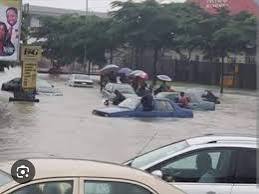
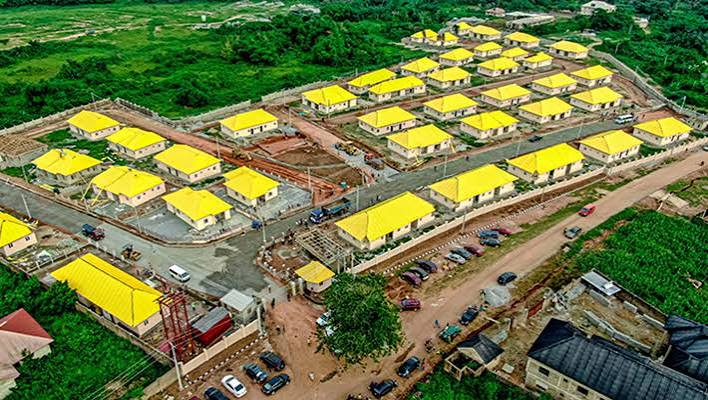
While Cross River has chosen the path of moral suasion, the situation in Rivers State, particularly in its capital Port Harcourt, presents a far more acute and pressing emergency that demands more than pleas. The Cross River experience merely provides a mirror for a deeper, more entrenched malady here. If accommodation has become expensive in Calabar, in Port Harcourt it has become prohibitive, and indeed, for many low and middle-income families, unattainable.
In Port Harcourt and Obio/Akpor today, securing decent shelter has become an ordeal defined by exorbitant charges. A modest one-bedroom flat now commands as much as one million naira per annum in many areas, while a finished apartment with Plaster of Paris ceiling can attract between N1.5 million and N1.7 million. These figures are not isolated; they represent the new normal in parts of Diobu, Rumuokoro, Peter Odili Road, and other densely populated axes. The consequence is a relentless displacement of tenants who have occupied premises for years but can no longer meet arbitrary increases.
The weight of this crisis is felt most keenly by the ordinary citizen. The average civil servant, whose minimum wage remains grossly inadequate against market realities, finds it increasingly impossible to reside within the city he serves. In Bonny, the situation is even more outrageous, driven by the presence of oil and gas operations, where rents rival those of highbrow districts in Lagos and Abuja. Families are being frustrated out of their homes, livelihoods are being disrupted, and workers are forced to relocate to distant peripheries, with attendant costs in time and transportation. It is a burden too heavy to bear.
This local agony must be situated within a national catastrophe. Nigeria faces an estimated housing deficit of 28 million units, a figure consistently cited by the Federal Ministry of Housing and Urban Development (2023) and corroborated by the World Bank (2023). The National Bureau of Statistics (NBS) reported in its Consumer Price Index of late 2024 that housing, water, electricity, gas and other fuels contributed significantly to headline inflation, which peaked at 34.19 per cent in June 2024. When shelter, a fundamental human need, becomes this unaffordable, the social contract begins to fray.
Affordability indices further illuminate the hardship. According to the NBS Nigerian Labour Force Survey 2023, over 63 per cent of Nigerians are classified as multidimensionally poor, spending more than 60 per cent of their income on housing and food alone. For a civil servant on Grade Level 08 in Rivers State earning less than N150,000 monthly, a rent of N1 million per annum consumes over 55 per cent of annual income, far above the 30 per cent threshold recommended by UN-Habitat (2022) for housing affordability. This is not merely a market fluctuation; it is a systemic impoverishment.
We cannot feign ignorance of the role of government inaction in compounding this deficit. For a protracted period, the Rivers State Government has largely abandoned the housing sector as a social responsibility. The low-cost housing estates at Aggrey Road and other locations built under former Governor Peter Odili provided modest relief. His successor, Chibuike Rotimi Amaechi, initiated some developments, notably the Golf Estate and other schemes, but many remained incomplete or inaccessible to the poor. Under Nyesom Wike, there was little demonstrable interest in mass housing for low-income earners, with priority accorded to roads, flyovers and other infrastructure.
Regrettably, the housing projects undertaken by the present administration appear not to be tailored for the average citizen or the indigent. They are priced beyond the reach of the very people most in need of intervention. When government housing is targeted at the affluent, it ceases to be a social programme and becomes a commercial venture, leaving the chasm between supply and demand to be exploited by speculative landlords and agents.
Part of that exploitation is fuelled by the spiralling cost of building materials. Data from the NBS Construction Price Index (2024) and the Cement Manufacturers Association of Nigeria (2024) show that the price of a 50kg bag of cement rose from about N4,500 in early 2023 to between N12,000 and N15, 000 by 2026, an increase of several per cent. Sharp sand, granite, reinforcement bars and agency fees have followed a similar trajectory. The Central Bank of Nigeria (2024) also linked this to foreign exchange volatility and high logistics costs. When construction becomes this expensive, only high-rent properties can guarantee returns, thus perpetuating the cycle.
It is for this reason that moral appeals alone, such as that issued in Cross River, will not suffice in Rivers. What is imperative is legislative intervention. Ebonyi State has provided a worthy precedent, where government fixed rental ceilings for different categories of accommodation and drastically reduced agency and legal fees to two per cent, with enforcement mechanisms. Rivers State should act likewise, enacting a tenancy law that curtails arbitrary rent hikes, standardises agency charges, and provides protection against capricious eviction. Shelter cannot be left entirely to market forces.
The long-term solution lies in massive public investment in housing. The state government must return to direct construction of low-cost and medium-income estates in Port Harcourt, Obio/Akpor, Eleme, and Bonny, as a deliberate strategy to flood the market and force down rental values. Concurrently, it must collaborate with the Federal Government and private sector to subsidise building materials, streamline land titling, and regulate the activities of housing agents. The burden on the average individual is already too heavy. To restore dignity, stability and productivity to our people, government must treat housing not as a privilege, but as a right.

Regrettably, the reports of assaults on the offices of some political parties in Rivers State are utterly condemnable and portend a dangerous precedent. Law enforcement agencies must not tolerate such criminality under any guise. Such brigandage does not represent the democratic ethos the nation professes to uphold. It is imperative that all political gladiators in the state, including the Minister of the Federal Capital Territory (FCT), Chief Nyesom Wike, sheath their swords and allow rival organisations to canvass freely. The police and other security operatives must protect persons and property without partisan colouration.
This descent is reminiscent of the 2023 experience in Rivers, which must not be allowed to recur. With campaigns for the 2023 elections about to commence fully, the state government, through Executive Order 21, prohibited the use of public schools for campaigns without approval from the Ministry of Education and demanded that applicants deposit a non-refundable N5 million as caution fees. Even when opposition figures opted for non-government facilities, they were obstructed or attacked. A presidential candidate was effectively prevented from campaigning in the state. Such conduct is unacceptable in a constitutional democracy and should not be repeated this year.
The practice of denying political opponents access to public facilities or inhibiting them from erecting billboards and posters to reach their supporters is patently undemocratic and should be discouraged. Democracy, by definition, entails free and unhindered participation. When state apparatus is deployed to frustrate legitimate political expression, the essence of pluralism is defeated. Public assets belong to all citizens, not to the ruling party of the day, and must be made available on equitable terms.
This intolerance is not peculiar to Rivers. In Lagos State, for instance, the campaign banners of a presidential candidate were reportedly removed on the orders of the authorities without cogent justification. Similarly, reports from the North indicate that the posters and banners of President Bola Tinubu are being destroyed, while campaign vehicles are vandalised. This pattern of mutual destruction was foreshadowed by the violence that marred the last general elections. Before the 2023 polls, the Independent National Electoral Commission (INEC) reported attacks on at least 53 of its offices nationwide, while the European Union Election Observation Mission stated that at least 21 persons were killed in electoral violence during the 18 March governorship and State Assembly elections. The nation cannot persist in this trajectory and expect progress.
Nigeria deserves elections that conform to global standards, where outcomes reflect the genuine will of the electorate and inspire confidence. We hold the view that matters should be conducted properly and transparently. In the forthcoming polls, voters must be allowed to cast their ballots for candidates of their choice without intimidation, inducement or coercion, while politicians must be free to visit any part of the federation to solicit support. Credibility is not conferred by declaration; it is earned through impartial conduct.
Already, there are ominous signs of orchestrated violence emanating from the pronouncements of some political actors. Preparatory to the Osun State gubernatorial election, a senator allegedly enjoined his supporters to kill Accord Party opponents. What disciplinary or legal action was taken against him? Likewise, an area council chairman in Abuja reportedly advised those unwilling to support the ruling party to relocate from his council area to another location. Although he later claimed he was quoted out of context, many Nigerians perceived the clarification as an afterthought. Such inflammatory utterances heat up the polity and must be denounced.
In a similar vein, a commissioner in Borno State was reported to have boasted that anyone who failed to support the ruling party would be flogged. The said official has not been called to order. INEC should not remain mute in the face of these provocative declarations. The Electoral Act 2022 criminalises undue influence, intimidation, and incitement. The Electoral Commission, working in concert with the Department of State Services (DSS) and the Nigeria Police Force (NPF), should arrest and prosecute offenders to serve as a deterrent. Silence by regulatory and security agencies emboldens impunity.
The recent prohibition of Mr Peter Obi from reaching his destination in Benue State, allegedly on official instruction, smacks of political motivation and should not have been allowed to stand by security operatives. Nigerians are weary of such antics. It appears that those in positions of authority are deploying the powers of the state to achieve selfish partisan ends. Freedom of movement and association are constitutionally guaranteed and cannot be abridged to settle political scores.
Some state governments are already introducing unreasonable conditions and enacting laws manifestly designed to frustrate the opposition. From exorbitant fees to cumbersome permits for venues and outdoor advertising, the objective is to stifle competition. This should not be allowed to continue. What citizens require from candidates is not administrative hurdles against rivals, but a clear articulation of what they will do to improve livelihoods, secure lives, and restore public trust if elected.
INEC must ensure that politicians adhere strictly to the campaign regulations contained in the Constitution, the Electoral Act, and its own guidelines. The Commission should halt this craziness before it spirals out of control. The electoral umpire must live up to its billing, no matter whose ox is gored. By demonstrating firmness, impartiality, and consistency in the application of sanctions, Nigerians would be persuaded that the body is serious and genuinely independent.
Civil Society Organisations (CSOs) must complement the efforts of the electoral umpire and security agencies in maintaining sanity during the current electioneering period. Election observation, civic education, early warning, and advocacy for peace are indispensable. What all these developments indicate is that a segment of the political class has not learnt its lessons. It is a shame that crude, anachronistic politics is still being practised in this age. The 2027 elections must be violence-free, issue-based, and credible.
-

 Education4 days ago
*RSU Champions Urban Greening to Tackle Heat, Air Pollution in Port Harcourt*
-
 Oil & Energy4 days ago
Nigeria Needs $410bn Additional Investment To Achieve Net-Zero Pathway —– Presidency
-
 Maritime4 days ago
NPERA Task On Port Regulation To Unlock Nigeria’s Fisheries, Blue Economy
-
 Politics4 days ago
APC SUPPORT GROUP WOMEN STAGE RALLY FOR TINUBU, OTHERS IN RIVERS
-

 Business4 days ago
NIGERIA AT 66: FROM REFORM TO THE REAL TEST OF DEVELOPMENT
-

 News4 days ago
NBA Decries Absence Of Substantive Attorney-General In Rivers
-
 Politics4 days ago
Shettima Credits Tinubu With Saving Nigeria From Economic Collapse
-
 Education4 days ago
Staff, Students Protest Alleged Attempt To Arrest – Vc