
Editorial
Flooding in Rivers: Decisive Action Now!



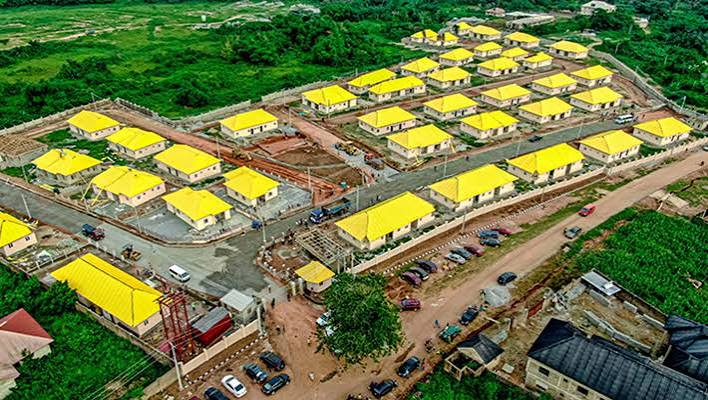
While Cross River has chosen the path of moral suasion, the situation in Rivers State, particularly in its capital Port Harcourt, presents a far more acute and pressing emergency that demands more than pleas. The Cross River experience merely provides a mirror for a deeper, more entrenched malady here. If accommodation has become expensive in Calabar, in Port Harcourt it has become prohibitive, and indeed, for many low and middle-income families, unattainable.
In Port Harcourt and Obio/Akpor today, securing decent shelter has become an ordeal defined by exorbitant charges. A modest one-bedroom flat now commands as much as one million naira per annum in many areas, while a finished apartment with Plaster of Paris ceiling can attract between N1.5 million and N1.7 million. These figures are not isolated; they represent the new normal in parts of Diobu, Rumuokoro, Peter Odili Road, and other densely populated axes. The consequence is a relentless displacement of tenants who have occupied premises for years but can no longer meet arbitrary increases.
The weight of this crisis is felt most keenly by the ordinary citizen. The average civil servant, whose minimum wage remains grossly inadequate against market realities, finds it increasingly impossible to reside within the city he serves. In Bonny, the situation is even more outrageous, driven by the presence of oil and gas operations, where rents rival those of highbrow districts in Lagos and Abuja. Families are being frustrated out of their homes, livelihoods are being disrupted, and workers are forced to relocate to distant peripheries, with attendant costs in time and transportation. It is a burden too heavy to bear.
This local agony must be situated within a national catastrophe. Nigeria faces an estimated housing deficit of 28 million units, a figure consistently cited by the Federal Ministry of Housing and Urban Development (2023) and corroborated by the World Bank (2023). The National Bureau of Statistics (NBS) reported in its Consumer Price Index of late 2024 that housing, water, electricity, gas and other fuels contributed significantly to headline inflation, which peaked at 34.19 per cent in June 2024. When shelter, a fundamental human need, becomes this unaffordable, the social contract begins to fray.
Affordability indices further illuminate the hardship. According to the NBS Nigerian Labour Force Survey 2023, over 63 per cent of Nigerians are classified as multidimensionally poor, spending more than 60 per cent of their income on housing and food alone. For a civil servant on Grade Level 08 in Rivers State earning less than N150,000 monthly, a rent of N1 million per annum consumes over 55 per cent of annual income, far above the 30 per cent threshold recommended by UN-Habitat (2022) for housing affordability. This is not merely a market fluctuation; it is a systemic impoverishment.
We cannot feign ignorance of the role of government inaction in compounding this deficit. For a protracted period, the Rivers State Government has largely abandoned the housing sector as a social responsibility. The low-cost housing estates at Aggrey Road and other locations built under former Governor Peter Odili provided modest relief. His successor, Chibuike Rotimi Amaechi, initiated some developments, notably the Golf Estate and other schemes, but many remained incomplete or inaccessible to the poor. Under Nyesom Wike, there was little demonstrable interest in mass housing for low-income earners, with priority accorded to roads, flyovers and other infrastructure.
Regrettably, the housing projects undertaken by the present administration appear not to be tailored for the average citizen or the indigent. They are priced beyond the reach of the very people most in need of intervention. When government housing is targeted at the affluent, it ceases to be a social programme and becomes a commercial venture, leaving the chasm between supply and demand to be exploited by speculative landlords and agents.
Part of that exploitation is fuelled by the spiralling cost of building materials. Data from the NBS Construction Price Index (2024) and the Cement Manufacturers Association of Nigeria (2024) show that the price of a 50kg bag of cement rose from about N4,500 in early 2023 to between N12,000 and N15, 000 by 2026, an increase of several per cent. Sharp sand, granite, reinforcement bars and agency fees have followed a similar trajectory. The Central Bank of Nigeria (2024) also linked this to foreign exchange volatility and high logistics costs. When construction becomes this expensive, only high-rent properties can guarantee returns, thus perpetuating the cycle.
It is for this reason that moral appeals alone, such as that issued in Cross River, will not suffice in Rivers. What is imperative is legislative intervention. Ebonyi State has provided a worthy precedent, where government fixed rental ceilings for different categories of accommodation and drastically reduced agency and legal fees to two per cent, with enforcement mechanisms. Rivers State should act likewise, enacting a tenancy law that curtails arbitrary rent hikes, standardises agency charges, and provides protection against capricious eviction. Shelter cannot be left entirely to market forces.
The long-term solution lies in massive public investment in housing. The state government must return to direct construction of low-cost and medium-income estates in Port Harcourt, Obio/Akpor, Eleme, and Bonny, as a deliberate strategy to flood the market and force down rental values. Concurrently, it must collaborate with the Federal Government and private sector to subsidise building materials, streamline land titling, and regulate the activities of housing agents. The burden on the average individual is already too heavy. To restore dignity, stability and productivity to our people, government must treat housing not as a privilege, but as a right.

Regrettably, the reports of assaults on the offices of some political parties in Rivers State are utterly condemnable and portend a dangerous precedent. Law enforcement agencies must not tolerate such criminality under any guise. Such brigandage does not represent the democratic ethos the nation professes to uphold. It is imperative that all political gladiators in the state, including the Minister of the Federal Capital Territory (FCT), Chief Nyesom Wike, sheath their swords and allow rival organisations to canvass freely. The police and other security operatives must protect persons and property without partisan colouration.
This descent is reminiscent of the 2023 experience in Rivers, which must not be allowed to recur. With campaigns for the 2023 elections about to commence fully, the state government, through Executive Order 21, prohibited the use of public schools for campaigns without approval from the Ministry of Education and demanded that applicants deposit a non-refundable N5 million as caution fees. Even when opposition figures opted for non-government facilities, they were obstructed or attacked. A presidential candidate was effectively prevented from campaigning in the state. Such conduct is unacceptable in a constitutional democracy and should not be repeated this year.
The practice of denying political opponents access to public facilities or inhibiting them from erecting billboards and posters to reach their supporters is patently undemocratic and should be discouraged. Democracy, by definition, entails free and unhindered participation. When state apparatus is deployed to frustrate legitimate political expression, the essence of pluralism is defeated. Public assets belong to all citizens, not to the ruling party of the day, and must be made available on equitable terms.
This intolerance is not peculiar to Rivers. In Lagos State, for instance, the campaign banners of a presidential candidate were reportedly removed on the orders of the authorities without cogent justification. Similarly, reports from the North indicate that the posters and banners of President Bola Tinubu are being destroyed, while campaign vehicles are vandalised. This pattern of mutual destruction was foreshadowed by the violence that marred the last general elections. Before the 2023 polls, the Independent National Electoral Commission (INEC) reported attacks on at least 53 of its offices nationwide, while the European Union Election Observation Mission stated that at least 21 persons were killed in electoral violence during the 18 March governorship and State Assembly elections. The nation cannot persist in this trajectory and expect progress.
Nigeria deserves elections that conform to global standards, where outcomes reflect the genuine will of the electorate and inspire confidence. We hold the view that matters should be conducted properly and transparently. In the forthcoming polls, voters must be allowed to cast their ballots for candidates of their choice without intimidation, inducement or coercion, while politicians must be free to visit any part of the federation to solicit support. Credibility is not conferred by declaration; it is earned through impartial conduct.
Already, there are ominous signs of orchestrated violence emanating from the pronouncements of some political actors. Preparatory to the Osun State gubernatorial election, a senator allegedly enjoined his supporters to kill Accord Party opponents. What disciplinary or legal action was taken against him? Likewise, an area council chairman in Abuja reportedly advised those unwilling to support the ruling party to relocate from his council area to another location. Although he later claimed he was quoted out of context, many Nigerians perceived the clarification as an afterthought. Such inflammatory utterances heat up the polity and must be denounced.
In a similar vein, a commissioner in Borno State was reported to have boasted that anyone who failed to support the ruling party would be flogged. The said official has not been called to order. INEC should not remain mute in the face of these provocative declarations. The Electoral Act 2022 criminalises undue influence, intimidation, and incitement. The Electoral Commission, working in concert with the Department of State Services (DSS) and the Nigeria Police Force (NPF), should arrest and prosecute offenders to serve as a deterrent. Silence by regulatory and security agencies emboldens impunity.
The recent prohibition of Mr Peter Obi from reaching his destination in Benue State, allegedly on official instruction, smacks of political motivation and should not have been allowed to stand by security operatives. Nigerians are weary of such antics. It appears that those in positions of authority are deploying the powers of the state to achieve selfish partisan ends. Freedom of movement and association are constitutionally guaranteed and cannot be abridged to settle political scores.
Some state governments are already introducing unreasonable conditions and enacting laws manifestly designed to frustrate the opposition. From exorbitant fees to cumbersome permits for venues and outdoor advertising, the objective is to stifle competition. This should not be allowed to continue. What citizens require from candidates is not administrative hurdles against rivals, but a clear articulation of what they will do to improve livelihoods, secure lives, and restore public trust if elected.
INEC must ensure that politicians adhere strictly to the campaign regulations contained in the Constitution, the Electoral Act, and its own guidelines. The Commission should halt this craziness before it spirals out of control. The electoral umpire must live up to its billing, no matter whose ox is gored. By demonstrating firmness, impartiality, and consistency in the application of sanctions, Nigerians would be persuaded that the body is serious and genuinely independent.
Civil Society Organisations (CSOs) must complement the efforts of the electoral umpire and security agencies in maintaining sanity during the current electioneering period. Election observation, civic education, early warning, and advocacy for peace are indispensable. What all these developments indicate is that a segment of the political class has not learnt its lessons. It is a shame that crude, anachronistic politics is still being practised in this age. The 2027 elections must be violence-free, issue-based, and credible.
Over the past few weeks, Ogoniland has once again assumed considerable prominence in national discourse. What is unfolding goes far beyond a mere announcement that crude oil production is set to resume. The region finds itself at the confluence of three competing imperatives: the drive to revive extraction, the unfinished task of environmental remediation, and an increasingly acrimonious dispute over who genuinely represents the Ogoni people. It inevitably recalls the discredited practices of the past — prioritising extraction while relegating environmental restoration and community welfare to the periphery.
At the heart of this renewed initiative is Oil Mining Lease 11, which has remained dormant since 1993. The Federal Government directed the National Security Adviser to collaborate with the Nigerian National Petroleum Company Limited (NNPCL) and Ogoni stakeholders towards the resumption of operations. OML 11 covers 3,095.55 square kilometres, sufficiently expansive to be subdivided into nine or ten viable blocks, according to researchers cited by former agitators. Industry figures presented to stakeholders indicate that 32 years of inactivity has cost more than $226.734bn across 96 wells, with the potential to produce about 500,000 barrels per day. For a federation grappling with severe fiscal pressures, the allure is readily apparent.
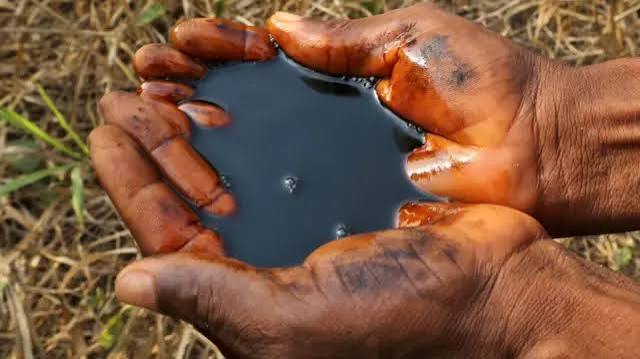
But, the hazards of precipitous action are already evident on the ground. Across the expansive farmlands of Yola Oilfield — also known as Yorla — the remnants of a major spill offer a grim portrait of ecological devastation, with mangroves, palm trees and other vegetation coated in crude while creeks remain fouled. In August 2025 alone, crude flowed into adjoining farms and waterways in Kpean, Khana Local Government Area, from a facility that had long been abandoned. This is not simply the residue of historical pollution; it is continuing contamination occurring even as negotiations over the resumption of operations gather momentum.
The Hydrocarbon Pollution Remediation Project (HYPREP) maintains that remediation efforts are progressing. The agency says it has completed work on five sites — Deebon Bodo/Mogho in Gokana, Nkeleoken/Alode in Eleme, Korokoro Well in Tai, Obolo Ebubu in Eleme and Bara Akpor Botem in Tai. Its 2026 livelihood scheme, we are informed, is designed to provide skills training to 2,200 people across Eleme, Gokana, Khana and Tai. Nevertheless, the implications of the United Nations Environment Programme’s (UNEP) 2011 assessment remain profound. UNEP found that potable water in Nsisioken Ogale was contaminated with benzene, a known carcinogen, at concentrations up to 900 times the World Health Organisation’s (WHO) guideline of 10 micrograms per litre, and cautioned that comprehensive restoration could require 25 to 30 years.
It would be misleading to contend that all Ogoni people are opposed to oil exploration on their land. Some young people have openly endorsed the reactivation of OML 11, but with a condition that is both legitimate and non-negotiable: they insist on direct participation in consultations and operational frameworks. Youth leaders are demanding at least 500 direct jobs within NNPCL and its subsidiaries. Their position is unequivocal: production may resume, but not without their meaningful participation and consent.
At least 51 civil society organisations appreciate this distinction and have opposed the proposed resumption of production, urging the government to abandon the plan and concentrate instead on remediating decades of pollution. Their apprehension is neither frivolous nor misplaced. Restarting wells while HYPREP’s remediation programme remains incomplete could expose communities to another cycle of contamination, health hazards and social tensions. The organisations include Oilwatch International and Health of Mother Earth Foundation, which argue that extracting oil without prior remediation would undermine human rights and Nigeria’s climate commitments.
Even more instructive is the schism within Ogoni leadership itself. KAGOTE — the principal socio-cultural body representing the four kingdoms — has called on the Ogoni Dialogue Committee to provide greater transparency and clarity regarding oil-related activities, appointments and opportunities. The disagreement centred on 40 NNPCL job slots and alleged contract awards, which KAGOTE questioned, while the Committee’s chairman, Prof Don Baridam, dismissed the corruption allegations as false and misleading and denied influencing the 40 beneficiaries or receiving federal funds. Consequently, the controversy has transcended the question of whether oil should return. It now encompasses who decides, who benefits, under what conditions, and who possesses the legitimate mandate to speak for Ogoniland.
Compounding the fraught situation is the arrest and prosecution of Chief Gani Topba. The leader and spokesman of the Conscience of Ogoni People and a participant in the dialogue process is facing four-count charges relating to terrorism, seizure and detention of oil wells, and cybercrime before the Federal High Court in Port Harcourt. Prosecutors allege that he sought to pressure the government to exclude Shell — now Renaissance Africa Energy Company — and its affiliates from contracts. The court has scheduled a date in September 2026 for his bail application and further proceedings. He has pleaded not guilty. Whatever the eventual determination of the allegations, the prosecution of dissent within a process ostensibly founded on dialogue inevitably sends a dangerous signal.
Amid these controversies, the Movement for the Survival of the Ogoni People (MOSOP) has accused some parties of clandestinely drilling in parts of Tai and Eleme without community consent, describing the alleged activity as a betrayal of the spirit of dialogue. MOSOP has demanded an immediate cessation and full disclosure. If the authorities genuinely seek to cultivate trust, every stage of re-entry must be subjected to rigorous public scrutiny. Opacity, in such a sensitive environment, is the surest way to rekindle longstanding suspicions.
We are of the opinion that Ogoni has already paid an exorbitant price for Nigeria’s oil wealth — polluted land, contaminated water, devastated livelihoods and, in 1995, the execution of Ken Saro-Wiwa and eight other activists. The proposed return offers an opportunity to alter that tragic narrative, but only if the Federal Government, its corporate partners and Ogoni stakeholders establish a framework that is transparent, inclusive and environmentally responsible. Otherwise, reopening OML 11 will not merely reopen wells; it will reopen old wounds.
The trial of an Ogoni advocate and the drive to recommence production must not be regarded as unrelated developments. They are facets of the same fundamental question: whether the emerging compact between Ogoni and the Nigerian state will rest on dialogue, justice and mutual trust, or on confrontation, opacity and suspicion. Ogoni should not be compelled to choose between economic prosperity and environmental justice. It deserves both. If oil is to return, it must do so under a new social contract — one that safeguards the environment, guarantees substantive community participation, makes benefits transparent and measurable, and prevents any individual or group from appropriating the process.
Ogoni cannot remain indefinitely imprisoned by the failures of its past. If extraction recommences under a genuinely reformed framework that guarantees environmental safeguards, meaningful community participation, employment, infrastructure and equitable revenue sharing, it could contribute to economic rejuvenation. But Abuja and the industry must appreciate that Ogoniland is not an ordinary oil-producing territory. Its history bears the profound scars of decades of pollution, broken promises and state violence. That history demands not haste, but exceptional prudence.
Comprehensive and credible remediation must remain a cardinal objective, not an afterthought; communities must have a substantive voice; economic gains must be tangible rather than disappear into elite pockets; young people must receive meaningful employment rather than token gestures; and a robust accountability mechanism must ensure that another major spill cannot be casually dismissed as merely a cost of doing business. Ogoni has already paid once; oil must not make it pay a second time.
-
Business4 days ago
Maduba Urges Lawyers To Embrace AI, Build Lasting Legacy
-
Business4 days ago
Skills Acquisition: FG To Lift 5m Nigerians Out Of Poverty
-
 Featured4 days ago
UNICEF Strengthens Public Health Emergency Preparedness Across 10 States
-
Politics4 days ago
2027: GROUP PLANS DOOR-TO-DOOR CAMPAIGN FOR RIVERS ADC CANDIDATES
-
 News4 days ago
RSG Relocates Community Secondary School Over Flooding
-
 Politics6 hours ago
Nigeria @66: June 12 Must Be Remembered Beyond Public Holiday — Musawa
-
 News1 hour ago
Etche Monarch To Be Buried Soon -Son
-
News4 days ago
?Obuama Community Refutes Udekama Land Claim