Connect with us

Environment

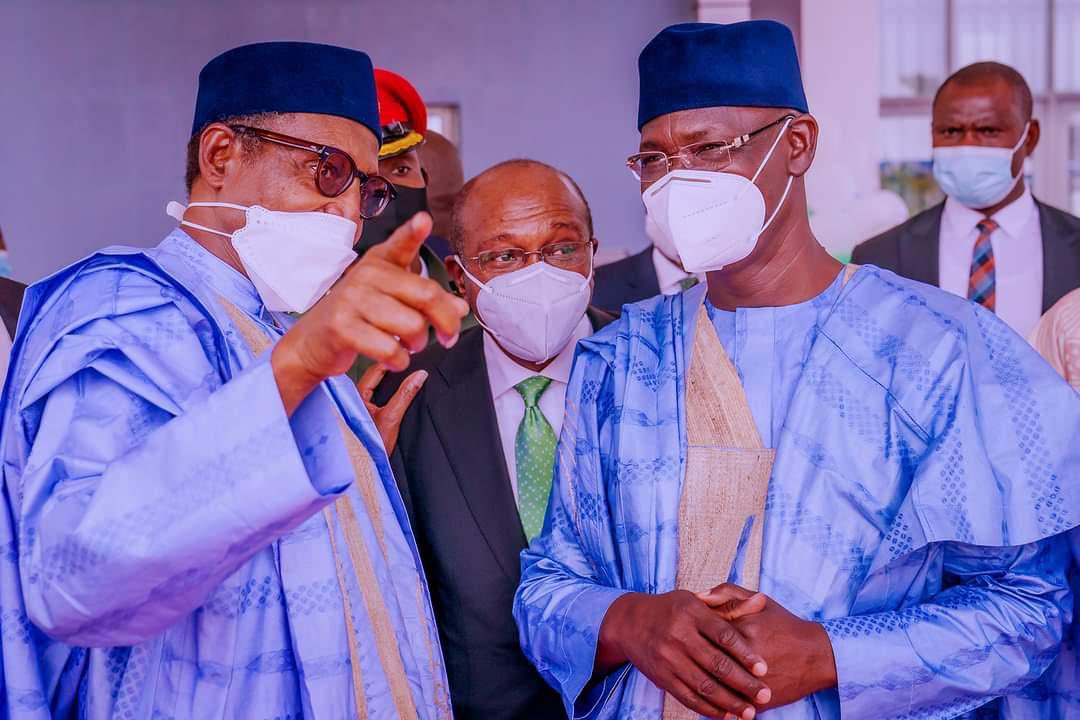
Buhari Sets Agenda For National Council On Climate Change

Published

on

President Muhammadu Buhari has charged the National Council on Climate Change to formulate appropriate policies toward achieving green growth and sustainable economic development for Nigeria.
The president gave the charge while inaugurating the Council before the commencement of the Federal Executive Council meeting in the State House, Abuja, recently.
The president said the inauguration marked the commencement of the implementation of the Climate Change Act 2021 and a new chapter in the renewed response to climate change in the country.
He also directed the Attorney General and Minister of Justice in conjunction with the Minister of Environment to initiate appropriate amendments of “noticeable implementation challenges” inherent in the Act.
While highlighting the losses and damages caused by the recent increasing floods in several parts of the country as well in Pakistan, Bangladesh and other parts of East and Southern Africa, Buhari described climate change as one of the biggest challenges facing humanity.
“It (Climate Change) is complex and dynamic; and requires multidimensional and multi-sectoral initiatives to address its impacts and avert its rapid advance.
“Updated data show increases in sea level rise, heat waves, wild fires, floods, desertification, drying wetlands and many more disruptive climate occurrences.
“The latest Intergovernmental Panel on climate change report warns that rising GreenHouse Gas emissions could soon outstrip the ability of communities to adapt.
“The window for taking decisive steps needed to spare our planet from the gravest impacts of climate change is rapidly narrowing.
“We cannot ignore what is happening in our local environment. The increasing re-occurrence of floods in several parts of the country is a wakeup call,” he said.
The president decried the loss of lives, damage and destruction of infrastructure such as roads, bridges, schools and agricultural production.
Buhari, therefore, reiterated the determination of his administration to strengthen national response to climate change and accelerate the implementation of decisive actions to reduce its impacts on the people and economy.
According to him, Nigeria is a party to the United Nations Framework Convention on Climate Change, which is an established international treaty to combat “dangerous human interference with the climate system”, in part by stabilising GreenHouse Gas concentrations in the atmosphere.
Buhari said: “It is against this background that in Nov. 2021, after COP 26 in Glasgow, I signed the Nigeria Climate Change Act despite noticeable implementation challenges inherent in the Act”.
“ This is to set the framework for mainstreaming climate change action, carbon budgeting and the establishment of the National Council on Climate Change.
“The council is tasked with the responsibility of formulating appropriate policies and other mechanisms for achieving low GreenHouse Gas emissions, including green growth and sustainable economic development for Nigeria.
“In a clear demonstration of our commitments as enshrined in our Nationally Determined Contributions and the Net Zero-Target by 2060, I also approved, on July 25, 2022, the appointment of the Director General and Secretary for the National Council on Climate Change.”
The president, therefore, maintained that those lapses earlier alluded to – which included the establishment of states and Zonal offices creating a huge and costly bureaucracy would not be tolerated.
According to the president, the Act also takes out the Commissioners of Environments from the states as members of Council.
“It also did not make transitional provisions capturing the work of the Inter-ministerial Working Group.
“This group was responsible for Energy Transition, the supervisory oversight of the Ministry of Environment and the establishment of an Executive Management structure at the secretariat level to support the DG in running the Council Secretariat.
“Accordingly, I hereby direct the Attorney General and Minister of Justice in conjunction with the Minister of Environment to initiate the appropriate amendment to reflect these observations,” he said.
Ahead of COP27 in Sharm El Sheikh, Egypt, the president expressed optimism that the National Council on Climate Change would harmonise all issues relating to Climate Change, Energy Transition Plan, Emissions Trading Scheme and the Carbon Trading Framework.
According to him, this is in line with its mandate under the Act, so that Nigeria could have a robust and impactful outing that captures Nigeria’s Climate Change priorities.
He said the composition of the council was a reflection of the magnitude of the problem and the seriousness of the nation’s response.
Buhari added, “it comprises the highest level of governance and a representation of all key sectors of the economy.”
Buhari also used the occasion to thank Vice-President Yemi Osinbajo for heading Nigeria’s Energy Transition Plan, presiding over the global launch of the plan and initiating its marketing by engaging key stakeholders in the United States.
He urged the Council to consolidate on these first steps and ensure a sustained marketing of the plan.
Earlier, the Minister of Environment, Mohammed Abdullahi, thanked the president for “walking the talk” on climate change at the international, regional and national level.
He also lauded him for demonstrating immense leadership towards Nigeria’s quest for net-zero by 2060.
The Council is chaired by the President with the Vice President as Vice Chairman. The Chairman, Nigeria Governors’ Forum, is also a member.
Other members of the Council are the Ministers responsible for Environment; Petroleum Resources; Budget and National Planning; Justice; Mines and Steel Development; Finance; Agriculture and Rural Development; Power; Women Affairs; Transportation; and Water Resources.
The Governor of Central Bank; the National Security Adviser; President of Association Local Governments of Nigeria; a representative of the private sector on climate change or environmental related matters (representative of National Conservation Foundation)are also members of the Council.
Others are; a representative of National Council on Women Societies; a representative of National Youth Congress, and a representative of the Civil Society Organisation.
The Director-General of the National Council on Climate Change, Dr Salisu Dahiru, will serve as Secretary.
The News Agency of Nigeria (NAN) reports that after the inauguration, FEC observed a minute of silence in honour of Ayodele Ogunlade, a former Minister of National Planning, under former Head of State, Sani Abacha, who died on Tuesday aged 88. (NAN)


 

Continue Reading

Environment

Why Buildings Keep Collapsing In Nigeria…. NIOB

Published

on

The Nigerian Institute of Building (NIOB) has attributed the recurring building collapse cases across the country to weak construction laws and failure to hold offenders accountable.
President of the institute, Daniel Kolade, made this known in Abuja at the 2026 Builders Day celebration, themed, “Advocacy and Policy Influence: Towards Sustainable Reforms for a Resilient Built Environment”
He expressed worry that, in spite of concerns over building safety, a key regulatory framework meant to strengthen enforcement within the built environment has remained pending before the National Assembly since 2006.
According to him, the delay has created a situation where those responsible for structural failures often escape punishment.
“Because the enforcement arm of the law is still lying with the National Assembly and has not been passed into law since 2006, the room remains for people to go scot-free when these incidents happen,” Kolade said.
According to Kolade, the lack of consequences encourages negligence on construction sites, as many operators believe little or nothing will happen, even if they violate building regulations.
Kolade cited previous building collapse incidents where, years after the tragedies, no individual had been prosecuted or sanctioned.
“As long as people continue to go free when these things happen, you should expect that it may not stop,” he said.
The NIOB president also said that the growing number of unqualified individuals working on construction sites worsened the problem.
He said it has become common for people without the required training or professional certification to assume technical roles in building projects.
“On most construction sites today, everybody claims to be an engineer, even labourers.
“Without the requisite knowledge and understanding, people just assume roles they are not qualified for,” he said.
Kolade noted that professional builders are regulated by the Council of Registered Builders of Nigeria (CORBON), which has the authority to register practitioners and discipline erring members.
He explained that builders found guilty of professional misconduct should face sanctions, including the withdrawal of their practicing licences.
However, he said the absence of a strong enforcement mechanism outside professional bodies makes it difficult to prosecute developers or project promoters who violate construction standards.
“In Nigeria, only one major case in Lagos saw the building promoter go down with the incident.
“In many other cases across the country, those responsible have walked free,” he said.
Kolade stressed that the built environment consists of several specialised professionals, each with defined responsibilities, including builders, architects and engineers.
He said the NIOB remained committed to promoting professionalism, ethical standards and quality assurance within the building industry.
March 13 is observed annually as Builders’ Day to create public awareness about the roles of professional builders and the importance of engaging qualified professionals in construction projects.
Continue Reading

Environment

Lagos Resumes Monthly Environmental Sanitation April 25

Published

on

The Lagos State Government has announced the resumption of the monthly environmental sanitation exercise, nearly a decade after it was suspended in the state.
Residents are expected to clean their surroundings, clear drainage channels in front of their homes, and dispose of waste responsibly as part of efforts to improve environmental hygiene and tackle waste management challenges.
The Commissioner for Environment and Water Resources, Tokunbo Wahab, on Saturday, disclosed the development in a statement, explaining that the exercise would officially restart later in the year.
“I am pleased to inform all Lagosians that the monthly environmental sanitation exercise will resume effective Saturday, 25th April 2026, holding on the last Saturday of every month from 6:30 a.m. to 8:30 a.m.
“During this period, residents are enjoined to clean their surroundings, clear drainage channels in their frontages, and dispose of waste properly as a civic responsibility.”
Wahab urged residents to view the initiative as a shared duty toward building a healthier city, stressing that the government would ensure strict compliance.
“This exercise is a collective responsibility and a vital part of our commitment to a cleaner, healthier, and flood-resilient Lagos. And it shall be backed with the full enforcement weight of the Lagos State Government,” he said.
Explaining the significance of reintroducing the sanitation culture, the commissioner said the state was returning to a practice that once formed part of Lagosians’ lifestyle.
“Let me formally say this and say it boldly. Mr Governor and his deputy are taking a very audacious step. For those who don’t know, prior to 2016, we had a culture that emphasised cleanliness as next to godliness.
“Once every month, we took our time to clean up our surroundings and then maintain them sparkling. However, for some years, we stopped it.”
He said the absence of the exercise had contributed to mounting environmental pressures in the state.
“Now, waste, debt, and environmental challenges have become an existential challenge to us as a state. It’s taken us over a year to debate, talk, and agree that it’s time to reintroduce a monthly environmental sanitation,” Wahab said.
Appealing to residents for cooperation, he urged Lagosians to dedicate a small portion of their time each month to environmental cleanliness.
“It’s a plea that it is time for us to give up just one or two hours a month. In our marketplaces, every Thursday, we observe environmental cleanliness. But this time, we are saying as a state, let us sit back once a month and observe the cleanliness of our environment as we used to before 2016.”
“The monthly sanitation exercise, previously held on the last Saturday of every month between 7 a.m. and 10 a.m., was suspended in November 2016 following a legal pronouncement restricting movement during the exercise.
The suspension later coincided with growing waste management concerns, including clogged drainage channels and indiscriminate refuse disposal across parts of the state.
Continue Reading

Environment

Illegal Buildings On Embassies’ Land Will Be Demolished – Wike

Published

on

The Minister of the Federal Capital Territory, Nyesom Wike, has condemned the construction of buildings on land allocated to foreign embassies in the diplomatic zone of Katampe Extension, Abuja, describing them as illegal structures.
Wike spoke on Friday while addressing journalists during an inspection tour of ongoing infrastructure projects across the FCT.
He said the illegal structures would not be allowed to stand and ordered the demolition of the affected buildings.
During the tour, the minister inspected several roads and infrastructure projects, including the route linking Wuse to the Central Area, a road near the Body of Benchers complex, and the Tungan-Madaki road off the airport corridor.
He expressed confidence that many of the projects would be completed in time for the inauguration marking the third anniversary of President Bola Tinubu’s administration.
On the illegal structures occupying embassy land, Wike said the plots had originally been allocated on March 18, 2008, to various diplomatic missions for residential purposes, but were later seized by an illegal developer who began construction without approval from the Federal Capital Development Authority.
“This land was allocated to various embassies in 2008. Somebody just came here, took the land, and started developing it on their own without approval from the FCDA. We cannot allow this kind of land invasion to continue,” he said.
Wike listed the diplomatic missions affected to include Thailand, Bulgaria, Syria, Somalia, Serbia and Montenegro, Japan, Austria, Switzerland, Senegal, and the Palestine Liberation Organisation. A portion of the land had also been reserved for the Power Holding Company of Nigeria for a 132/133KV power station.
The minister said the FCTA had directed the Department of Development Control to demolish all structures on the land and restore it to its original purpose.
“I have told them to bring down every building standing on this land,” he said, adding that the affected embassies would be formally notified to take possession of their allocated plots.
Wike also disclosed that the suspected developer had been arrested and would soon be prosecuted.
“The man has been arrested and he will be charged in court. The police are carrying out their investigation and he will be charged any moment from now,” he said.
Continue Reading

Trending